Category:
EconomyRituals Dominate Bhutanese Household Spending
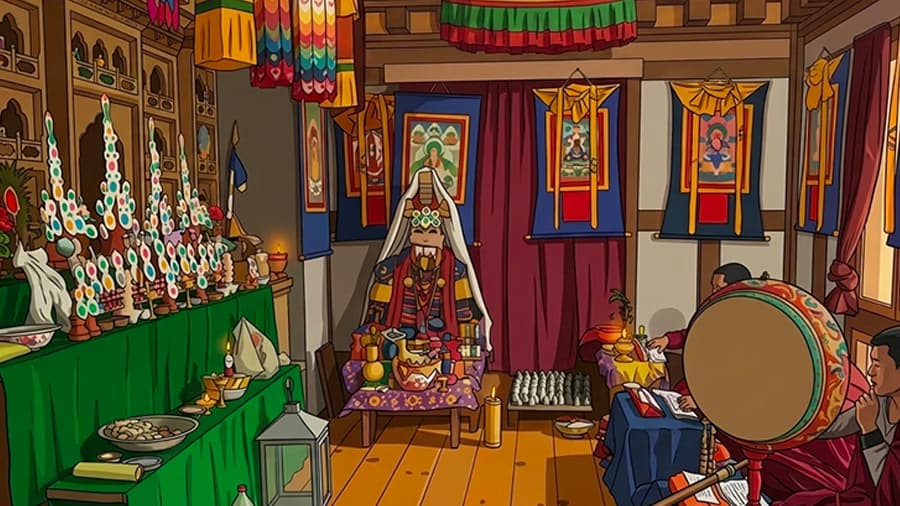
The Cultural Significance of Rituals in Bhutan 🇧🇹
In Bhutan, rituals are not just events; they are a way of life. A recent analysis by the National Statistical Bureau (NSB) reveals that these customary practices take the largest share of household expenditures. This trend underscores the deep-rooted cultural and religious significance of rituals in the daily lives of Bhutanese people.
Disparities in Ritual Spending 💸
Despite the cultural importance, ritual spending varies significantly across different economic and social demographics. On average, Bhutanese households spend Nu 27,689 annually on rituals. However, this average masks the wide disparities among different income groups. Wealthier households spend more in absolute terms, yet poorer families allocate a larger proportion of their budget to these activities. For instance:
- Poorest households: Spend about 5.9% of their total consumption on rituals
- Richest households: Spend approximately 3.5% of their total consumption
This indicates that while richer households can afford more luxurious ceremonies, the financial burden of rituals is heavier on the less affluent.
Urban vs. Rural Spending Patterns 🏙️🌾
Geographical location plays a crucial role in the extent of ritual spending. Rural households dedicate about 6.4% of their consumption to rituals, compared to 2.5% in urban areas. This difference can be attributed to the stronger adherence to traditional practices in rural regions, which often lack the economic diversification found in urban centers.
Gender Dynamics in Ritual Expenses 👩👧👦
A striking pattern emerges when analyzing ritual expenditures by gender. Female-headed households tend to spend significantly more on rituals than their male counterparts, with an average annual expenditure of Nu 32,341 compared to Nu 24,879 for male-headed households. This could be influenced by social expectations and the unique circumstances often faced by female heads of households, such as widowhood or spousal migration.
The Influence of Age and Education 🎓
Age is another determinant in ritual expenditure. Older household heads, particularly those over 65, spend more on rituals compared to younger heads. In contrast, education seems to reduce ritual spending, with households headed by individuals with tertiary education spending 54% less on rituals than those without formal education. This suggests that education may influence spending priorities and lifestyle choices.
Regional Variations in Spending 🌍
The NSB report highlights a geographical gradient in ritual spending, with households in western Bhutan, including dzongkhags like Haa and Paro, recording higher expenditures. In contrast, regions in the south and southeast show lower ritual spending. This variation could be linked to regional cultural practices and economic conditions.
The Broader Economic and Cultural Context 🌐
Rituals in Bhutan are more than just cultural artifacts; they reflect the broader socio-economic landscape. The financial pressure of maintaining these traditions can impact household economic stability, particularly for those with limited resources.
Conclusion: Balancing Traditions and Economic Realities ⚖️
The findings of the NSB highlight the complex interplay between cultural tradition and economic realities in Bhutan. As the country continues to modernize and integrate into the global economy, balancing these timeless practices with financial sustainability will be crucial for many Bhutanese families. Looking forward, understanding these dynamics could help in formulating policies that support cultural preservation while promoting economic wellbeing.
You May Also Like
Economy
Bhutan's Bold Vision: Two USD 50M Enterprises by 2030
September 27, 2026
Economy
Mega Dry Port in Pasakha: Bhutan's Trade Revolution
September 25, 2026
Economy
Fixed Deposit Tax Withholding: What You Need to Know
September 13, 2026
Economy
DRC's QR Payment Innovation: Tracking Business Income
September 2, 2026