Category:
EconomyMatsutake Price Surge: Bhutan's Forest Gold Bounces Back
🍄 A Golden Opportunity Returns to Bhutan's Forests
Bhutan's prized matsutake mushroom market is experiencing a remarkable resurgence, signaling renewed hope for forest communities across the nation. The matsutake price has climbed to impressive levels this season, offering local harvesters and farmers a tangible boost to their household incomes and economic prospects. This uptick represents more than just improved profit margins—it reflects the growing global demand for one of nature's most coveted delicacies and Bhutan's strategic position in the international specialty mushroom trade.
The timing couldn't be better for communities like Geney Gewog, where matsutake harvesting has been the lifeblood of the local economy for over three decades. As the eighth edition of the Matsutake Festival celebrates both the harvest season and 40 years of diplomatic friendship between Bhutan and Japan, the economic narrative surrounding this precious fungus deserves closer examination.
📊 Understanding the Price Dynamics in 2024-2025
This season's matsutake pricing tells an encouraging story for rural communities. Class A mushrooms—the premium grade—are commanding ₦2,000 per kilogramme, representing a meaningful increase from last year's ₦1,800 per kilogramme. Class B mushrooms have similarly strengthened to ₦1,800 per kilogramme, demonstrating broad-based price improvement across quality categories.
What makes this particularly significant is that the price recovery occurred despite moderate production levels remaining consistent with the previous year. This suggests that demand factors, rather than supply constraints, are driving the market upward—a distinction that carries important implications for future sustainability.
The Auction Mechanism Driving Better Returns
The competitive bidding environment at this year's auction has fundamentally shifted the dynamics. With seven active bidders participating—more than double the three bidders from the previous season—the price discovery mechanism has become considerably more robust. The expanded participation, particularly from Japanese exporters seeking premium matsutake for their domestic market, has created genuine competition that translates directly into higher prices for collectors.
The auction period, running from July 31 through October 10, allows for systematic price formation and transparent transactions that benefit both harvesters and buyers. This structured approach has become essential for maintaining Bhutan's reputation as a reliable supplier of high-quality matsutake to international markets.
🌲 Production Volumes and Economic Impact
Geney Gewog's 2024 harvest yielded 7,478.896 kilogrammes of matsutake, comprising 6,535.539 kilogrammes of Class A and 952.355 kilogrammes of Class B varieties. The 2025 season showed a slight moderation to 6,960 kilogrammes total, with 5,547.9 kilogrammes of premium Class A and 1,412.1 kilogrammes of Class B mushrooms.
These volumes, while appearing modest in global commodity terms, generate substantial income for a region of approximately 857.5 hectares of designated forest reserve. Individual collectors typically earn between ₦100,000 and ₦300,000 during each season—a significant contribution to household budgets in rural Bhutan where alternative cash income sources remain limited.
Revenue Generation and Royalty Systems
The 2024 harvest generated ₦149,757.90 in forest royalties, demonstrating the fiscal importance of matsutake collection to local governance structures. More impressively, Bhutan exported nine metric tonnes of matsutake in the previous year, generating ₦57 million in national export revenue—a figure that underscores the mushroom's strategic importance to the nation's economic development objectives.
These revenue streams support the broader 13th Plan initiative aimed at doubling household incomes through tourism development and expanded export of local products. Matsutake represents a textbook example of how forest-based enterprises can deliver both conservation and economic growth simultaneously.
🤝 Institutional Framework Supporting Sustainable Harvesting
The Geney Sangay Shamu Association, comprising 126 members, has emerged as a critical institutional mechanism for managing the matsutake economy. By August 14 of the current season, the association had already collected approximately 1,770 kilogrammes, indicating healthy participation and harvest momentum.
The association's role extends beyond simple aggregation and sales functions. Association leadership has established clear protocols for sustainable collection practices, recognizing that short-term profit maximization would ultimately undermine the long-term viability of this precious resource.
Enforcement and Sustainability Measures
Strict regulations govern collection practices, with penalties of ₦500 per piece for harvesting immature mushrooms before the appropriate seasonal window. Five collectors have already faced fines this season, demonstrating that enforcement mechanisms are being actively applied rather than remaining merely theoretical.
The association also actively combats illegal harvesting, with recent incidents involving outside collectors being deterred by vigilant locals. These protective measures reflect a community-wide commitment to preventing resource degradation that could jeopardize future harvests and income streams.
Collectors receive explicit training on proper harvesting techniques, emphasizing careful extraction without felling trees or damaging the surrounding forest ecosystem. Post-harvest care of mushroom spots and comprehensive waste management protocols ensure that the forest environment remains conducive to continued matsutake production across multiple seasons and decades.
🌍 Global Market Dynamics and Export Opportunities
The expanding number of exporters bidding for Bhutan's matsutake reflects broader global market trends. Japanese importers remain the primary market driver, with their sophisticated culinary traditions and willingness to pay premium prices for authentic, high-quality matsutake creating sustained demand.
The Japanese market's reverence for matsutake—deeply rooted in cultural and gastronomic traditions—provides Bhutan with a stable, high-value export destination. This cultural alignment between Bhutan and Japan around forest stewardship and natural reverence creates a natural partnership that transcends ordinary commercial relationships.
Climate Sensitivity and Production Variability
Association leadership emphasizes that matsutake production depends heavily on rainfall patterns. Abundant precipitation generally correlates with higher yields, while extended sunny periods tend to reduce production volumes. This climate sensitivity underscores the importance of maintaining forest cover and ecosystem health, as deforestation would disrupt the microclimate conditions essential for matsutake fruiting.
The unpredictability of weather patterns adds an element of risk to matsutake-dependent livelihoods, yet the consistent returns over three decades suggest that long-term averages remain favorable despite year-to-year variability.
🎊 The Matsutake Festival: Cultural and Economic Convergence
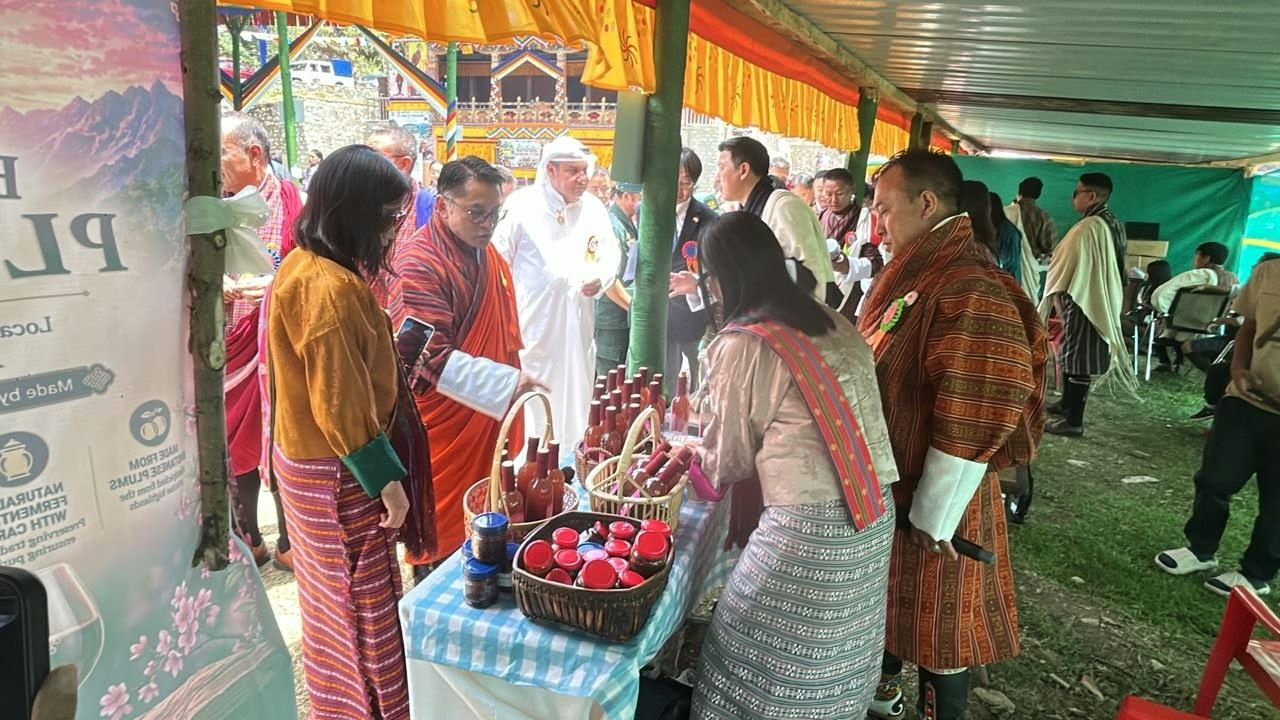
The eighth edition of the Matsutake Festival, held in Genekha under the theme "From Forest to Feast, Celebrating Matsutake and Our Heritage," represents far more than a seasonal celebration. The festival serves as a platform for showcasing Bhutan's commitment to sustainable forest management while celebrating the deep cultural connections between Bhutan and Japan.
Attendance by Agriculture and Livestock Minister Yonten Phuntsho, alongside representatives from Japan International Cooperation Agency (JICA) and international diplomatic missions, elevates the festival's profile and signals government commitment to supporting matsutake-based livelihoods.
The two-day program—featuring mushroom foraging expeditions, forest bathing, grading competitions, traditional mask dances, and archery—demonstrates how economic activity can be integrated with cultural preservation and environmental education. These activities attract both domestic and international visitors, creating secondary economic opportunities through tourism while maintaining focus on the matsutake harvest.
💡 Strategic Considerations for Sustained Growth
While the current matsutake price recovery offers genuine optimism, stakeholders recognize the delicate balance required to sustain this success. Minister Yonten Phuntsho specifically cautioned that festival growth must not come at the cost of destroying matsutake in its natural habitat, emphasizing that such destruction would contradict the festival's fundamental vision and objective.
This perspective reflects a mature understanding that economic expansion and environmental conservation are not competing priorities but rather interdependent objectives. The long-term viability of matsutake-based income depends entirely on maintaining the forest ecosystem conditions that enable consistent fruiting and production.
Income Diversification Within Forest-Based Livelihoods
Matsutake offers considerable advantages compared to alternative agricultural pursuits. The mushroom requires substantially less labor than conventional crop cultivation while still generating meaningful income for participating families. This favorable labor-to-income ratio makes matsutake collection particularly attractive for rural communities where agricultural labor is increasingly scarce due to youth migration to urban centers.
The seasonal nature of matsutake harvesting also allows for complementary economic activities during non-harvest periods, enabling households to pursue diversified income strategies rather than depending on a single seasonal resource.
🔮 Looking Ahead: Market Prospects and Policy Alignment
The convergence of improved matsutake pricing, expanded export demand, and supportive government policy creates a promising trajectory for forest communities. The 13th Plan's emphasis on doubling household incomes through tourism and local product exports provides policy alignment that can amplify the benefits of this natural resource.
Expanding the exporter base beyond current participants would further strengthen price competition and farmer returns. Similarly, investment in post-harvest processing, value-added products, and direct-to-consumer marketing channels could enhance the economic multiplier effects of the matsutake trade.
The institutional framework established through the Geney Sangay Shamu Association provides a proven model that could be adapted and replicated in other forest regions where matsutake grows naturally. This scaling potential represents a significant opportunity for expanding forest-based income opportunities across Bhutan's rural communities.
✨ Conclusion: A Sustainable Path Forward
The resurgence in matsutake pricing represents far more than improved commodity values—it embodies Bhutan's capacity to balance economic development with environmental stewardship. The matsutake price recovery demonstrates that markets can reward sustainable practices when quality, authenticity, and ethical sourcing are prioritized.
As communities like Geney Gewog experience improved household incomes from this season's harvest, the broader lesson resonates clearly: nature-based enterprises, properly managed and sustainably harvested, can deliver genuine economic benefits while strengthening rather than degrading environmental assets. For Bhutan's rural communities, the matsutake mushroom continues to prove itself as a genuine forest treasure—one that offers hope for prosperous, sustainable livelihoods rooted in the nation's extraordinary natural heritage.
You May Also Like
Economy
Bhutan's Bold Vision: Two USD 50M Enterprises by 2030
September 27, 2026
Economy
Mega Dry Port in Pasakha: Bhutan's Trade Revolution
September 25, 2026
Economy
Fixed Deposit Tax Withholding: What You Need to Know
September 13, 2026
Economy
DRC's QR Payment Innovation: Tracking Business Income
September 2, 2026