Category:
EconomyHotel Interest Subsidy Scheme Expands to 218 Participants
Bhutan's hospitality sector is experiencing a significant boost as government support mechanisms continue to expand their reach across the nation's tourism industry. 🏨 The interest subsidy scheme, a cornerstone initiative within the broader Economic Stimulus Programme, has demonstrated remarkable growth momentum in recent months, signaling renewed confidence and participation from hotel operators nationwide.
Understanding the Hotel Interest Subsidy Initiative 💡
The government's commitment to strengthening the hospitality sector has materialized through a targeted interest subsidy scheme designed specifically to alleviate financial pressures on hotel establishments. This program provides crucial relief by covering four percent of interest charges on qualifying loans for four-star and below-rated hotels over a one-year period.
The initiative represents a strategic intervention aimed at supporting the hotel industry during a critical period of economic adjustment and recovery. By reducing borrowing costs, the scheme enables hotel operators to redirect capital toward operational improvements, staff development, and infrastructure upgrades—investments that ultimately enhance service quality and competitiveness.
Tracking the Remarkable Growth Trajectory 📈
The expansion of hotel participation in the interest subsidy scheme has accelerated dramatically over recent months. By July alone, ninety-seven additional hotels received onboarding approval, marking a substantial leap from the previous month when only twenty-five establishments joined the program. This acceleration reflects growing awareness among hotel proprietors and improved processing efficiency within government agencies.
As of early August, the cumulative enrollment reached 218 hotels that had received Verification Letters from the Department of Tourism. This figure represents hotels that have successfully cleared eligibility assessments and are positioned to benefit from the subsidy support. The trajectory suggests continued momentum as remaining applications proceed through verification channels.
The Application Pipeline: Numbers and Progress 📊
The Department of Tourism has processed a total of 299 applications since the scheme's inception, demonstrating substantial industry interest. Of these submissions, 218 had received Verification Letters by August 6, positioning them as eligible participants. The remaining applications were progressing through verification procedures, with officials projecting completion before the August 30 deadline.
Financial institutions had approved 167 applications by early August, while 88 remained under review. Notably, only two applications faced rejection—both involving loans that fell outside the hotel sector and therefore failed to meet scheme eligibility criteria. This exceptionally low rejection rate underscores the program's accessibility and the industry's alignment with program requirements.
The subsidy disbursements have demonstrated steady growth, with Nu 3.75 million distributed in May and Nu 7.21 million in June. These figures vary based on individual hotel loan amounts, reflecting the scheme's customized approach to supporting diverse establishment sizes and financial situations.
Eligibility Requirements and Verification Processes 🔍
Participation in the interest subsidy scheme requires hotels to meet specific criteria established by the Department of Tourism and financial institutions. The verification process encompasses multiple checkpoints designed to ensure program integrity and appropriate resource allocation.
Hotels must demonstrate:
- Valid star-rating certification confirming their classification status
- Active utilization of the Tourism Registration System (TRS)
- Current industry licensing meeting all regulatory requirements
- Loan repayment commencement before subsidy application
The certification responsibilities are strategically distributed between government entities. The Department of Tourism manages assessment for three and four-star establishments, while dzongkhag authorities handle certification for one and two-star hotels. This decentralized approach ensures localized expertise and streamlined processing.
Addressing Implementation Challenges ⚙️
While the scheme's expansion has been encouraging, officials have identified specific obstacles requiring attention. Approximately ten hotels expressed intent to seek recertification after their star ratings expired but had not yet completed self-assessment procedures. Additionally, around 26 hotels awaiting certification represent potential future participants whose enrollment could further increase program reach.
A notable challenge involves inactive Tourism Registration Systems among certain applicants. Some establishments had recently registered or failed to maintain active TRS status, rendering them temporarily ineligible until they satisfy this requirement. The Department of Tourism has responded proactively by providing dedicated support to help applicants navigate eligibility requirements.
Timeline Extensions and Support Mechanisms 📅
Recognizing the complexity of certification procedures, authorities extended the certification window through August 30, accommodating late submissions and allowing additional hotels to complete their applications. Furthermore, a provisional six-month correction period has been established, enabling hotels that fall short of star-rating requirements to implement necessary improvements before approaching financial institutions.
The Department of Tourism has deployed multiple communication channels to expedite the process, sending repeated reminders and providing guidance to prospective participants. This proactive engagement reflects the government's commitment to maximizing scheme participation and ensuring eligible hotels do not miss enrollment opportunities.
Financial Institution Requirements and Loan Considerations 💰
From the lending perspective, the Royal Monetary Authority has established that loan repayment must have commenced before subsidy application becomes possible. This requirement ensures accountability in deploying public funds and confirms that beneficiary hotels demonstrate capacity to meet their repayment obligations.
Hotels facing monthly installment challenges have access to loan-splitting arrangements, allowing them to divide their obligations strategically. In such cases, the subsidy applies exclusively to the loan portion for which repayment has commenced, maintaining program integrity while providing flexibility to struggling establishments.
Geographic Distribution and Industry Concentration 🗺️
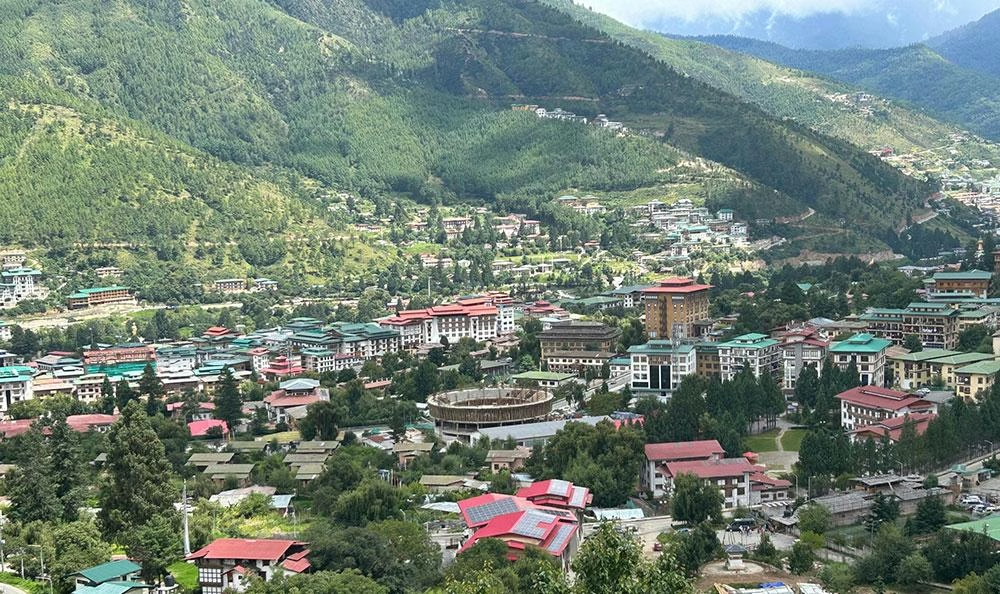
The majority of hotels benefiting from the interest subsidy scheme are concentrated in Thimphu, reflecting the capital's dominant position within Bhutan's hospitality sector. However, the scheme's national framework ensures that hotels throughout the country remain eligible for participation, supporting tourism development across all dzongkhags.
This geographic distribution pattern aligns with broader tourism infrastructure trends, where urban centers typically host higher concentrations of commercial hotel establishments. Nevertheless, the scheme's inclusive design ensures rural and regional hotels maintain equal access to support mechanisms.
What Awaits as the Deadline Approaches ⏰
With the August 30 deadline drawing near, authorities anticipate continued growth in scheme participation. Outstanding data from one financial institution remains pending, suggesting that final enrollment figures could exceed current estimates. Officials project that as remaining applicants complete certification and financing procedures, the number of hotels receiving subsidy support will continue climbing.
The scheme's success hinges on sustained coordination between the Department of Tourism, financial institutions, and dzongkhag authorities. Each entity's commitment to streamlined processing and applicant support directly influences participation rates and program effectiveness.
Broader Economic Implications and Industry Impact 🌟
The expanding hotel interest subsidy scheme represents more than a simple financial assistance program—it embodies the government's strategic commitment to hospitality sector development during a transformative economic period. By reducing interest burdens, the initiative enables hotels to strengthen operational resilience, invest in quality improvements, and maintain employment stability.
For Bhutan's tourism industry, which generates substantial foreign exchange and employment opportunities, such targeted support mechanisms prove invaluable. The scheme demonstrates recognition that hospitality establishments require strategic assistance to navigate competitive pressures and economic uncertainties while maintaining service excellence.
Key Takeaways for Hotel Operators 🎯
Hotel proprietors considering participation should understand that receiving a Verification Letter represents progress but does not guarantee subsidy receipt. Successful enrollment requires navigating multiple verification stages, maintaining active TRS engagement, and ensuring loan repayment has commenced.
The Department of Tourism remains accessible to prospective participants, offering guidance through the eligibility verification process and supporting applicants in meeting certification requirements. Hotels that have not yet applied should prioritize completing self-assessment procedures before the August 30 deadline to avoid missing this support opportunity.
The hotel interest subsidy scheme exemplifies how targeted government intervention can strengthen critical economic sectors while maintaining fiscal responsibility. As participation continues expanding toward and beyond the initial 218 enrollees, the initiative promises to deliver meaningful support to Bhutan's hospitality industry during this pivotal development period.
You May Also Like
Economy
Radhi Farmers Expand Handa Tengma Markets Beyond Tradition
August 15, 2026
Economy
Informal Trade Undercuts Formal Businesses in Phuentsholing
August 15, 2026

Economy
Bhutan's Agricultural Future: Why Economics Must Drive Food Security
August 15, 2026
Economy
Breaking Down Barriers: The Economics of Cheaper Goods
August 12, 2026