Category:
EconomyRadhi Farmers Expand Handa Tengma Markets Beyond Tradition
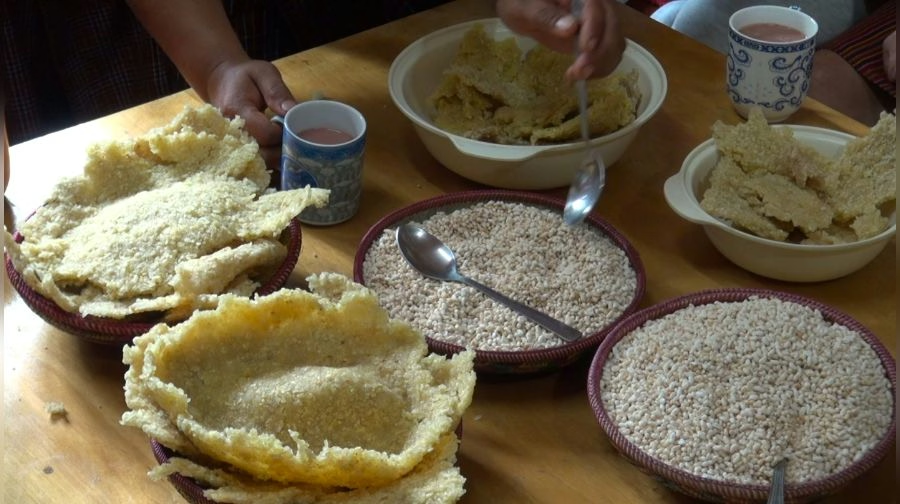
From Sacred Tradition to Commercial Opportunity 🌾
In the serene valleys of lower Radhi Gewog, Trashigang, an ancient culinary tradition is experiencing a remarkable renaissance. Farmers are transforming Handa Tengma, a traditional beaten rice delicacy once reserved for ceremonial occasions, into a viable commercial product with significant market potential. This shift represents more than just agricultural innovation—it reflects how rural communities are leveraging their cultural heritage to create sustainable income streams.
The journey of Handa Tengma from family kitchens to marketplace shelves tells a compelling story about preservation, entrepreneurship, and community resilience. What was once prepared exclusively for honoring distinguished guests and spiritual leaders is now gaining recognition as a unique regional product worthy of wider distribution.
Understanding Handa Tengma: Craft Meets Cuisine 🍚
Handa Tengma is crafted from Pho Bara, a distinctive local rice variety cultivated specifically for its unique oily texture and flavor profile. The production process demands considerable skill and patience, transforming simple grains into a delicacy through carefully orchestrated steps.
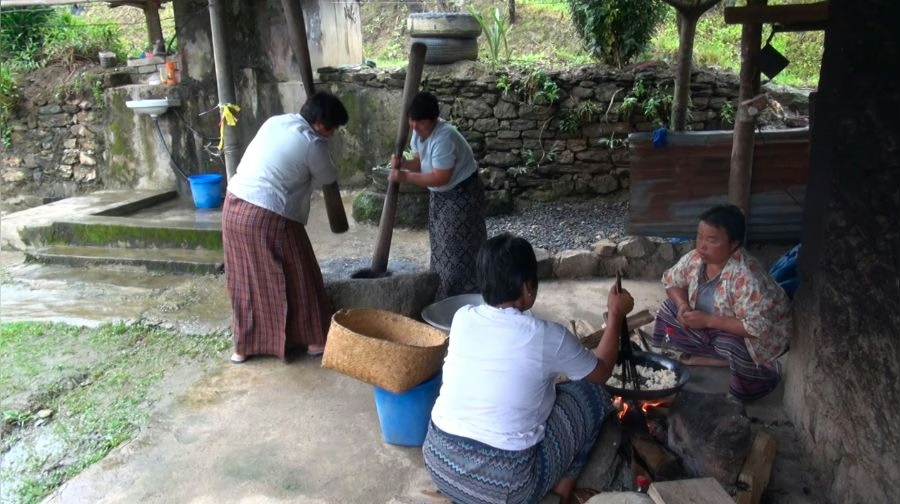
The traditional preparation begins with washing and soaking the rice overnight, allowing it to absorb moisture and develop optimal consistency. The soaked grains are then roasted with mustard oil, requiring constant attention to achieve the perfect golden hue without burning. Once roasted to precision, the rice is flattened using traditional pounding tools, a labor-intensive process that requires both strength and finesse.
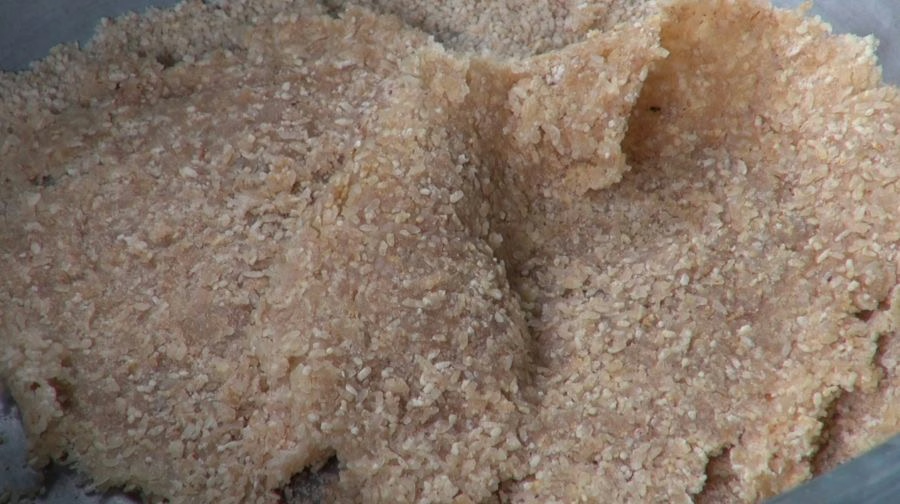
"Getting the right taste and texture requires careful preparation," explains one of the region's experienced producers. "The amount of oil and heat must be controlled precisely to prevent the rice from burning. Too little oil results in a bland product, while excessive heat can ruin an entire batch." This delicate balance between tradition and technique remains central to producing authentic Handa Tengma.
The cultural significance of this product cannot be overstated. Traditionally, Handa Tengma serves as a prestigious offering to honored guests, including high-ranking spiritual leaders and members of the Royal Family. Its presence on a table signals respect and cultural awareness, making it far more than mere sustenance—it is a symbol of Bhutanese hospitality and reverence.
The Perfect Pairing: Handa Tengma and Butter Tea ☕
Handa Tengma is traditionally enjoyed alongside butter tea, Bhutan's beloved national beverage. This pairing creates a harmonious culinary experience deeply rooted in Bhutanese culture. The slightly oily texture of the beaten rice complements the creamy richness of butter tea, making it an ideal comfort food during cold mountain mornings or social gatherings.
Pho Bara cultivation remains relatively limited, as farmers primarily grow this variety specifically for producing both Handa Tengma and zaw, another traditional rice preparation. The oily nature of the grain makes it less suitable for everyday rice consumption, but perfectly suited for these specialty products.
Market Expansion: From Festival Showcase to Commercial Scale 🎪
The turning point for Radhi's Handa Tengma producers came through strategic market exposure. Farmers participated in the flower festival held in Sheytemi, Merak earlier this year, where they showcased their product to a diverse audience beyond their immediate community.
"More people are now aware of Handa Tengma after we showcased it at the flower festival," shares one participating farmer. "We have started receiving orders and plan to cultivate more rice to meet the growing demand." This market feedback validated what producers had long believed—their traditional product possessed commercial viability.
The response has been encouraging, with orders trickling in from customers who experienced the product firsthand. This organic demand generation has inspired farmers to consider expanding their cultivation areas, a significant decision given the labor-intensive nature of both growing and processing Pho Bara.
Pricing and Market Positioning 💰
Currently, Handa Tengma is positioned as a premium product, with wholesale pricing expected to reach approximately Nu 600 per kilogram. This pricing reflects the labor-intensive production process, the scarcity of Pho Bara cultivation, and the product's cultural and culinary value. For consumers, this represents an investment in authenticity and traditional craftsmanship.
The premium positioning strategy aligns well with emerging market trends favoring artisanal, locally-sourced food products. Urban consumers and tourism markets increasingly seek authentic regional delicacies, creating favorable conditions for products like Handa Tengma to command higher prices than mass-produced alternatives.
Challenges and Constraints: The Path Forward 🚧
Despite promising market indicators, significant obstacles remain. Currently, only 40 to 50 households throughout Radhi cultivate Pho Bara, creating supply constraints that limit production capacity. This limited farmer base creates vulnerability in the supply chain and restricts the volume available for market distribution.
Low yields compound the challenge. Pho Bara cultivation requires specific growing conditions and careful management, and farmers report that yields remain below what would be necessary for large-scale commercial operations. Climate variability, soil conditions, and limited access to improved seeds further constrain productivity.
These production bottlenecks must be addressed before Handa Tengma can achieve significant market expansion. Solutions might include:
- Agricultural extension services providing technical support for yield improvement
- Seed improvement programs focusing on Pho Bara variety enhancement
- Farmer cooperatives enabling collective marketing and resource sharing
- Training programs documenting and standardizing production techniques
- Market linkage initiatives connecting producers directly with retailers and restaurants
Vision for Gelephu Mindfulness City 🌟
Farmers envision a transformative opportunity through Gelephu Mindfulness City, Bhutan's ambitious new development project. This emerging urban center, designed to attract international visitors and promote wellness tourism, represents an ideal market for premium regional products.
"Handa Tengma is one of Radhi's unique products," explains a local farmer leader. "We hope to promote it further and eventually export it to Gelephu Mindfulness City with government support." This aspiration reflects broader recognition that cultural products can serve as economic engines for rural communities while supporting Bhutan's tourism diversification strategy.
Gelephu Mindfulness City's focus on experiential tourism and authentic cultural experiences creates natural demand for products like Handa Tengma. Visitors seeking genuine Bhutanese culinary experiences would likely welcome the opportunity to purchase and consume traditional food products directly from their place of origin.
Government Support and Policy Implications 🏛️
Successful market expansion will require meaningful government intervention. Farmers explicitly seek government support in promoting Handa Tengma and establishing export pathways to emerging markets like Gelephu. This support might include:
- Product certification and branding establishing Handa Tengma as a protected geographical indication
- Market development assistance connecting producers with distributors and retailers
- Infrastructure investment improving storage, packaging, and transportation facilities
- Promotional campaigns highlighting Handa Tengma's cultural and nutritional value
- Agricultural subsidies encouraging Pho Bara cultivation among additional households
The Broader Economic Context 📊
Radhi's Handa Tengma initiative exemplifies broader trends in Bhutanese rural development. As agriculture faces pressure from climate change, labor migration, and market competition, communities are increasingly turning to value-added products and niche markets. Products with cultural authenticity and limited production capacity—characteristics that might seem limiting—increasingly represent advantages in premium market segments.
This model demonstrates how traditional knowledge, when properly documented and commercialized, can generate sustainable income while preserving cultural heritage. Other Bhutanese communities facing similar rural economic challenges might learn valuable lessons from Radhi's experience.
Looking Ahead: Opportunities and Expectations 🔮
The momentum building around Handa Tengma suggests genuine market potential. Growing consumer awareness, demonstrated through festival participation and subsequent orders, validates the product's commercial viability. The challenge now lies in scaling production sustainably while maintaining quality standards and cultural authenticity.
Farmers express optimism that growing demand will encourage additional households to cultivate Pho Bara. If even 20-30 additional households enter production, supply could expand significantly, enabling more aggressive market development efforts. This growth would create employment opportunities, support household incomes, and strengthen community economic resilience.
The pathway from cultural tradition to commercial product requires careful navigation. Success depends on balancing market demands with cultural preservation, scaling production without compromising quality, and ensuring that economic benefits reach farming households equitably. With appropriate government support and continued market development, Handa Tengma could become a model for how Bhutanese communities monetize cultural heritage.
Conclusion: Tradition Meets Opportunity 🌏
Radhi's farmers are writing a compelling chapter in Bhutan's economic development story. By transforming Handa Tengma from a ceremonial delicacy into a commercial product, they demonstrate how cultural authenticity and entrepreneurial vision can combine to create sustainable livelihoods. The journey from family kitchens to wider markets represents more than agricultural diversification—it reflects a community's determination to preserve its heritage while building prosperity.
As Gelephu Mindfulness City develops and consumer interest in authentic regional products grows, opportunities for Handa Tengma expansion appear genuinely promising. The coming years will reveal whether Radhi's farmers can successfully scale production, establish reliable distribution channels, and capture their rightful share of premium markets. Their success would not only benefit individual farming households but would also demonstrate to other rural communities how traditional knowledge can fuel economic transformation.
You May Also Like
Economy
Hotel Interest Subsidy Scheme Expands to 218 Participants
August 15, 2026
Economy
Informal Trade Undercuts Formal Businesses in Phuentsholing
August 15, 2026
Economy
Bhutan's Agricultural Future: Why Economics Must Drive Food Security
August 15, 2026
Economy
Breaking Down Barriers: The Economics of Cheaper Goods
August 12, 2026