Category:
EconomyMatsutake Mushroom Boom Transforms Genye's Rural Economy
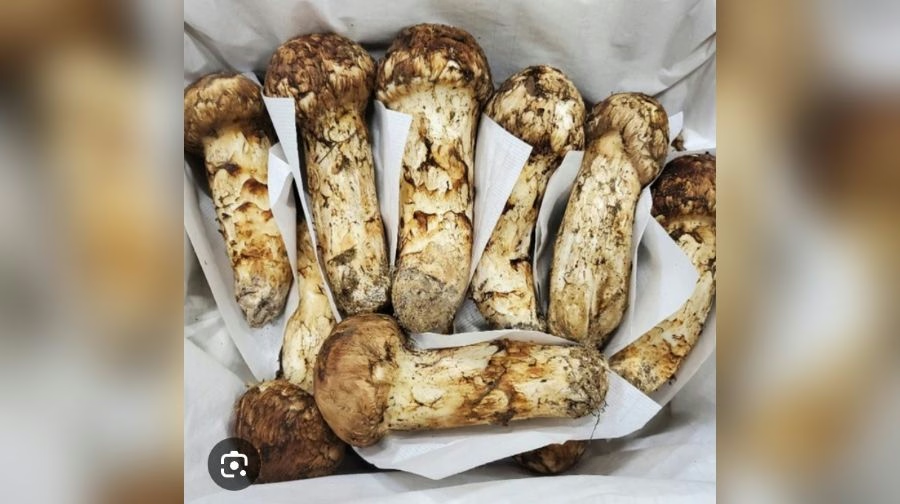
From Forest Forage to Cash Crop 🍄
In the verdant hills of Genye Gewog, nestled within Thimphu's boundaries, a quiet economic revolution is taking place. What was once a humble forest product, gathered primarily for family consumption, has blossomed into a thriving income stream that's reshaping rural livelihoods across the region. The matsutake mushroom—prized for its distinctive aroma and culinary excellence—has become the unexpected engine of prosperity for farming communities who have tended these lands for generations.
The transformation tells a remarkable story of market opportunity meeting traditional knowledge. Today's matsutake prices represent a dramatic shift from the days when these prized fungi were considered worthless, too mysterious and potentially dangerous to command any value in the marketplace.
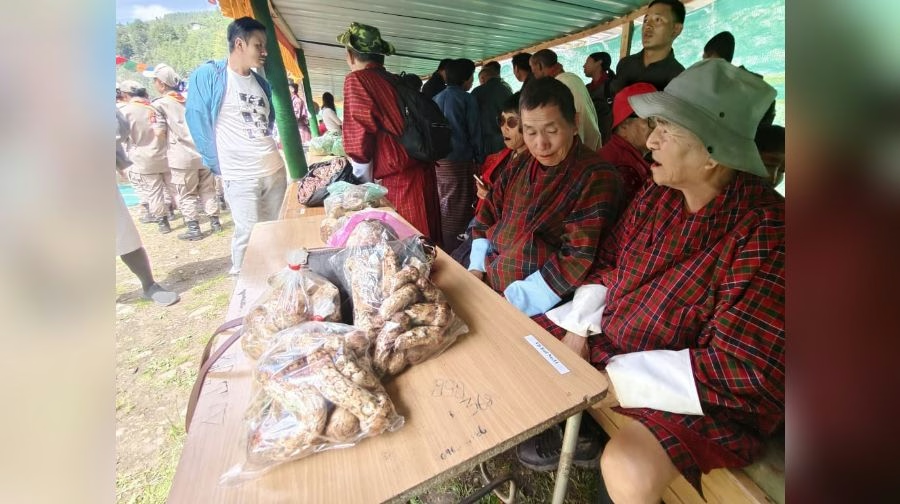
The Remarkable Journey from Nu 5 to Nu 2,000 Per Kilogramme 📈
The price trajectory of matsutake mushrooms in Genye Gewog reads like a success story from an economics textbook. Decades ago, when 69-year-old Namgay from Tshochekha first attempted to sell matsutake mushrooms, the concept was virtually unheard of. Local merchants dismissed the idea outright, viewing the mushrooms with suspicion and concern about potential toxicity.
"Matsutake has existed since the time of our parents," Namgay recalls. "We never thought of selling it. When I took it to Wangchuktaba on my horse, no one was willing to buy it because they thought it might be poisonous." This skepticism represented a significant barrier to commercialization, one that has since been entirely overcome.
Today's pricing structure reflects the maturation of the matsutake market:
- Grade A Mushrooms: Nu 2,000 per kilogramme (current exporter rates)
- Grade B Mushrooms: Nu 1,700 per kilogramme (current exporter rates)
- Festival Premium Pricing: Up to Nu 3,000 per kilogramme during peak sales events
This represents an astronomical increase from the original Nu 5 per kilogramme rate, demonstrating how market development and international demand have fundamentally altered the economic calculus for Genye's farming communities.
Substantial Income Generation for Rural Farmers 💰
The financial impact on individual farmers has been nothing short of transformative. Namgay's personal earnings trajectory illustrates the income potential that matsutake cultivation now provides. In 2024, he earned approximately Nu 300,000 from mushroom sales—a figure that climbed to around Nu 400,000 in the following year, positioning him among the highest earners within his community.
These aren't supplementary earnings; they represent primary household income that enables farmers to meet critical needs and invest in their futures. Namgay emphasizes the life-changing nature of this income stream: "In Genye Gewog, people's livelihoods have improved through Matsutake. We have used the income to buy roofs, as well as food and other household items. We depend on this source of income, and it has made our lives more convenient."
The ability to fund home improvements, secure adequate nutrition, and purchase essential goods demonstrates how matsutake economics have elevated living standards across the gewog.
Expanding Export Markets and International Demand 🌍
The matsutake industry in Genye is experiencing rapid internationalization. What was once a primarily domestic trade has evolved into a sophisticated export operation with connections spanning multiple Asian markets.
The exporter landscape has expanded dramatically, reflecting growing international appetite:
- 2024: Three active exporters
- Current Year: Seven exporters operating in the region
- Export Destinations: Japan (established market), Korea (new market), Singapore (emerging market)
Tshering Wangchuk, manager of Padma Gourmet and Foods, explains the evolving market dynamics: "Till last year, two of our friends used to export to Japan, and we also exported to Japan. This year, there are seven exporters in total, and some of them say they are exporting to Korea as well. Some of them say they will be sending mushrooms to Singapore as well."
This diversification of export destinations reduces market concentration risk and creates multiple pathways for matsutake producers to monetize their harvest. The establishment of permanent importers in Japan, in particular, signals long-term market stability and predictable demand.
Direct-to-Consumer Sales Outperform Exporter Rates ✨
While exporter agreements provide baseline pricing security, savvy farmers have discovered that direct-to-consumer channels yield superior returns. The annual Matsutake Festival has emerged as a critical sales venue where market dynamics shift dramatically in producers' favor.
Farmer Tandin Dorji highlights the festival advantage: "During the annual Matsutake Festival, prices tend to increase, and buyers are willing to pay more for well-preserved mushrooms. In terms of convenience, it is easier for us to sell to Tshogpa members because mushroom collectors usually collect the mushrooms in the morning and sell them in the evening."
The Nu 3,000 per kilogramme price point achieved during festival sales represents a 50% premium over Grade A exporter rates, providing strong financial incentive for farmers to participate in direct marketing channels. This pricing differential underscores the value of quality preservation, timing, and direct consumer access.
Community Economic Transformation and Future Prospects 🚀
The matsutake phenomenon extends beyond individual earnings to reshape the entire Genye Gewog economic landscape. The mushroom trade has catalyzed infrastructure improvements, enhanced food security, and created employment opportunities across the value chain—from collection and grading to packaging and export logistics.
The growing exporter presence indicates confidence in future market growth. Seven competing buyers in a single gewog suggests a robust, competitive marketplace that benefits producers through price competition and service quality improvements.
Key Economic Indicators:
- Household expenditures on infrastructure have increased significantly
- Food security has improved through diversified income sources
- Employment opportunities have expanded beyond traditional agriculture
- Market sophistication continues advancing with each passing season
The matsutake market in Genye represents a successful case study in rural economic development. By leveraging natural forest resources, establishing export connections, and creating direct-to-consumer sales channels, the community has built a sustainable income stream that respects traditional practices while embracing modern market opportunities.
Looking Forward: Sustainability and Growth 🌱
As matsutake prices continue climbing and international demand expands, Genye's farmers face both opportunities and responsibilities. Sustainable harvesting practices will be essential to maintain forest health and ensure long-term productivity. The cooperative marketing structures that have emerged—including Tshogpa member networks—provide frameworks for collective action that can balance individual profit maximization with community-wide sustainability.
The matsutake success story offers valuable lessons for other rural communities seeking to monetize forest resources responsibly. It demonstrates that traditional knowledge, combined with market access and quality focus, can generate substantial economic benefits without requiring dramatic lifestyle changes or resource extraction practices that compromise environmental integrity.
For Genye's farmers, matsutake has evolved from a mysterious forest product into a legitimate livelihood cornerstone. The journey from Nu 5 to Nu 3,000 per kilogramme represents not merely price appreciation, but the recognition of value, the establishment of trust, and the creation of genuine economic opportunity in rural Bhutan.
You May Also Like
Economy
Bhutan's Bold Vision: Two USD 50M Enterprises by 2030
September 27, 2026

Economy
Mega Dry Port in Pasakha: Bhutan's Trade Revolution
September 25, 2026

Economy
Fixed Deposit Tax Withholding: What You Need to Know
September 13, 2026
Economy
DRC's QR Payment Innovation: Tracking Business Income
September 2, 2026