Category:
EducationMotithang Higher Secondary School Zayed Sustainability Prize Finalist
🌱 Bhutanese School Advances to Global Sustainability Competition
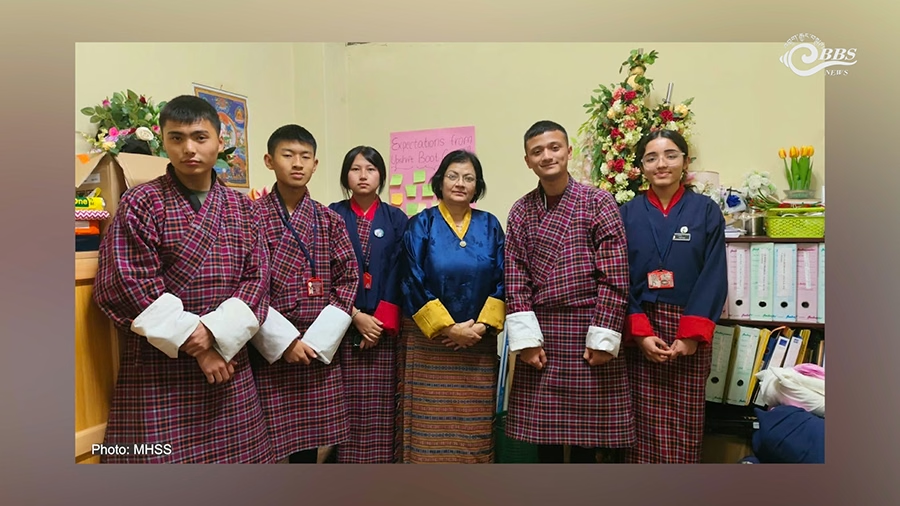
Motithang Higher Secondary School has earned a prestigious position among the world's top finalists for the 2027 Zayed Sustainability Prize, marking a significant achievement for Bhutanese education on the international stage. The school's innovative smart agriculture project demonstrates how young minds can leverage cutting-edge technology to tackle one of humanity's most pressing challenges: sustainable resource management and food security.
The recognition places Motithang among only ten finalists in the Global High Schools category, competing against thousands of entries from 177 countries. This accomplishment underscores Bhutan's commitment to fostering environmental consciousness and technological innovation among its younger generation.
💡 The Smart Agriculture Innovation
The project, titled Smart Agriculture for a Sustainable Future, represents a convergence of traditional farming wisdom and modern Internet of Things (IoT) technology. Eight talented students from classes nine and eleven collaborated to develop a system that fundamentally reimagines how we approach agricultural water management.
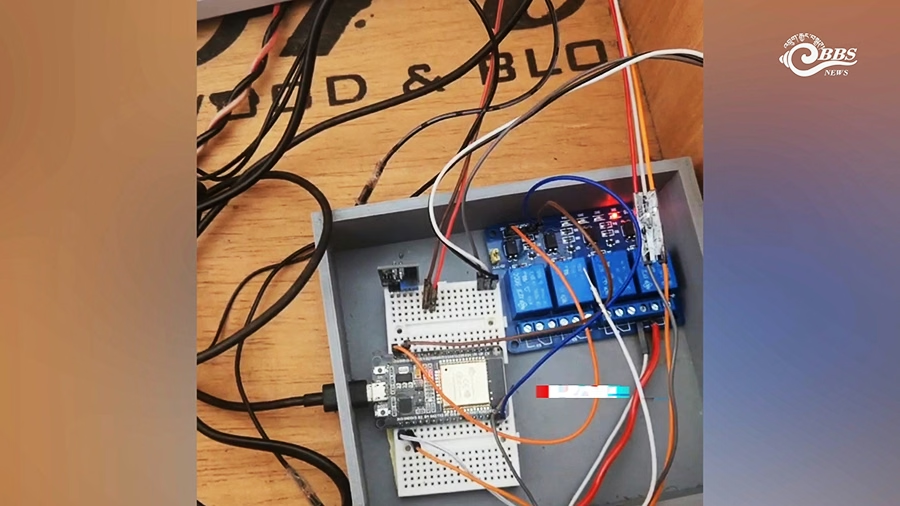
At its core, the system employs sophisticated sensor networks combined with automated drip-irrigation mechanisms. Rather than relying on conventional flooding or overhead watering methods that waste significant water volumes, this technology delivers moisture directly to plant root zones with precision accuracy.
How the Technology Works
The intelligent system utilizes multiple sensor types working in concert:
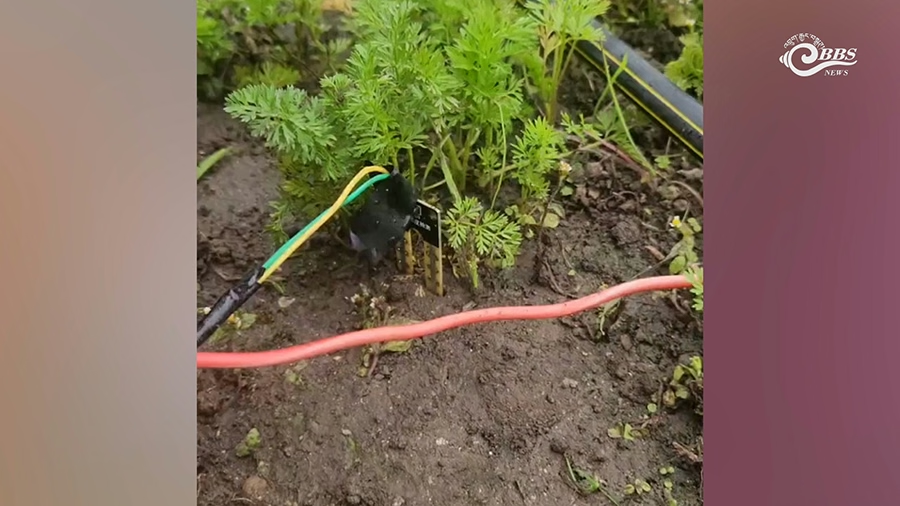
- Soil moisture sensors continuously measure water levels in growing media
- Temperature sensors track ambient and soil conditions
- Humidity sensors monitor atmospheric moisture content
- Ultrasonic sensors measure plant growth and development
- Automated solenoid valves control water flow based on real-time data
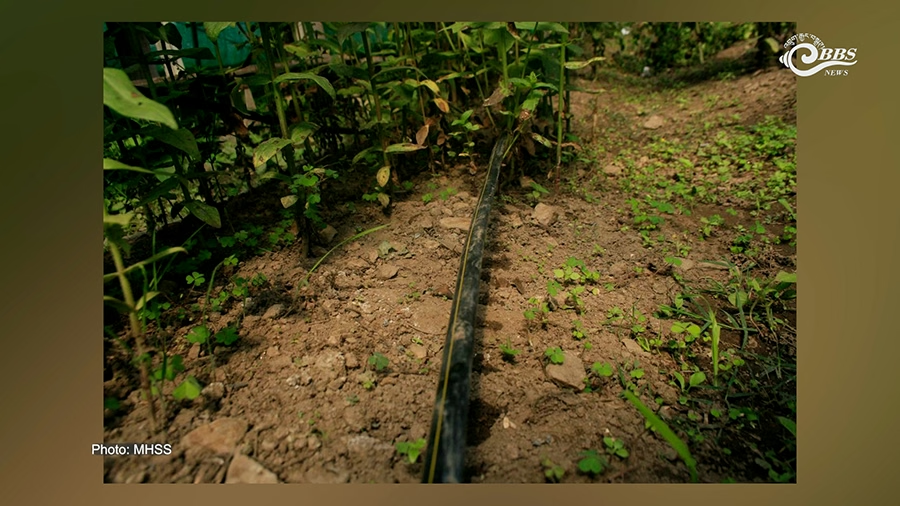
"Smart agriculture basically works on the idea of drip irrigation. Using the pipes, it directly transfers the water to the base of the plant so that there will be no wastage of water," explained one of the student developers. This straightforward yet revolutionary approach eliminates the inefficiencies inherent in traditional watering methods.
📱 Remote Monitoring and Control
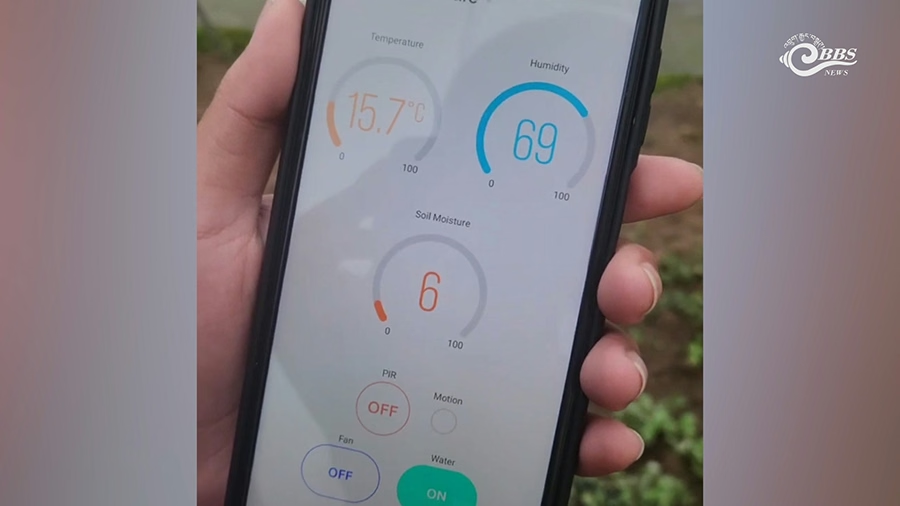
What sets this project apart from conventional agricultural improvements is its integration of mobile technology. The entire system can be monitored and controlled remotely through the Blynk mobile application, allowing users to manage irrigation from anywhere with internet connectivity.
This remote capability transforms agricultural management from a time-intensive daily chore into an efficient, data-driven process. Users can monitor sensor readings in real-time, identify when conditions deviate from optimal thresholds, and take corrective action instantaneously. As student Nehal Khatiwara noted, the system empowers users to recognize critical threshold crossings and respond appropriately before problems escalate.
Previously, teaching and support staff spent considerable time each day manually watering plants—a labor-intensive process prone to human error and inconsistency. The automated system has virtually eliminated this burden while dramatically improving outcomes.
📊 Measurable Environmental Impact
The results speak powerfully to the project's effectiveness. Since implementation, the system has achieved a 35 percent reduction in water consumption while simultaneously producing noticeably improved plant growth and vitality. In a nation where water resources are precious and climate change increasingly threatens agricultural productivity, this efficiency gain carries profound implications.
These metrics represent more than academic achievement—they demonstrate tangible environmental stewardship. In a global context where agriculture consumes approximately 70 percent of freshwater resources, innovations like this become critically important for long-term sustainability.
🌲 Expansion Beyond the Greenhouse
The ambitions of Motithang's student team extend well beyond their initial greenhouse success. The school has developed plans to deploy the smart agriculture technology across approximately two acres of fire-affected land near Sangaygang, supporting reforestation and ecological restoration efforts.
This expansion represents a shift from proof-of-concept to large-scale environmental remediation. By applying their technology to reforestation initiatives, the students are addressing multiple sustainability challenges simultaneously: water conservation, habitat restoration, and climate resilience.
Long-Term Vision
Recognizing the potential of their innovation, Motithang plans to:
- Establish a dedicated Smart Agriculture Club to maintain momentum and continue development
- Transform the project into a permanent practical learning space for students
- Mentor younger cohorts in sustainable technology implementation
- Document and share findings with other educational institutions
🏆 Recognition and Regional Significance
Motithang's finalist status positions it among an elite group of South Asian institutions. Only three schools from the entire South Asia region advanced to this stage, with finalists also coming from Sri Lanka and Nepal. This distinction highlights Bhutan's leadership in educational innovation and environmental consciousness within the region.
The 2027 Zayed Sustainability Prize, administered from Abu Dhabi, represents one of the world's most prestigious recognitions for student-led sustainability initiatives. The competition attracted over 10,000 entries from 177 countries, making Motithang's selection among the final ten an extraordinary accomplishment.
💰 Prize Support and Future Opportunities
As a finalist, Motithang Higher Secondary School will receive USD 25,000 to support project expansion and implementation. This financial backing provides crucial resources for scaling the technology and expanding its environmental impact.
The grand prize winner, to be announced in Abu Dhabi on January 12, 2027, will receive USD 150,000—a substantial investment in the school's sustainability mission. Regardless of the final outcome, the finalist recognition has already catalyzed significant momentum for the school and its students.
🎓 Educational Leadership and Institutional Pride
Principal Jigme Choden expressed profound gratitude for the recognition, emphasizing that the achievement reflects both student creativity and institutional commitment to transforming theoretical classroom knowledge into practical, innovative solutions. "We are deeply humbled and honoured to be among the finalists for the Zayed Sustainability Prize for Global High Schools. This is indeed a recognition of the creativity of our students and our school's commitment to transform classroom learning into meaningful solutions," she stated.
The principal further noted that this international recognition will inspire the school community to pursue even more ambitious sustainability projects, reinforcing the importance of bridging the gap between academic learning and real-world problem-solving.
🌍 Broader Implications for Bhutanese Education
Motithang's achievement represents a watershed moment for Bhutanese secondary education. It demonstrates that schools in smaller nations can compete successfully on the global stage when they foster innovation, embrace technology, and empower students to address genuine challenges.
The project aligns seamlessly with Bhutan's constitutional mandate for environmental conservation and the nation's commitment to maintaining at least 60 percent forest coverage. By integrating sustainability into the curriculum through hands-on projects, schools like Motithang prepare students to become environmental stewards capable of addressing 21st-century challenges.
🚀 What's Next: The Path Forward
As Motithang awaits the January 2027 announcement, the school continues refining its smart agriculture system and preparing for large-scale deployment. The establishment of a Smart Agriculture Club ensures that momentum will continue regardless of prize outcomes, creating a sustainable pipeline of student innovation.
The project serves as a powerful model for other schools seeking to integrate sustainability, technology, and practical learning. It proves that secondary students possess the capability, creativity, and commitment to develop solutions with genuine environmental impact.
📌 Key Takeaways
Motithang Higher Secondary School's journey to becoming a Zayed Sustainability Prize finalist represents several critical developments:
- Innovation in Education: Student-led projects can address real environmental challenges while providing transformative learning experiences
- Technology for Good: IoT and automation technologies offer powerful tools for sustainable resource management
- Regional Leadership: Bhutanese institutions are increasingly competitive on the global sustainability stage
- Practical Learning: Bridging classroom theory and real-world application produces both environmental and educational benefits
As the school awaits the final verdict in Abu Dhabi, one thing remains certain: Motithang has already succeeded in demonstrating that young Bhutanese minds are capable of creating meaningful solutions to global sustainability challenges. Whether or not they secure the grand prize, their impact on environmental consciousness and educational innovation will resonate far beyond their greenhouse walls.
You May Also Like
Education
Students with Special Educational Needs Showcase Talents
October 6, 2026
Education
Local Produce Connects Gongthung Farms and School
September 21, 2026
Education
Two Students Transform Library System Into Digital Solution
September 16, 2026
Education
Strengthening School Support for Students Unable to Afford Tuition
September 13, 2026