Category:
EducationLocal Produce Connects Gongthung Farms and School
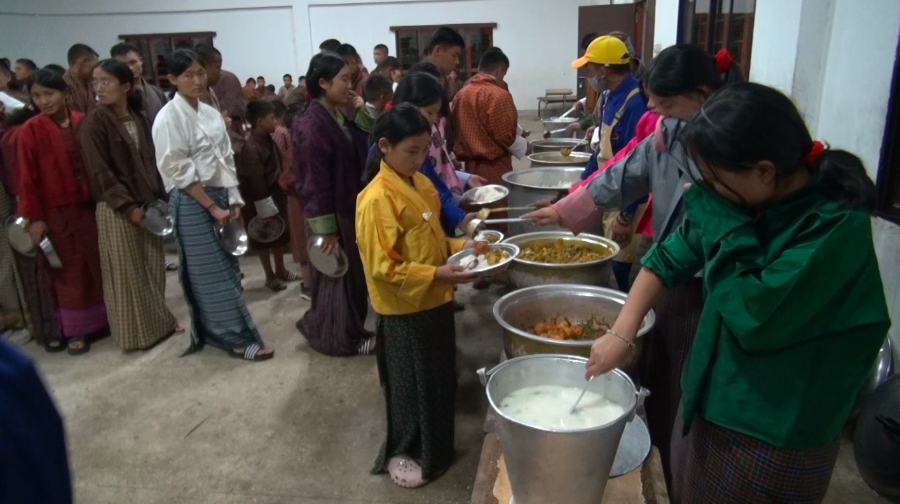
Building Bridges Between Agriculture and Education 🌾
In the heart of Bhutan's eastern region, a remarkable transformation is taking place. Gongthung village in Trashigang has quietly pioneered a sustainable model that bridges the gap between local farmers and educational institutions. This innovative approach demonstrates how strategic partnerships can simultaneously strengthen rural livelihoods, improve student nutrition, and foster community resilience.
The connection between Gongthung farms and school represents far more than a simple commercial transaction. It exemplifies the power of localized food systems and demonstrates how educational institutions can become anchors for agricultural development in rural communities.
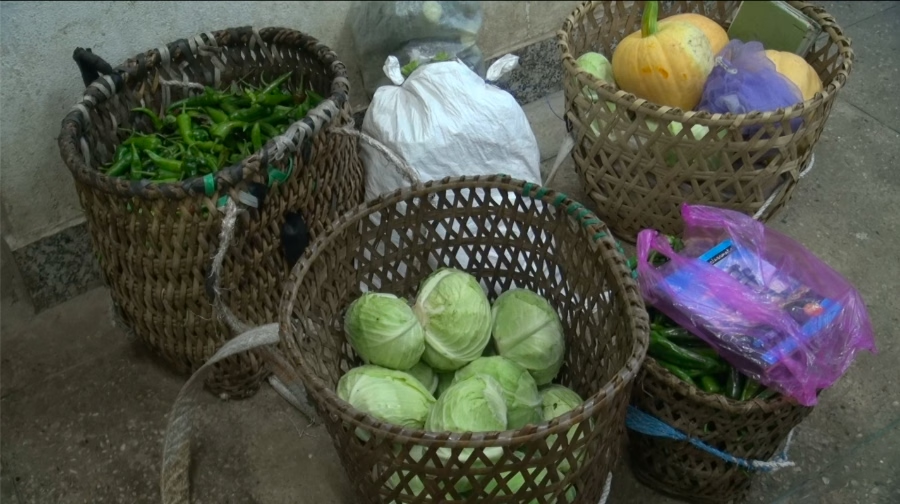
The Farm-to-Table Initiative: A Win-Win Partnership 🤝
Gongthung Middle Secondary School has established a direct purchasing relationship with local farmers, creating a reliable market for agricultural products. Every Tuesday and Saturday, fresh vegetables journey from village fields directly to the school kitchen. This consistent supply schedule has eliminated the uncertainty that typically plagues small-scale farmers in remote areas.
The arrangement involves four distinct vegetable groups operating within the community, each contributing to the school's nutritional needs. Beyond vegetables, a nearby poultry farm supplies fresh eggs, while the Gongthung dairy group provides milk and other dairy products. This diversified approach ensures comprehensive nutrition for the student body while distributing income opportunities across multiple farming households.
Economic Impact on Local Farmers 💰
The financial implications of this partnership have been transformative. Farmers participating in the Gongthung farms supply network report significant income generation. According to local producers, monthly earnings vary based on production volume and product type. Those supplying larger quantities earn between Nu 5,000 and Nu 9,000 monthly, while smaller suppliers generate Nu 300 to Nu 700. Premium vegetables like broccoli and potatoes command better prices compared to lower-value crops such as radish.
Collectively, Gongthung's farming community generates approximately Nu 250,000 monthly through school supply contracts—representing 42 percent of the institution's total meal stipend allocation. This substantial contribution underscores the economic significance of the partnership for rural livelihoods.
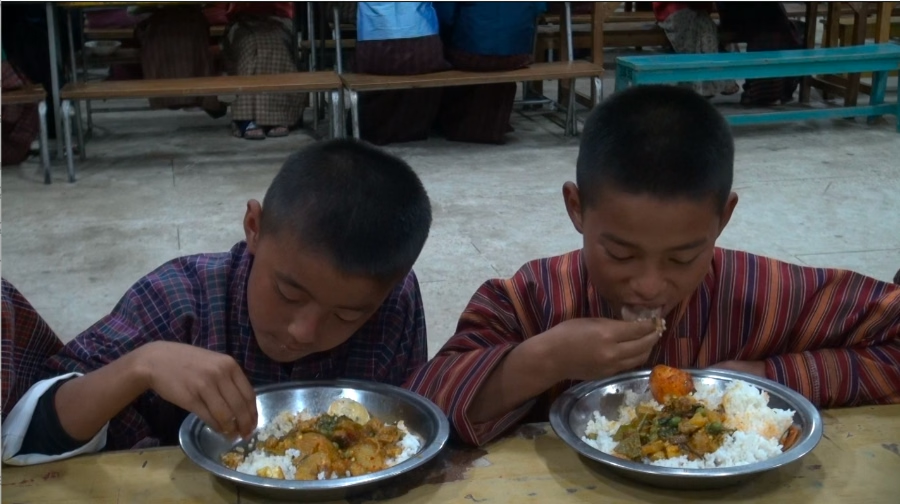
The Poultry Farming Success Story 🐔
Poultry farmers have experienced particularly remarkable growth. Prior to the school partnership, egg producers struggled to find reliable markets, with local shopkeepers often refusing to purchase their products. The situation shifted dramatically following the government's increase to the student meal stipend—from Nu 1,500 to Nu 3,100 annually per boarder.
This policy adjustment created unprecedented demand for eggs and poultry products. Individual poultry farmers now report monthly earnings between Nu 100,000 and Nu 120,000, representing a substantial improvement in household income and economic security. The increased student meal budget essentially catalyzed a secondary agricultural boom in the village.
Nutritional Benefits for Students 🥗
Beyond economic considerations, the Gongthung farms initiative delivers tangible nutritional advantages. The school's mess management prioritizes fresh, locally-sourced ingredients whenever available. Watermelons, cucumbers, and pears sourced from community farmers provide essential vitamins and minerals to the student population.
The school's commitment to organic produce further enhances nutritional quality. By purchasing organically-grown fruits and vegetables from local producers, the institution supports both student health and sustainable agricultural practices. This approach aligns with broader global trends emphasizing farm-to-school nutrition programs as critical components of childhood development and educational performance.
Addressing Supply Gaps and Future Expansion 📈
While the partnership has proven highly successful, certain supply challenges remain. Bananas and apples cannot yet be sourced locally in sufficient quantities, necessitating external procurement. However, recognizing this demand, Gongthung's farmers have proactively begun cultivating bananas. Additionally, the village dairy group has announced plans to supply yoghurt to the school, further diversifying the local product portfolio.

This adaptive approach demonstrates the entrepreneurial spirit within Gongthung's agricultural community. Rather than accepting limitations, farmers are expanding their production capabilities to meet institutional demand, creating opportunities for additional income and employment.
The Broader Significance of Local Food Systems 🌍
The Gongthung model reflects emerging global recognition of farm-to-school programs as essential infrastructure for sustainable development. Educational institutions represent consistent, predictable markets for agricultural producers—a critical factor in rural economic stability.
In Bhutan's context, where agricultural modernization and youth retention in farming communities remain policy priorities, initiatives like this provide tangible proof-of-concept. The success in Gongthung demonstrates that strategic institutional purchasing can simultaneously achieve multiple development objectives: poverty reduction, improved nutrition, agricultural sustainability, and community resilience.
Key Takeaways: A Replicable Model ✨
The Gongthung farms and school partnership illustrates several critical success factors:
- Reliable institutional demand creates market certainty for small-scale producers
- Consistent purchasing schedules enable farmers to plan production effectively
- Policy support (increased meal stipends) can catalyze agricultural sector growth
- Diversified farming approaches distribute income opportunities across communities
- Direct relationships eliminate middlemen and improve farmer profitability
- Community collaboration strengthens collective bargaining power and supply reliability
Looking Forward 🚀
What emerges from Gongthung's experience is a compelling blueprint for rural development. This is not merely a supply arrangement; it represents a holistic approach to strengthening local food systems while supporting farmer livelihoods and enhancing student nutrition.
As Bhutan continues its development trajectory, replicating and scaling the Gongthung model in other communities could yield substantial benefits. The initiative demonstrates that educational institutions, when strategically engaged with local agricultural producers, become powerful engines for rural economic development.
The success story unfolding in Gongthung village deserves wider recognition and support. It proves that sustainable development need not be complicated—sometimes, the most effective solutions emerge from simple, direct connections between those who produce and those who consume.
You May Also Like

Education
Two Students Transform Library System Into Digital Solution
September 16, 2026
Education
Strengthening School Support for Students Unable to Afford Tuition
September 13, 2026
Education
Student Citizen Journalism: Breaking Silence on Bullying
September 12, 2026
Education
Tashithang ECCD Centre: Nurturing Young Learners in Rural Bhutan
September 6, 2026