Category:
PoliticsMines and Minerals Bill Returns After 5-Year Deadlock
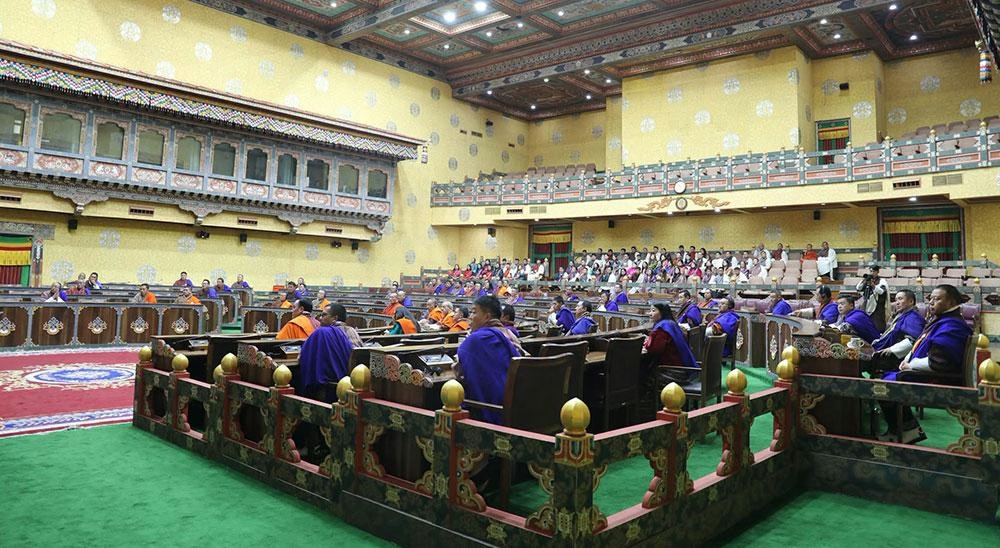
Breaking the Stalemate: Bhutan's Mining Sector Faces Long-Overdue Reform 🏛️
After nearly half a decade of legislative gridlock, Bhutan's Parliament is finally poised to tackle one of the nation's most contentious policy issues. The revised Mines and Minerals Bill will be presented during the winter session of the National Assembly, marking a significant moment for the country's resource management framework. This development represents far more than a routine legislative update—it signals Bhutan's commitment to modernizing governance structures that have remained largely static for three decades.
The original impasse emerged in June 2021 when lawmakers from the two houses of Parliament couldn't reach consensus on fundamental questions surrounding mineral ownership, administrative control, and revenue distribution. This five-year standoff has left the sector operating under increasingly outdated legal provisions, creating inefficiencies and regulatory ambiguities that have hindered development.
Understanding the Historical Context 📚
Bhutan's current mining regulations trace their roots to the Mines and Minerals Management Act of 1995, a piece of legislation that has remained virtually unchanged for three decades. While longevity in law can provide stability, the Act has become increasingly misaligned with contemporary economic realities and constitutional requirements.
The 1995 framework was designed for a different era—one with different technological capabilities, market conditions, and governance philosophies. Over the intervening years, several critical gaps have emerged:
- Constitutional misalignment: Multiple provisions directly contradict provisions in Bhutan's Constitution
- Regulatory vagueness: The Act lacks clarity on key operational matters, forcing authorities to rely on ancillary rules and regulations
- Governance inconsistencies: The legislation doesn't adequately address coordination with the Local Government Act
- Strategic resource gaps: The original bill failed to provide comprehensive guidance on managing strategic minerals
These deficiencies have created a precarious situation where successive administrations or even individual officials could interpret regulations differently, leading to inconsistent policy implementation.
The 2026 Revision: What's Changed? 🔄
The Department of Geology and Mines has submitted a comprehensively revised version to the Cabinet, incorporating substantial modifications to provisions governing strategic minerals. This updated iteration represents the culmination of extensive consultations and technical analysis conducted over the past five years.
According to National Assembly Deputy Speaker Sangay Khandu, the amendment aims to achieve several interconnected objectives:
- Enhanced operational efficiency: Streamlining mining sector management through clearer legal frameworks
- Resource optimization: Ensuring the nation maximizes benefits from its finite mineral reserves
- Sustainable development: Balancing extraction activities with environmental and social considerations
- Constitutional compliance: Eliminating contradictions with the nation's fundamental law
The revised bill represents a holistic approach to mineral resource governance, reflecting lessons learned from the previous deadlock and broader international best practices in mining regulation.
Why This Matters for Bhutan's Economy 💼
The mining sector, though not dominant in Bhutan's economy, plays a meaningful role in generating government revenue and providing employment opportunities in specific regions. Mineral extraction contributes to both direct revenue through royalties and indirect economic benefits through employment and infrastructure development.
However, the sector's potential remains constrained by regulatory uncertainty. Investors—both domestic and international—require clear, stable legal frameworks to justify capital commitments. The three-decade-old legislation has created an environment of ambiguity that potentially discourages investment and innovation.
Moreover, Bhutan's commitment to maintaining environmental sustainability while developing its resource base requires sophisticated regulatory mechanisms. The revised bill is expected to better balance these competing imperatives through updated provisions addressing environmental protection, community consultation, and benefit-sharing arrangements.
The Parliamentary Winter Session Agenda 📋
The upcoming winter session, scheduled from November 12 through December 28, 2026, will address multiple significant legislative items beyond the mining bill. Three major pieces of legislation are tentatively scheduled for deliberation:
The Mines and Minerals Bill remains the centerpiece, addressing resource management comprehensively. The Pay Revision Bill, to be presented by Finance Minister Lekey Dorji, requires passage during the same session due to its classification as a money bill. The OPEC Agreement represents Bhutan's engagement with international petroleum policy coordination mechanisms, addressing petroleum-related issues and strengthening cooperation with member countries.
Additionally, the Assembly will address third readings for the Jabmi Amendment Bill and Tobacco Control Amendment Bill 2026, finalize the BIMSTEC Convention on Mutual Legal Assistance in Criminal Matters, and complete deliberations on the Insolvency and Rehabilitation Bill.
While the agenda remains tentative pending final confirmation, the inclusion of the mining bill signals its elevated priority status within the legislative calendar.
The Core Issues: Why Consensus Proved Elusive 🤔
The original deadlock between parliamentary houses reflected genuine disagreements about fundamental principles. The central tensions revolved around:
Ownership and Control: Questions about whether mineral resources should be managed primarily by central government, local authorities, or through shared governance arrangements remained contentious. Different stakeholders held legitimate but competing visions for resource stewardship.
Profit Distribution: Determining how revenues should be allocated among the national treasury, local governments, and affected communities created complex negotiation dynamics. Each stakeholder group advocated for arrangements benefiting their constituents.
Strategic Resource Protection: Defining which minerals warrant special protection or restricted access generated disagreement about balancing economic development with national security and environmental preservation.
These weren't merely technical questions—they reflected deeper philosophical differences about governance, federalism, and national priorities.
Broader Context: Regional Infrastructure Challenges 🏗️
Parallel to the mining bill deliberations, the winter session will also address infrastructure governance issues affecting local development. The National Assembly has been examining the Regional Offices for Infrastructure Development (ROID) established by the Ministry of Infrastructure and Transport to manage engineering workload across districts.
These regional offices currently operate significantly below authorized staffing levels, with only 83 of 156 approved positions filled. Some regional centers function with merely six or seven engineers, most of them recently graduated, compared to the fifteen typically required for optimal operations.
Despite these constraints, the ROIDs achieved a 92 percent effective delivery rate last financial year, completing 233 design services and scrutinizing 641 private drawings. This performance demonstrates both the dedication of existing staff and the urgent need for additional resources.
These infrastructure governance challenges intersect with mining sector development, as improved engineering capacity will be essential for managing mining projects in compliance with updated regulatory frameworks.
Agricultural Policy and Cost-Sharing Mechanisms 🌾
The Assembly will also revisit agricultural cost-sharing arrangements, another issue affecting rural constituencies. Local government leaders from Pemagatshel have raised concerns about inconsistent cost-sharing ratios for agricultural inputs, which have fluctuated between 50-50 (government-farmer), 70-30, and 60-40 arrangements.
These shifting ratios have created uncertainty and affordability challenges for farming communities. Some farmers have borne disproportionate costs under certain arrangements, making essential agricultural inputs economically inaccessible.
This issue illustrates how regulatory clarity—a principle equally applicable to mining legislation—proves essential across multiple sectors. Just as the mining bill seeks to replace ad-hoc regulatory decisions with stable statutory frameworks, agricultural policy requires consistent, predictable cost-sharing mechanisms.
What Stakeholders Anticipate 🎯
Mining industry observers, environmental advocates, and local government representatives have developed distinct expectations for the revised bill. Industry participants hope for provisions that reduce regulatory uncertainty and streamline approval processes. Environmental organizations emphasize the importance of robust conservation requirements and community consultation mechanisms.
Local governments, particularly in mining-adjacent regions, anticipate clearer provisions regarding revenue-sharing and community benefit arrangements. These varied stakeholder interests will likely surface during parliamentary deliberations.
The fact that the bill survived five years of deadlock before returning suggests that negotiators have developed compromise language addressing core concerns across stakeholder groups. However, parliamentary debate may still reveal residual tensions requiring additional refinement.
The Path Forward: Implications and Expectations 🚀
Successful passage of the revised Mines and Minerals Bill would represent a watershed moment for Bhutan's governance architecture. Beyond the mining sector specifically, it would demonstrate Parliament's capacity to resolve complex, contentious policy questions through sustained negotiation and compromise.
The bill's passage would provide the legal certainty necessary for responsible sector development, enabling better long-term planning by government agencies, investors, and affected communities. It would also establish precedent for updating other aging legislative frameworks across the Bhutanese legal system.
Conversely, failure to achieve consensus would perpetuate the regulatory ambiguity that has constrained sector development. Another extended deadlock would signal that even sustained effort cannot overcome parliamentary divisions on resource management questions.
Conclusion: A Critical Legislative Moment 🌟
The return of the Mines and Minerals Bill to parliamentary deliberation after five years represents both opportunity and challenge. The revised framework addresses legitimate concerns about regulatory clarity, constitutional alignment, and strategic resource management. Deputy Speaker Sangay Khandu's emphasis on adopting a holistic approach reflects recognition that mining sector governance cannot be addressed in isolation from broader environmental, social, and economic considerations.
The winter session will reveal whether parliamentary negotiators have successfully bridged the divisions that created the original deadlock. Success would modernize a critical regulatory framework while demonstrating institutional capacity for resolving contentious policy questions. The nation's mining sector—and indeed broader governance architecture—awaits this pivotal moment with considerable anticipation.
You May Also Like
Politics
Bhutan and EU Parliamentarians Unite on Climate Action
September 26, 2026

Politics
Bhutan Launches Four Voter Participation Initiatives for LG Elections
September 16, 2026
Politics
Women in Politics: Breaking Through Barriers Before Election Day
September 15, 2026

Politics
Women Leaders Training: Preparing for 2027 Local Elections
August 31, 2026