Category:
PoliticsBhutan and EU Parliamentarians Unite on Climate Action
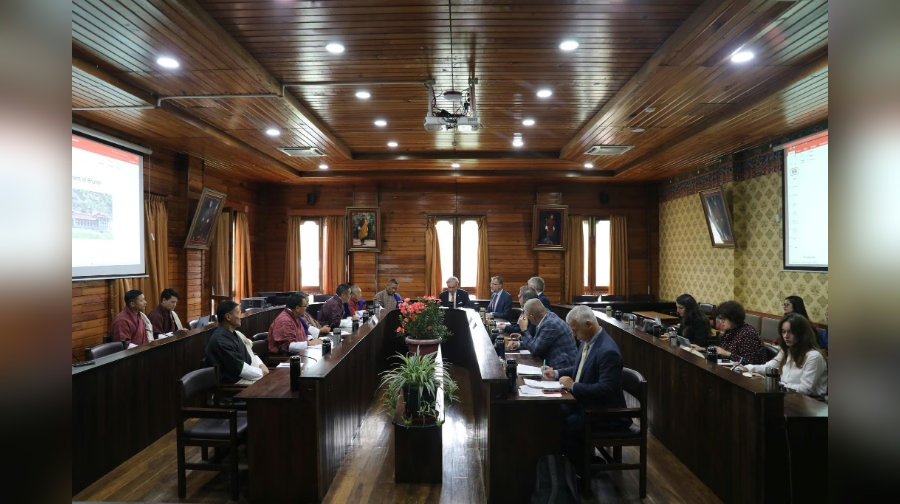
🌍 A Historic Dialogue on Global Challenges
In a significant diplomatic engagement, Bhutan and the European Parliament convened for their ninth Inter-Parliamentary Meeting, marking a pivotal moment in South Asian-European relations. This high-level gathering brought together Bhutanese legislators and a specialized five-member delegation from Brussels to tackle some of the world's most pressing challenges: climate resilience, renewable energy expansion, and sustainable economic development.
The timing of this dialogue couldn't be more crucial. As nations worldwide grapple with escalating climate impacts and energy security concerns, the convergence of these two legislative bodies signals a renewed commitment to collaborative problem-solving on a global stage.
🔥 Climate Resilience: Bhutan's Urgent Priority
Climate change emerged as the central concern throughout the parliamentary discussions, reflecting Bhutan's frontline vulnerability to environmental shifts. The Himalayan kingdom, nestled between two climate giants, faces increasingly severe weather patterns, glacial melt, and ecosystem disruption that threaten its agricultural foundation and hydroelectric infrastructure.
Bhutanese parliamentarians articulated a compelling case for adaptation finance mechanisms that extend beyond traditional development aid. They emphasized that climate resilience requires more than policy rhetoric—it demands tangible financial commitments and technical expertise to build infrastructure capable of withstanding environmental extremes.
Key climate concerns raised included:
- Glacial retreat and its impact on water security
- Increased frequency of extreme weather events
- Biodiversity loss in critical ecosystems
- Agricultural vulnerability and food security threats
- Infrastructure adaptation requirements
The discussions underscored a fundamental reality: developing nations like Bhutan cannot shoulder climate adaptation costs alone. International partnerships and equitable financing mechanisms are essential for building the resilience infrastructure necessary to protect vulnerable populations.
⚡ Renewable Energy: Powering Sustainable Development
Beyond climate adaptation, the parliamentary meeting focused extensively on renewable energy cooperation and Bhutan's remarkable position as a clean energy exporter. Despite its modest population of approximately 750,000 people, Bhutan generates substantial hydroelectric power, positioning itself as a potential renewable energy hub for South Asia.
The European Parliament delegation highlighted the EU's strategic interest in supporting Bhutan's transition toward a low-carbon economy. This commitment manifests through the 2021–2027 Multiannual Indicative Programme, which channels substantial grant funding and technical assistance to accelerate sustainable development initiatives.
EU support focuses on:
- Grid modernization and energy storage solutions
- Renewable energy infrastructure expansion
- Water resource management optimization
- Technology transfer for clean energy production
- Capacity building for energy sector professionals
Serban Dimitrie Sturdza, Chair of the Delegation for Relations with the Countries of South Asia, emphasized the tangible nature of European support: "The European Union is supporting some beautiful projects here in the Kingdom of Bhutan." This statement reflects the EU's commitment to translating diplomatic rhetoric into concrete developmental outcomes.
🏛️ Democratic Governance and Parliamentary Cooperation
Beyond environmental and energy concerns, Bhutanese parliamentarians presented comprehensive briefings on democratic governance structures, parliamentary procedures, and institutional development. These presentations served a dual purpose: showcasing Bhutan's democratic achievements while identifying areas where European parliamentary experience could inform local governance improvements.
The exchange of best practices in parliamentary operations, legislative drafting, and constituent engagement strengthened institutional ties between the two legislative bodies. Such knowledge-sharing mechanisms prove invaluable for emerging democracies seeking to refine governance frameworks.
💰 Bridging the Development Finance Gap
A particularly candid moment emerged during discussions about investment mechanisms and development financing. Sturdza clarified an important distinction: "We, as members of the European Parliament, cannot invest in Bhutan. Only private entities can invest, but I will say that the financial support of the European Union to different projects here in Bhutan seems to be really appreciated by the Bhutanese."
This statement highlights a critical reality in international development. While governmental institutions cannot directly invest, they can facilitate frameworks that attract private capital and provide public financing for essential infrastructure. The EU's grant-based approach through its Indicative Programme circumvents this limitation, enabling support for projects that might not attract commercial investment due to their social or environmental focus.
🎓 Digital Transformation and Skills Development
Parliamentarians identified digital transformation as a crucial lever for Bhutan's future development trajectory. As global economies accelerate their digital transitions, nations like Bhutan risk falling behind without deliberate investment in technology infrastructure and human capital development.
The discussions encompassed:
- Digital literacy and skills training programs
- E-governance infrastructure development
- Cybersecurity frameworks and data protection
- Broadband expansion to rural communities
- Technology entrepreneurship support systems
These initiatives directly support Bhutan's ambition to graduate from Least Developed Country status while maintaining its distinctive development philosophy centered on Gross National Happiness rather than purely economic metrics.
🌱 Sustainable Development and Environmental Stewardship
Water resource management emerged as a particularly significant discussion point, reflecting both Bhutan's hydroelectric dependence and regional water security concerns. The Himalayan region's freshwater systems support hundreds of millions of people across South Asia, making cooperative management approaches essential for regional stability.
EU-Bhutan cooperation in water management extends beyond national borders, recognizing that river systems transcend political boundaries. This transnational approach to environmental stewardship represents sophisticated diplomatic engagement addressing complex ecological realities.
📊 The Broader Context: Least Developed Country Graduation
Bhutan's anticipated graduation from Least Developed Country status represents a significant milestone in its development journey. The EU's 2021–2027 support programme explicitly targets this transition, ensuring that economic advancement doesn't compromise social cohesion or environmental sustainability.
This support encompasses:
- Economic self-reliance initiatives
- Social safety net strengthening
- Environmental protection measures
- Institutional capacity building
- Private sector development support
🤝 Inter-Parliamentary Cooperation: Learning Across Borders
The ninth Inter-Parliamentary Meeting reaffirmed the fundamental value of legislative-to-legislative dialogue in addressing global challenges. Rather than relying solely on executive-level diplomacy, parliamentary engagement enables direct lawmaker-to-lawmaker conversations that often prove more pragmatic and solution-oriented.
This cooperative framework allows Bhutanese legislators to access European parliamentary expertise while providing EU members with insights into South Asian development challenges and innovative governance approaches. The mutual learning dynamic strengthens both institutional relationships and individual parliamentarian networks.
🔮 Looking Forward: Strengthened Partnerships
As climate urgency intensifies and energy transitions accelerate globally, the Bhutan-EU parliamentary partnership assumes growing significance. The kingdom's commitment to carbon neutrality, coupled with European climate leadership, creates natural synergies for collaborative action on mitigation and adaptation strategies.
Future cooperation will likely deepen in emerging areas including green finance mechanisms, climate technology transfer, and regional energy market development. The Inter-Parliamentary Meeting framework provides an essential institutional mechanism for translating these aspirations into concrete policy outcomes.
The dialogue between Bhutan and the European Parliament demonstrates that addressing humanity's greatest challenges requires sustained, multifaceted engagement across governmental institutions, development partners, and civil society. Through continued cooperation, these legislative bodies can help chart a course toward sustainable, equitable development that protects both people and planet.
You May Also Like
Politics
Bhutan Launches Four Voter Participation Initiatives for LG Elections
September 16, 2026
Politics
Women in Politics: Breaking Through Barriers Before Election Day
September 15, 2026
Politics
Women Leaders Training: Preparing for 2027 Local Elections
August 31, 2026
Politics
Speaker Election: Constitutional Duty Over Party Loyalty
August 29, 2026