Category:
PoliticsBhutan Launches Four Voter Participation Initiatives for LG Elections
Strengthening Democracy Through Strategic Electoral Reforms 🗳️
Bhutan is taking decisive action to revitalize citizen engagement in its democratic processes. As the nation prepares for the second phase of the fourth Local Government Elections, authorities have unveiled a comprehensive strategy aimed at addressing critical gaps identified in recent electoral participation. The initiatives represent a turning point in how the country approaches voter engagement and electoral administration.
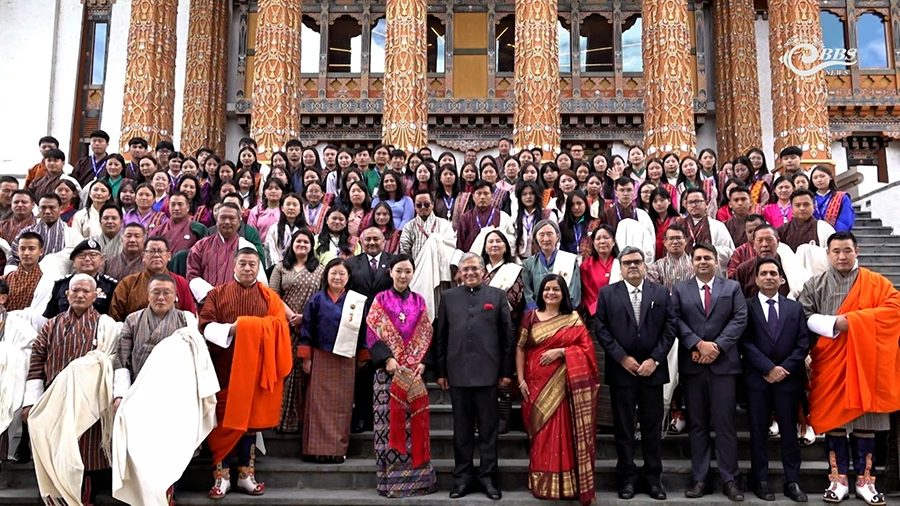
The Election Commission of Bhutan marked National Voters' Day with the unveiling of these groundbreaking measures, signaling a renewed commitment to inclusive democratic participation. With Her Royal Highness Princess Sonam Dechan Wangchuck gracing the celebration in Paro, the occasion underscored the significance of strengthening Bhutan's electoral framework at this crucial juncture.
The Participation Crisis: Understanding the Challenge 📊
Recent electoral data paints a sobering picture of voter engagement trends in Bhutan. The first phase of the fourth Local Government Elections revealed troubling participation rates that demand immediate attention and strategic intervention.
Key participation statistics:
- Only 33.92% of registered voters participated in the recent Thromde elections
- Young voters aged 18-24 represented just 8.17% of total votes cast (280 votes out of 3,518)
- Significant demographic disparities in electoral participation across different age groups
- Particularly low engagement among first-time and younger voters
These figures represent more than mere numbers—they signal a disconnect between young citizens and the democratic process. When nearly two-thirds of eligible voters abstain from elections, questions arise about the accessibility, relevance, and perceived value of participation in local governance.
The Election Commission's comprehensive analysis identified that youth disengagement extends beyond simple apathy. Structural barriers, insufficient voter education, and limited accessibility mechanisms all contribute to the participation gap. This multifaceted challenge requires equally comprehensive solutions.
Four Strategic Initiatives Transforming Electoral Administration 🎯
1. Strategic Roadmap for Electoral Excellence
Developed in collaboration with the Office of Cabinet Affairs and Strategic Coordination, this roadmap provides a long-term vision for electoral system improvements. Rather than implementing ad-hoc reforms, Bhutan is adopting a systematic approach to address institutional and procedural challenges.
The roadmap identifies critical areas requiring attention: voter education frameworks, accessibility standards, election official capacity building, and data management systems. By establishing clear benchmarks and timelines, the government demonstrates its commitment to sustained electoral improvement rather than temporary fixes.
2. Election and Results Administration System (ERAS)
This technological innovation represents a significant modernization of Bhutan's electoral infrastructure. Piloted during the recent Thromde elections, the system demonstrated the transformative potential of reliable technology in electoral administration.
Key features of ERAS include:
- Streamlined data collection and verification processes
- Real-time communication between electoral stakeholders
- Enhanced accuracy in vote tabulation and result reporting
- Improved coordination among election officials and observers
- Reduced administrative errors and inconsistencies
The pilot phase revealed critical insights about institutional coordination and personnel training requirements. These lessons will inform refinements before the system's full deployment in the second phase of local government elections. Technology alone cannot ensure electoral success—it must be paired with well-trained personnel and clear communication protocols.
3. Comprehensive Thromde Election Report 2026
Transparency and evidence-based decision-making form the foundation of this initiative. The detailed election report provides invaluable insights into what worked, what failed, and where improvements are most urgently needed.
The report's findings highlight several critical areas:
- Voter accessibility challenges that prevented participation among certain demographics
- Data inconsistencies that undermined confidence in electoral processes
- Training gaps among election officials and returning officers
- Communication deficiencies that left voters uninformed about procedures and requirements
- Youth disengagement patterns requiring targeted intervention strategies
By publishing these findings, the Election Commission demonstrates institutional accountability and invites public scrutiny of electoral processes. This transparency builds confidence in democratic institutions and provides a roadmap for continuous improvement.
4. E-Learning Course for Electoral Officials 💻
Developed in partnership with the Anti-Corruption Commission, this training program represents a significant investment in human capital within the electoral system. Election officials, returning officers, and national observers require comprehensive, standardized training to ensure consistent, fair, and efficient electoral administration.
The e-learning platform offers several advantages:
- Accessibility: Training available to officials across all regions regardless of geographic location
- Consistency: Standardized curriculum ensures uniform understanding of procedures and protocols
- Flexibility: Officials can complete training at their own pace while maintaining their regular duties
- Accountability: Digital records track completion and comprehension
- Continuous learning: Platform can be updated as procedures evolve
This investment in capacity building addresses a fundamental challenge: elections are only as strong as the people administering them. Well-trained officials reduce errors, enhance public confidence, and create more efficient electoral processes.
Addressing the Youth Engagement Gap 🌟
Young voters represent Bhutan's democratic future, yet they remain significantly underrepresented in electoral participation. Understanding their perspectives reveals important insights about barriers to engagement.
First-time voters often view participation through a lens of civic responsibility and personal investment in national direction. As one Paro-based student expressed, voting represents "the opportunity to contribute to the Bhutan I hope to see for generations to come." This perspective reflects a sophisticated understanding of democratic participation as a means of shaping the nation's future.
Yet young voters also harbor expectations about political accountability and responsiveness. They seek honest, committed leaders who prioritize citizen voices and create economic opportunities. When young people perceive that their concerns go unheard or that politicians fail to deliver on promises, disengagement follows naturally.
The challenge, therefore, extends beyond simply encouraging youth voting. Political leaders must demonstrate genuine responsiveness to young voter concerns about employment, economic opportunity, and meaningful representation. Electoral participation becomes meaningful when citizens believe their votes can effect real change.
Breaking Down Barriers to Participation 🔓
The initiatives launched address multiple layers of participation barriers:
Informational barriers are tackled through enhanced voter education programs and the strategic roadmap's emphasis on communication. When citizens understand electoral procedures, registration requirements, and voting locations, participation becomes more feasible.
Accessibility barriers receive attention through system improvements identified in the Thromde report. Geographic distance, physical accessibility, and scheduling conflicts have historically prevented participation. The ERAS system and accompanying infrastructure improvements aim to reduce these friction points.
Institutional barriers are addressed through official training and capacity building. When election officials understand procedures thoroughly and communicate clearly with voters, the entire system functions more smoothly.
Psychological barriers related to perceived relevance and efficacy require political leaders' engagement. Young voters must see themselves reflected in political processes and believe their participation matters.
Looking Ahead: The Second Phase Challenge 🚀
The second phase of the fourth Local Government Elections scheduled for early next year represents the true test of these initiatives. Implementation on a larger scale will reveal whether the reforms can translate theory into practice and whether participation rates improve measurably.
Success will require sustained commitment across multiple stakeholders: election officials must apply their training consistently, political leaders must engage meaningfully with voters, media must provide balanced electoral information, and citizens must recognize voting as a fundamental responsibility.
The initiatives launched represent Bhutan's recognition that electoral participation cannot be taken for granted in any democracy. By addressing systemic challenges, investing in capacity building, and demonstrating institutional accountability, the nation is making a serious commitment to strengthening democratic participation.
Key Takeaways 💡
Bhutan's comprehensive approach to boosting voter participation demonstrates that electoral challenges require multifaceted solutions. Technology, training, transparency, and strategic planning must work in concert to create an electoral system that serves all citizens effectively.
The real measure of success will be whether these initiatives transform electoral participation from a formal civic duty into something citizens enthusiastically embrace. When young voters see themselves represented in political processes, when officials administer elections fairly and efficiently, and when leaders respond to constituent concerns, democratic participation becomes self-reinforcing.
As the second phase of local government elections approaches, all eyes will be on whether Bhutan's strategic initiatives can reverse declining participation trends and create a more vibrant, inclusive democratic culture. The groundwork has been laid—now comes the crucial work of implementation and sustained commitment to electoral excellence.
You May Also Like
Politics
Women in Politics: Breaking Through Barriers Before Election Day
September 15, 2026
Politics
Women Leaders Training: Preparing for 2027 Local Elections
August 31, 2026
Politics
Speaker Election: Constitutional Duty Over Party Loyalty
August 29, 2026
Politics
Noise in the Quietest Democracy: Bhutan's Political Crisis
August 29, 2026