Category:
PoliticsMines and Minerals Bill: Deferred, Not Dead
A Legislative Ghost Returns to Haunt Bhutanese Parliament 👻⚖️
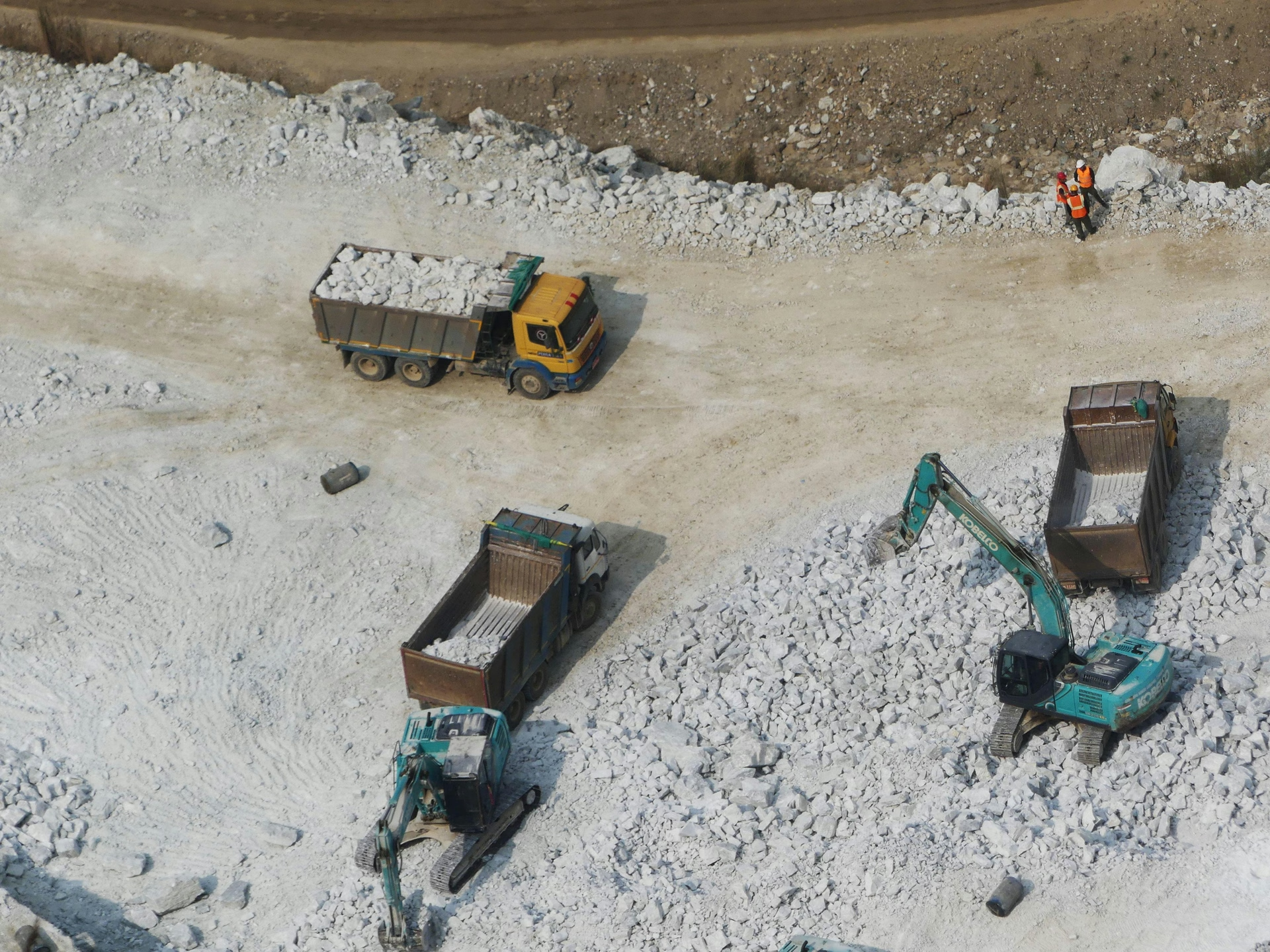
After more than five years of conspicuous silence, Bhutan's contentious Mines and Minerals Management Bill is poised to resurface during the upcoming winter parliamentary session. However, this resurrection comes laden with unresolved constitutional questions and lingering skepticism about whether the original 2020 deferment was a genuine postponement or a permanent legislative burial disguised as procedural maneuver.
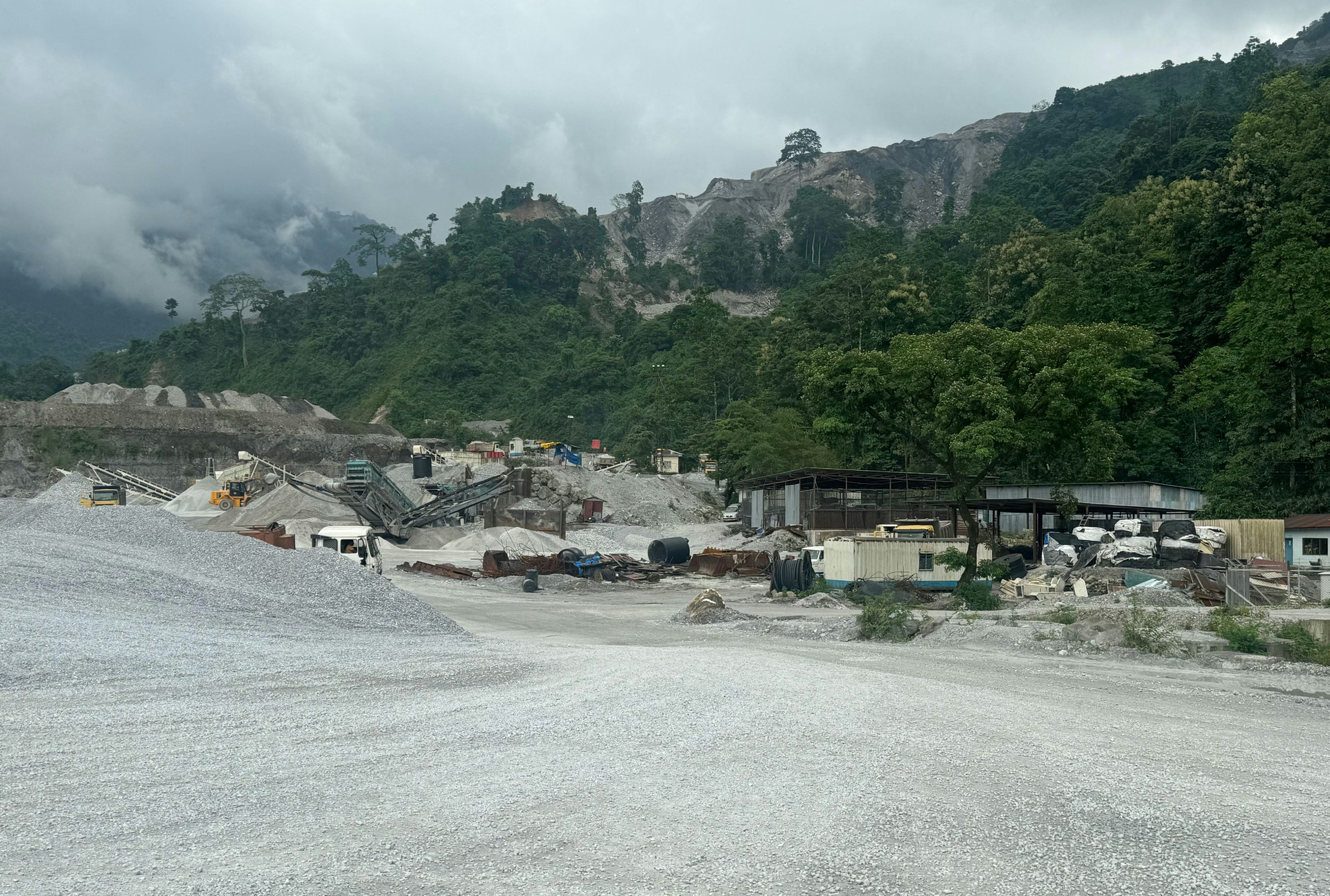
The reappearance of this legislation marks a critical juncture for Bhutan's resource management framework. The Department of Geology and Mines has submitted a substantially revised draft—the Mines and Minerals Management Bill of Bhutan 2026—to Cabinet, signaling renewed governmental commitment to modernizing mineral sector governance after nearly three decades of operating under outdated regulations.
The Constitutional Conundrum: Deferment vs. Constitutional Authority 🏛️
At the heart of this legislative saga lies a fundamental constitutional puzzle that remains conspicuously unresolved. When Parliament deferred the Bill in June 2021—following reports that six Joint Committee meetings had failed to produce consensus—it invoked Section 59(A) of the Legislative Rules of Procedure, a parliamentary procedural mechanism.
Yet this procedural maneuver appears to conflict directly with Article 13(8) of Bhutan's Constitution, which explicitly mandates that when the two Houses cannot reach agreement on amendments, the Bill must be submitted to the Druk Gyalpo, who will command a joint sitting where deliberation and voting are mandatory. The Constitution appears to recognize only two outcomes: passage or rejection through voting. Deferment finds no explicit constitutional accommodation.
This constitutional tension raises uncomfortable questions:
- Was the deferment constitutionally authorized? Neither the National Assembly nor government officials have provided clear constitutional justification for invoking a procedural rule to override constitutional provisions.
- Did Parliament exceed its authority? Constitutional scholars and observers at the time noted that Article 13(8) contains no deferment provision—only voting requirements.
- What precedent does this establish? If parliamentary procedure can supersede constitutional requirements, what does this mean for future legislative deadlocks?
When pressed on these constitutional questions, government institutions offered responses that sidestepped the core issue. The Department of Geology and Mines characterized the deferment as "an internal parliamentary process," while the Prime Minister's Office framed it as a judgment call by the previous Parliament—neither directly addressing the constitutional authority question.
Why the Original Bill Failed: Strategic Minerals and Wealth Distribution 💎
The 2020 Bill's inability to secure consensus revealed deeper ideological and practical divisions within Parliament regarding how Bhutan should manage its mineral wealth. The contentious provisions centered on strategic minerals—resources deemed critical for national development and economic security.
These disagreements weren't merely technical legislative quibbles. They reflected fundamental questions about:
- State control versus private investment – How much mineral extraction should remain under direct state management versus private sector participation?
- Wealth concentration risks – Would liberalized mining regulations concentrate mineral wealth among a few powerful entities, or distribute benefits equitably across the nation?
- Environmental trade-offs – Could enhanced mining development coexist with Bhutan's constitutional commitment to maintaining 60% forest coverage and environmental stewardship?
- Foreign investment parameters – What safeguards should govern international involvement in Bhutan's mineral sector?
The Joint Committee's inability to forge consensus on these matters suggested that deferment might represent a permanent escape hatch rather than a genuine pause for reflection.
The Five-Year Silence: Inaction or Strategic Recalibration? ⏳
Critics of the original deferment have long questioned whether the five-year hiatus represented legitimate legislative development time or calculated avoidance. Their skepticism carries weight—under parliamentary convention, deferred bills can theoretically be reintroduced as Private Member's Bills or Government Bills after six months. The fact that five years elapsed without reintroduction fueled suspicions that the deferment functioned as "permanent burial without a vote."
However, the Department of Geology and Mines offers a contrasting narrative. Officials characterize the intervening period not as legislative paralysis but as deliberate strategic refinement. According to this account:
- The ministry pursued an interim regulatory route, incorporating coherent provisions from the 2020 draft into updated regulations and policies
- The Mineral Exploration Guidelines 2023 and Mines and Minerals Management Regulations of 2022 provided clearer sector governance during the legislative vacuum
- Extensive stakeholder consultations informed the 2026 Bill's development
- Drafting a primary law of this complexity legitimately requires substantial time investment
This framing presents the silence not as evasion but as "focused legislative and regulatory strengthening." Whether this characterization satisfies skeptics remains uncertain.
The 2026 Bill: What's Changed? 🔄
The revised Mines and Minerals Management Bill of Bhutan 2026 represents the government's attempt to resolve the original deadlock through substantive revisions. Key features of the new draft include:
Enhanced Policy Alignment
- Coherence with the Mineral Development Policy 2017
- Integration of contemporary mining industry standards
- Greater emphasis on strategic mineral development and investment security
Revised Strategic Minerals Provisions
- The original Bill's most contentious elements have undergone substantial reworking
- New frameworks for managing mineral wealth concentration
- Clarified state authority over critical mineral resources
Expanded Sustainability Focus
- Heightened environmental stewardship requirements
- Value addition emphasis (processing minerals domestically rather than exporting raw materials)
- Equitable socio-economic benefit-sharing mechanisms
The Constitutional Foundation: State Ownership and Public Interest 🏛️💰
Underlying all these legislative negotiations stands Article 1 of Bhutan's Constitution, which establishes that "the rights over mineral resources, rivers, lakes and forests shall vest in the State and are the properties of the State, which shall be regulated by law."
This constitutional provision creates both opportunity and constraint. It affirms state sovereignty over mineral resources—preventing privatization or foreign ownership of mineral rights themselves—while simultaneously requiring that regulation serve the public interest. The tension between enabling development and protecting collective wealth has animated the entire legislative debate.
Bhutan's mineral sector isn't merely an economic matter; it represents a fundamental question about how the nation stewards its natural heritage for current and future generations. The minerals under Bhutanese soil belong to all citizens, and legislative frameworks must reflect this collective ownership reality.
Replacing a Relic: Why the 1995 Act No Longer Suffices 📜
The existing Mines and Minerals Management Act of 1995 has governed Bhutan's mineral sector for nearly three decades. By contemporary standards, this legislation appears increasingly antiquated:
- Technological obsolescence – Modern mining employs extraction, processing, and environmental management technologies unknown in 1995
- Economic evolution – Bhutan's economy and development priorities have transformed dramatically over three decades
- Environmental standards – International best practices and Bhutan's own sustainability commitments have advanced substantially
- Investment frameworks – Global mining investment patterns and risk management approaches have evolved considerably
- Value addition requirements – The 1995 Act predates the emphasis on domestic processing and mineral value enhancement
Simply updating the 1995 Act piecemeal would prove insufficient. A comprehensive new framework addressing contemporary mineral management realities has become essential.
What Happens Next: Winter Session Prospects 🔮
The 2026 Bill's anticipated presentation during the winter parliamentary session represents a critical test of whether the government can finally resolve the mineral wealth management question. Success requires:
- Genuine consensus-building – Stakeholder consultations must produce genuine agreement, not merely appearance of consensus
- Constitutional clarity – Parliament should explicitly address the constitutional basis for any deferment or procedural decisions
- Transparent debate – Public understanding of the Bill's provisions and implications should inform legislative deliberations
- Principled compromise – Disagreements should be resolved through principled negotiation, not procedural manipulation
The Broader Implications: Bhutan's Development Trajectory 🌏
This legislative struggle extends beyond mineral management technicalities. It reflects fundamental questions about Bhutan's development model:
- Economic diversification – Can mineral development contribute to economic growth without compromising environmental sustainability?
- Wealth distribution – How should natural resource revenues be distributed to benefit all Bhutanese citizens?
- Democratic governance – Can parliamentary institutions resolve complex policy questions through genuine deliberation and consensus?
- Constitutional integrity – Will parliamentary procedures respect constitutional requirements and limitations?
Conclusion: Deferred but Not Forgotten 🎯
The Mines and Minerals Management Bill's return from five-year legislative limbo signals that Bhutan's government recognizes the necessity of modernizing mineral sector governance. The 2026 draft represents a genuine attempt to address the original Bill's contentious provisions and incorporate stakeholder feedback.
However, the unresolved constitutional questions surrounding the original 2020 deferment remain troubling. Parliament and government institutions have not adequately explained the constitutional basis for deferring a bill when the Constitution appears to mandate voting outcomes. This constitutional ambiguity, if left unaddressed, establishes a concerning precedent for future legislative deadlocks.
As the winter session approaches, Bhutan's lawmakers face an opportunity not merely to pass legislation but to clarify constitutional governance principles. The Bill's ultimate success will be measured not only by whether it passes, but by whether it emerges from a process that respects constitutional requirements, incorporates genuine stakeholder consensus, and demonstrates that parliamentary institutions can resolve complex policy questions through principled deliberation rather than procedural evasion.
The minerals beneath Bhutanese soil belong to all citizens. How Parliament chooses to regulate their management will reveal much about the nation's commitment to both democratic governance and equitable resource stewardship. 🇧🇹✨
You May Also Like
Politics
Bhutan and EU Parliamentarians Unite on Climate Action
September 26, 2026
Politics
Bhutan Launches Four Voter Participation Initiatives for LG Elections
September 16, 2026

Politics
Women in Politics: Breaking Through Barriers Before Election Day
September 15, 2026

Politics
Women Leaders Training: Preparing for 2027 Local Elections
August 31, 2026