Category:
CultureZung: The Sacred Heart of the 108 Stupas
Understanding Zung: The Living Embodiment of Buddha's Wisdom 🙏
In the heart of Bhutan's spiritual tradition lies a concept that transcends the physical realm—zung, or wisdom consciousness (yeshe sempa). This sacred principle represents far more than religious symbolism; it embodies the enlightened body, speech, and mind of the Buddha himself. When properly consecrated and placed within a stupa, these spiritual essences transform ordinary materials into vessels of infinite spiritual power, equivalent to encountering the living Buddha.
The metaphor of a sesame seed perfectly captures this mystery. Within each tiny seed lies oil—unseen yet undeniably present, waiting to be extracted through deliberate effort. Similarly, zungs remain dormant until awakened through consecration rituals and the devotion of the faithful, at which point their sacred essence radiates forth to bestow boundless blessings upon all sentient beings.
The Zorig Chusum: Bhutan's Thirteen Traditional Arts 🎨
The creation of zungs represents a cornerstone of the Zorig Chusum, Bhutan's renowned Thirteen Traditional Arts. This comprehensive artistic framework was systematized during the seventeenth century by Zhabdrung Ngawang Namgyal (1594-1651), the founding father of the Bhutanese nation. His vision was further refined by master artisans like Tsang Khenchen Palden Jamtsho (1610-1684), who traveled to Bhutan at the Zhabdrung's invitation to establish these enduring traditions.
The thirteen arts encompassing this sacred craft tradition include:
- Lhazo (painting)
- Shingzo (carpentry)
- Parzo (carving)
- Jinzo (sculpture)
- Lugzo (bronze casting)
- Garzo (blacksmithing)
- Troezo (gold and silversmithing)
- Tsharzo (cane and bamboo work)
- Thagzo (weaving)
- Tshemzo (tailoring and embroidery)
- Shagzo (woodturning)
- Dey-zo (paper-making)
- Dozo (masonry)
Successive Druk Desis, Je Khenpos, and the Kings of Bhutan maintained these traditions through the centuries. His Majesty the Third King Jigme Dorji Wangchuck established the first formal Zorig Chusum institute in Thimphu in 1971, while His Majesty the Fourth King Jigme Singye Wangchuck opened a second institute at Trashiyangtse in 1997, ensuring these sacred arts would flourish for generations to come.
The Historical Significance of Stupas in Buddhist Tradition 📚
The stupa tradition reaches back to the time of Lord Buddha himself, representing one of Buddhism's most enduring architectural expressions. The earliest recorded stupa was constructed in Lumbini during the 5th century BCE by King Suddhodana to commemorate his son's birth. Others soon followed—at Vaishali, marking the Sangha's reconciliation, and at Kushinagar, honoring Buddha's parinirvana.
Following Buddha's cremation, his relics were enshrined and later redistributed under the visionary rule of Emperor Ashoka. This remarkable ruler commissioned the construction of 84,000 stupas throughout the Mauryan Empire, fundamentally transforming the spiritual landscape of Asia. New stupas erected during the 3rd century BCE at significant pilgrimage sites include Bodhgaya (enlightenment), Varanasi (first turning of the Wheel of Dharma), and Sankisa (Buddha's return from Tushita heaven).
The Sacred Contents: What Makes a Zung Complete ✨
The receptacles placed within a stupa represent a sophisticated spiritual technology refined over millennia. These sacred contents encompass:
- Mantras and dharanis (sacred incantations)
- Rolled scriptures and prayers
- Seed syllables and symbolic supports
- Relics of enlightened masters
- Blessed medicines and pills
- Sacred earth from holy pilgrimage sites
- Precious metals and gemstones
- Tsatsas (miniature stupas crafted from medicinal clay)
- Miniature images of Buddhas and Bodhisattvas
- Fragrant woods and incense
These elements form three principal supports representing the Buddha's complete nature. Sacred statues and images embody the Buddha's body, mantras and scriptures represent his speech, while sacred syllables and symbolic supports manifest his mind. This tripartite arrangement ensures that a properly consecrated stupa becomes a complete manifestation of Buddha's enlightened presence in material form.
The Zungshing: The Life-Tree at the Stupa's Heart 🌳
At the center of every stupa installation stands the zungshing, or sogshing—the life-tree that serves as the spiritual axis and vital support system. Carved from carefully selected fragrant woods such as juniper, cypress, or sandalwood, this central vertical element undergoes meticulous preparation before installation.
Master craftsmen inscribe sacred letters, mantras, and dharanis upon the zungshing using vermilion, following specific Buddhist lineage traditions and ritual manuals. The exact wordings depend on several factors: the particular Buddhist school overseeing the project, the ritual manual designated for that specific stupa type, and the precise instructions provided by the presiding lama. This means no two zungshing traditions are identical—each represents a unique spiritual fingerprint reflecting its particular lineage and purpose.
The 108 Stupas Project: A Modern Spiritual Undertaking 🏛️
The construction of 108 stupas represents one of contemporary Bhutan's most ambitious spiritual projects, coordinated by the Zhung Dratshang (the central monastic body) under the guidance of His Eminence Leytshog Lopen Sangay Dorji at Sarpang Dzong. The scale of this endeavor reveals the profound commitment to preserving and advancing Bhutan's spiritual heritage.
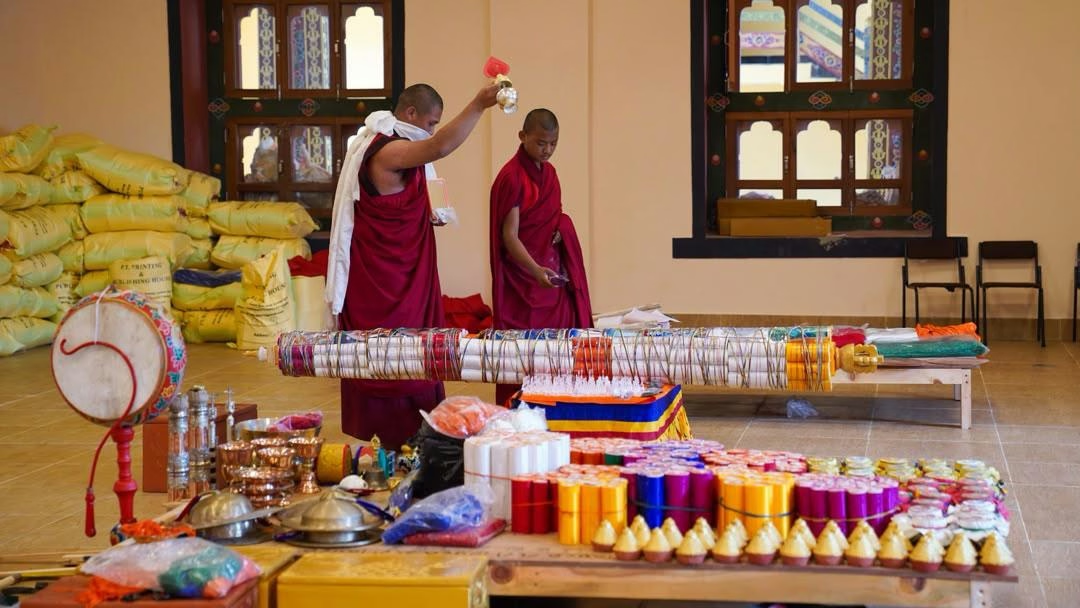
Over 2,400 monks were mobilized for this comprehensive project, each fulfilling specialized roles:
- 20 Zunglops (masters of zung installation) overseeing the sacred placement
- 60 supporting monks assisting with technical aspects
- 1,080 monks (10 each for 108 stupas) preparing zung offerings
- 540 monks performing the Dance of the Sixteen Offering Dakinis (ringa chudru cham)
- 216 monks executing the Fire Cleansing Dance (meycham)
- 500 monks participating in the Consecration Ceremony (rabney)
This mobilization demonstrates how deeply woven spiritual practice remains within Bhutanese society, where thousands of dedicated practitioners unite around a single sacred vision. Their Majesties The King and Queen, accompanied by the royal children, have personally engaged with the monks preparing the yeshe sempa and zungs at Sarpang Dzong, offering prayers and making aspirations for the benefit of all sentient beings.
The Consecration Process: From Matter to Spirit 🔮
The transformation of a stupa from architectural structure to spiritual power source follows a precisely choreographed sequence of rituals. Before construction begins, accomplished spiritual masters perform the Land Seeking and Site Blessing ceremonies (salan and sachog) to clear negative energies and prepare the ground.
The sacred zungs are then positioned in meticulous alignment with the Buddha's subtle body. This vertical arrangement follows a sophisticated spiritual anatomy:
- Foundation level (earth element) represents the base
- Lion throne and lotus establish the stupa as an enlightened throne
- Secret and navel channels ground its vital energy
- Heart channel houses the principal yeshe sempa
- Speech channel carries the Buddha's blessings through mantra
- Body channel radiates physical beauty and grace upward
- Crown represents supreme realization and wisdom
The final and most critical stage involves the Purification and Consecration Ceremony (rabney), presided over by an accomplished vajra master. During this ritual, the yeshe sempa is ceremonially invited from the absolute sphere to dissolve into the receptacle. This mystical moment transforms inert matter into a living embodiment of Buddha's wisdom and compassion—the culmination of months of preparation and spiritual dedication.
Spiritual Significance in Contemporary Bhutan 💫
The 108 stupas project reflects Bhutan's unique positioning as a nation that has deliberately prioritized spiritual development alongside material progress. While many countries struggle to maintain traditional practices amid modernization, Bhutan has integrated its sacred arts into national policy and cultural identity.
The involvement of thousands of monks, the royal family's personal participation, and the coordination of multiple spiritual institutions demonstrate how thoroughly Buddhism permeates Bhutanese governance and society. This isn't merely historical preservation—it represents an active, living tradition evolving to meet contemporary spiritual needs while maintaining unbroken continuity with centuries-old practices.
The zung concept itself embodies this balance. Each zung represents both an ancient spiritual technology and a contemporary expression of faith, crafted using traditional methods yet imbued with modern intention. The 108 stupas will stand as monuments to this philosophy, radiating blessings across Bhutan and beyond for generations to come.
Looking Forward: The Future of Bhutan's Sacred Heritage 🌟
As Bhutan continues navigating the complexities of the twenty-first century, projects like the 108 stupas serve as anchors to spiritual purpose. The involvement of over 2,400 monks in this single project indicates a thriving monastic community committed to preserving and advancing Buddhist practice.
The establishment of Zorig Chusum institutes ensures that the thirteen traditional arts will continue producing skilled artisans capable of creating the intricate zungs and spiritual components these stupas require. This educational infrastructure transforms spiritual practice into sustainable livelihood, allowing young Bhutanese to pursue meaningful careers rooted in their cultural heritage.
The 108 stupas project ultimately represents more than architecture or religious ritual—it embodies Bhutan's answer to a fundamental question facing traditional societies worldwide: how to honor ancestral wisdom while embracing contemporary life. Through the dedication of thousands of practitioners and the guidance of accomplished spiritual masters, Bhutan demonstrates that this integration is not merely possible but profoundly enriching. The sacred heart of these 108 stupas will continue beating with the spiritual vitality of an entire nation committed to enlightenment.
You May Also Like
Culture
108 Stupas in Sacred Harmony: Bhutan's Historic Spiritual Milestone
October 31, 2026
Culture
A Lungten Prophecy: Bhutan's 108 Stupas & Spiritual Vision
October 31, 2026
Culture
The Heart Within the 108 Chortens: Sacred Relics
October 31, 2026
Culture
Project 108 Stupas: Bhutan's Spiritual Vision Unites Nation
October 31, 2026