Category:
TourismZhemgang Bird Festival: Celebrating Biodiversity & Kheng Heritage
A Festival That Brings Life to the Mountains 🌿
When autumn transforms Bhutan's eastern valleys, something extraordinary happens in Zhemgang. The small town of Tingtibi, typically quiet and overlooked by passing travelers, awakens each year to welcome thousands of visitors eager to celebrate one of Asia's most biodiverse regions. This isn't just another cultural gathering—it's a powerful convergence of environmental conservation, indigenous heritage, and community pride that showcases why Bhutan remains a global leader in biodiversity preservation.
The Zhemgang bird festival has evolved into a significant platform for celebrating the district's ecological treasures while honoring the traditions of the Kheng people who have stewarded these lands for generations. With over 2,000 domestic and international visitors converging on this remote corner of Bhutan, the festival demonstrates the growing global interest in experiential tourism that combines nature, culture, and conservation.
The Origins of a Conservation Legacy ✨
The festival's roots run deep in Bhutan's commitment to environmental stewardship. Established in October 2015, the event was created to commemorate the 60th birth anniversary of His Majesty the Fourth Druk Gyalpo, Jigme Singye Wangchuck, whose visionary leadership transformed Bhutan into a conservation powerhouse. Rather than traditional celebrations, the festival was designed as a tribute to the former king's decades-long dedication to protecting Bhutan's natural heritage.
What began as a specialized initiative by the Ugyen Wangchuck Institute for Conservation and Environmental Research and the Department of Forests and Park Services has matured into a nationally recognized event. Today, it's jointly organized by the Department of Tourism and the Zhemgang Dzongkhag Administration, reflecting Bhutan's holistic approach to integrating conservation with sustainable tourism development.
The festival's calendar was strategically repositioned to mid-November to align with His Majesty's birth anniversary on November 11, creating a meaningful synchronization between celebration and remembrance. Even during the challenging COVID-19 pandemic period, the commitment to this event remained strong, with the festival resuming in November 2023 and continuing to grow in scale and impact.
Why Zhemgang? A Biodiversity Hotspot 🦅
Zhemgang's selection as the festival host location wasn't arbitrary—it's grounded in ecological significance. The district boasts an impressive 94.7% forest coverage, making it one of Bhutan's most pristine wilderness areas. More importantly, Zhemgang's strategic location provides access to three of Bhutan's most critical protected areas: Royal Manas National Park, Jigme Singye Wangchuck National Park, and Phrumshingla National Park.
This geographical positioning creates an extraordinary ecological corridor that supports some of the Himalayan region's rarest and most endangered species. The district has documented over 357 bird species, a number that places Zhemgang among the world's most important birdwatching destinations. For ornithologists and casual bird enthusiasts alike, this concentration represents an unparalleled opportunity for species observation and documentation.
Among the avian treasures found here are globally significant species that capture international conservation attention:
- Pallas's Fish Eagle: A majestic raptor that depends on pristine aquatic ecosystems
- Satyr Tragopan: An elusive pheasant species endemic to the eastern Himalayas
- Rufous-necked Hornbill: A striking forest dweller requiring old-growth forest habitats
- White-bellied Heron: Classified as critically endangered, with fewer than 250 individuals remaining worldwide
Beyond birds, Zhemgang's forests serve as crucial habitat for apex predators and primates. The Bengal Tiger prowls these valleys, while the endangered Golden Langur leaps through the canopy—each species an indicator of the region's ecological health and integrity.
The Festival Experience: Culture Meets Conservation 🎭
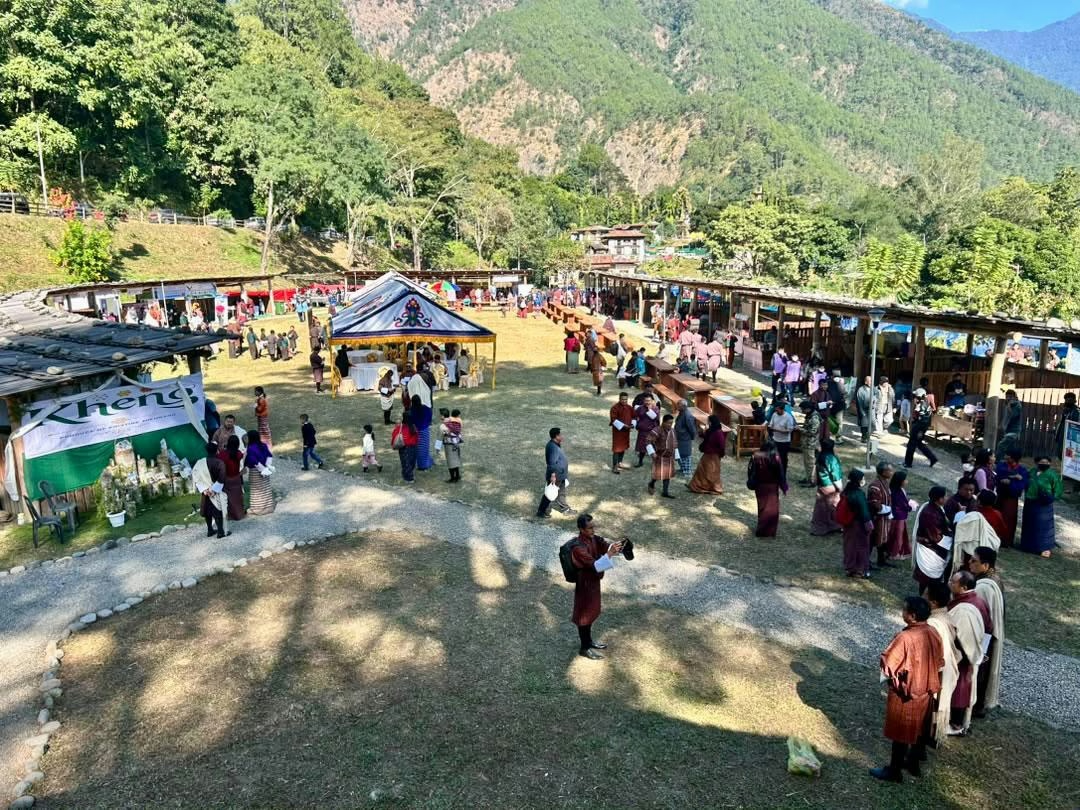
The modern Zhemgang bird festival represents a sophisticated blend of environmental education, cultural celebration, and community engagement. When visitors arrive at the festival grounds, they're immediately immersed in a sensory experience that reflects both the region's natural wealth and cultural identity.
Colourful posters depicting local bird species adorn traditional wooden stalls, while bamboo installations showcase products crafted by Kheng artisans. The atmosphere crackles with energy—recorded bird calls blend with traditional music, while the aroma of local cuisine prepared at festival stalls creates an inviting communal space. This intentional design transforms a conservation event into an accessible, engaging experience for families and serious naturalists alike.
Cultural Performances and Community Pride 🎵
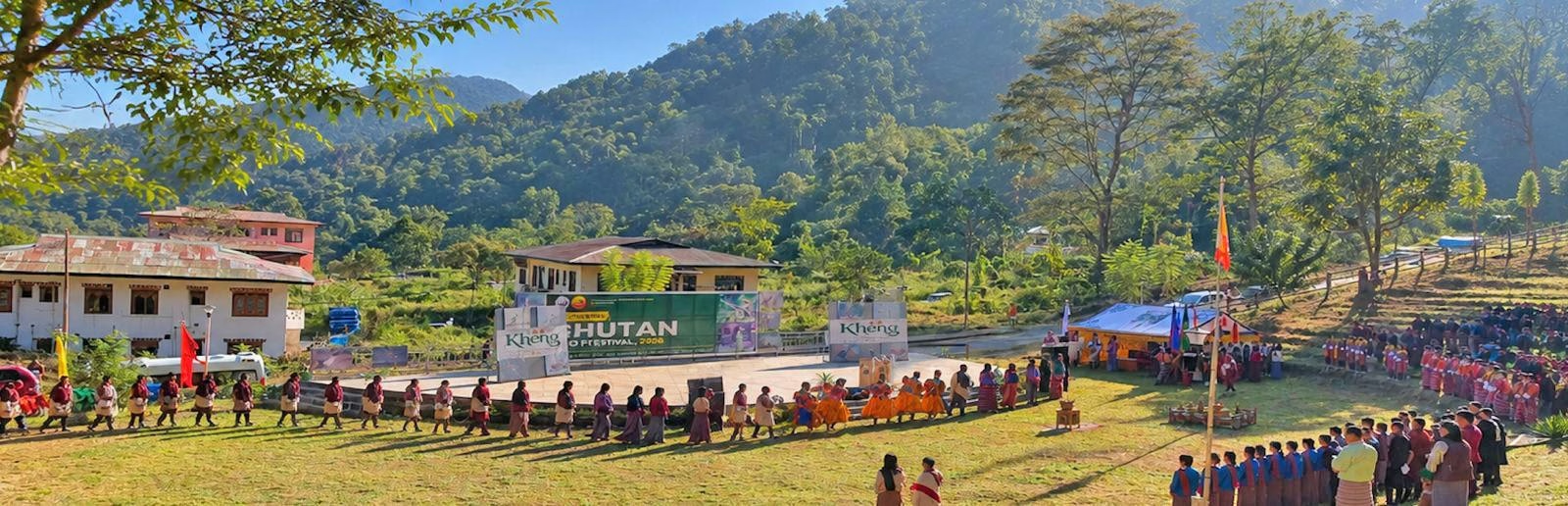
The festival's cultural programming celebrates the distinct heritage of the Kheng people, who have inhabited these mountains for centuries. Opening ceremonies feature performances by local schools and dzongkhag artists, ensuring that younger generations connect with their cultural traditions while building pride in their community's identity.
A particularly significant initiative is the launch of the Kheng Brand logo, which represents efforts to establish Zhemgang's distinct identity in Bhutan's tourism and commerce landscape. This branding initiative extends beyond the festival, creating year-round opportunities for local producers to market goods that reflect the region's unique character and craftsmanship.
Interactive Activities and Competitions 🏃
The festival extends far beyond passive observation. Multiple engagement opportunities allow visitors to participate actively in the celebration:
Birdathon: Unlike conventional marathons, this unique competition challenges participants to identify and record as many bird species as possible within a designated timeframe. The three-day birdathon preceding the main festival (November 9-11 this year) transforms birdwatching into a competitive, data-collection exercise that contributes to ongoing ornithological research.
Additional Activities:
- Bird conferences featuring expert presentations on conservation and species identification
- Art competitions showcasing local and visiting artists' interpretations of Zhemgang's natural beauty
- Tug of war and other community games fostering intergenerational connections
- Guided wildlife safaris led by trained naturalists
- Fly-fishing experiences in pristine mountain streams
- Marathon events connecting fitness enthusiasts with the landscape
Each activity serves a dual purpose: providing entertainment while subtly reinforcing conservation messages and supporting local economic development through tourism.
The Broader Tourism and Conservation Context 🌍
The Zhemgang bird festival operates within Bhutan's larger tourism strategy, which emphasizes "high-value, low-impact" visitation. Rather than pursuing mass tourism, Bhutan deliberately positions itself as a destination for thoughtful travelers seeking authentic cultural and natural experiences. This approach aligns perfectly with the bird festival's philosophy.
Globally, bird tourism has emerged as one of the fastest-growing segments within the nature tourism industry, generating billions in annual revenue while incentivizing habitat conservation. Bhutan's bird festival taps into this trend while maintaining strict environmental standards. The presence of 13 international guests among over 2,000 visitors demonstrates the festival's growing recognition on the global ecotourism circuit.
This international attention carries significant economic implications for Zhemgang. Tourism revenue directly supports local communities, incentivizes forest conservation (as pristine habitats attract more visitors), and creates employment opportunities that reduce pressure on natural resources. When villagers understand that living forests generate more income than cleared land, conservation becomes economically rational rather than merely idealistic.
Administrative Developments and Future Directions 📋
The festival serves as a platform for announcing significant administrative and economic initiatives. During the 2024 festival, the Zhemgang Dzongkhag Administration launched its annual report for the financial year 2025-2026 alongside a quadripartite memorandum of understanding on agricultural value chain financing.
This integration of policy announcements with cultural celebration reflects a sophisticated governance approach. By embedding economic development initiatives within a conservation-focused festival, administrators signal that agricultural advancement and environmental protection are complementary rather than contradictory goals. The agricultural value chain financing initiative specifically aims to strengthen local livelihoods while promoting sustainable farming practices suited to Zhemgang's mountainous terrain.
The Transformation of Tingtibi 🏘️
On ordinary days, Tingtibi embodies the quiet rhythm of rural Bhutan—trucks rumble past, shopkeepers lean in doorways, and few pedestrians traverse the streets. But during festival season, the town undergoes a remarkable transformation. Laughter echoes through streets, recorded bird calls drift from loudspeakers, and the entire community mobilizes to welcome visitors.
This temporary but annual transformation demonstrates the festival's significance beyond its immediate duration. It energizes the local economy, builds community cohesion, and reminds residents of their region's global importance. For young people considering migration to urban centers, the festival provides tangible evidence that their homeland possesses value and opportunity.
Planning Your Zhemgang Bird Festival Experience 🎒
For travelers considering attending future editions of this remarkable event, several factors merit consideration. The festival typically occurs in mid-November, coinciding with Bhutan's optimal weather season when clear skies and moderate temperatures facilitate birdwatching. Early arrival allows time to acclimate to the elevation and explore surrounding protected areas.
Visitors should prepare for variable mountain weather with layered clothing, quality binoculars for serious birdwatchers, and comfortable hiking boots for guided nature walks. The festival's blend of activities accommodates diverse interests—families seeking cultural immersion, ornithologists pursuing species documentation, and conservation-minded travelers wanting to support environmental initiatives.
Looking Forward: Sustainability and Growth 🌱
As the Zhemgang bird festival continues evolving, balancing growth with environmental protection remains paramount. The festival's success—measured by increasing visitor numbers and international participation—creates pressure to expand infrastructure and services. However, Bhutan's commitment to sustainable tourism principles suggests that future expansion will prioritize quality experiences over visitor volume.
The integration of conservation research with festival activities positions Zhemgang as a living laboratory where tourism and science reinforce each other. Birdathon data contributes to long-term species monitoring, visitor education builds global conservation awareness, and festival revenue directly funds habitat protection.
Conclusion: A Model for Conservation Tourism 🌟
The Zhemgang bird festival represents far more than a regional celebration—it embodies a sophisticated model for integrating conservation, cultural preservation, and sustainable economic development. By transforming a quiet mountain town into a gathering place for thousands of nature enthusiasts, the festival demonstrates that environmental protection and economic prosperity need not conflict.
For Bhutan, the festival reinforces the nation's position as a global conservation leader while generating tangible benefits for local communities. For visitors, it offers an unparalleled opportunity to witness one of the Himalayan region's most biodiverse areas while supporting the communities and conservation efforts that protect it. As global interest in ecotourism continues expanding, the Zhemgang bird festival stands as an inspiring example of how to celebrate nature while protecting it for future generations.
You May Also Like
Tourism
Airlines Expand Flights for Project 108: Meeting Historic Demand
November 2, 2026

Tourism
Dorji Dhradhul: Architect of Bhutan's Tourism Philosophy
October 24, 2026
Tourism
Laya Prepares for Royal Highland Festival 2024
October 21, 2026
Tourism
Eastern Dzongkhags Launch Strategic Tourism Action Plans
October 19, 2026