Category:
TourismAirlines Expand Flights for Project 108: Meeting Historic Demand
A Historic Moment Takes Flight ✈️
Bhutan's aviation sector is experiencing unprecedented activity as the nation prepares for one of its most significant cultural events in recent history. Project 108, a transformative national initiative envisioned by His Majesty The King, has prompted the country's airlines to significantly expand their operations to accommodate the surge in international and domestic travel demand.
This expansion represents more than just increased flight schedules—it reflects the broader importance of Project 108 as a defining moment for Bhutanese tourism and national pride. The coordinated efforts of multiple carriers demonstrate how critical infrastructure and strategic planning converge to support major national endeavors.
Understanding Project 108 and Gelephu Mindfulness City 🏛️
Project 108 centers around the development of Gelephu Mindfulness City (GMC), an ambitious urban development initiative that combines modern infrastructure with Bhutanese cultural values. The project's name carries profound spiritual significance, as 108 holds special meaning in Buddhist tradition.
The convergence of international visitors, government officials, and stakeholders required unprecedented coordination among aviation providers. What makes this event particularly challenging is the concentration of passenger demand within a narrow timeframe, requiring airlines to balance capacity, operational efficiency, and affordability.
Drukair's Comprehensive Response to Project 108 Demand 🛫
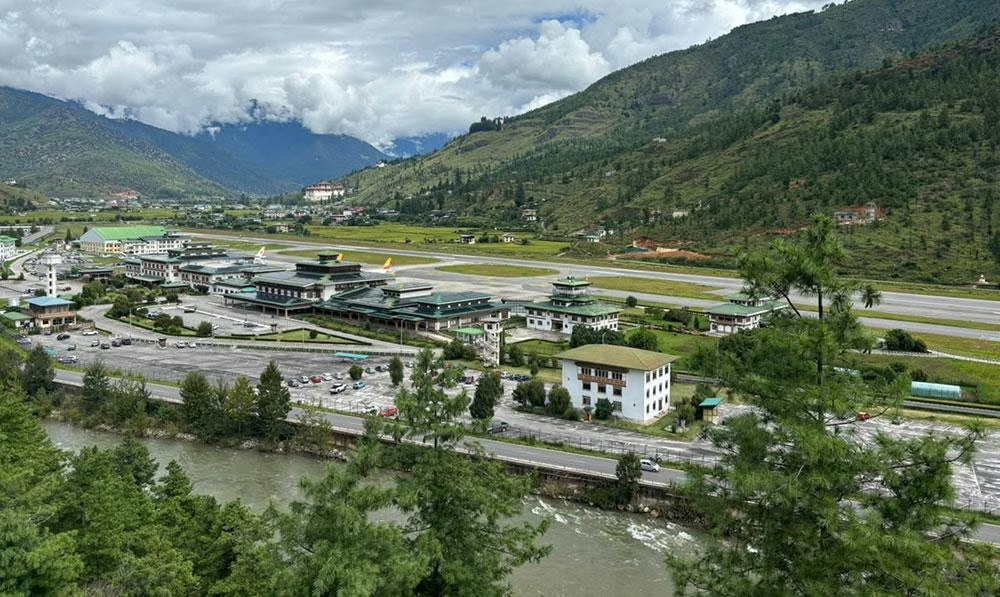
Drukair, Bhutan's national flag carrier, orchestrated an extensive operational expansion to support Project 108. The airline's strategic approach combined international capacity increases with robust domestic connectivity between Paro International Airport and the newly developed Gelephu airfield.
International Flight Expansion
Between October 29 and 31, Drukair operated 18 inbound international flights, including six additional services beyond regular schedules. These flights connected Bhutan to major regional hubs including Bangkok, Delhi, Singapore, Kathmandu, Dhaka, and Kolkata—key cities for international travelers seeking to reach Gelephu.
The airline allocated impressive capacity figures for the event period:
- 1,009 inbound international seats from October 29-31
- 657 outbound international seats from November 3-4
- Total international capacity: 1,666 seats
This represented a substantial increase over typical operations, requiring careful coordination with international aviation partners and ground handling facilities.
Domestic Operations: Connecting Paro and Gelephu
The domestic segment proved equally critical. Drukair scheduled daily flights between Paro and Gelephu throughout the event period, utilizing a specialized aircraft fleet to maximize efficiency. The airline operated 55 domestic flights from October 30 through November 1, transporting event participants and stakeholders.
By November 1, these domestic operations had successfully transported:
- 468 passengers from Paro to Gelephu
- 56 passengers from Gelephu to Paro
The domestic fleet consisted of four fixed-wing aircraft: one ATR and three PC-24s. Notably, two of the PC-24 aircraft were provided by the Adani Group, demonstrating private sector support for this national initiative. This partnership highlighted how strategic collaborations enhance operational capacity during critical events.
Domestic capacity planning reflected careful demand forecasting:
- 524 passenger seats allocated for Paro-to-Gelephu flights
- 480 passenger seats allocated for return journeys
Helicopter Services and Emergency Readiness 🚁
Drukair extended its support beyond fixed-wing operations by deploying helicopter services. Between October 30 and 31, the airline transported 37 passengers via helicopter, demonstrating the importance of diversified aviation solutions.
These helicopter operations included:
- 15 passengers from Punakha to Gelephu (October 30)
- 12 passengers on the Thimphu-Punakha-Gelephu route
- 10 GMC guests from Paro to Gelephu (October 31)
All three helicopters were strategically positioned in Gelephu to serve dual purposes: accommodating additional passenger demand while maintaining emergency response readiness. This positioning reflected the aviation sector's commitment to both tourism facilitation and national safety.
Operational Excellence and Strategic Planning 🎯
Drukair's preparation extended far beyond scheduling adjustments. The airline implemented comprehensive operational measures to ensure seamless service delivery:
Pre-Event Preparation:
- Complete aircraft maintenance protocols completed ahead of the event
- Leave embargo implemented for critical operational personnel to guarantee adequate staffing
- Gelephu station reinforced with additional personnel and specialized equipment
- Close coordination with Transport and Mobility Group, GMC, and aviation authorities
Pricing Strategy: In recognition of Project 108's national significance, Drukair charged standard passenger fares rather than premium charter rates. This decision kept travel affordable for participants while supporting the broader mission of ensuring widespread access to this historic event.
Total Capacity Deployment: Across all operations, Drukair allocated 2,670 total seats for Project 108, representing a significant operational commitment from the national carrier.
Bhutan Airlines: The Alternative Carrier's Strategic Role ✨
Bhutan Airlines, operating as the country's alternative national carrier, adopted a responsive and flexible approach to Project 108 demand. Rather than announcing massive capacity increases upfront, the airline implemented a dynamic scheduling strategy based on real-time booking data.
Demand-Responsive Operations
Bhutan Airlines increased flight frequencies ahead of Project 108 while continuously monitoring bookings to optimize capacity allocation. This approach allowed the airline to add flights where demand materialized while maintaining operational efficiency.
The airline's leadership emphasized the importance of maintaining connectivity during major events, even when individual flights might not achieve optimal load factors. This perspective reflects a broader understanding of aviation's role in supporting national priorities.
Post-Event Outbound Capacity
Recognizing that visitor departures would concentrate after the event, Bhutan Airlines strategically increased frequencies from November 2 through November 5. Early booking data indicated this additional capacity was performing well, suggesting accurate demand forecasting.
Special Services and Flexibility Options
Bhutan Airlines introduced specialized services to enhance accessibility:
- Special Hong Kong-to-Paro service on November 1 (a non-standard routing)
- Encouragement for early bookings, as popular dates and times were filling rapidly
- Advice for travelers to remain flexible with dates and routes to secure seats
Helicopter Operations and Emergency Support 🛩️
Beyond fixed-wing carriers, helicopter operators played a crucial supporting role. Heli Bhutan Private Limited coordinated extensively with the Project 108 Task Force, dedicating resources to passenger transport and emergency preparedness.
The company faced operational challenges, including an unforeseen technical issue on October 31 that required a full day of troubleshooting. Despite this setback, the aircraft returned to full operational status, enabling continued support for project activities.
Heli Bhutan's commitment extended beyond tourism transport to encompassing emergency response capabilities—a critical function during large-scale events with concentrated populations.
The Broader Context: Aviation's Role in Bhutanese Tourism 🌍
Project 108's aviation requirements illuminated several important trends in Bhutanese tourism and national development:
Tourism Growth Trajectory: Bhutan's tourism sector has experienced steady growth, with aviation capacity serving as a critical constraint. Project 108 demonstrated both the demand for increased connectivity and the operational challenges of managing demand spikes.
Regional Connectivity Enhancement: The expansion of routes to major regional hubs (Bangkok, Delhi, Singapore, Kathmandu, Dhaka, Kolkata) reflected Bhutan's growing integration into South and Southeast Asian aviation networks.
Infrastructure Development: The utilization of Gelephu's newly developed airfield represented a significant milestone in Bhutan's aviation infrastructure expansion, distributing traffic beyond the traditional Paro hub.
Public-Private Collaboration: The involvement of private partners like the Adani Group in providing aircraft demonstrated the potential for strategic collaborations to enhance national capacity during critical periods.
Operational Challenges and Solutions 💡
The Project 108 aviation expansion highlighted several operational complexities inherent in managing demand surges:
Personnel Management: Airlines implemented leave embargoes for critical staff to ensure adequate operational coverage—a measure that balanced employee welfare with operational necessity.
Equipment Positioning: Strategic positioning of aircraft and helicopters in Gelephu ensured rapid response to demand while maintaining emergency readiness.
Coordination Complexity: Multiple stakeholders—airlines, ground handlers, aviation authorities, GMC management, and the Project 108 Task Force—required seamless coordination to optimize operations.
Demand Forecasting: Accurate prediction of passenger volumes, travel patterns, and peak periods proved essential for effective capacity planning.
Lessons for Future Major Events 🎓
Project 108's aviation logistics offer valuable insights for managing transportation during future national initiatives:
- Diversified Capacity: Combining fixed-wing and helicopter services provides operational flexibility
- Dynamic Scheduling: Real-time booking monitoring enables responsive capacity adjustments
- Strategic Partnerships: Engaging private sector partners expands available resources
- Regional Connectivity: Expanding international routes to major hubs improves accessibility
- Affordability Focus: Prioritizing reasonable fares ensures inclusive participation
Looking Forward: Sustaining Momentum 🚀
As Project 108 concludes its initial phase, the expanded aviation infrastructure and operational relationships established during this period will likely influence Bhutanese aviation for years to come. The successful coordination demonstrated that strategic planning, inter-agency cooperation, and private sector engagement can effectively address capacity challenges.
The airlines' commitment to maintaining connectivity and managing demand responsibly sets a precedent for future major events. Whether through regular capacity increases or dynamic scheduling adjustments, Bhutan's aviation sector has demonstrated its capacity to support national priorities while maintaining operational excellence.
Project 108 represents more than a single event—it symbolizes Bhutan's evolving role in regional tourism and development. The aviation sector's successful response underscores how infrastructure, planning, and coordination converge to enable transformative national initiatives.
As Bhutan continues developing its tourism and infrastructure capabilities, the lessons learned from Project 108's aviation logistics will inform strategies for managing growth, maintaining connectivity, and supporting future national endeavors. The expanded routes, enhanced capacity, and demonstrated operational flexibility position Bhutanese aviation to better serve both tourism and broader national development objectives.