Category:
TourismLaya Prepares for Royal Highland Festival 2024
Highland Tourism Reaches New Heights in Bhutan 🏔️
Bhutan's remote alpine regions are experiencing unprecedented growth in cultural tourism, and the upcoming Royal Highland Festival in Laya represents a pivotal moment for this emerging sector. With preparations well underway to accommodate over 5,000 visitors across two days in late October, the highland community is demonstrating how traditional mountain cultures can thrive while maintaining their authentic character and environmental stewardship.
The ninth edition of this prestigious gathering marks a significant milestone for Bhutan's tourism landscape, showcasing how high-altitude destinations can successfully balance visitor influx with community welfare and cultural preservation. The festival's evolution reflects broader trends in global tourism, where travelers increasingly seek authentic, off-the-beaten-path experiences that connect them to indigenous cultures and pristine natural environments.
Understanding the Royal Highland Festival's Significance 🎭
Established by His Majesty The King in 2016, the Royal Highland Festival emerged from a vision to celebrate and sustain the lifestyles of Bhutan's highland communities. The inaugural event coincided with remarkable moments in Bhutanese history, including the birth of His Royal Highness Gyalsey Jigme Namgyel Wangchuck and the 400th anniversary of Zhabdrung Ngawang Namgyel's arrival in Bhutan.
This year's festival carries the theme "Rangelands for Life: Empowering Herders," which underscores the critical relationship between highland ecosystems and the pastoral communities who have stewarded them for generations. The festival has evolved into a platform for knowledge exchange on yak herding, traditional mountain practices, and sustainable livelihoods—essential topics as these communities navigate modern economic pressures.
Preparations Underway at Langothang Festival Ground 🏕️
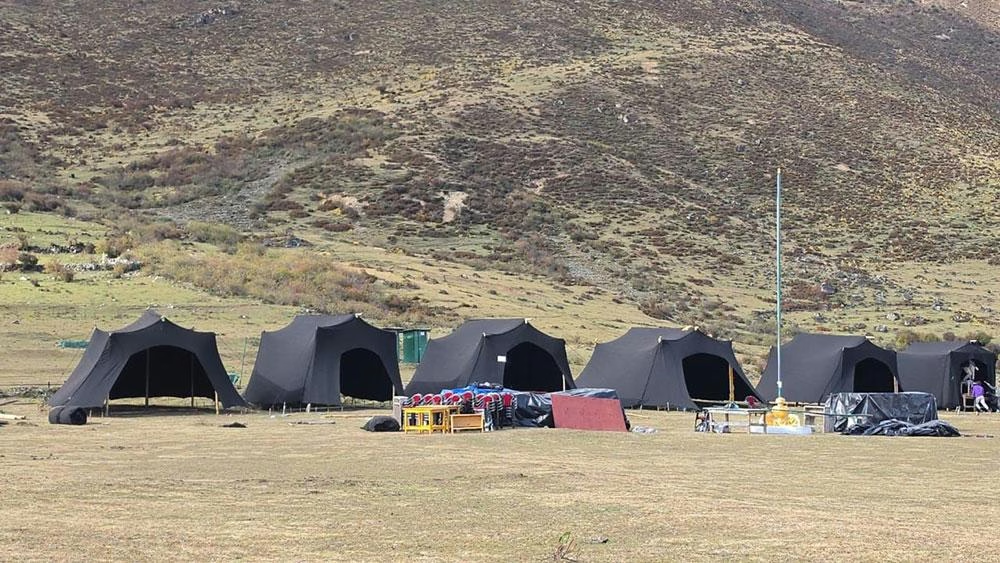
The Langothang festival ground, situated at nearly 4,000 meters elevation, has become a hive of activity since early October. Construction teams and community volunteers began setup on October 5, establishing traditional tents, commercial stalls, and kitchen facilities across the venue. The logistical undertaking is substantial, requiring coordination between multiple stakeholder groups and careful planning to overcome the unique challenges of high-altitude event management.
Infrastructure improvements have been prioritized to ensure visitor comfort and safety. Electricity supply upgrades at critical locations now support vendor operations and essential services. Telecommunications improvements will enhance connectivity for the thousands of visitors expected to arrive. A dedicated public parking area at Taktse Makhang has been completed, addressing transportation logistics for the expected crowd.
Laya Mangmi Pema Jamtsho, the festival organizer, emphasized the community-driven nature of these preparations. "People from different chiwogs have joined the preparations, and the stalls are ready," he explained. This collaborative approach reflects the deep cultural significance the festival holds for highland residents, who view it as both a celebration of their heritage and an economic opportunity.
Economic Opportunities for Local Entrepreneurs 💼
For Laya's business community, the Royal Highland Festival represents a crucial income-generating event. Local entrepreneurs have invested in upgrading their facilities and services to meet visitor expectations. Phuntsho, a restaurant operator in Laya, exemplifies this entrepreneurial spirit. During the previous festival, his establishment generated approximately Nu 100,000 in revenue, prompting him to reinvest in facility improvements for this year's event.
"I believe running a business is also a good way to earn a living instead of depending only on finding a job," Phuntsho noted, reflecting a broader shift in highland economic thinking. This diversification of income sources strengthens community resilience and reduces dependency on traditional herding alone, a critical consideration as climate patterns shift and market conditions evolve.
The festival creates cascading economic benefits throughout the region. Vendors selling traditional highland products, local cuisine, and artisanal goods find a concentrated market of culturally-interested visitors. Horse and yak ride operators, accommodation providers, and transportation services all benefit from the seasonal surge in tourism activity.
Accommodation Challenges in Remote Highlands 🏡
One of the most pressing logistics challenges involves housing over 5,000 visitors in a region with minimal commercial accommodation infrastructure. Gasa Dzongkhag currently lacks hotels, with only limited homestays available—many of which are already fully booked. This accommodation shortage reflects the broader reality of highland tourism development: infrastructure expansion must occur thoughtfully to preserve the authentic character that attracts visitors in the first place.
Laya has responded creatively to this constraint. Approximately 113 village homes have registered to host guests, though organizers acknowledge this capacity may prove insufficient for the projected attendance. Most registered accommodations are traditional village homes rather than certified commercial homestays, adding complexity to quality assurance and service standardization.
A significant innovation this year involves a local youth group assuming management responsibilities for village-home accommodation, horse services, and transportation coordination. This approach builds local capacity while ensuring revenue remains within the community. The Gasa Dzongkhag Administration will oversee service rate monitoring and quality standards, balancing visitor expectations with fair compensation for local hosts.
Logistical Complexities of High-Altitude Events 🚶
The Langothang festival ground's remote location—more than two hours' walk from the nearest road access—creates substantial logistical hurdles. Moving supplies, equipment, and materials across this distance demands careful planning and significant physical effort. Heavy construction materials, food supplies, and vendor equipment must be transported by foot or pack animals, a process complicated by Bhutan's challenging mountain terrain.
Weather presents another unpredictable variable. Cold temperatures and occasional snowfall can disrupt outdoor preparations and compromise equipment functionality. Event planners must account for these natural constraints when scheduling setup activities and establishing contingency protocols. The high altitude itself presents physiological challenges for workers and visitors unaccustomed to reduced oxygen levels.
Despite these obstacles, the community's determination to proceed demonstrates the festival's cultural and economic importance. Months of coordination with multiple stakeholder groups have brought preparations to their final stages, reflecting careful advance planning and community commitment.
Festival Programming and Cultural Highlights 🎪
The October 23-24 festival schedule encompasses diverse programming designed to showcase highland culture while celebrating contemporary mountain livelihoods. Cultural performances featuring traditional music and dance will highlight the region's artistic heritage. Traditional games will provide entertainment while reinforcing community bonds and cultural continuity.
Livestock exhibitions will display yak breeding achievements and herding practices, offering educational opportunities for visitors interested in pastoral agriculture. Exhibitions of highland products—including dairy goods, textiles, and handicrafts—will demonstrate the economic diversity of mountain communities. Yak and horse rides provide experiential opportunities for visitors to engage with the highland landscape and transportation methods.
The third edition of the Snowman Race, a highlight event, will challenge participants with a demanding mountain course. This year also marks historic firsts: the launch of the Himalayan Yak Herders Network Secretariat and the declaration of October 23 as National Yak Day, recognizing the cultural and economic significance of yak herding throughout the region.
Regional Participation and Network Expansion 🌐
The festival attracts representatives from all 10 highland dzongkhags, creating a rare gathering of mountain communities. International participation through yak cooperatives from Nepal and India adds cross-border cultural dimension to the event. Notably, Samtse Dzongkhag will participate for the first time, expanding the festival's geographic reach.
This expanded participation reflects growing recognition of shared challenges and opportunities among highland communities across the Himalayan region. Knowledge exchange on sustainable rangeland management, climate adaptation, and market access increasingly occurs through such platforms, strengthening networks that support pastoral livelihoods across borders.
Security and Visitor Management Protocols 👮
Accommodating 5,000 visitors in a remote location requires comprehensive security and crowd management planning. The Tshogpa of Chongra Loobchag Chiwog, Passang, confirmed that arrangements are firmly in place. "Visitors have started arriving, and the security personnel are ready for crowd control," he stated. "The cultural performances are also prepared, and we are looking forward to welcoming everyone."
Security personnel have been briefed on crowd management protocols, emergency response procedures, and visitor safety protocols. The festival's remote location, while creating logistical challenges, provides natural boundaries that facilitate controlled visitor flow and crowd management.
Booking Recommendations and Visitor Planning 📋
Given accommodation limitations and high demand, festival organizers strongly encourage advance booking of all services. The Gasa Dzongkhag Administration recommends visitors consult official festival channels for updated information on availability, service rates, and booking procedures. Early planning allows visitors to secure preferred accommodations and services while helping organizers manage capacity more effectively.
Visitors should anticipate high-altitude conditions, variable weather, and limited commercial services. Bringing appropriate clothing for cold temperatures, sun protection for high-altitude exposure, and any necessary medications is essential. The two-hour walk from road access means visitors should be in reasonable physical condition.
The Broader Significance for Bhutanese Tourism 🇧🇹
The Royal Highland Festival exemplifies Bhutan's distinctive approach to tourism development. Rather than pursuing mass tourism, the nation has cultivated a model emphasizing quality over quantity, cultural authenticity over commercial homogenization, and community benefit over external profit extraction. The highland festival demonstrates this philosophy in practice, with local communities maintaining control over their cultural presentation and economic participation.
As global tourism increasingly seeks authentic cultural experiences and sustainable travel models, Bhutan's highland communities are positioning themselves as leaders in responsible tourism innovation. The festival provides a replicable model for other mountain regions seeking to balance cultural preservation, economic development, and environmental stewardship.
Key Takeaways and What Lies Ahead 🔮
The ninth Royal Highland Festival represents more than a cultural celebration—it embodies a vision for sustainable mountain development where communities maintain agency over their futures. With over 5,000 visitors expected, comprehensive infrastructure improvements completed, and strong community participation, Laya is poised to deliver a memorable experience that honors highland traditions while creating meaningful economic opportunities.
The festival's evolution from 2016's inaugural event to this year's expanded gathering reflects growing global appreciation for authentic cultural tourism and mountain livelihoods. As climate change and economic pressures threaten traditional pastoral systems worldwide, platforms like this festival become increasingly vital for knowledge preservation, community strengthening, and sustainable livelihood promotion.
Visitors departing the festival will carry stories of highland resilience, cultural richness, and community warmth—stories that ripple outward, building understanding and support for mountain communities facing unprecedented challenges. For Laya's residents, the festival affirms that their way of life, their traditions, and their landscapes possess value worth celebrating and preserving. That's the true magic of the Royal Highland Festival. ✨
You May Also Like
Tourism
Eastern Dzongkhags Launch Strategic Tourism Action Plans
October 19, 2026
Tourism
Six Wildlife Sites to Boost Bhutan Tourism Circuit
August 26, 2026
Tourism
Bhutan's Tourism Crisis: Hidden Commissions Threaten Craft Authenticity
August 26, 2026
Tourism
Bumthang Tourism Growth: Local Businesses Push for Better Facilities
August 15, 2026