Category:
NewsYear-Round Irrigation Transforms Agriculture in Wangdue and Zhemgang
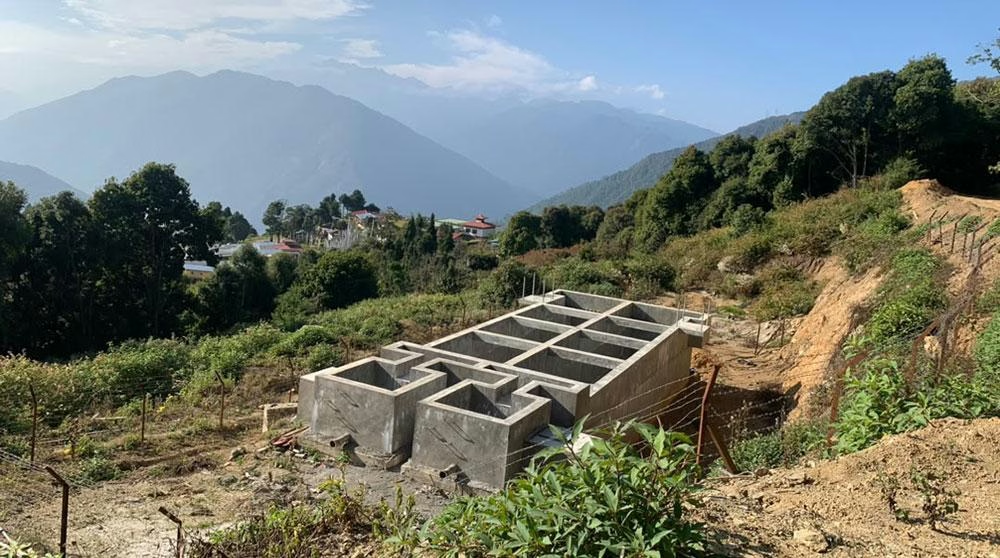
Revolutionizing Agricultural Water Access in Central Bhutan 🌾
For generations, farmers across the remote gewogs of Wangdue and Zhemgang have watched the skies anxiously, their livelihoods entirely dependent on the unpredictable monsoon season. This agricultural vulnerability is about to change dramatically. A groundbreaking integrated drinking water and irrigation scheme is poised to reshape how communities in these regions access water, transforming seasonal farming into year-round agricultural productivity.
The transformation represents far more than just infrastructure development—it signals a fundamental shift in how Bhutan addresses climate resilience, food security, and rural economic development. With global warming increasingly affecting traditional water sources, this initiative arrives at a critical moment for mountain communities facing unprecedented environmental challenges.
The Hetsotsamchu Scheme: Bhutan's Largest Water Infrastructure Project 💧
The Hetsotsamchu integrated scheme stands as one of the most ambitious water infrastructure projects in Bhutanese history. Backed by the Asian Development Bank (ADB), this comprehensive initiative will serve dual purposes: delivering safe drinking water to 461 households while simultaneously irrigating 1,279 acres of agricultural land. The project cleverly divides irrigation capacity between 929 acres of traditional wetland and 350 acres of dryland farming areas.
What makes this project particularly remarkable is its engineering scale. The scheme employs a 710-millimetre HDPE transmission pipe to convey water across challenging mountain terrain—a technical solution that demonstrates Bhutan's growing capacity in modern infrastructure development. Drawing water from the Hesotsamchu source, the system ensures both agricultural and domestic water needs receive consistent, reliable supply throughout the year.
Breaking Free from Monsoon Dependency 🌧️
Historically, farmers in Gasetsho Gom and Gasetsho Wom gewogs have operated under severe constraints. Paddy cultivation during summer months represented their primary income source, with winter months leaving vast tracts of productive land dormant and fallow. This seasonal limitation has created multiple interconnected problems for rural communities.
Wangdue Dzongkhag Engineer Nidup Tshering emphasized the urgency of this transformation: "The sources have dried up, partly due to global warming. People have been depending on seasonal rainfall, and there have also been water disputes among villagers." These water disputes have historically created tension within communities, disrupting social cohesion and making collaborative agricultural efforts increasingly difficult.
The year-round irrigation capability directly addresses these longstanding challenges:
- Reduced rainfall dependency: Farmers gain independence from erratic monsoon patterns
- Conflict resolution: Reliable water supply eliminates competition and disputes over scarce resources
- Extended growing seasons: Winter cultivation becomes viable for the first time
- Land productivity: Previously fallow land returns to productive use
- Income diversification: Farmers can expand beyond traditional seasonal crops
Agricultural Transformation and Economic Opportunity 📈
The agricultural landscape in these gewogs will experience dramatic transformation. Currently, paddy dominates the summer months across terraced wetlands, while farmers grow wheat, maize, barley, and other grains during winter rotations. Vegetables including potatoes, chillies, cabbages, and legumes are cultivated primarily for local markets.
With reliable year-round irrigation, agricultural possibilities expand exponentially. The Dzongkhag administration anticipates approximately 470 acres of currently fallow land returning to productive cultivation. This represents not merely a 37% increase in available farmland—it fundamentally changes economic opportunities for rural households.
Winter cultivation emerges as a particularly significant opportunity. By extending the growing season into traditionally unproductive months, farmers can cultivate high-value commercial crops that command premium prices in both domestic and regional markets. Vegetables and specialty crops that currently face seasonal constraints can now be grown continuously, creating stable income streams for rural families.
The Project's Ambitious Timeline and Structure 🏗️
Investing Nu 700 million (approximately USD 9.3 million), this transformative initiative operates under a build-operate-transfer (BOT) arrangement—a model that has proven effective for infrastructure development across the Asian region. This structure ensures professional management during initial operations while ultimately transferring ownership to local communities.
The implementation unfolds across two distinct phases:
Phase One: Foundation and Mobilization involves constructing access roads and mobilizing essential materials, manpower, and machinery. This critical groundwork phase establishes the infrastructure backbone necessary for subsequent construction activities. Construction is expected to require 24 months, with completion targeted for May 2028, followed by a comprehensive one-month trial period.
Phase Two: Community Distribution focuses on extending water distribution networks to beneficiary communities. Under the BOT arrangement, the joint venture contractor maintains and operates all infrastructure for 24 months before transferring complete ownership and management responsibility to villagers themselves. This approach ensures communities develop the capacity and knowledge necessary for long-term system maintenance.
Complementary Development in Zhemgang 🌟
The government's commitment to water security extends beyond Wangdue. Under the same Water Flagship Programme framework, a parallel scheme will benefit 491 households across Zhemgang town and several chiwogs under Trong Gewog. This complementary project, scheduled for completion by May 2027, specifically targets chronic water shortages affecting both urban residents and agricultural communities.
The dual-project approach demonstrates strategic planning at the national level, recognizing that water security challenges require comprehensive, multi-site solutions. By implementing similar infrastructure across multiple districts simultaneously, the government maximizes the impact of development investments while creating economies of scale in project management and technical expertise.
Aligning with National Climate Resilience Goals ♻️
These irrigation schemes form essential components of the government's Water Flagship Programme—an ambitious initiative designed to improve sustainable drinking water and irrigation access through climate and disaster-resilient infrastructure. This strategic alignment reflects Bhutan's recognition that water security directly connects to climate adaptation, food security, and rural economic stability.
Global warming poses unprecedented challenges for mountain communities. Traditional water sources are becoming less reliable, seasonal patterns are shifting unpredictably, and extreme weather events are increasing in frequency. By investing in climate-resilient water infrastructure now, Bhutan proactively addresses these emerging threats rather than reactively responding to crises.
The infrastructure's resilience design incorporates multiple safeguards:
- Diversified water sources: Drawing from established mountain sources reduces vulnerability to single-source failure
- Modern piping materials: HDPE transmission pipes resist degradation and environmental stress
- Redundant systems: Multiple distribution pathways prevent complete service interruption
- Community management: Local ownership ensures ongoing maintenance and system optimization
Broader Implications for Rural Development 🚀
Beyond immediate agricultural benefits, these schemes represent transformative investments in rural development. Year-round water access creates conditions for broader economic development: improved livestock management, small-scale agro-processing enterprises, and enhanced household food security become viable when water is reliable.
Education and health services improve when communities have adequate water supplies. Women's workload decreases substantially when water collection no longer requires lengthy daily journeys. These multiplier effects extend far beyond the agricultural sector, touching every dimension of rural life.
The projects also demonstrate Bhutan's successful engagement with international development partners. Asian Development Bank support reflects confidence in Bhutanese project management capacity and commitment to sustainable development principles. This partnership strengthens Bhutan's position within regional development networks while attracting additional international investment.
Implementation Challenges and Community Engagement 🤝
Successful implementation requires more than engineering excellence. Community engagement, capacity building, and institutional strengthening prove equally critical. The BOT arrangement explicitly recognizes this by requiring contractor-led training and gradual responsibility transfer to local management committees.
Key implementation considerations include:
- Technical capacity building: Training local technicians in system operation and maintenance
- Water management governance: Establishing fair allocation mechanisms and dispute resolution procedures
- Agricultural extension services: Helping farmers adopt new crops and cultivation techniques
- Environmental monitoring: Ensuring sustainable water extraction doesn't deplete sources
- Financial sustainability: Developing fee structures that enable long-term system maintenance
Looking Forward: A New Era for Mountain Agriculture ✨
The Hetsotsamchu and Zhemgang irrigation schemes represent watershed moments—both literally and figuratively—in Bhutanese agricultural development. When these projects reach completion in 2027-2028, they will fundamentally reshape how mountain communities engage with agriculture, water management, and economic opportunity.
These are not merely infrastructure projects; they are investments in community resilience, food security, and rural dignity. By transforming unreliable seasonal water access into dependable year-round supply, Bhutan demonstrates its commitment to supporting rural livelihoods while building climate-resilient infrastructure for future generations.
The success of these schemes will likely inspire similar projects across Bhutan's other districts, creating a cascading effect of rural development and agricultural transformation. As global climate patterns continue shifting unpredictably, Bhutan's proactive approach to water security and irrigation infrastructure serves as a model for other mountain nations facing similar challenges.
You May Also Like
News
Bhutan's Vision for Inclusive Future on World Children's Day
November 21, 2026
News
Amochu Road Crisis: Dust, Potholes Plague Residents
November 21, 2026
News
SOM Designs Visionary New Precinct for Gelephu Mindfulness City
November 21, 2026
News
NA Extends Potato Marketing Debate as Farmers Struggle
November 19, 2026