Category:
NewsSOM Designs Visionary New Precinct for Gelephu Mindfulness City
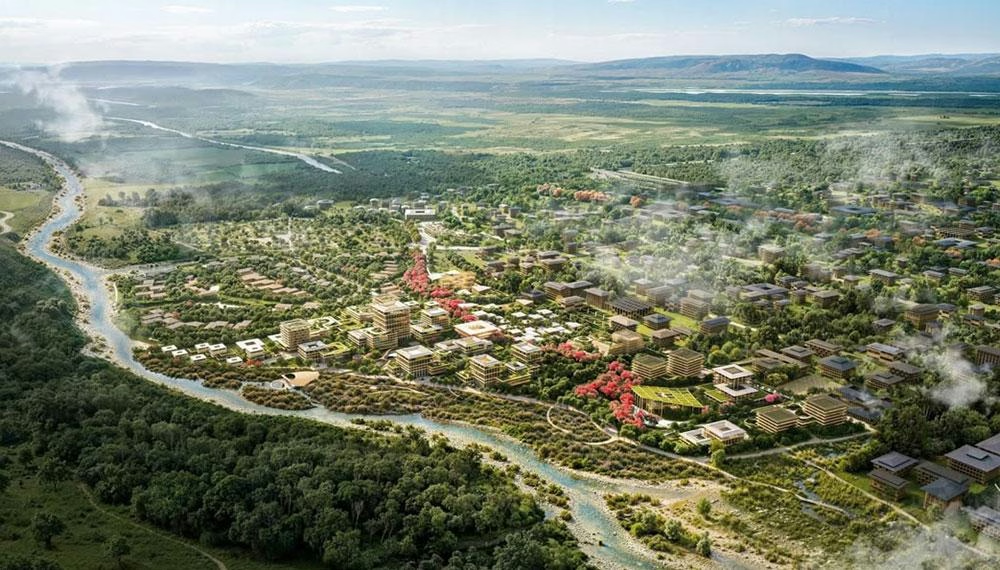
Global Architecture Powerhouse Takes on Bhutan's Ambitious Urban Vision 🌍
In a significant milestone for Bhutan's economic transformation, the renowned international architecture firm Skidmore, Owings & Merrill (SOM) has been selected to design an innovative new precinct within Gelephu Mindfulness City (GMC). This collaboration represents a convergence of world-class architectural expertise with Bhutan's groundbreaking vision for sustainable urban development, marking a pivotal moment in the nation's modernization journey.
The partnership brings together SOM, Thailand-based developer Magnolia Quality Development Corporation (MQDC), and the Gelephu Mindfulness City Authority (GMCA) to create a mixed-use neighborhood that balances contemporary urban living with environmental consciousness and cultural preservation.
Who is SOM and Why Does Their Involvement Matter? 🏗️
With roots stretching back to Chicago in 1936, SOM has established itself as one of the world's most influential architecture and urban planning firms. The company's portfolio reads like a who's who of iconic global structures—from the soaring Burj Khalifa in Dubai, recognized as the world's tallest building, to the symbolically powerful One World Trade Center in New York.
Beyond iconic individual buildings, SOM specializes in comprehensive urban design solutions. Their multidisciplinary approach encompasses architecture, structural engineering, urban planning, and environmental design—precisely the integrated expertise required for a complex project like GMC.
The firm's selection underscores Bhutan's commitment to attracting world-class talent and ensuring that Gelephu Mindfulness City meets international standards while maintaining its unique character and values.
Understanding the Precinct Concept 🏙️
In urban planning terminology, a precinct represents a carefully defined area within a city, typically organized around specific purposes or complementary activities. Unlike traditional zoning that separates different land uses, modern precinct design emphasizes integration and walkability.
The proposed GMC precinct exemplifies this contemporary approach, weaving together:
- Residential spaces for permanent inhabitants
- Hospitality facilities for visitors and business travelers
- Commercial establishments for economic activity
- Retail spaces for shopping and services
- Public spaces for community gathering and interaction
- Pedestrian routes prioritizing human-scale movement
This integrated approach creates vibrant neighborhoods where residents and visitors can live, work, shop, and socialize within a cohesive environment.
The Geographic and Strategic Location 📍
Situated on the western bank of the Mau Chhu River, the new precinct occupies a strategically advantageous position within GMC. Its proximity to both the Royal Park and Gelephu's historic Old Town creates layered opportunities for cultural connection and natural integration.
This location is particularly significant because it positions the precinct as a bridge between Bhutan's traditional heritage and its modern aspirations. Residents and visitors will have immediate access to natural spaces, cultural landmarks, and the river's ecological value.
The Mau Chhu River itself becomes more than a geographical feature—it transforms into an essential design element that shapes the precinct's character and functionality.
Innovative Design Philosophy: Nature as the Foundation 🌿
SOM's design approach places the natural landscape at the conceptual center, a philosophy that resonates deeply with Bhutanese values of environmental stewardship. According to SOM Design Partner Peter Lefkovits, the natural environment directly informed every aspect of the precinct's organization.
"The landscape was the starting point for our design," Lefkovits explained. "The Mau River, the surrounding national parks, and cultural landmarks like the 108 stupas informed the organisation of the precinct—from its pedestrian paths and public spaces, to the placement of buildings and views across the site."
This approach demonstrates sophisticated urban planning that respects ecological systems rather than imposing artificial structures upon them. The design acknowledges that successful cities integrate with their natural contexts rather than dominate them.
Key Design Features and Public Spaces ✨
The precinct incorporates several distinctive design elements that enhance livability and community experience:
The Green Spine Promenade serves as a linear public space that encourages pedestrian movement, social interaction, and connection to nature. Promenades of this type have proven highly successful in cities worldwide, creating vibrant urban corridors.
The Kindful Living Room represents an innovative approach to public gathering spaces, suggesting an emphasis on wellness and community well-being—core principles embedded in GMC's founding vision.
Beyond these named spaces, the precinct incorporates:
- Interconnected gardens providing green space and biodiversity
- Strategic waterways that manage stormwater while creating aesthetic and recreational value
- Comprehensive pedestrian pathways that prioritize foot traffic over vehicular movement
- Views and sightlines carefully calibrated to showcase natural and cultural landmarks
The Vision Behind Gelephu Mindfulness City 🎯
To understand the significance of this architectural project, context about GMC itself proves essential. His Majesty The King announced Gelephu Mindfulness City during the 116th National Day celebrations on December 17, 2023, introducing a transformative vision for Bhutan's economic future.
Conceived as a Special Administrative Region (SAR), GMC represents an unprecedented approach to economic development in Bhutan. Rather than pursuing growth at any cost, the project embeds mindfulness, sustainability, and well-being into its foundational DNA.
The SAR was formally established through Royal Charter in February 2024, encompassing more than 4,046 square kilometers in southern Bhutan. This vast territory provides space for comprehensive, thoughtfully-planned development that can serve as a model for sustainable urbanism.
GMC's strategic objectives include:
- Creating a new economic hub and global gateway for Bhutan
- Generating investment opportunities and employment
- Facilitating economic diversification beyond traditional sectors
- Demonstrating that prosperity and environmental responsibility can coexist
MQDC's Role and Development Philosophy 🌱
Magnolia Quality Development Corporation brings substantial experience to this partnership. Established in Thailand in 1994, MQDC has developed a distinguished portfolio of residential, hospitality, and mixed-use projects that emphasize quality and sustainability.
Notable MQDC developments include ICONSIAM in Bangkok, a landmark mixed-use development, and The Forestias, a large-scale project that integrates residential areas with extensive green spaces. These projects demonstrate MQDC's commitment to developments that enhance rather than diminish quality of life.
The company operates under the philosophy of "For All Well-Being," prioritizing sustainable development and improving relationships between built environments and nature. This philosophy aligns seamlessly with Bhutan's values and GMC's vision.
MQDC's involvement extends beyond design partnership. In February 2024, the company organized visits to Gelephu for Thai media representatives, demonstrating active commitment to communicating the project's vision and generating regional interest.
SOM's Managing Vision for the Project 💡
SOM Managing Partner Vram Malek articulated the firm's approach to translating GMC's visionary goals into tangible urban reality. "Our work translates the visionary goals of GMC into a tangible place, with a focus on the public realm and everyday human experiences that create a neighborhood's identity."
This statement reflects sophisticated understanding of urban design's true purpose—not merely creating buildings, but fostering human connection, community identity, and everyday experiences that make places worth inhabiting.
The emphasis on "public realm" acknowledges that successful neighborhoods are defined as much by shared spaces and community interaction as by individual buildings. Public squares, parks, and pedestrian streets become the connective tissue that binds a neighborhood together.
What This Means for Bhutan's Future 🚀
The SOM engagement represents far more than a single architectural project. It signals Bhutan's determination to pursue development that meets global standards while maintaining distinctive identity and values.
This precinct design will likely become a reference point for other developments within GMC and potentially influence urban planning approaches across Bhutan. The project demonstrates that economic growth, environmental responsibility, and cultural preservation need not conflict—they can reinforce one another.
For Bhutan's young professionals and entrepreneurs, the GMC development creates opportunities to engage with international best practices while contributing to their nation's future. The project attracts global talent and expertise while building local capacity.
The Broader Context: Sustainable Development in Asia 🌏
The GMC precinct design reflects broader trends in Asian urbanism toward more sustainable, human-centered development. Cities across Asia increasingly recognize that quality of life—not merely economic output—determines long-term success and attractiveness.
Projects that integrate nature, culture, and commerce within walkable, mixed-use neighborhoods represent the evolution of urban planning from purely functional zoning toward more sophisticated, holistic approaches. GMC positions Bhutan at the forefront of this evolution.
The project also demonstrates how smaller nations can leverage international expertise and partnerships to achieve ambitious development goals. By engaging firms like SOM and developers like MQDC, Bhutan accelerates its learning curve and avoids potential planning mistakes.
Looking Forward: Implementation and Impact 🔮
While design represents the crucial first phase, the real test lies in implementation. The precinct's success will depend on faithful execution of design principles, adaptive management as conditions change, and community engagement throughout development.
The coming months will involve detailed design development, environmental impact assessments, and stakeholder consultation. These processes will refine the initial vision and ensure that the precinct truly serves Gelephu's residents and visitors.
This architectural collaboration between Bhutan, Thailand, and international expertise exemplifies modern development partnerships that transcend national boundaries in pursuit of shared values and vision. The precinct will stand as physical manifestation of Bhutan's commitment to mindful, sustainable growth—proving that a small nation can think big while staying true to its principles.
As construction progresses and the precinct takes shape, it will become a living laboratory for sustainable urbanism, attracting visitors, investors, and urban planners interested in witnessing development done differently.
You May Also Like
News
Amochu Road Crisis: Dust, Potholes Plague Residents
November 21, 2026
News
Year-Round Irrigation Transforms Agriculture in Wangdue and Zhemgang
November 21, 2026
News
NA Extends Potato Marketing Debate as Farmers Struggle
November 19, 2026
News
Bhutan Launches Skills Training for Retirees Amid Population Aging
November 18, 2026