Category:
PoliticsWhy Women Outvote Men but Still Lose Elections
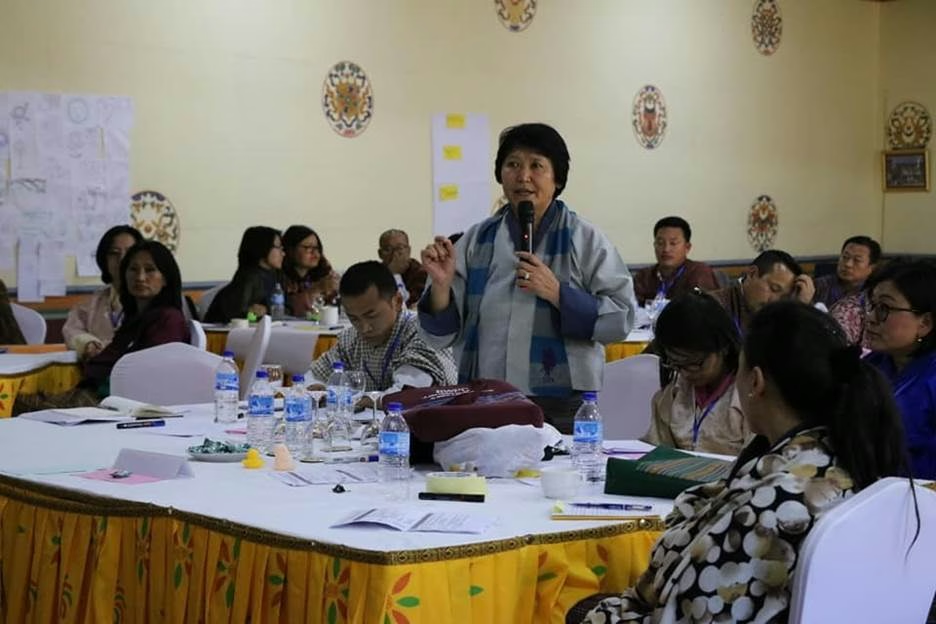
In Bhutan, women have consistently shown higher voter turnout rates compared to men. Despite this numerical advantage, their presence in political offices remains disproportionately low. This paradox raises questions about the social and cultural dynamics influencing electoral outcomes in Bhutan.
Historical Context: Women in Bhutanese Politics
Bhutan transitioned to democracy in 2008. Since then, female representation in political offices has fluctuated. The fourth National Assembly elections saw only two women elected out of 47 members. This is the lowest female representation since the country's democratic shift.
Voter Trends 📊
In the latest Thimphu Thromde elections, women accounted for 53.59% of registered voters. However, despite this majority, male candidates dominated the election outcomes. Such trends are not isolated to Thimphu but reflect a nationwide pattern where women voters outnumber men yet remain underrepresented in elected positions.
Barriers to Political Success for Women
Societal Perceptions 🧠
A prevailing belief that men make stronger leaders continues to influence voting behaviors. Many voters perceive women as less assertive, which can deter support for female candidates. This perception underscores the need for female leaders to actively challenge stereotypes by demonstrating strong leadership and decisiveness on national issues.
Limited Opportunities and Support 🤝
The political landscape in Bhutan offers limited opportunities for women. During the fourth National Assembly elections, only six female candidates were nominated by the two main political parties. This lack of representation at the candidacy level poses a significant barrier to increasing female political participation.
The Role of Women Voters
Contrary to some beliefs, women voters often support female candidates. However, personal connections and familiarity with candidates frequently sway votes more than gender solidarity. This suggests that female candidates need robust, wide-reaching campaign strategies to enhance their visibility and appeal.
Changing the Narrative 📢
For change to occur, there must be a shift in societal attitudes towards female leadership. Encouragingly, the presence of female parliamentarians who actively engage in political debates and advocate for key issues can help alter public perceptions.
Looking Ahead: Strategies for Greater Representation
Empowerment and Education 📚
Empowering women through education and leadership training can equip them with the skills needed to compete effectively in elections. Additionally, creating supportive networks for female leaders can foster a more inclusive political environment.
Policy Reforms and Advocacy 📈
Legislative reforms to ensure gender parity in political party nominations and the introduction of quotas for female candidates could pave the way for increased representation. Advocacy campaigns highlighting the importance of diverse leadership can further drive this change.
Conclusion: A Call to Action
The journey towards gender equality in Bhutanese politics requires collective efforts from society, political parties, and the government. By addressing the barriers women face and fostering an environment that champions female leadership, Bhutan can leverage its electoral potential and ensure that its democratic institutions reflect the diversity of its electorate.
In the coming years, it will be crucial to monitor these trends and advocate for changes that will allow women not only to outvote but also to win elections.
You May Also Like
Politics
Bhutan and EU Parliamentarians Unite on Climate Action
September 26, 2026
Politics
Bhutan Launches Four Voter Participation Initiatives for LG Elections
September 16, 2026
Politics
Women in Politics: Breaking Through Barriers Before Election Day
September 15, 2026
Politics
Women Leaders Training: Preparing for 2027 Local Elections
August 31, 2026