Category:
CultureVajra Bikers: The Monks Riding Sacred Paths
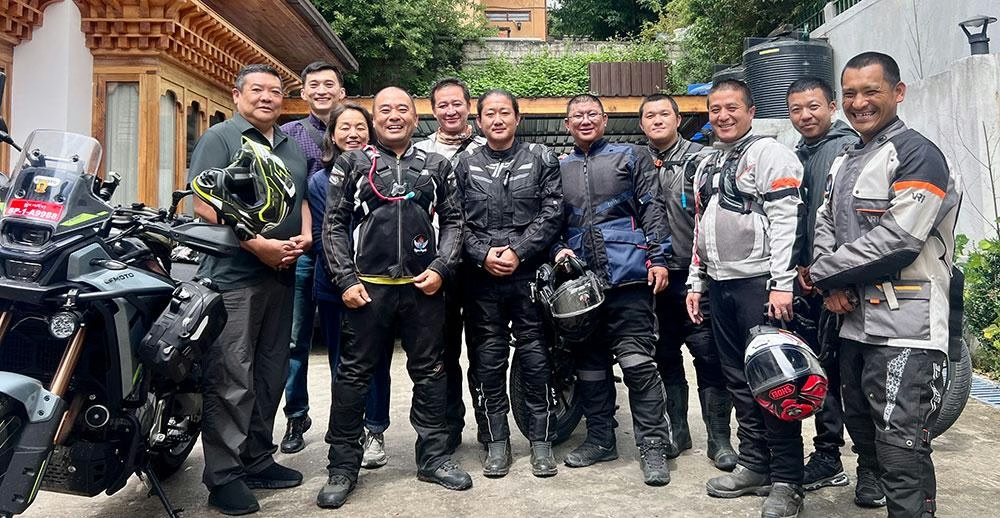
When Spiritual Practice Meets the Open Road 🏍️
On the mountain passes of Bhutan, where fog wraps around peaks above eleven thousand feet, an unusual sight has captured the imagination of travelers and locals alike. A group of robed monks, dressed in leather jackets and riding motorcycles, has become a powerful symbol of how ancient spiritual traditions can adapt to the modern world while maintaining their sacred essence.
This isn't a rebellious sect breaking monastic rules—it's a deliberate spiritual journey. The Vajra Bikers represent a fascinating convergence of Buddhist practice, pilgrimage tradition, and contemporary transportation. Their story reveals something profound about how religious communities navigate the twenty-first century without abandoning their core values.
The Journey Begins: Understanding Vajra Bikers ✨
The Vajra Bikers are a group of monks from Chokling Monastery who undertake regular motorcycle journeys through Bhutan's challenging terrain. These aren't casual leisure rides. Each journey serves multiple purposes—spiritual pilgrimage, community connection, and preparation for significant religious events.
The group is led by Neten Chokling Rinpoche, a revered Buddhist teacher and filmmaker in his mid-fifties who holds the title of a reborn spiritual master. What makes this leadership particularly compelling is Rinpoche's approach to spiritual authority. He combines deep traditional knowledge with a refreshingly modern sensibility, creating a model of Buddhist practice that speaks to contemporary practitioners.
The composition of the group includes:
- Seven to eight monks typically ranging in age from their thirties to forties
- Support vehicles carrying supplies and family members
- A carefully planned route that incorporates sacred sites and pilgrimage destinations
- A structured journey that balances spiritual practice with practical travel needs
The Sacred Meets the Secular: Pilgrimage on Two Wheels 🛣️
What distinguishes Vajra Bikers from ordinary motorcycle clubs is their explicit spiritual intention. Every route is designed with sacred geography in mind. Rinpoche never plans a journey without incorporating significant spiritual locations—monasteries, meditation sites, natural power places, and pilgrimage destinations.
During their travels, the monks perform traditional rituals at key locations. At high mountain passes, they conduct the Riwo Sangcho (mountain smoke offering) and the Serkyem (libation to local protectors). These ceremonies aren't performed in temples or controlled environments—they happen roadside, at passes where weather and altitude create challenging conditions.
This integration of spiritual practice into physical travel reflects a deeper Buddhist principle: enlightenment isn't confined to monasteries. The journey itself becomes the practice. Movement through landscape becomes meditation. Encounters with other travelers become opportunities for compassion and connection.
Why Motorcycles? The Philosophy Behind the Choice 🔥
The decision to use motorcycles for spiritual journeys might seem unconventional, but it reflects practical wisdom. Bhutan's terrain is notoriously challenging—high passes, narrow roads, and weather conditions that change dramatically. Motorcycles offer advantages that other vehicles cannot:
Practical Benefits:
- Maneuverability through narrow mountain roads
- Reduced environmental impact compared to larger vehicles
- Cost-effectiveness for a monastic community with limited resources
- Ability to navigate remote areas where pilgrimage sites are located
Spiritual Dimensions:
- The vulnerability of riding creates heightened mindfulness
- Connection to the natural environment is more immediate and visceral
- The physical challenge mirrors spiritual discipline
- Motorcycles represent engagement with modernity without abandonment of tradition
The monks ride Royal Enfields and CFMoto motorcycles—reliable machines suited to Bhutanese conditions. These aren't luxury bikes but functional tools, much like monastic robes are functional rather than decorative.
Leadership and Vision: Neten Chokling Rinpoche 👤
Understanding Vajra Bikers requires understanding their leader. Neten Chokling Rinpoche represents a particular lineage of Tibetan Buddhism that emphasizes both scholarly rigor and visionary experience. He's recognized as the reborn incarnation of Chokgyur Lingpa, a nineteenth-century Tibetan master known for discovering hidden spiritual teachings.
What distinguishes Rinpoche's approach to leadership is his deliberate rejection of conventional Buddhist authority structures. He maintains no social media presence, runs no donation drives, and avoids large religious convocations unless necessary. Instead, he operates on a principle of organic connection—those with genuine spiritual interest find him, and he responds with appropriate teaching.
His philosophy emphasizes:
- Direct transmission of teachings rather than institutional hierarchy
- Simplicity in lifestyle despite access to resources
- Genuine engagement with sincere practitioners
- Integration of spiritual practice with ordinary life
Rinpoche is also a filmmaker, suggesting how spiritual teachers increasingly must work across multiple media and formats to communicate effectively in contemporary society. This multimedia approach doesn't dilute his teachings—it extends their reach.
The Chokling Tersar: Why These Journeys Matter 📿
The Vajra Bikers' journeys aren't random adventures. They serve specific purposes aligned with the monastic calendar and teaching commitments. A significant upcoming event provides important context for understanding why these journeys have become increasingly important.
In November, Rinpoche will travel to Bartsam in Trashigang to bestow the complete Chokling Tersar—the full cycle of empowerments and teachings from his tradition. This represents a monumental event in Bhutanese Buddhism. The Chokling Tersar comprises teachings that Chokgyur Lingpa discovered and recorded in the nineteenth century, teachings believed to derive from Guru Rinpoche (Padmasambhava), the eighth-century master who brought Buddhism to Tibet.
The significance cannot be overstated: the complete cycle of these teachings has never been given in Bhutan before. For practitioners in eastern Bhutan who requested this transmission, it represents an extraordinary opportunity. For Rinpoche, it requires deep preparation and spiritual readiness.
The motorcycle journeys through Bhutan serve as reconnaissance and preparation. By traveling through the eastern regions, Rinpoche familiarizes himself with the landscape, meets with local communities, and establishes the energetic foundation for the major teaching event. This reflects a Buddhist principle that significant teachings require preparation at multiple levels—not just intellectual but geographical and relational.
Community and Discipline: The Monastic Motorcycle Club 🏛️
The Vajra Bikers function with the synchronized efficiency of a veteran motorcycle club combined with the discipline of a monastic community. This isn't accidental—it reflects years of training and shared spiritual commitment.
The monks maintain rigorous daily practice even while traveling. Early mornings include meditation and prayer. Meals are taken mindfully. Interactions with local people reflect Buddhist ethics of non-harm and compassion. Yet there's no stiffness or performative spirituality. The group maintains genuine warmth, humor, and camaraderie.
This balance between discipline and ease represents an important model for contemporary Buddhist practice. The monks demonstrate that spiritual commitment doesn't require grim austerity or separation from joy. Rinpoche travels with a handheld espresso maker and makes excellent shots at dinner tables. His wife, Tenzing Choyang Gyari, travels with the group maintaining continuous practice (prayer and mantra recitation) while attending to practical logistics.
The relationship between Rinpoche and his monks reflects a particular Buddhist ideal: the teacher as elder friend rather than distant authority. The monks speak of him with respect but also genuine affection. They joke and laugh together. The hierarchy is clear but not rigid—it's based on wisdom and compassion rather than institutional power.
Financial Sustainability Without Compromise 💰
One of the most striking aspects of Vajra Bikers is how they operate outside conventional funding structures. Chokling Monastery in Bir, India, where Rinpoche is based, maintains a monastic college and supports several hundred monks. Yet Rinpoche solicits no donations, maintains no wealthy patrons, and runs no fundraising campaigns.
When asked how the monastery sustains itself, Rinpoche's response is characteristically philosophical: support arrives when needed, as if by miracle. This isn't naïveté—it reflects a Buddhist approach to economics based on trust, simplicity, and the principle that genuine need draws appropriate response.
This model has profound implications. It suggests that spiritual communities can maintain integrity and independence by avoiding dependency on wealthy donors or institutional structures. It also reflects a teaching about non-attachment—Rinpoche may ride expensive motorcycles but maintains no attachment to possessions. Items are acquired and given away freely. His wife uses the same bag for ten years without concern for fashion or status.
For communities concerned about commercialization of Buddhism, Vajra Bikers offer an alternative model: spiritual transmission that operates outside market logic.
Cultural Significance in Contemporary Bhutan 🇧🇹
The Vajra Bikers hold particular significance within Bhutanese culture and contemporary Buddhist practice. Bhutan has maintained remarkable cultural continuity while navigating modernity. The Vajra Bikers represent how this integration can work—honoring tradition while engaging contemporary reality.
Their visibility on Bhutanese roads challenges assumptions about what Buddhist practice looks like. For young Bhutanese, they demonstrate that spiritual commitment can be compatible with modernity. Motorcycles aren't seen as spiritually corrupting but as tools—neutral in themselves, consecrated by intention.
The group also embodies Bhutanese values of community, connection to landscape, and integration of spiritual practice into daily life. Rather than separating monks into isolated monasteries, the Vajra Bikers model shows how Buddhist communities can engage with broader society while maintaining spiritual integrity.
What Other Travelers Witness 👀
Motorists who encounter the Vajra Bikers at mountain passes often stop, confused by the sight of robed figures in leather jackets performing rituals around juniper fires. The initial impression—a "leather-clad gang praying around a bonfire"—quickly transforms into recognition of something sacred and unusual.
These encounters represent spontaneous teaching moments. Travelers witness spiritual practice happening not in protected temple spaces but in the midst of ordinary journey. They see Buddhist monks as fully engaged with contemporary life while maintaining spiritual commitment. For many Bhutanese and tourists, these encounters become memorable spiritual experiences.
The rituals performed at high passes—the mountain smoke offerings and libations to local protectors—reflect Bhutanese Buddhism's integration of indigenous spiritual practices with Buddhist teachings. The Vajra Bikers don't perform these practices despite modernity but as expressions of how Buddhism adapts and thrives.
The Broader Implications for Buddhist Practice 🌟
The Vajra Bikers phenomenon extends beyond one group of monks. It raises important questions about how Buddhist traditions can remain vital in contemporary contexts:
Can spiritual practice integrate with technology without compromising authenticity? The Vajra Bikers suggest yes—motorcycles become vehicles for pilgrimage just as horses did in previous centuries.
Must Buddhist communities separate from society to maintain integrity? The Vajra Bikers model suggests engagement is possible when grounded in clear intention and ethical commitment.
How should spiritual authority function in contemporary contexts? Rinpoche's approach—avoiding institutional hierarchy while remaining deeply committed to genuine practitioners—offers one compelling model.
Can Buddhist communities operate outside commercial structures? The monastery's sustainability without wealthy patrons suggests alternative economic models are possible.
These questions matter not just for Buddhist practitioners but for any communities attempting to maintain cultural and spiritual traditions while navigating rapid social change.
Looking Forward: The November Teaching Event 🎯
As the Vajra Bikers continue their journeys, the November gathering in Trashigang looms as a significant milestone. This will be the first complete transmission of the Chokling Tersar teachings in Bhutan—an event years in the making and requested repeatedly by practitioners in the eastern regions.
For Rinpoche, this represents both culmination and beginning. It's the fruition of his preparation and study, the fulfillment of his role as a reborn master in his tradition. It's also a beginning—the opening of these teachings to a new generation and new geographic region.
The Vajra Bikers journeys serve as preparation for this event, establishing connections and creating the relational foundation necessary for authentic spiritual transmission. They demonstrate that Buddhist practice isn't confined to formal settings but extends through landscape, community, and the simple act of traveling together with shared intention.
Conclusion: Sacred Journey in Modern Times 🏁
The Vajra Bikers represent something increasingly rare: a spiritual community that maintains complete integrity while fully engaging with contemporary reality. They don't retreat from modernity but transform it through intention and practice.
Their journeys through Bhutan's mountain passes offer a powerful image for our time—the integration of tradition and innovation, discipline and joy, spiritual commitment and genuine engagement with the world. In an era when many fear that modernity inevitably corrupts spiritual practice, the Vajra Bikers suggest another possibility: that authentic spiritual traditions can adapt, thrive, and even flourish when rooted in clear intention and genuine compassion.
The next time you encounter monks on motorcycles at a mountain pass, or hear the sound of prayers rising from a juniper fire beside the road, you'll understand: this is Buddhism not retreating from the world but fully entering it, transformed and transformative.
You May Also Like
Culture
Sacred Mountains: A Spiritual Journey from Bhutan to Australia
October 28, 2026

Culture
108,108 Prostrations: Sacred Spiritual Journey at Bhutan's Historic Chortens
October 24, 2026
Culture
Ancient Bhutanese Tradition Steps Into Digital Age
October 24, 2026
Culture
Thai Designer Transforms Bhutanese Textiles into Contemporary Fashion
October 23, 2026