Category:
CultureSacred Mountains: A Spiritual Journey from Bhutan to Australia
The Call of Sacred Landscapes 🏔️
When a mountain becomes more than just geography, it transforms into something sacred—a keeper of memories, a symbol of identity, and a touchstone for the soul. This is the essence of spiritual pilgrimage, where physical journeys become pathways to deeper understanding and connection. For many across Asia and beyond, sacred mountains represent not merely natural formations but living embodiments of cultural heritage, spiritual wisdom, and ancestral reverence.
The experience of pilgrimage has evolved significantly in recent decades. According to UNESCO research, spiritual tourism has grown exponentially, with millions of people annually undertaking journeys to sites of religious and cultural significance. These expeditions represent more than tourism—they reflect humanity's enduring quest to connect with something greater than ourselves, to find meaning in landscapes that have held spiritual significance for generations.
Jomolhari: The Mountain of Childhood Memory 🇧🇹
In the heart of Bhutan's Paro Valley rises Jomolhari, a peak that has witnessed centuries of reverence and countless personal stories of transformation. Standing at 7,314 meters, this snow-crowned giant serves as both a physical landmark and a spiritual beacon for Bhutanese communities. For those who grew up in its shadow, Jomolhari represents far more than elevation—it embodies the essence of home, identity, and belonging.
The mountain carries profound significance in Bhutanese culture and Buddhist tradition. Local legends speak of Aum Jomo, a protective deity associated with the peak, whose presence has guided pilgrims and residents for generations. In Bhutan's unique approach to development, encapsulated in the concept of Gross National Happiness, mountains like Jomolhari play a crucial role. They represent the intersection of environmental conservation, cultural preservation, and spiritual wellbeing that defines the nation's philosophy.
For students at Drukgyel Higher Secondary School, positioned with commanding views of Jomolhari, the mountain becomes an inseparable part of their formative years. The institution, nestled in one of Bhutan's most scenic valleys, offers more than academic education—it provides a lived experience of Bhutanese cultural values and spiritual traditions. Within the school's library walls, students discover worlds through literature while maintaining profound connection to their own sacred landscape.
The Diaspora Experience: Carrying Home Across Continents 🌏
When Bhutanese individuals venture to distant lands for higher education and professional opportunities, they carry with them the spiritual imprint of their homeland. The journey to Western Australia represents a significant geographic and cultural displacement—from the Himalayan valleys to the vast, flat expanses of the Australian continent. This transition challenges fundamental perceptions of home, belonging, and spiritual identity.
Bhutan's education diaspora has grown substantially in recent years, with increasing numbers of young Bhutanese pursuing advanced degrees internationally. This movement reflects both the nation's commitment to developing human capital and the global nature of contemporary education. However, it also creates unique psychological and spiritual dimensions for expatriate communities who must navigate between maintaining cultural roots and adapting to new environments.
The experience of studying and working in Perth—a city characterized by its geographic isolation and expansive horizons—creates a particular kind of displacement. Where Jomolhari punctuates the Bhutanese landscape with vertical majesty, Western Australia stretches horizontally into infinity. This geographical inversion mirrors an internal experience: the familiar markers of home become increasingly distant, yet paradoxically more precious in memory.
The Pilgrimage Invitation: When Spiritual Paths Converge 🙏
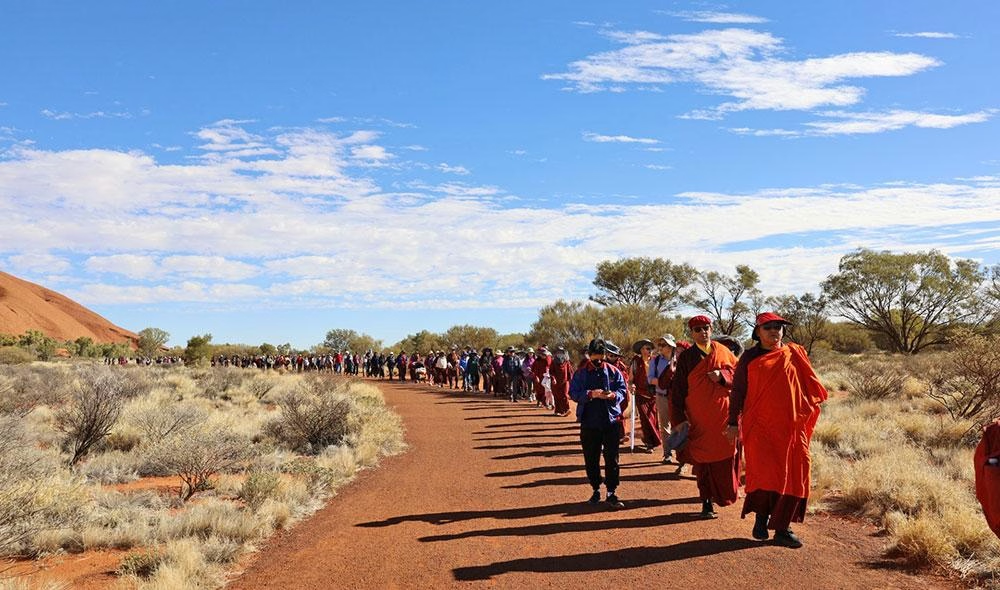
In 2025, a remarkable opportunity emerged when Gyalwa Dokhampa Rinpoche, a revered spiritual teacher, invited a group of Buddhist practitioners to undertake a pilgrimage to Uluru in Australia's Northern Territory. This invitation represented more than a religious journey—it symbolized a convergence of spiritual traditions, a meeting of sacred geographies, and an exploration of how reverence manifests across different cultural contexts.
Rinpoche's vision for this pilgrimage had developed over nearly a decade, reflecting careful spiritual discernment and preparation. The decision to gather 37 individuals from various backgrounds and stages of spiritual practice demonstrated the inclusive nature of contemporary Buddhist practice in the diaspora. This gathering included not only monks and nuns but also laypeople, families with children, and elders—creating a diverse community united by shared spiritual intention.
The logistics of such a pilgrimage required extraordinary coordination. Over five days, the group traveled by road from Western Australia across South Australia and into the Northern Territory. The journey itself became part of the spiritual practice—crossing red earth landscapes, navigating through silence and conversation, maintaining collective prayer and intention. This extended travel created space for deeper reflection and community building, transforming what could have been mere transportation into a contemplative experience.
Uluru: The Copper-Coloured Mountain 🏜️
Uluru, also known as Ayers Rock, stands as one of Australia's most iconic natural formations and one of the world's most significant Indigenous sacred sites. Rising 348 meters above the surrounding desert, this massive sandstone monolith transforms dramatically with changing light—shifting from copper to purple to deep indigo as the sun moves across the sky. For the Aṉangu people, the Traditional Owners of this Country, Uluru represents far more than a geological wonder; it embodies living law, ancestral knowledge, and ongoing relationship with the land.
The 2025 pilgrimage brought together approximately 375 Buddhist practitioners from various traditions and backgrounds. This gathering represented one of the largest Buddhist pilgrimages to Uluru, reflecting growing interest in cross-cultural spiritual exchange and the recognition of sacred sites beyond traditional Buddhist geography. The diversity of the gathering—including parents with children, elders supported by younger community members, and numerous volunteers and carers—demonstrated how pilgrimage functions as a community-building practice.
For Buddhist practitioners, Uluru evokes Zangdo Pelri, the Copper-Coloured Mountain of Guru Rinpoche's realm in Vajrayana Buddhist cosmology. Rinpoche's teachings suggested that enlightened presence transcends familiar forms and may manifest in unexpected ways, including within Australian landscapes. This perspective invited pilgrims to expand their understanding of how the sacred manifests across different cultural and geographical contexts.
Sacred Geography and Cultural Respect 🌍
The pilgrimage to Uluru presented a profound pedagogical opportunity: how can practitioners maintain deep devotion to their own spiritual traditions while genuinely honoring distinct sacred traditions of other peoples? This question carries particular weight given Australia's complex history and the ongoing work of reconciliation with Indigenous communities.
The Aṉangu people's relationship with Uluru and the surrounding landscape operates through Tjukurpa—a system encompassing law, knowledge, stories, and direct relationship with Country understood on its own terms. Respect for Tjukurpa requires listening to what Aṉangu choose to share rather than interpreting their knowledge through Buddhist or Western frameworks. During the retreat, prayers intentionally included Aṉangu and Indigenous peoples across Australia, acknowledging both spiritual solidarity and the responsibility to listen, respect, and act in support of Indigenous sovereignty and wellbeing.
This approach reflects evolving understanding within global Buddhist communities about cultural humility and appropriate engagement with sacred sites. Rather than imposing Buddhist interpretations onto Uluru, Rinpoche invited pilgrims to examine their own perceptions and attachments to familiar forms. In Vajrayana philosophy, appearances are inseparable from emptiness—the fundamental nature of reality. Attachment to habitual perceptions can obscure this understanding, while loosening such attachments creates space for wisdom and compassion to deepen together.
The Teaching of Perception and Reverence 💫
Rinpoche's core teaching during the pilgrimage centered on examining the mind that perceives. How do our habitual patterns of thinking shape what we see? Can we hold deeply to our own faith while cultivating the wisdom and humility to honor how others understand the sacred? These questions invited pilgrims toward a more nuanced spirituality—one that honors particularity while remaining open to transcendent truth manifesting in unexpected forms.
The Yangtik teaching offered at Uluru posed another essential question: can what we hold in our minds be reflected in how we speak and act? This inquiry transformed reverence from an internal, private experience into an ethical commitment affecting behavior toward people and the land. Spiritual authenticity requires alignment between inner conviction and outer action—a principle that carries profound implications for how pilgrims engage with communities, environments, and social responsibilities upon returning home.
This teaching resonates with Bhutan's own philosophical framework of Gross National Happiness, which emphasizes that wellbeing extends beyond individual spiritual development to encompass community welfare, environmental conservation, and cultural preservation. The integration of spiritual practice with social and environmental responsibility represents a crucial evolution in contemporary Buddhist engagement with the world.
Witnessing Exchange: The Documentary Encounter 🎬
Following the main pilgrimage gathering, a remarkable opportunity emerged for a select group to witness a deeply significant exchange between Rinpoche and Aṉangu Elders. This encounter was filmed as part of a documentary project exploring the intersection of ancient wisdom traditions and contemporary spiritual practice. The meeting brought together two holders of profound ancestral knowledge—one rooted in Himalayan Buddhist tradition, the other in one of the world's oldest continuous living cultures.
An Aṉangu Elder shared perspectives on land stewardship that transcended cultural boundaries. She articulated a fundamental principle: the land does not belong to us; we are custodians entrusted with its care before passing that responsibility to generations yet to come. This teaching aligns remarkably with Buddhist concepts of interdependence and with Bhutan's constitutional commitment to maintaining at least 60% forest coverage—a commitment rooted in both environmental necessity and spiritual principle.
The exchange demonstrated how different traditions, when approached with genuine respect and openness, often converge on essential truths about human responsibility, interconnection, and the sacred nature of the natural world. Such encounters carry particular significance in our contemporary moment, when environmental degradation, cultural erosion, and spiritual disconnection present interrelated challenges requiring wisdom from multiple traditions.
The Return Journey: Integration and Transformation 🔄
Pilgrimage functions not merely as escape from ordinary life but as a transformative practice that reshapes how practitioners engage with their world upon return. The journey from Jomolhari to Uluru—spanning thousands of kilometers and bridging distinct spiritual traditions—represents a pilgrimage home in multiple senses. It is a return to the sacred dimension of existence that often becomes obscured in daily life; a reconnection with spiritual community and lineage; and a deepening commitment to integrating wisdom into action.
For Bhutanese practitioners in diaspora, such pilgrimages carry particular significance. They affirm that spiritual home transcends geography—that reverence for Jomolhari and connection to Bhutanese Buddhist tradition remain vital even when living on distant continents. Simultaneously, they expand understanding of what "home" means, recognizing that sacred geography exists not only in places of origin but in any landscape approached with genuine openness and respect.
The experience at Uluru—witnessing how 375 practitioners from diverse backgrounds gathered in shared spiritual intention, how different traditions could honor one another's sacredness, how ancient wisdom and contemporary practice could converge—offers a model for how communities might navigate our increasingly pluralistic world. It suggests that spiritual depth and cultural respect need not be opposed; rather, genuine reverence for one's own tradition creates the foundation for honoring others' sacred truths.
Lessons for Contemporary Spiritual Practice 🌟
The pilgrimage from Jomolhari to Uluru illuminates several crucial insights for contemporary practitioners. First, sacred geography extends beyond traditional religious sites—the sacred manifests wherever practitioners approach with genuine reverence and openness. Second, spiritual maturity involves holding deep devotion to one's own tradition while cultivating humility about the limits of one's perception and the validity of others' spiritual paths.
Third, pilgrimage functions as both individual transformation and community building. The extended journey, the shared prayers, the collective witnessing of sacred landscape—these create bonds of spiritual kinship that sustain practitioners through subsequent challenges. Fourth, authentic spirituality must integrate into ethical action and environmental responsibility. Reverence that remains confined to internal experience or ritual practice remains incomplete.
Finally, the pilgrimage demonstrates that in our globalized world, spiritual seekers increasingly undertake journeys that cross cultural and geographical boundaries. These movements create opportunities for genuine exchange and mutual learning—but only when approached with the humility and respect that characterized this gathering. The presence of Aṉangu Elders' wisdom within the Buddhist pilgrimage space, and Buddhist practitioners' genuine honoring of Indigenous sovereignty and knowledge, modeled how cross-cultural spiritual engagement might proceed.
Looking Forward: Sustaining the Vision 🔮
As Bhutanese communities continue to develop internationally while maintaining strong cultural roots, pilgrimages like the 2025 journey to Uluru become increasingly significant. They provide opportunities for diaspora communities to deepen spiritual practice, reconnect with lineage and tradition, and engage meaningfully with the wider world. They also create platforms for genuine cross-cultural dialogue and mutual respect.
The vision that Rinpoche held for nearly a decade and brought to fruition in 2025 offers a template for how spiritual communities might engage with contemporary challenges. By combining rigorous spiritual practice with cultural humility, environmental awareness, and commitment to social responsibility, Buddhist communities demonstrate how ancient wisdom traditions remain profoundly relevant to contemporary life.
For those who grew up with Jomolhari on the horizon, the journey to Uluru affirms that home exists not only in geographical location but in spiritual alignment and community connection. It suggests that reverence for one's own sacred mountains need not limit appreciation for others' sacred landscapes. And it demonstrates that pilgrimage—the ancient practice of traveling to sacred sites with intentional spiritual purpose—remains a powerful pathway to transformation, connection, and wisdom.
The memory of Uluru's colors shifting with evening light, the experience of standing with hundreds of practitioners in shared spiritual intention, the wisdom shared by Aṉangu Elders, and the teachings offered by Rinpoche—these become part of pilgrims' inner landscape, as vital and sustaining as any mountain on the horizon. They carry forward the vision of a world where spiritual depth, cultural respect, and ethical commitment converge in service of collective wellbeing and the flourishing of all beings.
You May Also Like
Culture
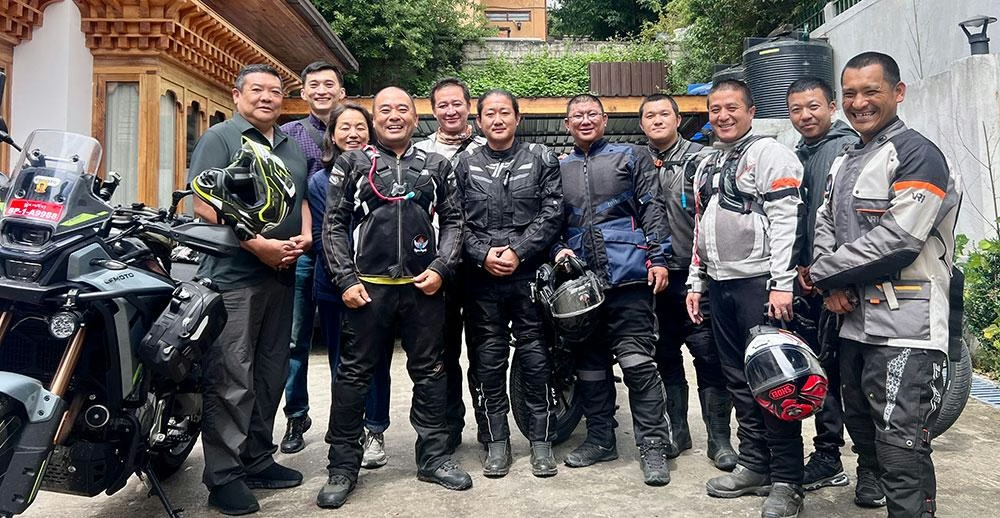
Vajra Bikers: The Monks Riding Sacred Paths
October 28, 2026

Culture
108,108 Prostrations: Sacred Spiritual Journey at Bhutan's Historic Chortens
October 24, 2026
Culture
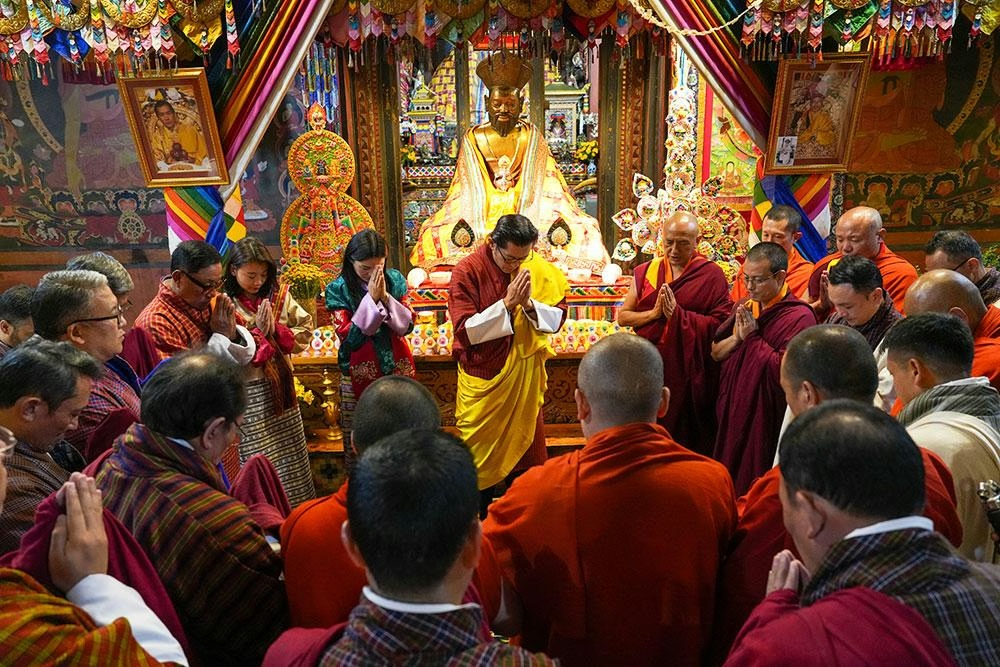
Ancient Bhutanese Tradition Steps Into Digital Age
October 24, 2026
Culture
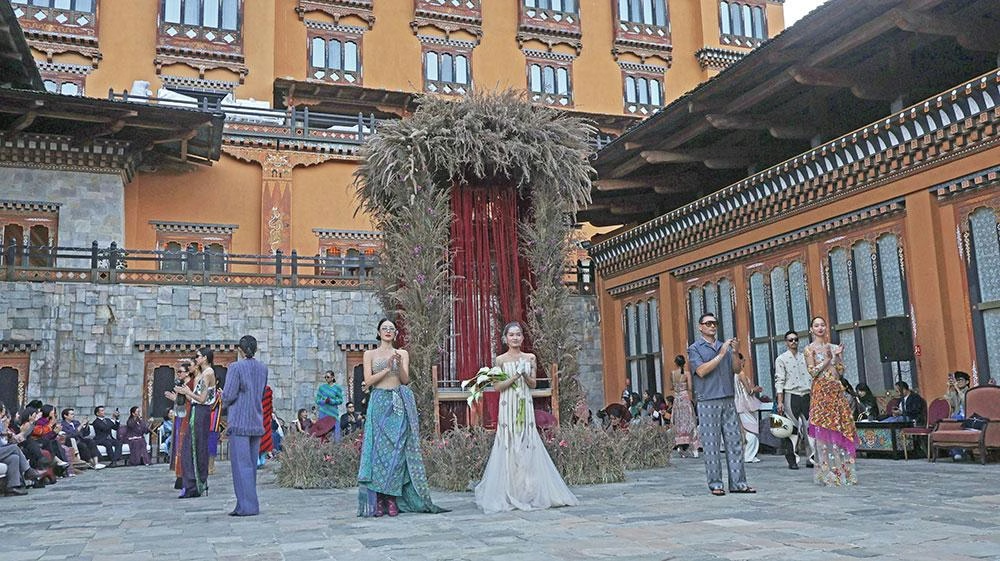
Thai Designer Transforms Bhutanese Textiles into Contemporary Fashion
October 23, 2026