Category:
TourismTsirang's Tourism Transformation: From Highway Pit Stop to Destination
A Strategic Shift for Bhutan's Emerging Gateway 🌏
Tsirang dzongkhag stands at a pivotal moment in its economic evolution. Nestled strategically along the corridor leading to Gelephu Mindfulness City (GMC), this traditionally agriculture-focused region is reimagining its identity as a destination rather than simply a place travelers pass through. The transformation represents a carefully calibrated strategy that honors Tsirang's agricultural heritage while capitalizing on unprecedented tourism opportunities.
The dzongkhag's positioning is neither accidental nor hastily conceived. With GMC expected to generate substantial visitor traffic and economic activity in the region, Tsirang has recognized a unique opportunity to diversify its economy while maintaining the agricultural and livestock production that currently sustains its communities.
Understanding Tsirang's Current Economic Foundation 📊
Before examining the tourism pivot, it's essential to understand what Tsirang has already built. The dzongkhag's economic performance demonstrates robust agricultural productivity that extends far beyond subsistence farming.
Recent midterm reviews reveal impressive production metrics across multiple sectors:
- Vegetable production reached 2,365.7 tonnes, surpassing the annual target of 2,210 tonnes
- Milk production achieved 2,638 tonnes, supporting a thriving dairy sector
- Egg production generated an impressive 20.64 million units
- Cereal production reached 5,381 tonnes, fulfilling nearly 90 percent of targets
- Livestock diversity includes 370 tonnes of chicken, 490 tonnes of pork, and 47 tonnes of chevon
This production base isn't merely statistical—it represents thousands of farmers, dairy cooperatives, and agricultural enterprises that have built sustainable livelihoods. The sector has generated meaningful employment through farm operations, milk collection and processing facilities, and organized farmer groups throughout the dzongkhag.
Value Addition: The Missing Link 🔗
Tsirang has already begun moving beyond raw commodity production through strategic value addition initiatives. Under the One Gewog One Product programme, local producers are developing differentiated products including ghee, buckwheat flour, kharang, and banana chips.
This transition is crucial for several reasons:
- Higher profit margins for producers through processing
- Extended shelf life enabling broader market distribution
- Brand development opportunities that attract premium pricing
- Employment diversification within rural communities
- Visitor appeal through authentic local products
The value addition movement creates a natural bridge between Tsirang's agricultural identity and its emerging tourism economy. Visitors increasingly seek authentic, locally-produced goods as souvenirs and gifts, creating market opportunities that didn't exist when only raw produce was available.
The GMC Effect: Creating Tourism Momentum 🚀
Gelephu Mindfulness City represents a transformative development for the region. While still in development phases, GMC's anticipated economic activity will fundamentally reshape visitor patterns and economic opportunities throughout the corridor.
Tsirang's current visitor numbers provide context for understanding the opportunity ahead. Tourist arrivals increased from 1,829 in 2024 to 2,120 in 2025, representing growth momentum but also illustrating that the dzongkhag remains in early-stage tourism development. The district has set an ambitious target of 10,000 visitors by 2029—a five-fold increase that will require comprehensive infrastructure and service development.
International visitor growth, while still modest in absolute terms, signals emerging market interest. This suggests that with proper positioning and facilities, Tsirang can capture a meaningful share of the growing visitor base.
Strategic Infrastructure Development 🏗️
Tsirang's tourism strategy isn't theoretical—it's grounded in concrete infrastructure projects already underway or completed:
Completed and Operational Facilities
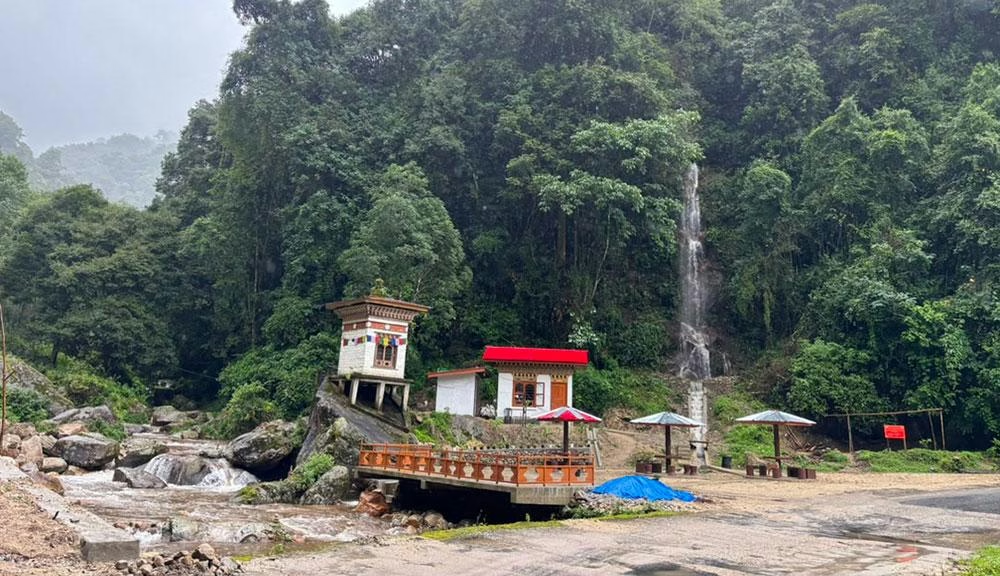
Recreational amenities at Kuchi Stream have been completed, providing visitors with rest areas and natural attractions. Darachhu Lake has undergone revival efforts, transforming a natural resource into a visitor-accessible destination. These projects demonstrate the dzongkhag's commitment to converting existing natural assets into tourism infrastructure.
Projects in Active Development
The Economic Hub in Damphu represents a comprehensive commercial facility designed to support both local businesses and visitor services. Landscaping and agro-tourism product development at Lungsigang positions this location as Tsirang's gateway—a critical first impression for arriving visitors.
High-Priority Future Developments
The next phase includes an Integrated Roadside Station at Serutar, designed as a comprehensive stop offering food, rest facilities, and local product sales. The Agro-Tourism Hub at Mendrelgang will showcase agricultural practices and enable visitor engagement with farming activities. Revival projects for Sukhay, Jori, and Sheti Phokhari lakes will expand the dzongkhag's natural attractions portfolio.
This multi-site approach represents sophisticated tourism planning. Rather than concentrating development at a single location, Tsirang is creating a distributed network of attractions and facilities along the highway corridor. This strategy maximizes visitor engagement opportunities and distributes economic benefits across multiple communities.
The Agro-Tourism Advantage 🌾
Tsirang's agricultural identity represents its strongest competitive differentiation in the tourism market. As Bhutan's tourism sector matures, visitors increasingly seek authentic experiences that connect them with local communities and traditional practices.
Agro-tourism offers multiple experience possibilities:
- Farm visits and agricultural demonstrations showing vegetable cultivation techniques
- Dairy operations tours explaining milk production and processing
- Seasonal harvest participation enabling hands-on engagement with farming cycles
- Traditional cooking classes utilizing locally-produced ingredients
- Farm-to-table dining experiences showcasing regional cuisine
- Livestock interaction particularly with dairy cattle and poultry operations
The Director of Tourism has emphasized that hospitality training will be essential for success. However, the focus extends beyond generic service skills to developing distinctly Tsirang experiences rooted in local culture, traditions, and cuisine. This approach aligns with broader trends in experiential tourism where travelers seek meaningful cultural engagement rather than standardized resort experiences.
National Tourism Standards Framework 📋
Tsirang's development is reinforced by the Tourism Minimum Facilities Initiative, launched nationally by Bhutan's Department of Tourism on July 31. This framework operates through the TASHEL system, establishing baseline standards for tourism destinations.
TASHEL encompasses six critical dimensions:
- Cleanliness: Maintaining hygienic, well-maintained facilities
- Accessibility: Ensuring physical access for diverse visitor populations
- Safety: Implementing security and health protocols
- Hospitality: Training staff in service excellence
- Authenticity: Preserving cultural and environmental integrity
- Local Stewardship: Ensuring community benefit and resource sustainability
For Tsirang, these standards provide a practical framework for developing visitor-ready infrastructure. Rather than improvising tourism development, the dzongkhag can align its projects with nationally-recognized quality benchmarks, ensuring consistency and credibility.
Connectivity as Foundation 🛣️
Tsirang possesses fundamental advantages that many emerging tourism destinations lack. All 12 gewog centers are connected by motorable roads, providing essential infrastructure for visitor movement and service delivery.
Broader connectivity metrics demonstrate the dzongkhag's readiness for tourism development:
- More than 95 percent of the population lives within an hour's walk of a roadhead
- More than 98 percent of settlements have access to telecommunications services
- 3G and 4G coverage enables digital connectivity for business and visitor services
This infrastructure foundation distinguishes Tsirang from many global tourism destinations that must invest heavily in basic connectivity before tourism development can proceed.
Financial Commitment and Resource Allocation 💰
Tsirang's tourism ambitions are backed by substantive public investment. The dzongkhag's annual block grant for fiscal year 2026-27 totals Nu 125.89 million, with Nu 27.99 million allocated as controllable expenditure excluding salaries.
Budget allocation reflects strategic priorities:
- Livestock development: Nu 20.29 million
- Agriculture: Nu 3.95 million
- Urban development and engineering: Nu 28.23 million
This spending distribution reveals Tsirang's balanced approach—strengthening existing agricultural and livestock sectors while simultaneously investing in the infrastructure necessary for tourism growth. The substantial allocation for urban development and engineering specifically supports tourism facility construction and roadside amenity development.
Sports Tourism as Complementary Strategy 🏅
Beyond agro-tourism, Tsirang is developing sports as a visitor activity utilizing the same infrastructure and hospitality facilities being developed for general tourism. This approach maximizes facility utilization while appealing to different visitor demographics.
Sports tourism opportunities might include hiking and trekking activities, mountain biking routes, agricultural heritage walks, and community-based sporting events. By leveraging existing natural features and developing basic sports infrastructure, Tsirang can attract visitors interested in active recreation experiences.
The Market Opportunity: GMC's Economic Spillover 📈
While GMC represents Tsirang's most significant opportunity, understanding the broader context is essential. Gelephu's development as a mindfulness and sustainable development city will create substantial employment, attract international visitors, and generate business activity.
For Tsirang, this translates to several economic advantages:
- Visitor overflow: GMC's capacity may exceed available accommodation, creating demand for nearby facilities
- Day-trip market: Visitors to GMC may seek day excursions to nearby attractions
- Supply chain opportunities: GMC's operations will require agricultural products and services
- Workforce proximity: Employment at GMC may attract workers from Tsirang
- Business development: Service businesses supporting GMC operations may locate in Tsirang
The dzongkhag's strategic positioning along the GMC corridor places it in an optimal location to capture these economic opportunities.
Product Branding and Market Identity 🎯
Ministry leadership has emphasized the importance of giving greater value and identity to Tsirang's agricultural products through strategic branding and value addition. This represents a critical shift from commodity production toward branded product development.
With GMC expected to create a substantial nearby market, Tsirang producers have opportunities to:
- Supply fresh produce to GMC facilities and visitor services
- Develop branded product lines for retail distribution
- Create farm-to-table dining experiences
- Establish direct relationships with hospitality businesses
- Market products through tourism channels
Branding efforts should emphasize Tsirang's identity as a high-quality agricultural producer, leveraging the dzongkhag's reputation for sustainable farming practices and authentic local production.
Challenges and Considerations ⚠️
While opportunities are substantial, Tsirang faces real challenges in executing its tourism strategy. Hospitality service standards require training and cultural shift among local communities. Tourism seasonality may create employment volatility. Competition from other emerging tourism destinations requires differentiation and quality excellence.
Successfully navigating these challenges requires sustained commitment to training, infrastructure maintenance, quality standards, and community engagement. The dzongkhag's early-stage visitor numbers suggest that tourism development remains a multi-year endeavor requiring patience and consistent investment.
Looking Forward: Tsirang's Tourism Horizon ✨
Tsirang's transformation from a transit corridor to a tourism destination represents strategic economic diversification grounded in authentic local assets. By leveraging agricultural production, natural attractions, and cultural heritage while maintaining economic stability through continued agricultural investment, the dzongkhag is positioning itself for sustainable growth.
The convergence of GMC development, national tourism standards frameworks, infrastructure investment, and community readiness creates a unique moment for Tsirang. Over the coming years, visitors traveling to Gelephu will increasingly recognize Tsirang not as a place to pass through, but as a destination worth exploring—a place where agricultural heritage meets contemporary hospitality, where local communities share their traditions, and where authentic Bhutanese experiences await.
Success will require continued investment, quality focus, and community engagement. But the foundation is clearly in place for Tsirang to emerge as a meaningful contributor to Bhutan's tourism economy while preserving the agricultural character that has defined the dzongkhag for generations.
You May Also Like
Tourism
Six Wildlife Sites to Boost Bhutan Tourism Circuit
August 26, 2026
Tourism
Bhutan's Tourism Crisis: Hidden Commissions Threaten Craft Authenticity
August 26, 2026
Tourism
Bumthang Tourism Growth: Local Businesses Push for Better Facilities
August 15, 2026
Tourism
24-Hour SDF Waiver Expansion: Transforming Phuentshogling into a Tourism Destination
August 9, 2026