Category:
CultureThe Last Herds of Zhodu: Bhutan's Fading Pastoral Legacy
A Windswept Highland Sanctuary at the Edge of Change 🏔️
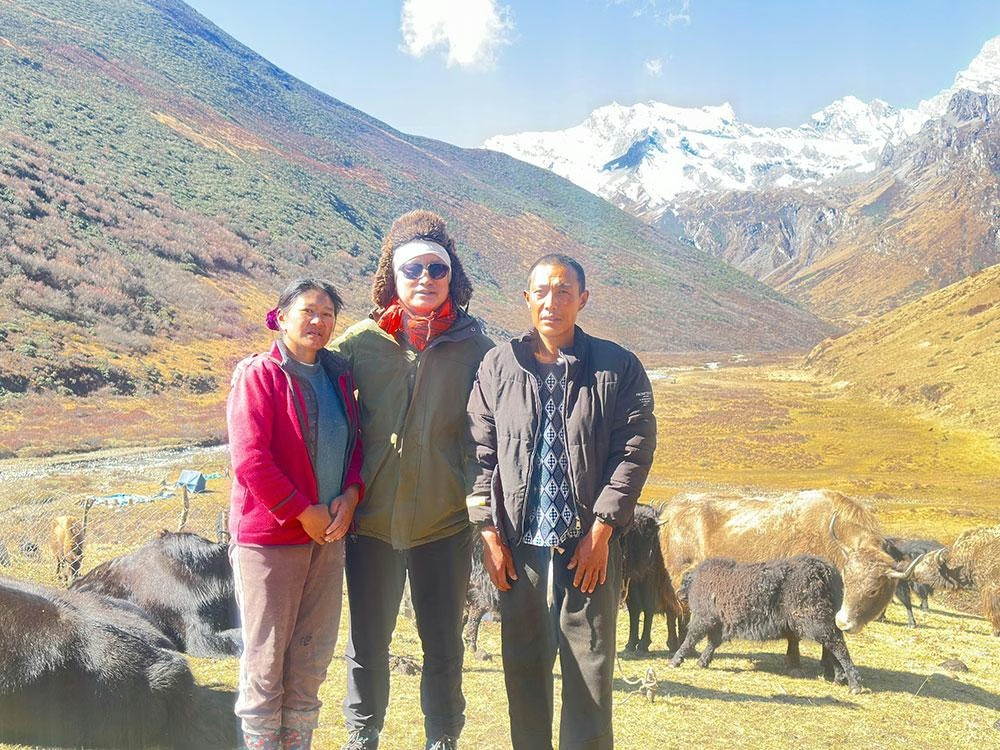
Perched at approximately 4,300 metres above sea level, nestled between the remote settlements of Barshong and Lingzhi, exists a place that defies conventional geography. Zhodu has no roads, no permanent structures, and no official designation on most maps. Yet this austere highland location serves as a vital waypoint for countless travellers undertaking the arduous journey across Bhutan's northern mountain passes, and more importantly, it remains home to three families whose entire existence revolves around the ancient practice of yak herding.
For these families, Zhodu represents far more than a geographical coordinate. It is a living testament to centuries of pastoral tradition, a fragile connection to ancestral knowledge, and increasingly, a symbol of cultural practices facing an uncertain future in modern Bhutan.
Life in the High Pastures: A Day-to-Day Reality 🐄
Kinzang Wangchuk and Dema Tshering, both in their late thirties, exemplify the contemporary yak herding family. Together, they manage approximately 100 yaks, with each of the other two families at Zhodu maintaining similar-sized herds. Their existence follows an ancient rhythm dictated entirely by seasonal pasture availability and climatic conditions.
From May through July, the families drive their animals to even higher elevations where summer grazing is most abundant. They return to Zhodu's immediate vicinity during the remaining months, though unlike herding communities in Merak and Sakteng—which traditionally utilize multiple seasonal grazing zones—the Zhodu families depend heavily on the limited pasture surrounding their highland settlement.
The reality of their daily lives stands in sharp contrast to the modern world below. Yak herding demands constant presence and unwavering commitment. There are no days off, no opportunity for both parents to leave simultaneously, and no escape from the relentless demands of livestock management.
The Harshest Season: Winter's Unforgiving Test ❄️
November through January represent the most brutal period for highland herders. Thick snow blankets the landscape, accessible pasture diminishes dramatically, and yak mortality rates climb significantly. During these months, the animals face genuine survival challenges, and families must employ every ounce of their accumulated knowledge to keep their herds alive.
Kinzang and Dema have identified a critical gap in their current management strategy: access to lower elevation pastures between 3,000 and 3,800 metres would provide crucial winter refuge when highland conditions become untenable. Currently, they lack viable options for moving their animals to more hospitable zones during the most severe weather, forcing them to manage their herds through conditions that exact a heavy toll.
This limitation reflects a broader challenge facing Bhutan's pastoral communities. Rangeland management and seasonal grazing access remain inadequately developed compared to the sophisticated knowledge systems that herders themselves possess.
The Education Paradox: Opportunity and Loss 📚
Kinzang and Dema have made a deliberate choice to send their two sons to boarding schools in Thimphu—one currently in Class XII and the other in Class VII. This decision reflects the aspirations that most parents hold for their children: better educational opportunities, expanded career prospects, and escape from the grinding physical demands of pastoral life.
Yet this choice embodies a profound paradox. By providing their sons with alternatives to herding, they simultaneously reduce the likelihood that anyone will inherit their family's pastoral knowledge and practices. Neither son currently expresses interest in returning to the highlands to continue the family tradition. Their parents understand this reality with painful clarity.
The broader statistics paint a concerning picture. Today, approximately 39 households continue yak herding in Lingzhi Gewog, a dramatic decline from historical levels. This contraction reflects a generational shift where young people increasingly view herding not as a viable livelihood but as a hardship to escape.
Knowledge Systems Under Threat 🌍
Pastoralism encompasses far more than simply tending animals. Over generations, herding families have accumulated extraordinary knowledge about:
- Mountain ecology: Which pastures sustain animals during specific seasons, where water sources exist, and how vegetation patterns change throughout the year
- Animal health: Traditional and contemporary methods for preventing disease, treating injuries, and maintaining herd productivity
- Wildlife management: Understanding predator patterns, migration routes of wild animals, and ecological relationships within alpine systems
- Route navigation: Knowledge of safe passages through treacherous terrain, emergency shelter locations, and weather prediction based on environmental signs
- Community connections: Trade relationships, barter systems, and social networks linking highland families with valley communities
As fewer young people learn these skills through daily practice, this accumulated wisdom faces erosion. When knowledge transmission breaks down across even a single generation, centuries of accumulated expertise can be lost irretrievably.
The Ripple Effects: Beyond Livestock 🌲
The decline of pastoral communities carries consequences that extend far beyond individual families or livestock management. Alpine rangelands provide multiple ecosystem services that depend partly on human stewardship:
- Pasture productivity and sustainable grazing that prevents rangeland degradation
- Wildlife habitat maintenance for endangered species adapted to high-altitude environments
- Water system regulation through vegetation management and soil conservation
- Cultural heritage preservation that connects contemporary Bhutanese to their ancestral traditions
- Human presence and accessibility in remote regions, providing crucial waypoints for travellers and emergency support networks
When herding families depart, the human knowledge and daily management practices that sustain these landscapes depart with them. The consequence is not simply cultural loss—it represents an ecological management vacuum.
For travellers like those passing through Zhodu, the presence of Kinzang and Dema provides more than hospitality. It offers genuine shelter, sustenance, and security in an unforgiving environment. Their departure would eliminate this crucial service in one of Bhutan's most remote regions.
The National Context: Bhutan's Development Crossroads 🇧🇹
Bhutan's commitment to measuring progress through Gross National Happiness rather than GDP alone reflects a philosophical approach that theoretically values cultural preservation and environmental stewardship. Yet this framework faces practical challenges when applied to pastoral communities.
Education expansion, economic diversification, and improved connectivity to remote regions have genuinely improved living standards for many Bhutanese. Young people now have access to opportunities their parents never imagined. However, these same developments have made traditional pastoral livelihoods seem increasingly untenable by comparison.
The tension is real: How can a nation simultaneously promote education and opportunity while maintaining cultural practices that require young people to forgo both?
What Pastoralism Requires to Survive 💪
Traditions do not persist simply because they are historically significant. They endure only when successive generations perceive viable futures within them. For Zhodu's herding families, survival of their way of life would require:
- Secure rangeland access: Formal recognition and protection of grazing rights, particularly for winter pastures at lower elevations
- Improved animal health services: Veterinary support, disease prevention programs, and modern health management integrated with traditional knowledge
- Market development: Fair pricing mechanisms for yak products, value-added production opportunities, and reliable sales channels
- Infrastructure investment: Improved shelter facilities, water management systems, and communication access
- Youth engagement: Demonstrating that herding can provide adequate income without requiring the same hardships parents endured
- Knowledge documentation: Recording and teaching pastoral expertise through formal education alongside traditional apprenticeship
- Policy support: Government recognition of herding's ecological and cultural value through targeted subsidies or incentives
The Uncertain Future: Questions Without Easy Answers ❓
As Kinzang and Dema's sons progress through their studies in Thimphu, an unspoken question hangs over Zhodu: Will either son choose to return to herding? More broadly, will any young person in Lingzhi Gewog find compelling reasons to remain in or return to pastoral work?
The answer depends not on nostalgia or cultural sentiment alone. It requires concrete improvements in livelihood viability, access to services, and economic sustainability. Young people need to see that herding can provide dignity, adequate income, and acceptable living standards without demanding the same exhausting sacrifices their parents have endured.
Currently, the trajectory suggests continued decline. Without significant intervention—including coordinated investment in herding communities, improved rangeland management, and genuine opportunities for pastoral youth—the number of households practising yak herding will likely continue contracting.
Respect Must Translate to Support 🤝
Bhutan's national rhetoric emphasizes cultural preservation and environmental stewardship. These values are genuine and deeply held. Yet rhetoric must translate into concrete support for those actually practising these traditions.
For Kinzang and Dema, respect means more than acknowledgment. It means access to winter pasture, veterinary services, fair markets, and the possibility that their sons—should they choose to return—could build lives that honour their heritage without reproducing the hardships their parents endured.
It means recognizing that pastoral families are not museum exhibits or living heritage performances. They are contemporary Bhutanese citizens whose livelihoods deserve the same policy attention and investment as any other economic sector.
Looking Ahead: The Choice Ahead 🔮
High above the valleys, in the windswept settlement of Zhodu, three families continue their daily work. They tend their herds through brutal winters, shelter weary travellers, and maintain knowledge systems refined across centuries. Their future extends beyond this small place.
The question facing Bhutan is not whether these families will survive—they will, as long as they choose to remain. The real question is whether the nation will create conditions where young people can choose to join them. Whether the next generation will find enough reason to return to the mountains. Whether pastoralism will evolve and adapt, or fade into historical memory.
The answer will reveal much about Bhutanese values and priorities. It will show whether cultural preservation is truly central to national identity, or merely decorative. And it will determine whether places like Zhodu remain living communities or become archaeological sites of abandoned traditions.
For now, Kinzang and Dema continue their work, their sons study in the capital, and travellers find shelter in the high pastures. The future remains unwritten, waiting for the choices that will shape it.
You May Also Like
Culture
Highlanders Celebrate 12th Jomolhari Mountain Festival
October 21, 2026
Culture
Sacred Heart of 108 Chortens: Bhutan's Spiritual Masterpiece
August 26, 2026
Culture
When Colour Drains From the Scene: Spiritual Gatherings in Bhutan
August 15, 2026
Culture
The Vanishing Trade of Drukor: Bhutan's Fading Cultural Exchange
August 15, 2026