Category:
CultureHighlanders Celebrate 12th Jomolhari Mountain Festival
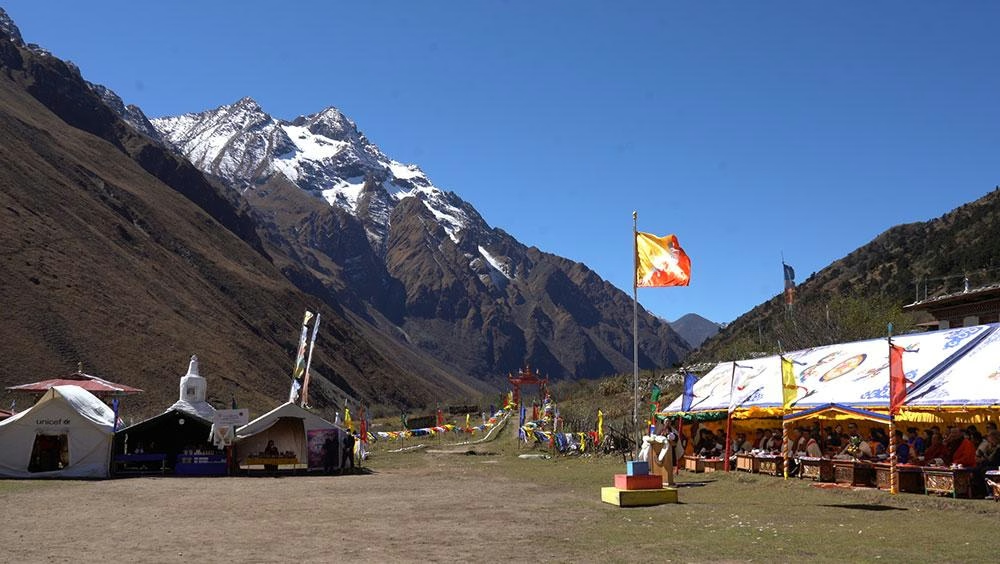
A Celebration of Highland Heritage and Conservation 🏔️
High in the eastern reaches of Bhutan, where mist clings to mountain peaks and ancient traditions remain vibrantly alive, communities gathered for a remarkable cultural milestone. The 12th Jomolhari Mountain Festival brought together more than 350 people from remote highland settlements, creating a vibrant tapestry of tradition, community spirit, and environmental stewardship that exemplifies Bhutan's unique approach to preserving both culture and nature.
Located at the base of Mount Jomolhari—Bhutan's second-highest peak and a sacred site for local communities—this annual celebration has evolved into a powerful symbol of highland resilience and cultural continuity. Held on October 14 and 15, the festival demonstrated the remarkable dedication of mountain dwellers who traverse challenging terrain to participate in this cherished tradition.
The Journey to the Mountains ⛰️
Attending the Jomolhari Mountain Festival requires genuine commitment. Participants from Naro and Lingzhi gewogs, along with residents from Yaktsa and Nubri villages in Tsento gewog, Paro, undertook arduous journeys to reach the festival site. Those traveling the standard route face a demanding two-day trek on foot, though local residents intimately familiar with mountain pathways can accomplish the journey in a single day.
Dressed in their finest traditional attire, participants from Lingzhi Gewog walked approximately six hours to attend the celebration. This physical dedication speaks volumes about the cultural significance these highland communities place on maintaining their heritage and strengthening social bonds with neighboring settlements.
The festival's remote location and challenging accessibility serve as a natural filter, ensuring that attendees arrive with genuine enthusiasm and commitment to celebrating their shared identity. This exclusivity paradoxically strengthens community bonds, as the effort required to attend becomes part of the experience itself.
Traditions Come Alive 🎭
The festival showcased the vibrant cultural practices that have defined highland Bhutanese communities for generations. Traditional circle dances formed the centerpiece of entertainment, with participants joining hands and moving rhythmically to ancient melodies that echoed across the mountainside. These dances carry deep cultural significance, often telling stories of harvests, spiritual beliefs, and community history.
Beyond traditional performances, the festival featured diverse activities that appealed to visitors of all ages:
- Horse racing competitions that celebrated the equestrian heritage of mountain communities
- Karaoke performances blending contemporary entertainment with local participation
- Tug of war contests showcasing community strength and cooperation
- Balloon popping and pillow fights providing lighthearted family entertainment
For local families, the festival represented far more than entertainment. It was an occasion to don their finest kira and gho—traditional Bhutanese garments—prepare special meals, and spend quality time together across generations. In an era of increasing modernization and rural-to-urban migration, these gatherings serve as crucial anchors for cultural continuity.
A Marketplace of Mountain Heritage 🧀
Local entrepreneurs transformed the festival grounds into a bustling marketplace showcasing the unique products of highland agriculture and craftsmanship. Stalls offered an array of locally-produced goods including plum wine, aromatic teas, and artisanal cheeses—products that represent generations of accumulated knowledge about mountain agriculture and food preservation.
The Jomolhari café became a gathering point, serving yak milk—a staple beverage in highland communities that provides essential nutrition and warmth in the cool mountain climate. These culinary offerings weren't merely commercial transactions; they represented living traditions of highland sustenance and hospitality.
The marketplace aspect of the festival supports local economies and incentivizes younger generations to maintain traditional production methods. By providing a platform for these products, the festival helps ensure that traditional knowledge remains economically viable in an increasingly globalized world.
Conservation and Coexistence 🐆
Beyond its cultural significance, the Jomolhari Mountain Festival carries profound conservation implications. Established in 2013, the festival's primary mission extends beyond celebration to actively promote snow leopard conservation and strengthen community participation in wildlife protection efforts.
The elusive snow leopard—known poetically as the "ghost of the mountains"—inhabits the same high-altitude terrain as these highland communities. This shared habitat creates inherent tensions between human livelihoods and wildlife preservation, making community engagement essential for long-term conservation success.
The festival's theme, "Celebrating Life in Harmony with the Snow Leopard," encapsulates this dual commitment to both cultural preservation and environmental stewardship. This integration of conservation messaging within cultural celebration represents an innovative approach to wildlife protection that respects local autonomy and cultural values.
International Partnership and Innovation 🌍
The festival attracted international attention, with Ashleigh Lutz-Nelson, executive director of the California-based Snow Leopard Conservancy, attending for the first time. Her presence underscored the global significance of these highland communities' conservation efforts and their role in protecting one of the world's most endangered big cats.
The Snow Leopard Conservancy's involvement traces back to the festival's founding, with organization founders Dr. Rodney Jackson and Darla Hillard providing early support through their partnership with the Bhutan Foundation. This international collaboration demonstrates how local cultural events can bridge global conservation networks while maintaining authentic community ownership.
During the festival, Lutz-Nelson received remarkable real-time evidence of conservation success: a snow leopard had been captured on a camera trap that very morning, providing tangible proof of the species' presence in the region and validating community conservation efforts.
Innovative Solutions for Human-Wildlife Coexistence 🛡️
The Snow Leopard Conservancy has worked extensively with highland communities to develop practical solutions that protect both wildlife and human interests. Two particularly innovative approaches have gained traction:
Yak Insurance Programs: These schemes protect herders from financial losses when livestock fall prey to snow leopards, reducing the economic incentive to retaliate against predators and creating economic stability for mountain communities.
Movable Solar Fences: Solar-powered electric fencing provides non-lethal deterrents that prevent snow leopards from accessing livestock while avoiding permanent habitat modification. These fences can be relocated seasonally, allowing for flexible land management.
As Lutz-Nelson emphasized, these interventions represent more than technical solutions—they embody a philosophy of coexistence. "It's about protecting domestic animal welfare, health, for livelihoods, and also just creating lasting coexistence for both," she explained, capturing the holistic approach that successful conservation requires.
Visitor Perspectives and Cultural Impact 👥
First-time visitor Jimmy Tsering found the festival experience profoundly moving. "Seeing the local traditions and meeting new people from the Jomolhari community, I feel that they have much more culture preservation than people who stay in the town area or the populated area," he observed. His reflection highlights a critical reality: remote highland communities often maintain cultural practices more vibrantly than urban centers, making these festivals invaluable repositories of authentic heritage.
Young attendees also found deep meaning in the celebration. Class III student Jigme Singay expressed joy at witnessing traditional performances firsthand, suggesting that the festival plays a crucial role in transmitting cultural knowledge to younger generations who might otherwise experience cultural disconnection through education systems and media exposure to global influences.
The Broader Significance for Bhutan 🇧🇹
The Jomolhari Mountain Festival represents far more than a regional celebration. It exemplifies Bhutan's distinctive approach to development—one that prioritizes cultural preservation and environmental conservation alongside economic progress. In an era when globalization threatens traditional ways of life worldwide, Bhutan's commitment to maintaining highland communities as living cultural centers offers an alternative model.
The festival demonstrates how cultural events can serve multiple functions simultaneously: strengthening community bonds, preserving traditional knowledge, supporting local economies, advancing conservation goals, and fostering intergenerational cultural transmission. This multifunctional approach maximizes the social value of community gatherings.
Looking Forward ✨
As the Jomolhari Mountain Festival enters its second decade, it stands as a testament to highland community resilience and the possibility of sustainable coexistence between human communities and endangered wildlife. The festival's continued growth—attracting over 350 participants despite challenging accessibility—indicates deepening community commitment and recognition of its importance.
The convergence of cultural celebration with conservation action at Jomolhari offers valuable lessons for mountain communities globally. It demonstrates that protecting endangered species need not require abandoning traditional ways of life; instead, conservation can be woven into cultural practices, creating mutual reinforcement between heritage preservation and environmental protection.
For those seeking authentic cultural experiences and meaningful engagement with Bhutanese traditions, the Jomolhari Mountain Festival represents an unparalleled opportunity. The physical journey required to attend becomes part of the transformative experience, offering visitors genuine connection to highland communities and their remarkable commitment to maintaining both cultural identity and environmental stewardship in one of Asia's most pristine mountain regions.
You May Also Like
Culture
Sacred Heart of 108 Chortens: Bhutan's Spiritual Masterpiece
August 26, 2026
Culture
When Colour Drains From the Scene: Spiritual Gatherings in Bhutan
August 15, 2026
Culture
The Vanishing Trade of Drukor: Bhutan's Fading Cultural Exchange
August 15, 2026
Culture
Yojay: Ancient Buddhist Prayer Practice Goes Global
August 12, 2026