Category:
TourismTergola Red Panda Trail: Bhutan's Community-Led Wildlife Tourism Model

A New Era of Sustainable Wildlife Tourism in Bhutan 🌲
Bhutan's commitment to conservation has long been legendary, but a groundbreaking initiative in the Haa district is redefining how tourism and environmental protection can work hand-in-hand. The Tergola Red Panda Trail represents a transformative approach to nature-based and wildlife tourism, where local communities become active participants in both conservation and visitor experiences rather than passive observers.
Snaking through pristine broadleaf and rhododendron forests on the southern slopes of Tergola, this accessible trail embodies a philosophy that resonates throughout Bhutan's tourism sector: "Where red pandas thrive, forests survive." This isn't merely a catchy slogan—it reflects a fundamental shift in how destination management organizations and conservation bodies are approaching sustainable tourism development.
Understanding the Tergola Red Panda Trail Initiative 🐼
The Tergola Red Panda Trail stands as one of six flagship nature-based and wildlife tourism (NBWT) projects developed collaboratively by the Department of Forests and Park Services and WWF-Bhutan. This partnership represents a significant investment in creating thriving landscapes where endangered species, intact ecosystems, and community prosperity coexist.
What distinguishes this initiative from conventional tourism development is its deliberate community-centric design. Rather than imposing external tourism infrastructure on local populations, the project centers all activities around the Dorithasa community, positioning them as essential partners in both conservation outcomes and visitor experiences.
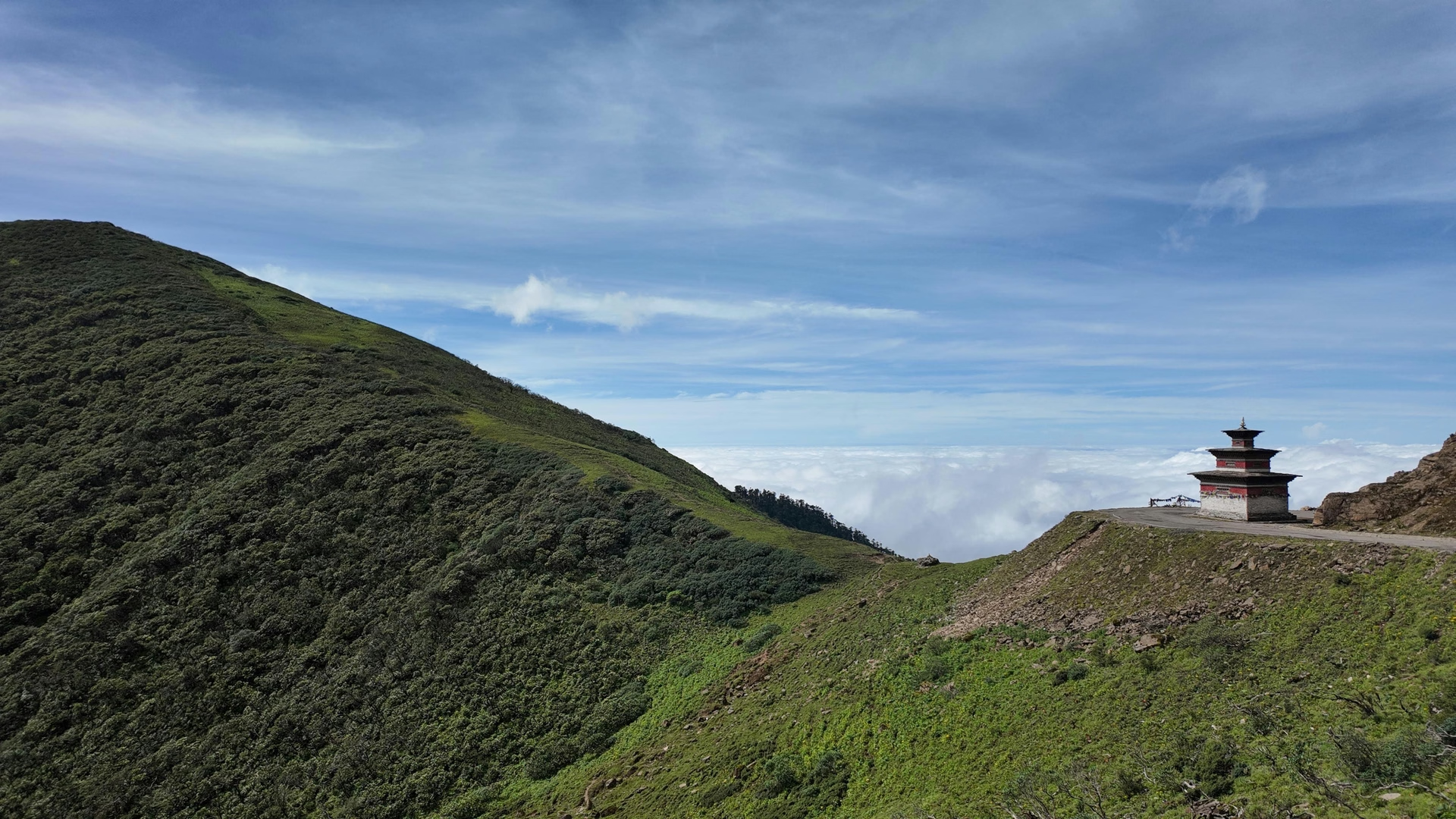
The trail winds through approximately 2,500 meters of elevation, offering visitors an immersive journey through diverse forest ecosystems. The bamboo understory, moss-laden trees, and intact forest structure create ideal habitat conditions for red pandas and numerous other forest species. While encounters with the elusive red panda are never guaranteed—adding genuine adventure to the experience—camera trap imagery, behavioral signs, and designated habitat zones ensure visitors develop meaningful connections with the species regardless.
Why Tergola Became the Focal Point 🎯
Tergola's selection as a flagship NBWT site wasn't arbitrary. The landscape demonstrates exceptional potential for red panda-centered tourism experiences backed by compelling scientific evidence.
Bhutan's national red panda survey documented 42 red pandas in Haa, with the majority concentrated in the Tergola landscape. A 2025 camera trap survey yielded 138 photographic records, including images of a red panda cub—a particularly significant finding for a species with low reproductive rates in the wild. Rangers and visitors have reported at least 12 direct red panda sightings, making Tergola one of the country's most promising sites for reliable wildlife viewing opportunities.
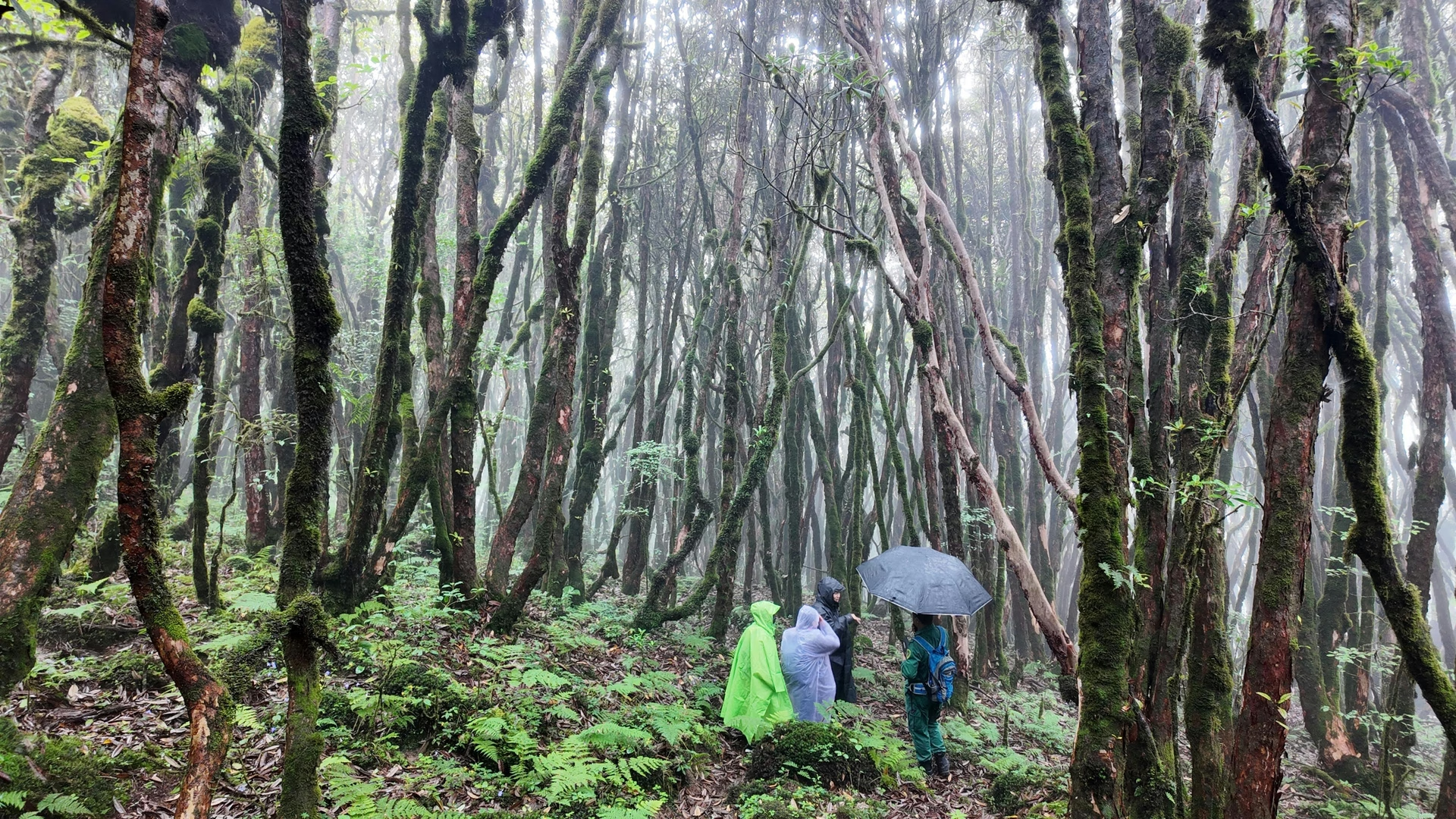
Beyond the charismatic red panda, Tergola supports exceptional biodiversity that enhances tourism appeal:
Mammalian Diversity: The landscape harbors at least 21 mammal species, including apex predators like tigers and Himalayan black bears, alongside golden cats, Himalayan serows, dholes, and sambars. This species richness creates opportunities for comprehensive wildlife education and multiple sighting possibilities.
Avian Attractions: Rare bird species including Satyr tragopan, Himalayan monal, and blood pheasant frequent the area, making it compelling for birdwatching enthusiasts and ornithological researchers.
Botanical Splendor: From April through June, up to 18 rhododendron species bloom alongside endemic red poppies, primulas, orchids, and temperate alpine wildflowers, transforming the landscape into a photographer's paradise.
The area's designation as both a Key Biodiversity Area and High Conservation Value Area underscores its ecological significance and justifies the investment in sustainable tourism infrastructure.
The Community-Led Model: Turning Conservation Into Opportunity 💼
The Tergola Red Panda Trail exemplifies how wildlife tourism can generate meaningful economic benefits for local communities while strengthening conservation outcomes. The project specifically targets the 25 households of Dorithasa village in Gakiling gewog, who have traditionally depended on herding, forest resource extraction, and traditional land use practices.
The implementation strategy prioritizes several interconnected objectives:
Economic Empowerment: Tourism revenue streams are deliberately channeled back to community development through multiple mechanisms. Homestay development, community-based tourism enterprises, nature interpretation services, and cultural storytelling opportunities create diversified income sources beyond traditional livelihoods.
Conservation Employment: The "Red Panda Guardians" program trains community members as both wildlife monitors and local guides. This dual role enables residents to contribute directly to conservation monitoring while earning income from tourism services. This model transforms communities from potential resource competitors into active conservation stakeholders.
Capacity Building: Comprehensive training programs develop local expertise in trail stewardship, wildlife monitoring, visitor management, and sustainable tourism practices. These skills create long-term employment opportunities while building institutional capacity for adaptive management.
Governance Structures: The project establishes benefit-sharing mechanisms and governance frameworks ensuring that tourism revenue distribution remains transparent and equitable. This institutional design prevents the wealth concentration patterns that have undermined community tourism initiatives elsewhere.
Infrastructure and Visitor Experience Development 🏗️
Successful wildlife tourism requires thoughtful infrastructure that enhances visitor experiences while minimizing environmental impact. The Tergola Red Panda Trail implementation includes strategic investments in visitor facilities:
- Gazebos and viewing platforms positioned to capture sunrise and sunset vistas—Tergola is renowned for spectacular light displays
- Sanitation facilities designed with waste management systems preventing ecosystem contamination
- Resting spots and trail markers ensuring visitor safety and comfort throughout the journey
- Interpretive signage explaining red panda behavior, forest ecology, and conservation challenges
- Scientific monitoring infrastructure supporting ongoing research and adaptive management
These investments reflect a fundamental principle: sustainable tourism infrastructure should enhance rather than detract from the natural experience.
Broader Context: Bhutan's Wildlife Tourism Strategy 🌍
The Tergola initiative exists within a larger framework of Bhutan's commitment to nature-based tourism development. Five additional flagship NBWT projects demonstrate the government's systematic approach to wildlife tourism:
- Ramina: Red panda tourism experiences in complementary landscapes
- Jomolhari: Snow leopard heartland experiences in high-altitude ecosystems
- Nubi: Living with tigers coexistence tourism initiatives
- Yangbari: Golden mahseer and river adventure hub development
- Kharungla: Three tragopan species habitat tourism
Collectively, these initiatives position Bhutan as a global leader in community-led, conservation-focused wildlife tourism. This strategic positioning differentiates Bhutan's tourism product in an increasingly competitive global market while reinforcing the nation's constitutional commitment to maintaining 60% forest coverage.
Economic and Conservation Integration 📊
The Tergola Red Panda Trail demonstrates how economic incentives can align with conservation objectives. When local communities benefit directly from wildlife protection, incentive structures shift fundamentally. Rather than viewing forest conservation as an external imposition, community members recognize protected forests as assets generating sustainable income.
This economic alignment proves particularly significant given global trends in wildlife tourism. International tourist demand for authentic, conservation-focused experiences continues growing, especially among environmentally conscious travelers seeking meaningful engagement with endangered species and intact ecosystems. Bhutan's positioning as a high-value, low-impact tourism destination positions it advantageously to capture this expanding market segment.
Visitor Experience: Beyond Wildlife Sighting 🎬
While red panda encounters represent the trail's primary draw, the comprehensive visitor experience extends considerably beyond wildlife sighting. The forest immersion itself—what wellness practitioners term "forest bathing"—provides documented health benefits including stress reduction, immune system enhancement, and improved psychological well-being.
Visitors can integrate the red panda trail with Haa's established cultural tourism circuit, including monastery visits, village homestays, festival participation, and traditional trekking routes. This integration creates multi-day experiences where wildlife tourism complements cultural immersion, extending visitor duration and increasing economic benefits for both tourism enterprises and conservation initiatives.
Looking Forward: Sustainability and Scalability 🚀
The Tergola Red Panda Trail implementation represents an experimental model with potential for replication across Bhutan and beyond. Success metrics extend beyond visitor numbers to encompass conservation outcomes, community income generation, ecosystem health indicators, and institutional capacity development.
Private sector engagement through concessions and joint ventures creates additional implementation pathways, enabling resource mobilization beyond government budgets. This public-private partnership approach has proven effective in other conservation contexts, particularly where local communities maintain decision-making authority over tourism operations.
As Bhutan navigates the complex terrain of sustainable development—balancing economic growth with environmental protection—the Tergola Red Panda Trail offers a replicable model demonstrating that these objectives need not conflict. Instead, when designed thoughtfully with genuine community participation, wildlife tourism becomes a powerful conservation tool and economic development strategy.
Conclusion: A Blueprint for Conservation Tourism 🌟
The Tergola Red Panda Trail transcends its immediate geographic context to represent something larger: a blueprint for how developing nations can leverage wildlife tourism as a conservation and development tool. By centering community participation, ensuring equitable benefit distribution, and maintaining rigorous conservation standards, the initiative offers a compelling alternative to conventional tourism models that often extract value from local communities and ecosystems.
As climate change and habitat loss threaten wildlife populations globally, models like Tergola demonstrate that protection and prosperity can advance together. The red pandas of Tergola, the forests they inhabit, and the communities who steward these landscapes are proving that when tourism and conservation align around genuine community partnership, everyone thrives.
You May Also Like
Tourism
Six Wildlife Sites to Boost Bhutan Tourism Circuit
August 26, 2026
Tourism
Bhutan's Tourism Crisis: Hidden Commissions Threaten Craft Authenticity
August 26, 2026

Tourism
Bumthang Tourism Growth: Local Businesses Push for Better Facilities
August 15, 2026
Tourism
Tsirang's Tourism Transformation: From Highway Pit Stop to Destination
August 15, 2026