Category:
CultureStupas, Mindfulness and Building Bhutan's Futuristic Vision
The Sacred Architecture Shaping Bhutan's Future 🏛️
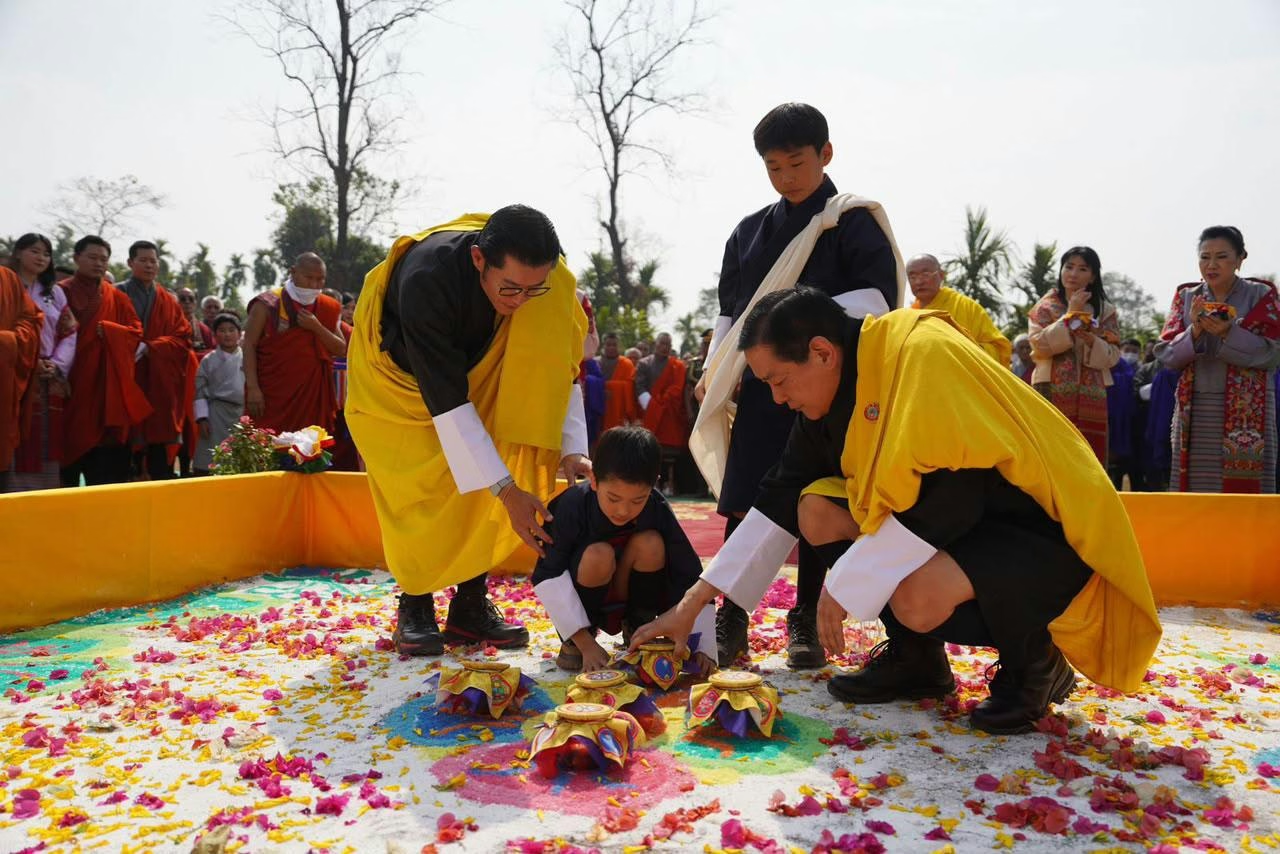
In 2026, Bhutan celebrates a monumental milestone: the 400th anniversary of the Druk Zhung, the unified Bhutanese state established in 1626. This historic year carries profound spiritual significance, marked by an extraordinary initiative—His Majesty King Jigme Khesar Namgyel Wangchuck is orchestrating the construction of 108 stupas within a single 24-hour period. This ambitious undertaking represents far more than an architectural feat; it symbolizes the nation's commitment to rejuvenating its cultural heritage while embracing mindfulness and modern development.
The construction of these stupas during such a compressed timeframe demonstrates how ancient Buddhist traditions continue to shape contemporary Bhutanese society. Rather than viewing tradition and progress as opposing forces, Bhutan's leadership has crafted a unique approach that weaves spiritual practice into the fabric of national development.
Understanding the Stupa: From Ancient Burial Mounds to Spiritual Symbols 🕉️
The origins of stupas trace back much further than Buddhism itself. Scholars have identified connections to Vedic burial mounds, known as tumuli, which served a practical purpose in ancient times—containing the spirits of the deceased to prevent them from causing harm to the living. This concept eventually transformed into something more reverent: monuments honoring the dead and preserving sacred relics.
When Buddhism emerged, stupas underwent a profound metamorphosis. Rather than being constructed immediately after the Buddha's lifetime, the first Buddhist memorial stupas appeared following his parinirvaṇa, or final passing. According to Buddhist tradition, eight relic-stupas were built to house portions of the Buddha's cremated remains, each distributed to different kingdoms that had received a share of these sacred materials.
The symbolism embedded within stupa architecture reflects Buddhist philosophy with remarkable precision. Over centuries, five primary stupa classifications emerged, each containing numerous subdivisions. Among these, eight architecturally distinct forms developed to commemorate the eight deeds of the Buddha's life—a sophisticated system that transformed physical structures into spiritual teaching tools.
The Evolution of Stupa Architecture Across Buddhist Asia 🌏
Scholars have developed what's known as the "time-shape hypothesis," which proposes that a stupa's architectural form reveals both its historical period and geographic origin. This geographical variation demonstrates how Buddhist communities adapted sacred architectural principles to local contexts and building traditions.
In East Asia, Chinese, Japanese, and Korean stupas evolved into roomed-temple pagodas—hollow structures rather than solid forms, yet maintaining their original spiritual function. Conversely, Burmese, Thai, Cambodian, and Vietnamese stupas developed into distinctive tower-like configurations. Pakistani, Nepali, and Afghan stupas retained closer resemblance to the original Indian forms.
The Himalayan region, including Bhutan, developed its own distinctive stupa aesthetic. Tibetan, Mongolian, and Bhutanese stupas share remarkable architectural similarities, with measurements and proportions traceable to Tibetan origins. Interestingly, while smaller stupas adopted a characteristic vase shape as Buddhism spread through these regions, larger stupas maintained traditional dome forms to ensure structural stability—a practical adaptation that didn't compromise spiritual significance.
Bhutan's Innovative Stupa Tradition 🎨
Bhutan's relationship with stupa architecture reflects the nation's broader cultural philosophy. One remarkable example stands in Paro: the Dumtseg, an innovative temple-stupa hybrid constructed around 1421 or 1433 by the visionary architect and engineer Thangtong Gyalpo (1385–1464).
Thangtong Gyalpo's genius extended across both material and spiritual domains. He didn't merely construct buildings; he created integrated teaching spaces that communicated Buddhist philosophy through architecture itself. The Dumtseg represents a revolutionary approach—a stupa-shaped temple designed to embody the entire Buddhist system of tantric teachings through visual representation for both monastic practitioners and lay practitioners.
What made Thangtong Gyalpo's work particularly significant was his willingness to experiment during an era when sectarian boundaries remained fluid and ideas flowed freely across traditions. He even incorporated representations of Atisa Dipamkara, a renowned Buddhist master, within Dumtseg's walls. His innovative spirit extended beyond stupas; he designed bridges and engaged in numerous creative endeavors that shaped Bhutanese cultural infrastructure.
A lesser-known stupa attributed to Thangtong Gyalpo still stands beside the Paro Bondey bridge, testament to his prolific output and lasting influence on Bhutanese architecture.
Mindfulness as the Foundation for Futuristic Development 🧘♀️
The contemporary construction of 108 stupas within 24 hours embodies a philosophical approach that many Western societies are only beginning to understand: mindfulness and spiritual practice aren't obstacles to progress—they're catalysts for sustainable, meaningful development.
Bhutan's unique positioning as a nation that measures Gross National Happiness (GNH) rather than solely GDP reflects this integrated worldview. By incorporating stupa construction into national celebrations and development initiatives, Bhutan demonstrates how ancient wisdom traditions can inform modern urban planning and community development.
Mindfulness practice, central to Buddhist thought for over 2,500 years, offers practical frameworks for addressing contemporary challenges: stress management, environmental consciousness, community cohesion, and sustainable decision-making. When these principles guide architectural and urban development projects, the results reflect deeper values than purely economic considerations.
The Futuristic City Built on Spiritual Foundations 🌆
As cities worldwide grapple with sustainability, livability, and community disconnection, Bhutan's approach offers compelling insights. The nation's commitment to preserving and constructing stupas while modernizing infrastructure suggests a different model for urban development—one that prioritizes spiritual wellbeing alongside technological advancement.
The 108 stupas initiative represents more than ceremonial practice. In Buddhist numerology, 108 holds profound significance, appearing throughout Buddhist texts and practices. This number connects to various cosmological and spiritual frameworks, making the choice deeply intentional rather than arbitrary.
Bhutanese urban planners and policymakers increasingly recognize that cities designed solely for economic productivity often fail to foster human flourishing. By integrating spiritual architecture and mindfulness-based design principles, Bhutan's futuristic vision creates spaces that nurture psychological wellbeing, community connection, and environmental stewardship.
Historical Context: The 1626 Unification and Its Modern Relevance 📜
The 400th anniversary celebration commemorates 1626, when the 32-year-old lama Zhabdrung emerged from a three-year spiritual retreat to unify the Bhutanese territories. This historical moment marks the beginning of the Druk Zhung, establishing political and administrative structures that would govern the nation for centuries.
Shortly after unification, Zhabdrung initiated construction of the Simtokha fortress (completed in 1629), strategically positioned to control traffic between major valleys. This early infrastructure project demonstrated how spiritual leadership translated into practical governance—a pattern that continues shaping Bhutanese development philosophy.
By invoking this historical anniversary through contemporary stupa construction, Bhutan's leadership creates a symbolic bridge between past and future, suggesting that national rejuvenation emerges from honoring cultural roots while embracing innovation.
The Global Significance of Bhutan's Approach 🌍
As other nations confront challenges related to rapid urbanization, mental health crises, and environmental degradation, Bhutan's integrated approach warrants serious consideration. The construction of stupas within futuristic city planning frameworks offers a model that other Buddhist-influenced societies, and indeed many Western cities, might adapt to their contexts.
Mindfulness-based urban design isn't merely aesthetic; research increasingly demonstrates correlations between built environments that incorporate spiritual or contemplative spaces and improved mental health outcomes, stronger community bonds, and enhanced environmental stewardship.
Looking Forward: Stupas as Symbols of Sustainable Progress ✨
The 108 stupas constructed in 2026 will stand as enduring monuments to a nation's commitment to balancing tradition with progress. Each structure represents not just religious devotion but a philosophical statement: that societies can advance technologically and economically while maintaining spiritual depth and cultural authenticity.
For Bhutan, these stupas embody the core principle of Gross National Happiness—the belief that development should enhance human wellbeing comprehensively, not merely economic indicators. As the nation continues modernizing its infrastructure, economy, and technology, stupas serve as physical reminders of the spiritual foundations upon which sustainable progress rests.
The futuristic city that Bhutan is building won't resemble the sterile, economically-driven urban centers that characterize much of the developed world. Instead, it will be a place where ancient stupa architecture coexists with modern technology, where mindfulness practice informs urban planning, and where cultural preservation strengthens rather than hinders national development. This vision offers profound lessons for a world increasingly recognizing that true progress requires integrating spiritual wisdom with technological innovation. 🔥
You May Also Like
Culture
108 Stupas in Sacred Harmony: Bhutan's Historic Spiritual Milestone
October 31, 2026
Culture
A Lungten Prophecy: Bhutan's 108 Stupas & Spiritual Vision
October 31, 2026
Culture
The Heart Within the 108 Chortens: Sacred Relics
October 31, 2026
Culture
Project 108 Stupas: Bhutan's Spiritual Vision Unites Nation
October 31, 2026