Category:
NewsPunakha Road Workers Challenge Wage Deductions
A Crisis of Transparency in Bhutan's Road Maintenance System 🚨
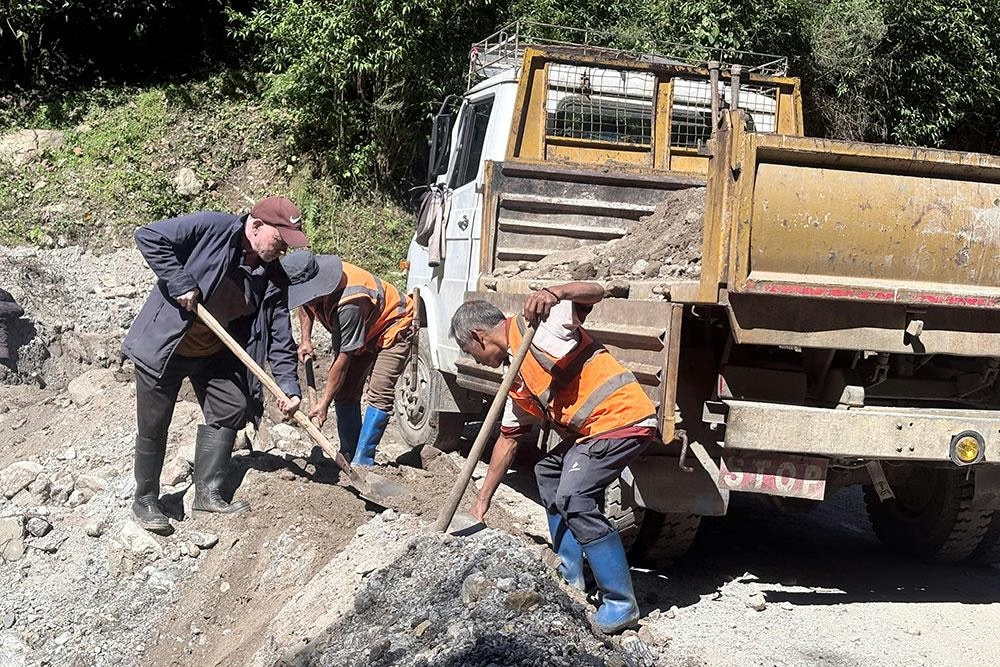
Sixteen daily-wage labourers maintaining critical road infrastructure across Punakha and Gasa have found themselves in a troubling predicament. Since November 2024, these workers have experienced unexplained deductions from their monthly salaries, ranging from Nu 500 to Nu 4,062.50, creating financial hardship for families already struggling to make ends meet. Their repeated appeals to oversight bodies have largely gone unanswered, raising serious questions about accountability and worker protection in Bhutan's public sector.
These workers, employed by the Bhutan Construction and Transport Authority's Lobesa division, earn Nu 400 daily—translating to approximately Nu 12,000 monthly. For workers in a developing economy where housing, food, and basic services consume most wages, even modest deductions represent a significant burden.
The Performance-Based Maintenance System: Progress or Problem? 💼
The Department of Streets and Sanitation (DoST) introduced a Performance-Based Maintenance System (PBMS) as a replacement for the traditional muster roll payment method. According to department officials, this system ties compensation directly to work output against agreed monthly targets, theoretically incentivizing efficiency and quality.
However, the implementation has created confusion and frustration among workers. The transition from predictable monthly wages to performance-dependent payments has left labourers uncertain about:
- Calculation methodology: Workers report receiving different explanations for deductions
- Consistency across divisions: Some workers at other sites received full pay while Punakha-Gasa workers faced ongoing deductions
- Transparency in standards: The specific performance metrics and how they're measured remain unclear to many workers
Chief Engineer Ugyen Dorji from DoST's Regional Office in Lobesa acknowledged that workers were informed of the change but emphasized that the department aims to ensure workers receive at least Nu 12,000 monthly. Yet the reality on the ground tells a different story.
Voices from the Field: Stories of Struggle 😔
The Confusion and Frustration
Dil Bdr Dhal, a 60-year-old worker from Dagana, articulates the core problem: workers receive vague explanations for deductions. "When they ask for clarification, they are told the deductions are because of lighter workload," he explains. "Sometimes, supervisors tell us the order came from 'up', but we don't know who 'up' refers to."
Each worker maintains approximately two kilometres of road monthly, performing multiple tasks including drain clearing, vegetation cutting, and overgrowth removal. Despite completing assigned work, deductions continue—and workers receive no compensation for tasks exceeding their quotas.
Long-Service Workers Left Behind
Sai Kumari Rai, 51, transferred into the position in 2010 after her father-in-law's retirement. For two years, her pay has been docked. Despite completing assigned work on numerous occasions, supervisors cite incomplete site clearing as justification. "I have called the DoST office in Lobesa several times, but there has been no response," she laments. "With such a small salary, it is difficult to make ends meet."
Her husband, Kharka Bdr, a retired army soldier turned carpenter, has spent considerable effort filing complaints with the Anti-Corruption Commission (ACC) and Royal Audit Authority (RAA) since 2024. His frustration reflects a broader concern: workers earning barely enough to cover rent and food face arbitrary pay cuts without clear justification.
Dismissal Without Dignity
Damber Singh Tamang's story is perhaps the most troubling. After 38 years of service maintaining roads, this 60-year-old worker faced dismissal alongside his wife and two eldest children—all PWD labourers—when supervisors claimed there was no budget. On September 1, after questioning deductions and receiving accusations of poor work quality, he was simply told his services were no longer needed.
"I worked for 38 years hoping to retire with dignity, but in the end, all I was told was that there was no budget and that I was fired," he says, visibly emotional. Without provident fund or gratuity entitlements, workers like Tamang face retirement with virtually no safety net.
The Accountability Gap: Where Are the Oversight Bodies? 🔍
Perhaps most alarming is the apparent silence from Bhutan's oversight institutions. Workers report submitting petitions to both the ACC and RAA without receiving responses. The RAA has stated it received no formal complaint on this matter, yet workers claim to have filed documentation.
Interestingly, after workers escalated complaints to the Prime Minister's Office, they received full salaries for three consecutive months (June-August 2025). This temporary relief ended in September 2025, when deductions resumed for Punakha-Gasa workers while labourers at Dochula, Tsirang, and Nobding continued receiving full compensation.
This inconsistency raises critical questions:
- Why are workers under the same system treated differently?
- What criteria determine which divisions receive full pay versus partial pay?
- Why did deductions resume after the Prime Minister's Office inquiry?
Historical Context: Wage Improvements and Current Challenges 📊
In November 2023, the Druk Nyamrup Tshogpa government increased daily wages from Nu 215 to Nu 400—an 86% increase representing significant progress for road maintenance workers. However, this improvement has been partially undermined by PBMS implementation and unclear deduction practices.
The wage increase was intended to improve worker welfare and reduce turnover in essential infrastructure maintenance. Yet the current situation suggests that policy implementation gaps are negating these gains.
Systemic Issues: Beyond Individual Cases 🏗️
The Punakha-Gasa situation reflects broader challenges in Bhutan's public sector workforce management:
Lack of Job Security: Workers lack provident fund or gratuity protections, leaving them vulnerable to sudden dismissal after decades of service.
Housing Insecurity: While the department claims to provide free accommodation where available, many workers must rent privately, consuming significant portions of already-modest wages.
Wage Stagnation vs. Living Costs: Nu 12,000 monthly is insufficient for workers paying rent, particularly in areas lacking government housing near work sites.
Institutional Gaps: Oversight bodies appear unable or unwilling to respond promptly to worker complaints, suggesting systemic capacity or prioritization issues.
The Department's Perspective: Efficiency vs. Worker Welfare ⚖️
DoST officials maintain that PBMS represents progress, arguing it improves work efficiency and creates incentives for better maintenance. The department acknowledges that Nu 12,000 monthly is insufficient for living expenses and claims to be working toward providing all workers with free accommodation and basic facilities.
However, department statements about worker awareness of PBMS implementation conflict with worker testimonies describing confusion and inconsistent explanations. This communication gap suggests implementation challenges requiring urgent attention.
What Happens Next: The Investigation Imperative 🔬
Workers have formally requested that the ACC conduct a thorough investigation into wage deduction practices, accountability mechanisms, and the differential treatment of workers across divisions. Such investigation should examine:
- Documentation: Whether formal records justify all deductions
- Consistency: Why similar workers face different payment outcomes
- Communication: Whether workers received clear explanations for PBMS transition
- Institutional Response: Why oversight bodies failed to respond to complaints
- Systemic Fairness: Whether PBMS implementation was equitable across all divisions
Looking Forward: The Need for Systemic Reform 🌟
The Punakha-Gasa road workers' situation demands more than individual case resolution. Bhutan's government must address fundamental questions about how it treats essential workers, protects vulnerable populations, and ensures institutional accountability.
Key reforms needed include:
- Clear PBMS Guidelines: Publish transparent performance metrics and calculation methodologies accessible to all workers
- Strengthened Oversight: Ensure ACC and RAA respond promptly to worker complaints with documented investigations
- Worker Protections: Establish provident fund and gratuity systems for long-service workers
- Housing Solutions: Accelerate provision of government accommodation near work sites
- Wage Reviews: Conduct regular assessments of whether compensation meets living costs
Conclusion: Workers Deserve Clarity and Justice 💪
Bhutan's road maintenance workers perform essential services maintaining critical infrastructure that connects communities and enables economic activity. Their compensation should reflect this importance, and their treatment should embody the principles of fairness and transparency that Bhutan espouses.
The wage deduction controversy in Punakha and Gasa is not merely a payroll administration issue—it represents a test of institutional integrity and commitment to worker welfare. As these 16 labourers await ACC investigation, their case will likely influence how Bhutan addresses similar concerns across its public sector. The government's response will signal whether workers' voices matter and whether oversight institutions can deliver accountability when it matters most.
You May Also Like
News
His Majesty Graces Royal Highland Festival 2026
October 24, 2026
News
Founder-Centric CSOs: Accountability & Governance Challenges
October 24, 2026
News
Drukair Employee Arrested in Major Cannabis Smuggling Investigation
October 23, 2026
News
Gelephu Prepares for 40,300 Vehicles Ahead of Project 108
October 21, 2026