Category:
NewsDrukair Employee Arrested in Major Cannabis Smuggling Investigation
Major Drug Smuggling Case Rocks Bhutan's National Carrier 🚨
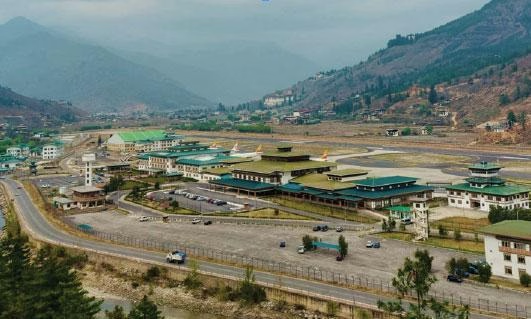
A significant law enforcement operation has unfolded at Paro International Airport, revealing what authorities describe as a substantial attempt to introduce illegal narcotics into Bhutan. The case involves a middle-aged employee of Drukair, the nation's flag carrier, and has triggered a comprehensive investigation into potential organized smuggling networks operating through the country's primary aviation gateway.
The arrest marks one of the most notable drug interdiction cases in recent months, highlighting vulnerabilities in cargo and passenger screening procedures at the kingdom's busiest international airport.
The Arrest: How the Discovery Unfolded 🔍
On September 14, law enforcement officials took a Drukair employee into custody following his arrival at Paro International Airport. The individual, a resident of Samtse district in southwestern Bhutan, had traveled as a passenger aboard a Drukair flight originating from Bangkok with a stopover in Bagdogra, India, on September 12.
What began as routine post-flight procedures evolved into a major drug seizure. During standard aircraft inspections, customs officials discovered two abandoned carry bags concealed within a waste-bin bag located inside the aircraft cabin. Laboratory analysis subsequently confirmed that the contents tested positive for cannabis, with the total weight reaching 22.34 kilograms—a quantity that exceeds typical personal use thresholds significantly.
The discovery mechanism itself reveals important details about airport security protocols. CCTV surveillance footage captured the suspect moving suspiciously near the area where the bags were eventually found, providing crucial visual evidence during the critical moments following the aircraft's arrival.
The Investigation: Building the Case 📋
Following the arrest, Bhutanese police established a dedicated investigative task force to pursue multiple investigative angles. The team's mandate extends beyond the immediate suspect to encompass the broader supply chain, potential co-conspirators, and the operational methodology behind the smuggling attempt.
Initial screening procedures revealed that the suspect tested positive for cannabis use, suggesting potential personal involvement beyond mere transportation. This finding has become a key component of the investigative narrative, though authorities have not disclosed specific details about the testing methodology or threshold levels used.
During preliminary questioning, the suspect has consistently maintained his innocence, asserting that the discovered packages did not belong to him. This denial, combined with the CCTV evidence and positive drug screening, has created a complex evidentiary situation that investigators continue to develop.
Travel Patterns and Intelligence Gaps 🌏
Investigators have identified a concerning pattern in the suspect's recent travel history. Records indicate that the individual had undertaken multiple personal trips to Bangkok during recent months prior to his arrest. The specific purposes of these journeys remain under active investigation, though authorities suspect they may be connected to the smuggling network.
Notably, police officials have acknowledged that they possessed no prior intelligence regarding this particular smuggling attempt before the airport discovery. This admission underscores a potential intelligence gap in monitoring aviation-based narcotics trafficking and raises questions about information-sharing protocols between different agencies involved in border security.
The Bangkok connection is particularly significant given Thailand's position as a major transit hub for Southeast Asian drug trafficking. The route through Bagdogra, India—a common junction point for flights connecting South Asia—adds another layer of complexity to the investigation.
Cannabis Trafficking in South Asia: The Broader Context 📊
Bhutan's geographic position places it at the intersection of major drug trafficking corridors spanning South and Southeast Asia. Cannabis cultivation and smuggling have become increasingly sophisticated in the region, with criminal organizations exploiting air routes, land borders, and maritime pathways.
Recent years have witnessed a notable increase in cannabis interdiction cases across South Asian nations. Bhutan, despite its reputation as a peaceful nation with strict drug policies, remains vulnerable to trafficking due to its international airport and land borders with India and China. The kingdom's small population and limited law enforcement resources create operational challenges for comprehensive border security.
The Drukair incident reflects broader trends observed throughout the region:
- Increased use of commercial aviation for drug smuggling operations
- Involvement of transportation sector employees in trafficking networks
- Sophisticated concealment methods utilizing aircraft waste systems and hidden compartments
- Multi-country supply chains connecting production regions with distribution centers
Drukair's Response and Aviation Security Implications ✈️
The involvement of a Drukair employee in this case raises important questions about aviation security protocols and employee vetting procedures. Drukair, which operates limited international routes primarily to regional hubs like Bangkok, Delhi, and Kathmandu, faces increased scrutiny regarding staff background checks and internal security measures.
Airlines operating in developing economies often struggle to implement comprehensive security protocols comparable to international standards. The incident may prompt Bhutanese aviation authorities to review and potentially strengthen employee screening procedures, access controls to aircraft, and post-flight inspection protocols.
The discovery mechanism—finding contraband in aircraft waste systems—suggests that perpetrators possess intimate knowledge of aircraft operations and security blind spots. This insider knowledge is particularly concerning and may indicate that investigations should extend beyond the immediate suspect to encompass other airline personnel.
Legal Framework and Investigative Procedures 🏛️
Bhutan maintains strict narcotics legislation under the Narcotic Drugs, Psychotropic Substances and Chemical Precursors Act. Cannabis possession with intent to distribute carries severe penalties, including lengthy imprisonment and substantial fines. The quantity seized—over 22 kilograms—far exceeds thresholds for simple possession charges, placing this case firmly within trafficking prosecution categories.
The investigative team's focus on supply chain analysis and network mapping indicates that authorities are pursuing this case beyond individual criminal liability. Identifying upstream suppliers and downstream distributors could yield significant intelligence about organized trafficking operations within Bhutan.
Law enforcement officials have strategically withheld certain investigative details, particularly regarding CCTV findings, to preserve the integrity of ongoing inquiries and prevent suspects from tailoring their testimony or destroying evidence.
Implications for Border Security and Drug Policy 🛡️
This case serves as a stark reminder of Bhutan's ongoing challenges in maintaining effective border security despite its geographic isolation and small population. The incident underscores the need for:
- Enhanced training for airport security personnel in identifying smuggling indicators
- Improved coordination between aviation authorities, customs, and police
- Investment in advanced detection technologies for cargo and passenger screening
- Strengthened information-sharing protocols with regional law enforcement agencies
- Regular security audits of aviation infrastructure and procedures
Bhutan's government has historically maintained a strong anti-drug stance, enshrined in constitutional provisions that prohibit tobacco and alcohol advertising while emphasizing drug prevention education. However, enforcement at international gateways requires continuous adaptation to evolving smuggling methodologies.
What Lies Ahead: Investigation Status and Expected Developments 🔮
The dedicated investigative task force continues its work, with multiple investigative angles remaining active. Key priorities include:
- Identifying the supply source for the seized cannabis
- Locating intended recipients within Bhutan's distribution network
- Mapping potential co-conspirators and organizational structure
- Determining the suspect's role within any larger trafficking organization
- Establishing financial flows connected to the operation
The suspect remains in police custody pending further proceedings. His continued denial of involvement contrasts with physical evidence, including CCTV footage and positive drug screening results, creating a complex evidentiary landscape that prosecutors must navigate.
Future developments may include additional arrests, expanded investigations into Drukair personnel, and potential policy reforms addressing aviation security vulnerabilities.
Conclusion: Vigilance in an Interconnected World 💡
The Drukair cannabis smuggling case represents a critical juncture for Bhutanese law enforcement and aviation security. While the immediate investigation focuses on the apprehended suspect and the 22.34-kilogram seizure, the broader implications extend to regional drug trafficking patterns, employee vetting procedures, and border security effectiveness.
For Bhutan—a nation that has successfully maintained one of the world's strictest drug policies—this incident serves as a sobering reminder that geographic isolation and small population size provide insufficient protection against determined smuggling operations. The case underscores the importance of continuous vigilance, modern security infrastructure, and coordinated regional cooperation in combating transnational narcotics trafficking.
As investigations proceed, stakeholders across government, aviation, and law enforcement will likely reassess existing protocols and implement enhanced security measures to prevent similar incidents. The outcome of this case will provide valuable lessons for Bhutanese security agencies and may influence policy discussions regarding aviation security standards and employee background verification procedures across the region.
You May Also Like

News
Gelephu Prepares for 40,300 Vehicles Ahead of Project 108
October 21, 2026
News
Third Child Plus Programme Disburses Nu 186M to 6,510 Children
October 21, 2026

News
German-Bhutan Society Backs Gelephu Mindfulness City
October 21, 2026

News
Himalayan Yak Network Launches at Royal Highland Festival
October 21, 2026