Category:
TourismPhuentsholing's Urban Transformation: A Gateway City Reimagined
Bhutan's southern border town is experiencing a remarkable metamorphosis. 🌟 Phuentsholing, long recognized as the country's commercial and tourism gateway, is undergoing a comprehensive urban overhaul that promises to reshape its identity and economic prospects. The Phuentsholing Thromde Enhancement Programme (PTEP) represents an ambitious government initiative designed to breathe new life into this vital trading hub while positioning it as a premier destination for both regional and international visitors.
The Vision Behind Phuentsholing's Urban Transformation 🏗️
The PTEP emerged from a recognition that Phuentsholing needed strategic intervention to enhance its competitiveness in an increasingly dynamic tourism landscape. Rather than pursuing haphazard development, the programme takes a holistic approach, addressing six priority delivery clusters simultaneously. This coordinated strategy aims to strengthen tourism infrastructure, generate employment opportunities, and improve overall urban livability—three interconnected pillars essential for sustainable growth.
Launched in March, the first phase extends through March of the following year, creating an intensive 12-month window for transformative change. What makes this initiative particularly noteworthy is its recognition that urban development must balance economic growth with community welfare and cultural preservation.
Infrastructure Development: Building the Foundation 🏟️
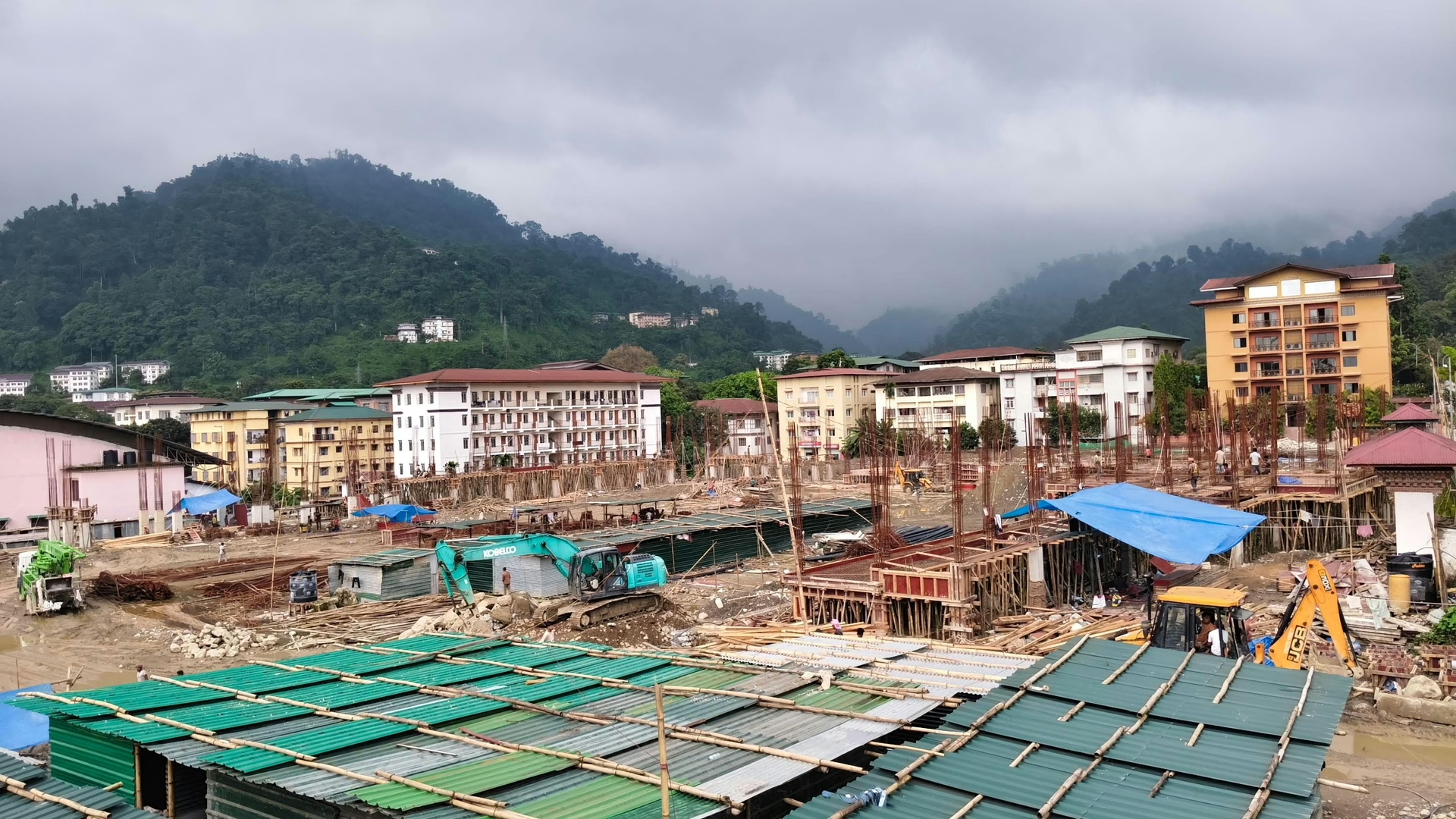
The most visible symbol of Phuentsholing's transformation is the redevelopment of the Phuentsholing Sports Association (PSA) ground. This Nu 231.1 million investment will create a modern multipurpose stadium capable of hosting events ranging from local competitions to national and international tournaments. Chimmi RD Construction Private Limited has undertaken this ambitious project, with completion targeted for April of the following year.
Progress on the stadium has reached approximately 25 percent physically, with financial expenditure at 27 percent—a balanced trajectory suggesting the project remains on schedule despite monsoon-related disruptions. The facility will serve multiple functions: hosting sporting events, accommodating cultural programs, and providing a gathering space for community engagement. Such multipurpose infrastructure reflects contemporary urban planning wisdom, maximizing utility and economic returns from significant capital investments.
Revitalizing Local Commerce Through Innovation 💼
Beyond brick-and-mortar infrastructure, the PTEP is generating tangible economic outcomes through creative market interventions. The Sunday Farmers' Market, established near the Zangdopelri area in February, has demonstrated remarkable success in its first six months of operation. With 24 weeks of trading activity, the market has generated approximately Nu 8.89 million in collective sales for participating farmers—a figure that underscores genuine demand for locally produced agricultural products.
What's particularly significant is the market's cross-border appeal. Customers from both within Bhutan and across the Indian frontier are frequenting the market, suggesting that Phuentsholing can serve as a regional hub for agricultural commerce. This development creates a virtuous cycle: farmers gain reliable markets, consumers access fresh produce, and the town's economy strengthens through increased commercial activity.
The forthcoming Kaja Throm Changyul Park Model represents the next evolution in market infrastructure. Currently in the design approval stage, this initiative will transform an existing space into a hygienic, professionally managed local market with organized vendor participation. The Gyalpoi Zimpon's office is reviewing the technical specifications, and once approved, implementation will proceed systematically.
Elevating Service Quality Through Skills Development 📚
Recognizing that tourism competitiveness depends fundamentally on service excellence, the PTEP invested in hospitality worker training. The Department of Tourism conducted pilot assessments involving 64 hotel employees from nine establishments—exceeding the initial target of 55 participants by nearly 20 percent.
The results proved impressive: 60 of 64 participants achieved competency certification, yielding a 93.75 percent pass rate. This initiative directly addresses a critical bottleneck in Bhutan's tourism sector. As the country positions itself as a high-value, low-impact destination, service quality becomes a key differentiator. Well-trained hospitality professionals enhance guest experiences, generate positive reviews, and encourage repeat visitation.
These trained workers will be instrumental in establishing Phuentsholing's reputation as a premier stopover and short-stay destination—a positioning that leverages its geographic advantages while differentiating it from longer-stay tourism experiences elsewhere in Bhutan.
Expanding Tourism Boundaries: The SDF Waiver Innovation 🎫
One of the programme's most strategically important initiatives involves expanding the 24-hour Sustainable Development Fee (SDF) waiver zone. Currently, international tourists utilizing this waiver cannot visit Milarepa Lhakhang or the Pachu community—despite their proximity to Phuentsholing and their significant cultural and natural attractions.
The regulatory sandbox initiative has identified these two sites as pilot projects for waiver expansion. Standard operating procedures have been finalized, cultural clearances secured, and Chhukha Dzongkhag Administration is leading implementation. A sensitization meeting conducted in August brought together travel agents, tour operators, and tour guides to prepare for the operational transition.
This expansion addresses a fundamental limitation that has constrained Phuentsholing's tourism appeal. As Nado, chairman of the Pachu Community Tourism, articulated, visitors seeking authentic experiences beyond the town center have had limited options. The waiver expansion opens new possibilities: tourists can now explore cultural heritage sites, engage with local communities, and extend their stay duration—all while maintaining the regulatory framework that protects Bhutan's tourism model.
For local transport operators and business owners, this development offers immediate economic relief. Taxi drivers and tour operators have struggled with severely limited destination options, particularly since the Amochhu suspension bridge became inaccessible. The expanded waiver zone provides them with viable itineraries to offer visitors, directly translating into increased business activity and employment.
Strategic Tourism Branding and Destination Marketing 📢
Recognizing that infrastructure alone cannot drive tourism growth, the PTEP has commissioned comprehensive branding and communication strategy development. A national consultant is conducting research, branding analysis, and technical positioning work to establish Phuentsholing as a premier stopover and short-break destination.
This strategic marketing initiative addresses a critical gap in Phuentsholing's tourism ecosystem. While the town serves as Bhutan's primary commercial gateway, it has historically lacked cohesive destination branding. By developing integrated media and communication strategies, the programme aims to create compelling narratives that resonate with target markets—particularly regional tourists from India and neighboring countries.
Stakeholder consultations on digital payment feasibility have been completed, with the comprehensive tourism branding strategy scheduled for launch by the end of September. This timing positions Phuentsholing to capitalize on upcoming tourism seasons with professional, market-tested positioning.
Creating Memorable Experiences Through Festival Innovation 🎉
Extending visitor stay duration represents a crucial economic objective. The PTEP is planning a mega night festival and signature event designed to increase visitor numbers and encourage tourists to remain in Phuentsholing longer. A committee led by Phuentsholing Drungpa Karma Jurmi, working collaboratively with the Department of Multilateral Communication, International and Inter-Regional Promotion and the Department of Tourism, has submitted the festival proposal to the Prime Minister's Advisory Team.
This initiative reflects sophisticated understanding of experiential tourism dynamics. Memorable events create emotional connections to destinations, generate social media buzz, and provide compelling reasons for extended stays. By creating distinctive signature experiences, Phuentsholing can differentiate itself from competing destinations and build lasting visitor loyalty.
Challenges and Momentum 💪
Progress on the PTEP has been steady despite significant obstacles. Monsoon disruptions created construction and fieldwork challenges, yet the programme maintained momentum across all six priority delivery clusters. This resilience suggests strong institutional commitment and effective project management.
The programme's success depends on continued coordination among multiple stakeholders: government agencies, private sector partners, community organizations, and local residents. Early indicators—from the farmers' market's commercial success to the hotel workers' high certification rates—suggest this coordination is functioning effectively.
Looking Forward: Phuentsholing's Emerging Future ✨
The Phuentsholing Thromde Enhancement Programme represents more than infrastructure development or tourism promotion. It embodies a strategic vision for how Bhutan's commercial gateway can evolve into a vibrant, economically dynamic urban center that benefits residents, supports businesses, and welcomes visitors with world-class experiences.
The convergence of physical infrastructure improvements, skills development, market innovation, and strategic marketing creates a comprehensive framework for sustainable urban transformation. As the first phase progresses toward completion, Phuentsholing stands poised to demonstrate that thoughtful, coordinated urban development can simultaneously serve economic growth, community welfare, and cultural preservation.
For tourism professionals, business owners, and residents invested in Phuentsholing's future, the coming months will prove decisive. The initiatives launched under the PTEP are establishing foundations for long-term prosperity—foundations that extend far beyond any single development project. They represent a commitment to reimagining Phuentsholing as a destination of choice in Bhutan's tourism landscape and a thriving commercial hub for the broader region.
You May Also Like
Tourism
Six Wildlife Sites to Boost Bhutan Tourism Circuit
August 26, 2026
Tourism
Bhutan's Tourism Crisis: Hidden Commissions Threaten Craft Authenticity
August 26, 2026
Tourism
Bumthang Tourism Growth: Local Businesses Push for Better Facilities
August 15, 2026
Tourism
Tsirang's Tourism Transformation: From Highway Pit Stop to Destination
August 15, 2026