Category:
NewsNearly 200 Illegal Cordyceps Collectors Intercepted in Lunana
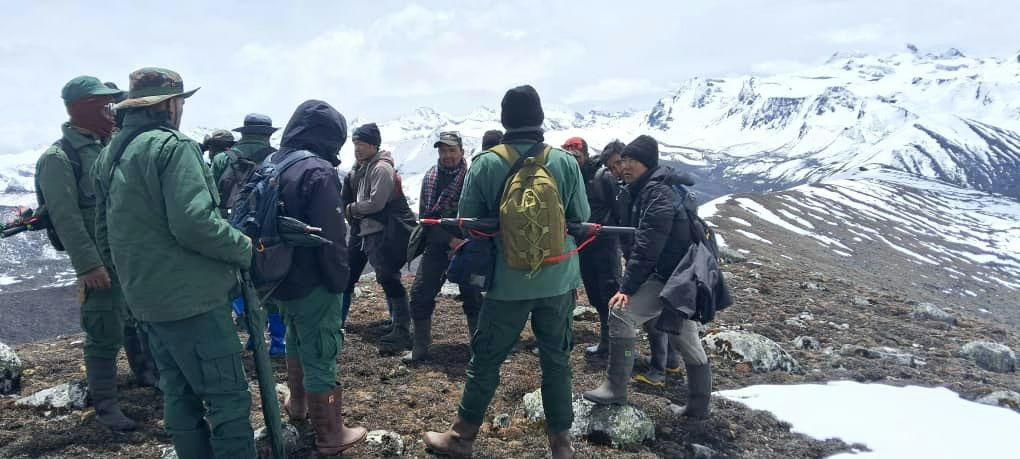
🚨 Major Crackdown on Illegal Cordyceps Harvesting in Bhutan's Remote Lunana Region
Bhutan's high-altitude Lunana gewog faced an unprecedented enforcement challenge this year as authorities intercepted nearly 200 unauthorized cordyceps collectors during the peak harvesting season. Between May and June, police and forest officials seized over 2,300 specimens while confronting the largest wave of illegal collection activity in recent memory. This enforcement operation reveals the complex tensions between resource management, local livelihoods, and the protection of Bhutan's pristine alpine ecosystems. 🏔️
The cordyceps season in Lunana—one of the world's most remote and ecologically sensitive regions—has become increasingly contentious as demand for this valuable medicinal fungus continues to surge globally. The 2024 season proved particularly challenging due to an exceptional harvest that occurs only once every four years, attracting opportunistic collectors from across the kingdom and beyond.
Understanding the Cordyceps Gold Rush 💰
Cordyceps, known locally as yartsa gunbu, represents one of the most valuable natural resources in Bhutan's alpine regions. This parasitic fungus, which infects ghost moth caterpillars at high altitudes, commands premium prices in international markets, particularly in China and other Asian countries where it's prized for traditional medicine and wellness applications.
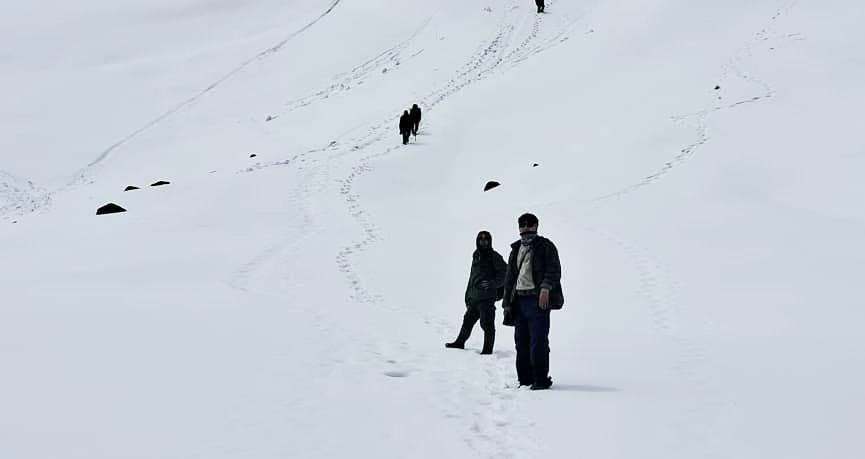
The economic incentive driving illegal collection cannot be underestimated. During the recent auction held on July 25 in Khamaed Gewog, Lunana's cordyceps achieved the highest bid value at Nu 3.602 million, demonstrating the substantial financial stakes involved. However, this wealth potential creates perverse incentives for unauthorized harvesting that threatens both ecological balance and community safety.
The Scale of Illegal Activity
Authorities documented a staggering enforcement picture:
- 191 illegal collectors intercepted during the May 11 to June 8 monitoring period
- 2,383 cordyceps specimens seized across multiple enforcement operations
- 90 percent of violations concentrated in just six specific collection areas
- Kazhi emerged as the hotspot with 63 apprehensions, followed by Dangchu (56) and Sephu (53)
These numbers underscore a critical reality: illegal collection in Lunana isn't random or scattered—it's concentrated, organized, and increasingly bold. 🎯
The Geography of Conflict 🗺️
Lunana's five major official cordyceps collection sites—Fangu, Khoda, Tshokena, Gangjayphu, and Tshomdu—have become focal points for conflict. Hundreds of unauthorized collectors camped outside these designated areas even before the official season commenced on May 4.
The accessibility of collection sites directly correlates with enforcement challenges. Fangu, requiring a full day's trek to reach, experienced fewer unauthorized incursions. Conversely, the four more accessible sites transformed into what officials characterize as "conflict hotspots," where intruders repeatedly breached cordoned-off areas and confronted authorities.
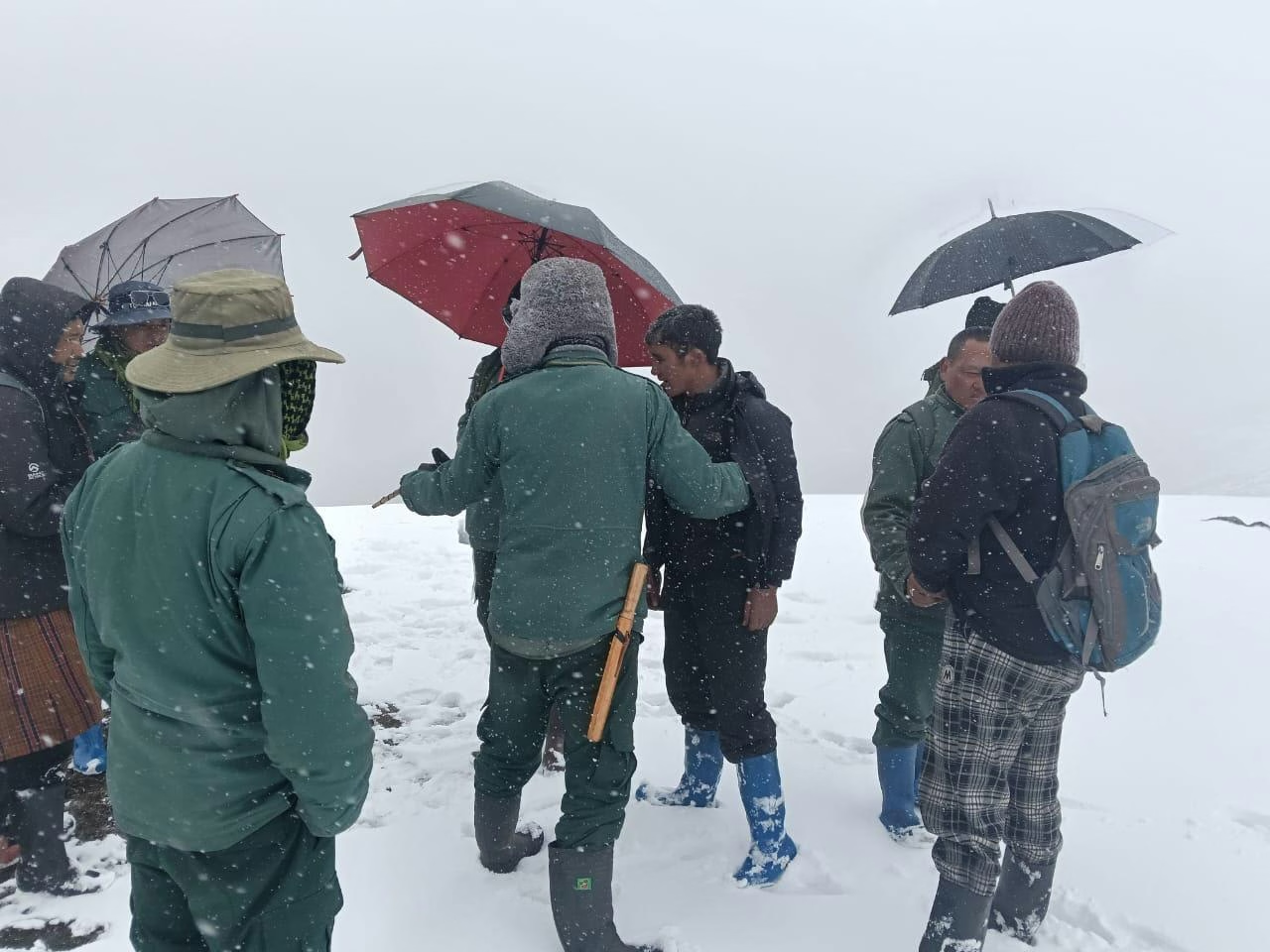
This geographic pattern reveals a troubling trend: as accessibility increases, so does illegal activity. The implication for resource management is clear—remote regions require proportionally greater enforcement resources to maintain regulatory compliance.
Enforcement Operations: Numbers Don't Tell the Whole Story 📊
One of the most revealing aspects of this enforcement campaign involves the disconnect between the number of people intercepted and the quantity of cordyceps seized. This pattern suggests a more sophisticated illegal operation than simple subsistence collection.
On May 15, officials encountered 43 people in a single day—the highest daily total—yet recorded zero cordyceps seizures. This anomaly suggests either that collectors had already distributed their harvest or that enforcement focused on apprehension rather than confiscation on that particular day.
Conversely, the largest seizures clustered around specific dates:
- May 19: 665 cordyceps from 14 people
- May 22: 854 cordyceps from 13 people (largest single seizure)
- May 28: 635 cordyceps from 20 people
These three operations alone accounted for 2,154 specimens—over 90 percent of the total seized. This concentration indicates that enforcement efforts, while broadly deployed, achieved their most significant results through targeted interventions rather than routine checks. The operational pattern suggests sophisticated coordination among illegal collectors, with some groups managing substantially larger harvests than others.
The Human Cost of Illegal Collection ⚠️
Beyond enforcement statistics lies a troubling human dimension. The pursuit of cordyceps in Lunana's treacherous terrain claims lives and creates dangerous conflicts.
On May 15, a 28-year-old man from Dangchu was swept away by an avalanche while illegally collecting cordyceps in Belumarp. His body wasn't recovered until June 11—a grim reminder that enforcement operations compete with nature itself as the primary threat to collector safety.
Violence also emerged as a concerning trend. On June 21, a 43-year-old man from Mongar, who had settled in the region after marriage, was attacked while sleeping in his tent in Gangjayphu, one of the five major collection sites. The attacker remains unidentified, suggesting either territorial disputes among collectors or deliberate intimidation tactics.
Additionally, officials reported multiple confrontations with intruders who pelted stones and verbally abused enforcement personnel. These incidents escalated beyond simple regulatory violations into physical confrontations that endanger both collectors and officials. 😔
Seasonal Patterns and Enforcement Evolution 📈
The enforcement data reveals how illegal collection patterns shifted throughout the season. Early May saw frequent apprehensions, with several days recording double-digit intercepts. However, as the season progressed toward June 4, encounters became increasingly sporadic.
Several days recorded no illegal collectors whatsoever, and officials reported numerous days with zero cordyceps seizures. This declining trend could reflect several factors: improved enforcement deterrence, natural depletion of accessible cordyceps stocks, or collectors shifting to different regions.
The uneven nature of both enforcement and illegal activity suggests that neither authorities nor collectors operated with consistent intensity. This variability complicates resource management and highlights the challenges of maintaining sustained enforcement operations in remote, high-altitude environments.
The Broader Legal Framework 📜
Cordyceps harvesting in Bhutan operates under a carefully controlled legal structure. Following a royal command issued by the Fourth Druk Gyalpo on June 17, 2004, residents of higher-altitude areas across nine districts gained legal harvesting rights.
Before this royal directive, legal harvesting was restricted exclusively to Lunana Gewog. The subsequent expansion to Paro, Thimphu, Wangdue, Gasa, Lhuntse, Trashigang, Trashiyangtse, Haa, and Bumthang represented a significant policy shift, acknowledging the economic importance of cordyceps while attempting to distribute harvesting pressure across multiple regions.
However, this legal expansion hasn't eliminated unauthorized collection. In fact, the concentration of illegal activity in Lunana suggests that demand exceeds legal supply, or that collectors from non-designated areas continue pursuing unauthorized harvesting in high-yield zones.
Ecological and Economic Implications 🌍
The bumper cordyceps harvest—occurring once every four years—demonstrates the cyclical nature of alpine ecosystem productivity. However, this abundance created an ironic consequence: it attracted maximum illegal collection precisely when the resource was most vulnerable to overexploitation.
Unsustainable harvesting threatens the long-term viability of cordyceps populations. Unlike agricultural crops, cordyceps depend on complex ecological relationships between fungi, insects, and alpine meadow environments. Overexploitation can degrade these ecosystems for years, impacting not just cordyceps but entire alpine communities.
The economic dimension compounds this concern. Cordyceps represent a critical income source for Lunana's remote communities, particularly during the brief collection season. Illegal harvesting by outsiders directly undermines local livelihoods while externalizing environmental costs.
Looking Forward: Challenges and Solutions 🔮
The 2024 enforcement campaign reveals both the scale of illegal collection challenges and the limitations of current enforcement strategies. Nearly 200 intercepted collectors represent a significant law enforcement effort, yet the concentration of seizures in just three operations suggests that the broader illegal network remains largely intact.
Future approaches might emphasize:
- Enhanced community engagement: Leveraging local knowledge to identify and deter illegal collectors
- Technology deployment: Using surveillance and monitoring systems in accessible collection zones
- Economic incentives: Expanding legal harvesting quotas to reduce price premiums that incentivize illegal activity
- Regional coordination: Collaborating across districts where legal harvesting now occurs to prevent displacement of illegal activity
- Safety protocols: Implementing mandatory safety training and equipment requirements for all collectors
Key Takeaways 🎯
The nearly 200 illegal cordyceps collectors intercepted in Lunana's 2024 season represent more than an enforcement statistic—they reflect deeper tensions between resource scarcity, economic opportunity, and environmental protection. While authorities demonstrated significant enforcement capacity, the concentration of seizures in just three operations and the continued violence and dangerous conditions suggest that current strategies require evolution.
Bhutan's approach to cordyceps management must balance legitimate local economic interests with ecological sustainability and community safety. The upcoming seasons will test whether 2024's enforcement intensity translates into lasting deterrence or merely represents a temporary disruption in an entrenched pattern of illegal harvesting. 🏔️✨
You May Also Like
News
Women Entrepreneurs Master AI and Digital Tools in Phuentsholing
September 1, 2026
News
Can Samtse Keep Up With Its Growing Workforce?
August 29, 2026
News
Nepal Flood Exposes Critical Gaps in Bhutan's Early Warning Systems
August 29, 2026
News
High Court Overturns Acquittal: Doctor Sentenced to 10 Years for Child Sexual Abuse
August 29, 2026