Category:
NewsBudget Constraints Leave Tading-Phuentshopelri Road in Poor Condition
Infrastructure Challenges Threaten Regional Connectivity 🚧
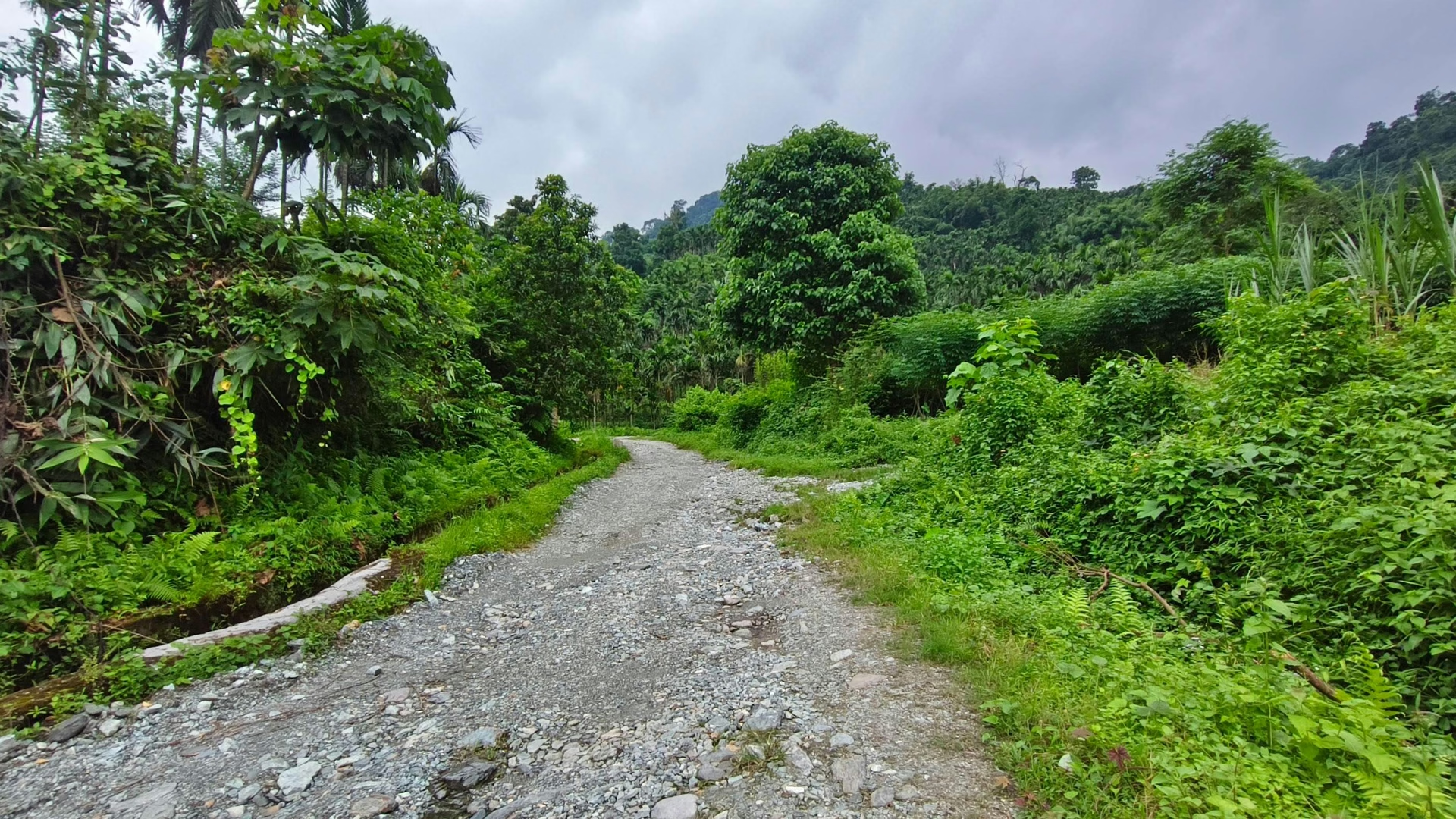
The Tading-Phuentshopelri road, a critical 36-kilometre route connecting two important communities in Samtse District, continues to deteriorate due to persistent funding shortages. This vital transportation corridor has become increasingly unreliable, leaving residents and businesses dependent on a deteriorating infrastructure that struggles to meet modern demands. The situation highlights the broader challenges facing Bhutan's road maintenance and development sectors, where ambitious plans often clash with limited budgetary allocations.
Why This Road Matters More Than You Think 💡
The Tading-Phuentshopelri route serves as a crucial alternative to the traditional Phuentsholing corridor, particularly when border crossings through India become unavailable. For residents of Phuentshopelri, the significance of this road cannot be overstated—it reduces travel distance to Phuentsholing by approximately 44 kilometres compared to the longer route through Samtse. During the COVID-19 pandemic and other periods of border restrictions, this alternative became indispensable for maintaining regional connectivity and economic activity.
The gewog of Phuentshopelri represents one of Samtse's most economically vibrant areas, hosting significant industrial operations including the Lhaki and Penden cement factories, alongside numerous mining and quarrying enterprises. These businesses rely heavily on efficient transportation networks to move goods and maintain supply chains. When the road deteriorates, it creates cascading economic challenges that extend far beyond simple inconvenience.
The Distance Factor: A Lifeline for Commerce 📊
The numbers tell a compelling story about the road's importance:
- Direct route via Tading-Phuentshopelri: Significantly shorter alternative
- Alternate route through Samtse: Approximately 103 kilometres to reach Phuentsholing
- Distance savings: Nearly 44 kilometres shorter when using the direct route
- Travel time reduction: Substantial savings in fuel, vehicle wear, and personnel hours
For commercial operators, these distance calculations translate directly into operational costs. Every kilometre saved represents reduced fuel consumption, decreased maintenance expenses, and faster delivery times. During monsoon seasons, when the road becomes nearly impassable, businesses face even greater challenges in maintaining regular operations and meeting customer commitments.
From Model Farm Road to Regional Necessity 🌾
The Tading-Phuentshopelri road's origins reveal an interesting narrative about infrastructure evolution. Originally conceived as a modest model farm road, the project gained broader significance during its construction phase. Recognising the route's potential benefits to the wider community, local landowners voluntarily contributed private land for the road alignment, demonstrating grassroots support for improved connectivity.
Tading Gup Yam Bahadur Ghalley has emphasised this collaborative spirit, noting that community stakeholders understood the road's larger potential from the outset. However, this initial momentum has not translated into sustained development efforts. Since its completion, the road has received minimal attention beyond routine repairs and monsoon restoration work.
Funding Constraints: The Central Problem 💰
The Department of Surface Transport (DoST) has repeatedly submitted proposals seeking funding for comprehensive road improvements, but these requests have consistently faced rejection or indefinite delays. The department currently lacks resources to undertake the major rehabilitation work necessary to transform this route into a reliable, year-round transportation corridor.
This funding gap represents a systemic challenge within Bhutan's infrastructure development framework. Multiple competing priorities vie for limited national resources, and road improvement projects often face postponement in favour of other urgent needs. The DoST's inability to secure approval for improvement proposals suggests either insufficient budgetary allocation at the national level or competing infrastructure priorities deemed more pressing.
Technical Barriers to Road Development 🔨
Beyond financial constraints, technical challenges have complicated improvement efforts. Slope instability emerged as a significant concern, particularly along approximately 26 kilometres of the route that experienced stability issues following initial paving work completed in 2019. These geotechnical problems have created a chicken-and-egg scenario: the road needs improvement, but certain sections require foundational stabilisation work before modern upgrades can proceed.
The DoST maintains that any blacktopping initiative must first address underlying structural deficiencies. The department argues that attempting to apply asphalt surfacing to an unstable base would prove futile, resulting in rapid deterioration and wasted resources. This technical position, while potentially sound from an engineering perspective, has effectively stalled all major improvement work.
Local leadership disputes this assessment to some degree. Tading Gup Yam Bahadur Ghalley contends that previously problematic slopes have since naturally stabilised, and that improvement works should now proceed without further delay. This disagreement between local administrators and technical experts underscores the complexity of infrastructure decision-making in remote regions.
Economic Implications for Local Businesses 🏭
Phuentshopelri Gup Robat Lepcha has articulated the economic stakes clearly: improving this road would facilitate goods transportation and strengthen commercial activity throughout the gewog. Businesses already contend with additional challenges when moving certain products through Indian territory, making an efficient domestic alternative especially valuable.
The cement manufacturing sector, represented by the Lhaki and Penden factories, depends on reliable transportation for raw materials and finished products. Mining and quarrying operations similarly require consistent access to markets. When road conditions deteriorate, these enterprises face:
- Increased vehicle maintenance costs
- Extended delivery timeframes
- Reduced competitiveness in regional markets
- Higher insurance and operational risks
- Potential supply chain disruptions
Current Status and Future Outlook 🔮
Presently, the DoST has no concrete plans to blacktop the road. The department's current maintenance strategy focuses on minor repairs and seasonal restoration work—essentially keeping the route minimally functional rather than genuinely improving it. This reactive approach, while necessary for immediate needs, fails to address the road's fundamental deficiencies.
Realignment discussions have occurred for certain problematic stretches, but these conversations have not crystallised into formal plans or approved projects. Without budgetary allocation and clear implementation timelines, such discussions remain theoretical rather than actionable.
Broader Context: Infrastructure Development in Bhutan 🇧🇹
The Tading-Phuentshopelri road situation reflects wider challenges within Bhutan's infrastructure sector. The nation faces the perpetual tension between ambitious connectivity goals and realistic budgetary constraints. As Bhutan continues developing its economy and expanding regional trade, efficient transportation networks become increasingly critical.
Other remote routes throughout the country face similar challenges, with funding limitations preventing comprehensive upgrades. The pattern suggests systemic issues rather than isolated problems—inadequate budget allocation, competing priorities, and technical complexity all contribute to infrastructure development bottlenecks.
What Needs to Happen Next ✅
Resolving this situation requires coordinated action across multiple levels:
- Budget Reallocation: National authorities must prioritise this route for infrastructure investment, recognising its economic importance
- Technical Assessment: A comprehensive geotechnical survey should definitively determine slope stability status and required foundational work
- Implementation Timeline: Clear project schedules with realistic milestones would provide certainty to affected communities and businesses
- Community Engagement: Continued dialogue between local leadership, DoST officials, and business stakeholders could facilitate collaborative problem-solving
- Regional Planning: Integration of this road into broader regional connectivity strategies would strengthen its case for funding priority
The Path Forward 🛣️
The Tading-Phuentshopelri road represents more than simply a connectivity issue—it embodies the challenges facing rural and semi-rural regions throughout Bhutan. Residents and businesses in Phuentshopelri have demonstrated their commitment to this route through voluntary land contributions and continued reliance on it despite its poor condition.
Addressing this infrastructure deficit requires sustained commitment from national authorities to allocate adequate resources and technical expertise. The road's strategic importance during periods of border closure, combined with its role in supporting local commerce and industry, justifies prioritisation within national infrastructure planning. Until funding constraints are resolved and technical barriers addressed, communities dependent on this route will continue navigating an increasingly challenging transportation situation that impacts their economic vitality and daily quality of life.
You May Also Like
News
Women Entrepreneurs Master AI and Digital Tools in Phuentsholing
September 1, 2026
News
Can Samtse Keep Up With Its Growing Workforce?
August 29, 2026
News
Nepal Flood Exposes Critical Gaps in Bhutan's Early Warning Systems
August 29, 2026
News
High Court Overturns Acquittal: Doctor Sentenced to 10 Years for Child Sexual Abuse
August 29, 2026