Category:
PoliticsNC Demands Action on Pension Reform: Government Faces Scrutiny
A Critical Moment for Bhutan's Pension System 🎯
Bhutan's legislative body has raised serious concerns about the government's sluggish response to comprehensive pension reform recommendations. The National Council's recent assessment reveals a troubling pattern: while the administration acknowledges the need for change, concrete action remains largely absent. This standoff threatens the financial security of thousands of Bhutanese pensioners and civil servants who depend on the National Pension and Provident Fund (NPPF) for retirement income.
The tension between parliamentary oversight and executive reluctance highlights a fundamental challenge in pension system governance—balancing immediate fiscal concerns with long-term social obligations. With retirement income inadequacy already affecting vulnerable populations, the stakes have never been higher for meaningful reform.
The Government's Vague Commitments Fall Short 📋
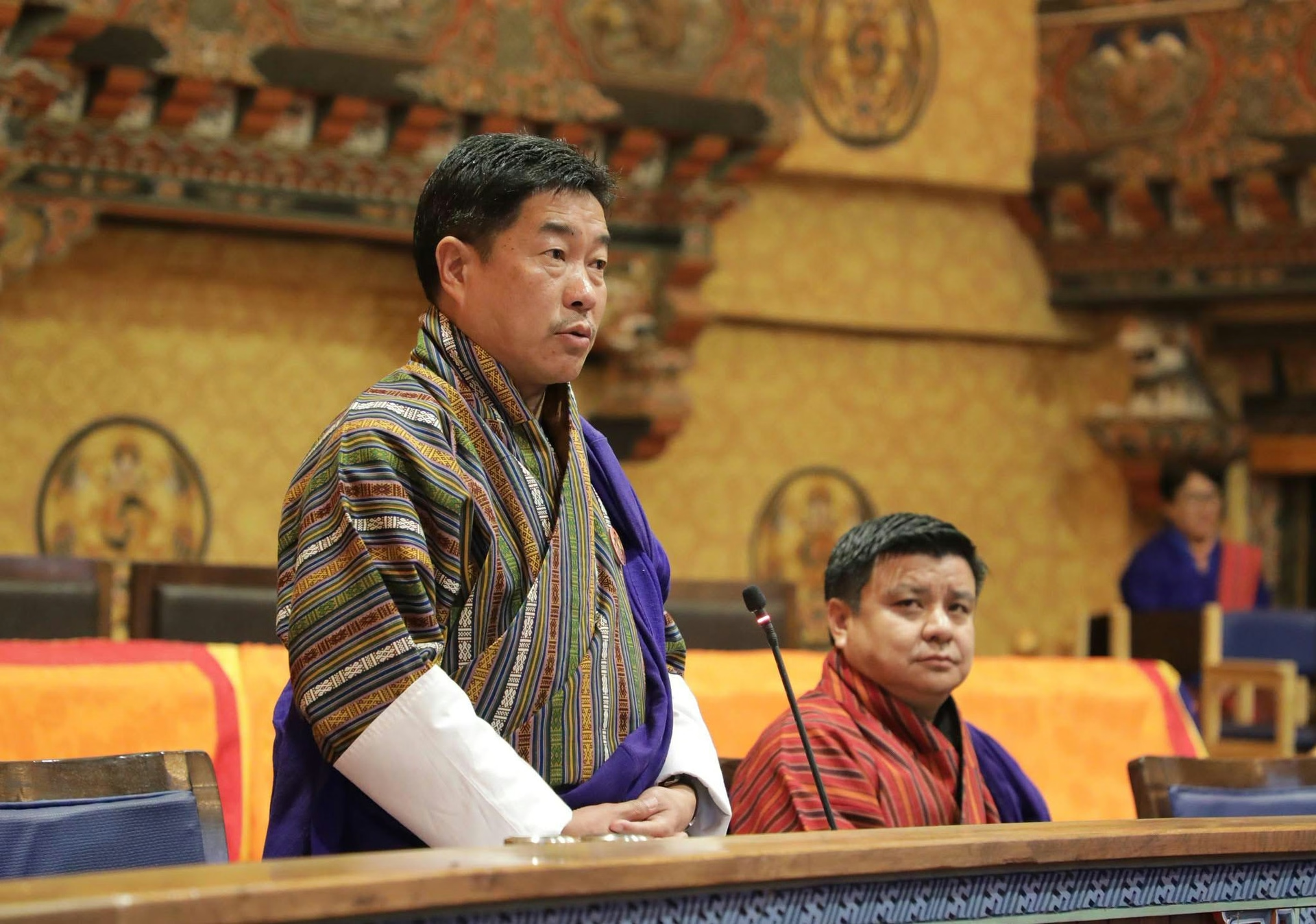
During deliberations at the National Council's 38th session, the Good Governance Committee presented findings from an extensive five to six-month investigation into pension governance. The committee had endorsed 10 specific recommendations aimed at strengthening the NPPF framework, yet the government's responses painted a discouraging picture.
Good Governance Committee Chairperson Rinzin Namgyel articulated the core frustration: the government's replies consisted primarily of assurances that reforms "will be done" or are "to be done"—vague commitments devoid of implementation details, timelines, or measurable milestones. This approach fundamentally undermines parliamentary accountability and raises legitimate questions about whether promised improvements will ever materialize.
The disconnect is particularly troubling given the committee's rigorous research methodology. Engaging multiple stakeholders and agencies over half a year should have produced concrete policy responses, not indefinite promises. Instead, legislators are left wondering whether their recommendations will gather dust or translate into genuine improvements for Bhutan's pensioner population.
Core Issues Demanding Immediate Attention 🔍
The National Council's recommendations addressed several interconnected challenges within Bhutan's pension architecture:
Governance Deficiencies: The NPPF operates without a dedicated legal framework, relying instead on executive directives that can be modified without parliamentary scrutiny. This governance vacuum creates uncertainty and prevents substantive policy changes from receiving proper democratic deliberation.
Inadequate Retirement Benefits: Civil servants retiring at the P1 level currently receive monthly pensions ranging from Nu 15,000 to Nu 20,000—an amount that Bumthang National Council member Kencho Tshering characterized as fundamentally insufficient for households facing escalating living costs. As inflation erodes purchasing power, these fixed payments become increasingly inadequate.
Inflation's Corrosive Impact: Pension values systematically deteriorate as prices rise, yet the current system lacks mechanisms to adjust benefits or protect retirees from economic erosion. This structural vulnerability exposes pensioners to potential poverty, particularly as they age and incur additional healthcare expenses.
Disparities in Coverage: Contract employees face discriminatory treatment regarding provident fund contributions, creating two-tiered retirement security based on employment classification rather than need or contribution levels.
Limited Retirement Flexibility: The current system offers few options for workers seeking to tailor their retirement arrangements to personal circumstances, constraining individual financial planning.
The Legislative Framework Gap 📜
Central to the reform debate is the absence of a dedicated NPPF Act. This legislative void represents perhaps the most critical deficiency in Bhutan's pension governance structure. Currently, the system operates under executive orders and administrative directives—instruments that lack the permanence, transparency, and democratic legitimacy of statutory law.
Rinzin Namgyel explicitly urged the government to prioritize enacting comprehensive NPPF legislation, even suggesting that the National Council could initiate the legislative process if the administration proved unable or unwilling to act. "If the government is unable to do so, the National Council, as a legislative institution, could coordinate to enact the Act," he stated, signaling parliamentary determination to advance reform regardless of executive hesitation.
Kencho Tshering reinforced this perspective, arguing that a dedicated Act would address systemic governance issues while ensuring that substantive pension changes received proper parliamentary scrutiny from both legislative chambers. Legal certainty, he emphasized, depends on statutory protection rather than administrative discretion.
Government's Three-Stage Reform Timeline: Too Little, Too Late? ⏰
The administration outlined an incremental approach to pension reform, proposing three sequential stages: parametric review and reform framework, followed by structural and institutional modifications, before legislative and regulatory changes could be considered.
This phased approach, while potentially methodical, raises critical concerns about implementation velocity. Given that the National Council has already invested substantial time researching these issues, further delays in legislative development risk perpetuating governance uncertainty and delaying relief for inadequately pensioned civil servants.
The government's reluctance to immediately prioritize legislative action suggests competing fiscal priorities or institutional resistance to enhanced regulatory oversight. However, from a policy perspective, establishing a legal framework earlier rather than later would provide stability for subsequent parametric and structural reforms.
Institutional Governance: Board Authority and Composition Disputes 🏛️
The National Council recommended strengthening the NPPF Board's authority and expanding its membership to include representatives from the Royal Civil Service Commission and the Ministry of Industry, Commerce and Employment. This structural enhancement aimed to improve governance coordination and ensure diverse stakeholder perspectives in pension policy decisions.
The government countered that the Board already possessed full decision-making authority and that composition should be strengthened through professional expertise rather than additional ex-officio appointments. Officials argued that separate institutional representation was unnecessary at this developmental stage.
This disagreement reflects broader debates about governance structure: should pension boards prioritize representative diversity or specialized competency? In practice, effective pension governance typically benefits from both elements—technical expertise combined with stakeholder representation ensures decisions reflect both sound financial principles and beneficiary interests.
Fund Management Separation: Incremental Progress Without Urgency 💰
Regarding the proposed separation of fund management from pension scheme administration, the Ministry of Finance and NPPF expressed support in principle, noting that accounting-level liabilities were already separated. However, they proposed pursuing further separation "progressively, guided by market readiness rather than a fixed timeframe."
This non-committal stance exemplifies the government's broader approach: acknowledging merit in recommendations while avoiding concrete implementation deadlines. For pensioners and contributors anxious about fund security and management integrity, indefinite timelines provide little reassurance.
Parametric Review: Questions Without Answers ❓
When asked about reviewing parametric reform options, the government responded that the scheme was "already reviewed periodically" and would continue. However, the Good Governance Committee correctly identified critical information gaps: which specific reform options would be examined, when would reviews occur, and how would findings influence actual policy reforms?
These aren't merely technical questions—they represent fundamental accountability issues. Periodic reviews without clear objectives or decision-making frameworks amount to administrative busy-work rather than genuine policy development. Meaningful parametric review requires transparent criteria for evaluating reform options and explicit mechanisms for translating findings into legislative or regulatory changes.
Early Retirement and Lump-Sum Payments: Philosophical Divide 🏦
The National Council recommended allowing employees to receive Tier-I or complete retirement benefits as lump-sum payments upon attaining pensionable age. This flexibility would enable retirees to address immediate financial needs or pursue alternative income strategies.
The government rejected this proposal, citing historical experience under earlier gratuity and government employee provident fund schemes where lump-sum recipients exhausted their payments within four to five years. This cautionary stance reflects legitimate concerns about retiree financial literacy and long-term security.
However, rather than maintaining rigid restrictions, the NPPF proposed examining hybrid withdrawal arrangements and partial commutation options—allowing retirees to access portions of their savings while preserving minimum monthly pensions. This compromise approach acknowledges both individual autonomy and systemic protection concerns.
The government also indicated willingness to explore whether matching contributions or enhanced pension accruals could incentivize employees to remain in service beyond vesting periods, recognizing that improved retirement security encourages workforce stability.
Pensioner Advocacy and Sustainability Concerns 👥
Eminent Member Phuntsho Rapten expressed significant dissatisfaction with governmental responses, emphasizing that the NPPF faces multiple management and regulatory challenges. He noted that NPPF management operates primarily on board directives and that the board itself had previously advocated for dedicated legislation.
Rapten also referenced media reporting highlighting inadequate pension levels amid rising inflation—a public concern that underscores the urgency of reform. When pension inadequacy becomes newsworthy, it signals that current arrangements are failing beneficiaries.
Kencho Tshering's warning about poverty exposure for pensioners and their families resonates particularly strongly in Bhutan's development context. As the nation advances economically, retirement security must evolve proportionally to ensure that civil servants who dedicated careers to public service enjoy dignified retirements.
The Governance Sustainability Question 🔐
A fundamental concern underpinning National Council deliberations involves the sustainability of pension governance through executive directives rather than statutory law. Executive orders can be modified without parliamentary deliberation, creating governance instability and preventing substantive policy changes from receiving proper democratic scrutiny.
Kencho Tshering articulated this constitutional concern explicitly: "If there is an Act, it will address all the current issues." Statutory law provides legal certainty, ensures parliamentary involvement in significant policy modifications, and creates transparent governance frameworks that inspire public confidence.
Executive governance, by contrast, permits administrative flexibility but sacrifices transparency and democratic legitimacy. For a system affecting tens of thousands of contributors and pensioners, democratic accountability should take precedence over administrative convenience.
Parliamentary Follow-Up and Future Accountability 📅
Following National Council deliberations, the House directed its Secretariat to follow up with relevant agencies regarding NPPF Act initiation and to obtain clear implementation timelines. This decision signals parliamentary determination to maintain pressure on the executive branch and prevent pension reform from becoming indefinitely delayed.
The follow-up report is scheduled for presentation on December 22, 2026—providing a concrete checkpoint for assessing governmental progress. This accountability mechanism transforms vague commitments into measurable outcomes, though the extended timeline itself raises questions about reform urgency.
What's at Stake for Bhutan's Future 🌍
Pension reform represents far more than technical administrative adjustment. It fundamentally affects social stability, retirement security, and intergenerational equity. As Bhutan continues developing economically and socially, ensuring adequate retirement protection for civil servants becomes increasingly critical.
The current standoff between parliamentary oversight and executive reluctance reflects broader tensions in Bhutanese governance—balancing democratic accountability with administrative efficiency, protecting vulnerable populations while managing fiscal constraints, and establishing legal certainty without constraining policy flexibility.
Moving Forward: The Path to Meaningful Reform 🚀
The National Council's criticism, while diplomatically expressed, represents serious parliamentary frustration with inadequate governmental response. The distinction between promises and concrete action has never been clearer. Bhutan's pensioners deserve more than assurances that reforms "will be done"—they deserve transparent timelines, measurable milestones, and statutory protections.
The government faces a critical choice: proactively advance comprehensive pension reform or face continued parliamentary pressure and potential legislative intervention. Given the social importance of pension security and the National Council's demonstrated commitment to oversight, meaningful action appears increasingly unavoidable.
For Bhutan's civil service workforce, the coming months will prove consequential. Whether pension reform becomes reality or remains perpetually deferred will signal whether democratic institutions can effectively pressure executive branches toward substantive policy change. The answer will reverberate far beyond pension governance.
You May Also Like
Politics
Better Late Than Never: Bhutan's Housing Crisis Demands Urgent Policy Action
November 14, 2026
Politics
OPEC Fund Agreement: Bhutan's New Private Sector Financing Opportunity
November 14, 2026
Politics
Bhutan's New Mining Bill: Environmental Protection and Community Equity
November 14, 2026
Politics
LG Aspirants Challenge Revised Competency Test Standards
November 14, 2026