Category:
NewsMRMS: How Bhutan's New System Transforms Media Communication
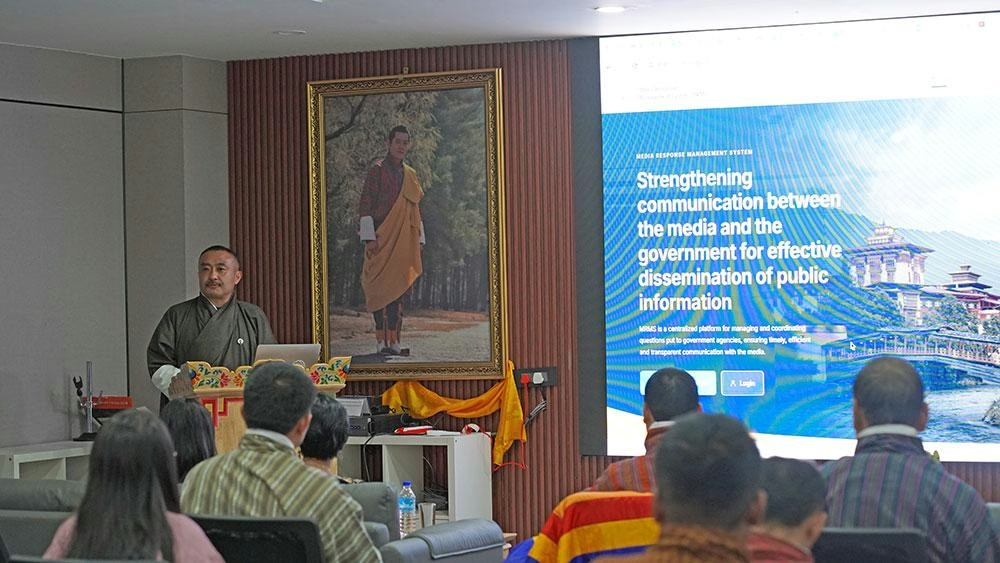
Bridging the Information Gap 📡
Bhutan's media landscape is undergoing a significant transformation. For years, journalists and government media focal persons have navigated a fragmented communication ecosystem, relying on WhatsApp messages, email chains, and informal channels to exchange critical information. This decentralized approach created bottlenecks, delayed responses, and frustrated both reporters seeking timely updates and officials managing multiple concurrent inquiries.
Now, a groundbreaking solution promises to reshape how information flows between government institutions and the press. The Media Response Management System (MRMS), officially launched on November 24 alongside the National Media and Information Literacy Strategy 2026, represents a pivotal moment for Bhutanese journalism and institutional transparency.
Understanding the MRMS: A Game-Changer for Media Relations 🎯
The MRMS isn't simply another digital tool—it's a comprehensive framework designed to standardize, track, and optimize how government agencies respond to media inquiries. Developed through a collaborative effort between the Ministry of Industry, Commerce and Employment and the GovTech Agency, this system operationalizes the 2023 Standard Operating Procedure for Sharing of Public Information with the Media.
What makes this initiative particularly significant is its foundation in accountability and transparency. Rather than relying on informal channels where communication trails disappear and response timelines blur, MRMS creates a documented, traceable system that benefits all stakeholders.
Key Features That Matter
- Centralized request management: All media inquiries funnel through a single, organized platform
- Response time tracking: The system monitors how quickly government agencies address journalist questions
- Transparent audit trails: Every communication is recorded and accessible for verification
- Designated focal person accountability: Clear assignment of responsibility ensures no inquiries fall through the cracks
- Real-time status updates: Journalists can monitor their requests without constant follow-up calls
The Journalist's Perspective: Optimism Meets Pragmatism ✍️
Sangay Rabten, a senior journalist with Business Bhutan, articulates the cautious optimism many in the profession feel about MRMS. While acknowledging the system's potential to ease long-standing access-to-information challenges, he emphasizes a critical point: the technology is only as effective as its implementation.
"The system will only transform our industry if journalists use it properly and government agencies genuinely commit to timely responses," Rabten notes. This perspective reflects a broader understanding within Bhutan's media community that structural solutions require behavioral change from both sides of the equation.
For emerging reporters entering the profession, MRMS represents something equally important: a more professional, predictable framework for gathering information. Rather than navigating informal networks and personal relationships, new journalists can rely on standardized processes from day one.
Inside Government: The Media Focal Person Experience 🏛️
Sonam Yangchen, media focal person at the Prime Minister's Office, offers invaluable insight into how government communicators experience this transformation. Previously, coordinating media inquiries meant juggling multiple communication channels—WhatsApp conversations, email threads, phone calls, and ad-hoc meetings all happening simultaneously.
The fragmentation created significant challenges. Messages could be missed, context lost in translation across platforms, and response consistency compromised. For someone like Yangchen, who coordinates monthly media press activities, the manual coordination burden was substantial.
"This initiative will make the work considerably easier while simultaneously ensuring transparency and accountability throughout the system," she explains. This dual benefit—improved efficiency for government staff while enhancing public accountability—represents the system's core value proposition.
The Journalists' Association of Bhutan: Setting Expectations 🤝
The JAB recognizes MRMS as more than just an operational improvement. The association views it as a foundational step toward broader press freedom objectives in Bhutan. Specifically, JAB expects the system to:
- Provide transparent mechanisms for tracking all media requests
- Enable monitoring of government response times against established benchmarks
- Ensure media focal persons respond proactively rather than reactively
- Create accountability mechanisms for non-responsive agencies
- Generate data that informs future Right to Information legislation
This last point deserves particular attention. The JAB recognizes that MRMS implementation data could provide empirical evidence supporting the case for a comprehensive Right to Information law—legislation that would formalize and expand journalists' access to government information.
Media Literacy in the Digital Age 📚
Paralleling the MRMS launch, the National Media and Information Literacy Strategy 2026 addresses a complementary challenge: ensuring citizens can distinguish credible information from misinformation in an increasingly complex digital landscape.
Developed through collaboration between the Bhutan Media Foundation, the Department of Media, Creative Industry and Intellectual Property, and UNESCO, this strategy reflects global recognition that media literacy is essential infrastructure for democratic societies.
Why Media Literacy Matters Now
The digital revolution has democratized content creation, meaning anyone can publish information to mass audiences. Simultaneously, artificial intelligence technologies enable creation of increasingly sophisticated synthetic content—deepfakes, AI-generated articles, and manipulated imagery that can deceive even careful observers.
Sangay Phuntsho Waiba, Programme Officer at the Bhutan Media Foundation, articulates the strategy's expanded scope: "Modern media literacy extends far beyond traditional journalism skills. Citizens must understand digital platform algorithms, recognize AI-generated content, evaluate source credibility, and participate responsibly in online spaces."
The strategy encompasses education systems, government institutions, media organizations, civil society, and communities—recognizing that addressing misinformation requires collective responsibility.
The Broader Context: Bhutan's Media Evolution 🌟
These initiatives arrive at a crucial moment in Bhutanese media development. As the nation increasingly engages with digital platforms and global information flows, maintaining institutional credibility and public trust requires deliberate investment in transparency and media literacy.
Bhutan's relatively young democracy benefits from proactive infrastructure development. Rather than waiting for press freedom crises to emerge, the government and media organizations are collaborating to strengthen foundational systems.
International media development research consistently demonstrates that countries investing early in press freedom infrastructure, information access systems, and media literacy initiatives experience stronger democratic participation and more resilient institutions long-term.
Implementation Challenges and Opportunities 🔧
While MRMS represents genuine progress, successful implementation requires attention to several factors:
Training and adoption: Government staff and journalists must understand the system's features and best practices for maximum benefit.
Consistent usage: The system only works if agencies consistently use it rather than reverting to informal channels for difficult inquiries.
Response quality: Tracking requests means nothing if responses remain delayed or inadequate. The system must drive behavioral change, not just documentation.
Continuous improvement: Regular feedback from both journalists and government communicators should inform system refinements.
Integration with other initiatives: MRMS works best when complemented by media literacy programs and broader transparency efforts.
Looking Forward: The Path to Press Freedom 🚀
The MRMS launch and media literacy strategy represent strategic investments in Bhutan's information ecosystem. These initiatives acknowledge that modern democratic governance requires seamless communication between institutions and the public, mediated by informed journalists and media-literate citizens.
Sangay Rabten's hope that MRMS will inspire new reporters reflects a deeper truth: professional infrastructure attracts and retains quality journalism. When systems are transparent and predictable, talented individuals feel confident entering the profession.
The Journalists' Association's perspective on using MRMS implementation data to inform Right to Information legislation suggests these initiatives are stepping stones toward more comprehensive press freedom frameworks. Each successful implementation builds the case for deeper reforms.
Key Takeaways 💡
The Media Response Management System and National Media and Information Literacy Strategy 2026 represent coordinated efforts to strengthen Bhutan's information infrastructure. For journalists, MRMS promises more efficient access to official information and transparent response tracking. For government communicators, it offers streamlined coordination and clear accountability. For citizens, both initiatives support their ability to access credible information and distinguish truth from misinformation.
Success depends on genuine commitment from all stakeholders—journalists using the system properly, government agencies responding promptly and substantively, and citizens developing media literacy skills. When these elements align, Bhutan's media ecosystem becomes stronger, more transparent, and more resilient. The foundation is now in place; the next chapter depends on how effectively these systems are implemented and refined.
You May Also Like
News
Bhutan's Vision for Inclusive Future on World Children's Day
November 21, 2026
News
Amochu Road Crisis: Dust, Potholes Plague Residents
November 21, 2026
News
Year-Round Irrigation Transforms Agriculture in Wangdue and Zhemgang
November 21, 2026
News
SOM Designs Visionary New Precinct for Gelephu Mindfulness City
November 21, 2026