Category:
EducationMobile ECCD Centre Transforms Early Childhood Care in Trashigang
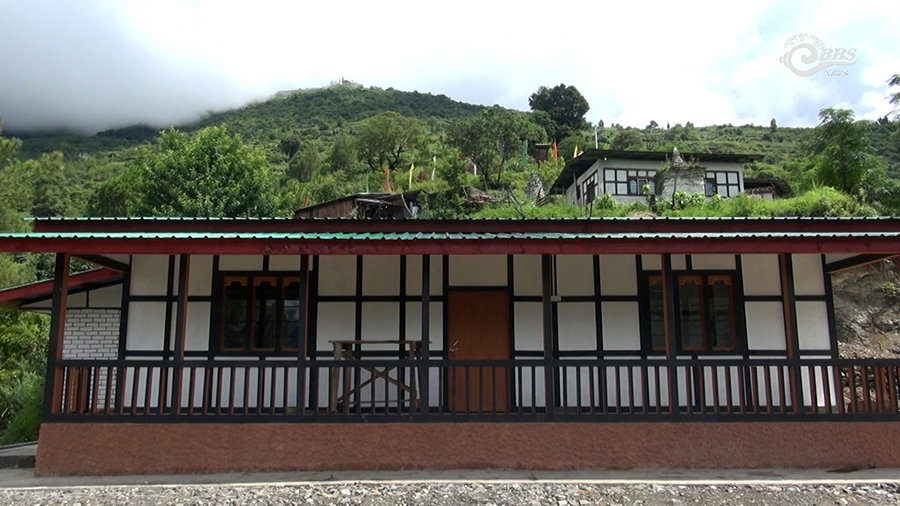
Bridging the Gap: A New Hope for Rural Families 🌟
In the remote communities of Yabrang and Phimsong within Trashigang's Phongmey Gewog, a significant transformation is underway that promises to reshape early childhood development and family dynamics. The establishment of a mobile Early Childhood Care and Development (ECCD) centre represents a pivotal moment for families who have long struggled to balance agricultural responsibilities with childcare obligations.
For generations, rural families in these chiwogs have faced an impossible choice: leave young children in the care of aging grandparents and elder siblings, or bring them to the fields where safety and educational opportunities remain limited. This reality has created a genuine challenge for parents seeking to provide their children with quality early learning experiences while maintaining their livelihoods.
Understanding the Rural Childcare Challenge 🏘️
The Daily Struggle
Agriculture remains the backbone of life in Yabrang and Phimsong, with most families depending entirely on farming for their survival. Parents typically begin their workday before dawn, leaving young children behind with whoever can watch them. This scenario has persisted for years, creating anxiety and missed developmental opportunities for children during their most critical growth years.
Key challenges families face:
- Limited access to structured early learning environments
- Safety concerns when children are left with elderly caregivers
- Reduced parental work productivity due to childcare responsibilities
- Limited educational guidance from parents with minimal formal schooling
- Developmental delays that compound when children eventually enter primary school
Gem Lhamo, a parent from Yabrang, articulated the widespread concern: families constantly worry about their children's safety while working. She noted that parents consistently report improved learning outcomes when children attend proper care centres before enrolling in pre-primary education.

The Parental Perspective
Dawa Dema, another parent from Phimsong, shared a particularly poignant experience common to many families in the region. As a farmer with limited formal education, she felt unable to provide adequate guidance to her children. Previously, she relied on her elderly parents for childcare, but the constant worry about whether aging grandparents could adequately supervise active young children weighed heavily on her mind.
Chimi Wangmo from Yabrang presented another crucial dimension: the economic impact of childcare gaps. Without reliable care options, some parents cannot work during certain periods, directly affecting household income and agricultural productivity. This creates a compounding disadvantage for already economically vulnerable families.
The Mobile ECCD Solution: What's Being Built 🏗️
Infrastructure and Investment
The Ministry of Education and Skills Development allocated Nu 1.5 Million to construct this transformative facility, demonstrating the government's commitment to equitable early childhood development across Bhutan's diverse geography. The main structure has been completed, with final touches including safety facilities and playground development underway.
This investment reflects a broader national trend recognizing that early childhood care and development directly impacts educational outcomes, social mobility, and long-term economic productivity. Countries worldwide have documented that every dollar invested in quality ECCD programmes yields returns of five to nine dollars through improved educational attainment, higher earning potential, and reduced social costs.
How the Mobile Model Works
The innovative mobile ECCD approach addresses the reality of rural deployment challenges. Rather than requiring a permanent, full-time facility with dedicated staff immediately, the centre will operate through regular visits from a facilitator based at the Saling ECCD centre—currently scheduled for at least once weekly.
This flexible model offers several advantages:
- Immediate service delivery without waiting for permanent staffing
- Cost efficiency by sharing resources across multiple communities
- Community integration through established relationships with existing centres
- Scalability to formal status if demand and sustainability metrics support it
- Professional guidance from trained ECCD facilitators
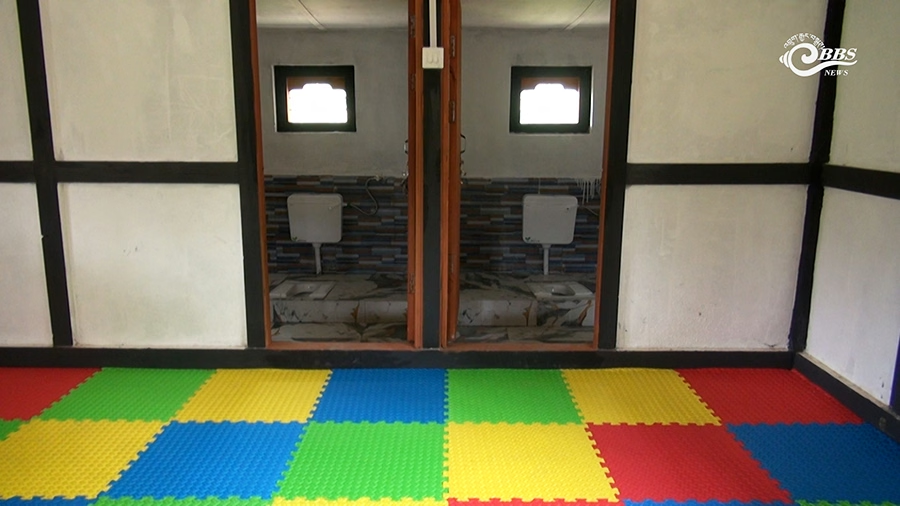
Expected Impact and Community Benefits 💡
Reaching the Right Population
The facility is projected to serve approximately 20 children from Yabrang and Phimsong chiwogs during its initial phase. While this number may seem modest, it represents a significant portion of the early childhood population in these specific communities and establishes a crucial foundation for expansion.
Transformative Outcomes for Families
Parents anticipate multiple benefits extending beyond basic childcare:
Educational advantages: Children will receive structured early learning experiences during their most neurologically receptive years, establishing foundations for academic success in formal schooling.
Parental empowerment: With reliable childcare, parents can dedicate full days to agricultural work without distraction or worry, potentially increasing productivity and household income.
Developmental support: Professional facilitators can identify developmental concerns early, enabling timely intervention and support.
Social preparation: Children gain peer interaction and social skills before entering primary school, easing their transition to formal education.
Intergenerational relief: Elderly grandparents and elder siblings are freed from intensive childcare responsibilities, improving overall family wellbeing.
The Path Forward: From Mobile to Permanent Status 🚀
Strategic Implementation Framework
The district administration has thoughtfully structured this initiative with a clear progression pathway. Initial operation as a mobile centre allows stakeholders to gather crucial data on enrollment patterns, community engagement, and operational sustainability before proposing formal centre status to the Ministry of Education and Skills Development.
This phased approach represents sound policy implementation, ensuring that resources are allocated efficiently and that permanent positions are created only when justified by demonstrated need and community commitment.
Sustainability Considerations
For the centre to transition from mobile to permanent status, several factors will be evaluated:
- Enrollment stability: Consistent attendance demonstrating genuine community demand
- Parental engagement: Active participation in centre activities and decision-making
- Financial sustainability: Identification of ongoing funding mechanisms
- Facility utilization: Effective use of completed infrastructure
- Facilitator capacity: Availability of trained personnel for full-time deployment
Broader Context: ECCD in Bhutan's Education Strategy 📚
National Priorities
Bhutan's education sector has increasingly recognized early childhood care and development as foundational to achieving broader educational and developmental goals. The establishment of ECCD centres across the country, including in remote areas like Phongmey Gewog, aligns with international evidence demonstrating that early intervention yields the highest returns on educational investment.
The United Nations Sustainable Development Goal 4 specifically targets ensuring inclusive and equitable quality education, with ECCD programmes recognized as essential components. Bhutan's commitment to establishing services in underserved areas like Yabrang and Phimsong demonstrates alignment with these global objectives.
Rural Development Integration
This initiative also connects to broader rural development strategies. By supporting agricultural families through improved childcare access, the government enables rural communities to maintain economic viability while investing in human capital development. This approach helps prevent rural-urban migration driven by limited services in remote areas.
Key Takeaways and Looking Ahead ✨
The mobile ECCD centre for Yabrang and Phimsong represents more than infrastructure development—it embodies a commitment to equitable opportunities for all Bhutanese children, regardless of geographic location. For families in these chiwogs, it offers tangible solutions to longstanding challenges that have constrained both childcare options and parental productivity.
What this means for the community:
- Approximately 20 children will gain access to structured early learning
- Parents can work with greater peace of mind and productivity
- A foundation is established for potential expansion to formal centre status
- Local facilitators from Saling ECCD centre gain professional engagement opportunities
- The model demonstrates feasibility for similar initiatives in other remote areas
As the safety facilities and playground near completion, anticipation builds in these communities. The mobile ECCD centre stands ready to transform early childhood experiences and family dynamics in Yabrang and Phimsong, proving that quality early development services need not be limited to urban areas. This initiative offers hope and concrete support to families who have long navigated childcare challenges alone.
You May Also Like
Education
Dzongkha Pronunciation and Spelling Challenges in Bhutanese Education
October 10, 2026

Education
Bhutanese Students Reconsider Australia Plans Amid New Visa Rules
October 7, 2026
Education
Motithang Higher Secondary School Zayed Sustainability Prize Finalist
October 6, 2026
Education
Students with Special Educational Needs Showcase Talents
October 6, 2026