Category:
EducationEtonHouse Bhutan International School Opens Doors
A Milestone for Bhutanese Education 🎓
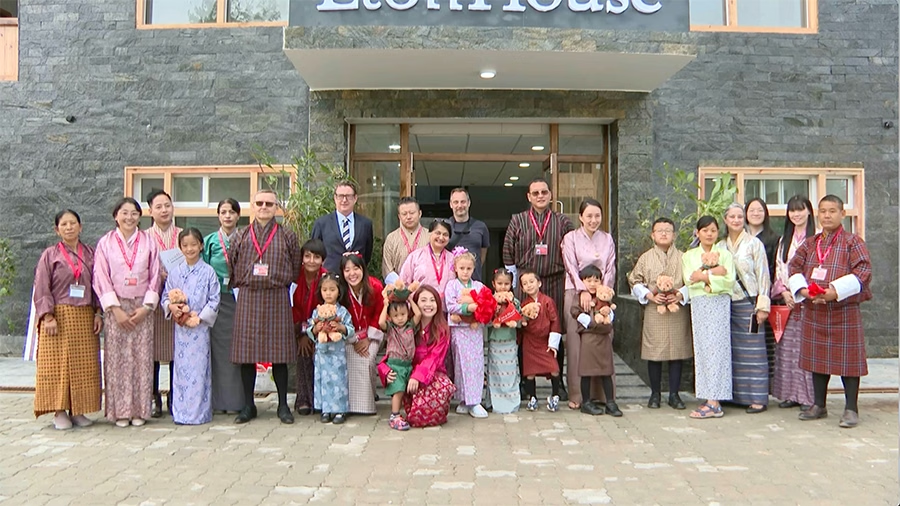
Thimphu has witnessed a significant educational milestone with the establishment of the nation's inaugural international school. EtonHouse Bhutan International School officially commenced operations, marking a transformative moment in Bhutan's educational landscape. This development represents a pivotal shift in how families within the country can access world-class education without necessarily seeking opportunities abroad.
The institution launched with an impressive infrastructure spanning from Kindergarten through Year 12, demonstrating comprehensive educational coverage. With nine enthusiastic students enrolled in its inaugural cohort and a dedicated faculty of seven educators—including three international instructors and four local professionals—the school has established a strong foundation for quality learning.
Strategic Expansion and Enrollment Phases 📈
The school's leadership has adopted a thoughtfully structured approach to growth rather than rapid expansion. This measured strategy ensures that educational quality remains paramount while facilities and resources develop systematically.
Current and Upcoming Enrollment Timeline:
- Immediate: Kindergarten through Year 6 students currently enrolled
- January 2027: First cohort of secondary students (Year 7) will commence their studies
- August 2027: Upper secondary grades (Years 8, 9, and possibly Year 10) will join the institution
- Ongoing: Continuous admissions for preschool and primary-level students (ages 3-11)
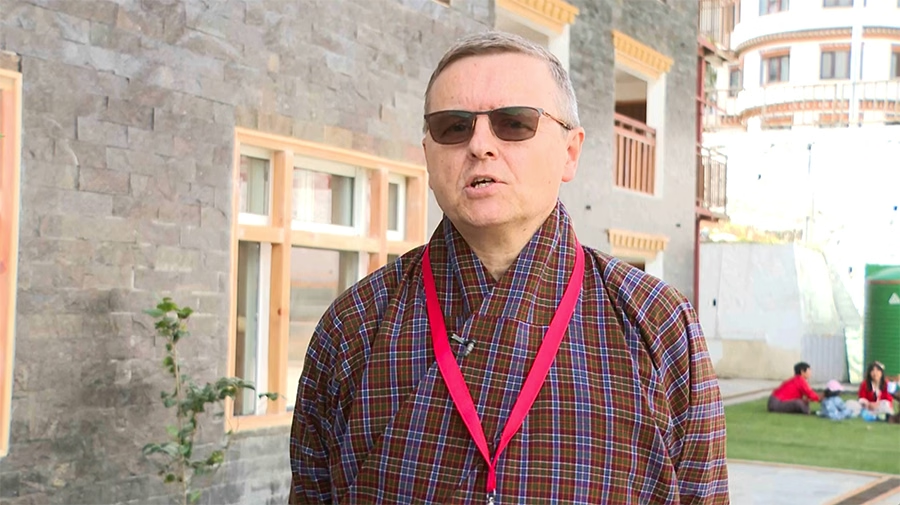
Michael Leahy, the Founding Principal, articulated the institution's vision with clarity and purpose. He emphasized that the phased approach allows the school to maintain exceptional standards while gradually welcoming more learners into the community. This deliberate expansion strategy reflects best practices observed in successful international school establishments globally.
Facilities Development and Infrastructure 🏗️
The school's physical development mirrors its enrollment strategy, unfolding in coordinated phases to ensure optimal learning environments. Phase One, currently underway, involves comprehensive renovation of existing structures with completion anticipated by September. This foundational work ensures that classrooms, administrative spaces, and support facilities meet international standards.
Phase Two will introduce specialized recreational and educational facilities, including a dedicated playground designed to promote physical development and social interaction among students. These enhancements reflect understanding that comprehensive education encompasses physical wellness, creative expression, and holistic child development.
The institutional commitment to systematic infrastructure development demonstrates long-term vision and stability—critical factors that parents and guardians consider when selecting educational institutions for their children.
Accessibility and Financial Considerations 💰
While the EtonHouse International Education Group maintains confidentiality regarding specific fee structures, they have transparently communicated that costs vary based on selected services. Current offerings include transportation and nutritional services, with flexibility in package selection.
Remarkably, the institution has implemented a concessional rate specifically for Bhutanese students, demonstrating commitment to making international-standard education accessible to local families. This pricing strategy acknowledges the economic context of Bhutan while maintaining educational excellence.
This approach contrasts favorably with many international schools globally, which often price education beyond reach for local populations. By offering differentiated pricing, EtonHouse Bhutan signals genuine dedication to national development rather than serving exclusively expatriate communities.
Educational Philosophy and National Impact 🌍
The establishment of an international school in Bhutan addresses a significant educational gap. Historically, many affluent Bhutanese families seeking international-standard education have sent children abroad—a costly and disruptive practice that separates families and creates brain drain concerns.
School leadership articulates a compelling vision: international education serves as a benchmark for continuous improvement across Bhutan's entire educational ecosystem. By operating within the country, the institution creates opportunities for knowledge transfer, curriculum innovation, and professional development that elevates standards nationally.
Key Benefits of International Education in Bhutan:
- Local Access: Families retain the option of international-standard education without overseas relocation
- Economic Efficiency: Reduces financial burden compared to international boarding schools
- Cultural Continuity: Students maintain connections to Bhutanese culture while accessing global perspectives
- Knowledge Sharing: International pedagogical approaches inform and improve national educational standards
- Competitive Advantage: Graduates possess globally recognized qualifications alongside local cultural competency
Faculty Excellence and Educational Standards ✨
The school's teaching team reflects a balanced approach to international education. The combination of expatriate educators bringing specialized expertise and Bhutanese teachers providing cultural context creates an enriched learning environment. This staffing model has proven successful in international schools across Asia and ensures that students benefit from diverse pedagogical perspectives.
The relatively small initial cohort allows for exceptional teacher-student ratios, enabling personalized attention and differentiated instruction—hallmarks of premium international education. As enrollment expands, the institution plans proportional faculty growth to maintain these standards.
Broader Context: International Education Trends in South Asia 🎯
EtonHouse Bhutan's establishment reflects broader regional trends. South Asia has witnessed growing demand for international education options, with countries like India, Nepal, and Sri Lanka hosting numerous international schools. Bhutan's entry into this landscape was somewhat delayed, likely due to the nation's smaller population and unique educational philosophy emphasizing Gross National Happiness alongside academic achievement.
The timing of this launch suggests confidence in Bhutan's economic trajectory and growing middle-class demographics seeking educational diversification. International school establishment typically correlates with economic development and increased parental demand for alternative educational pathways.
Looking Forward: Growth and Integration 🚀
As EtonHouse Bhutan develops, several interesting dynamics will emerge. The institution must balance international best practices with Bhutanese cultural values and national educational priorities. Successfully navigating this balance will determine whether the school becomes merely an alternative for expatriate families or a transformative force in Bhutanese education.
The phased expansion timeline suggests confidence in market demand and institutional sustainability. By January 2027, when secondary students arrive, the school will serve approximately 40-50 students across multiple grade levels—a critical mass for developing robust inter-grade interactions and extracurricular programming.
Future developments to monitor include curriculum accreditation, international examination offerings (such as International Baccalaureate or Cambridge qualifications), and partnerships with Bhutanese institutions for cultural integration and community engagement.
Conclusion: A New Chapter in Bhutanese Education 📚
The commencement of EtonHouse Bhutan International School represents far more than the opening of another educational institution. It symbolizes Bhutan's evolving relationship with globalization, its commitment to educational excellence, and its recognition that quality education takes diverse forms.
For families seeking international-standard education, the school eliminates the difficult choice between local options and overseas relocation. For Bhutan's educational sector, it introduces new pedagogical approaches and raises the benchmark for excellence. For the nation's economic development, it contributes to creating globally competitive human capital.
As the institution grows through its carefully planned phases, stakeholders should watch with interest how it integrates international best practices with Bhutanese educational philosophy. The success of this venture will likely influence Bhutan's educational landscape for decades, potentially inspiring similar initiatives and elevating standards across the entire system.
The nine students who walked through EtonHouse Bhutan's doors on opening day are not merely beginning their education—they are participating in a pivotal moment in their nation's educational history. 🌟
You May Also Like
Education
Team Bhutan Shines at FIRST Global Challenge 2026
October 15, 2026
Education
BFF Academy Achieves Historic Milestone with First Cambridge Checkpoint Exam
October 14, 2026
Education
Dzongkha Pronunciation and Spelling Challenges in Bhutanese Education
October 10, 2026

Education
Bhutanese Students Reconsider Australia Plans Amid New Visa Rules
October 7, 2026