Category:
EnvironmentMatsutake Decline: Ura's Fight to Save Its Forest Treasure
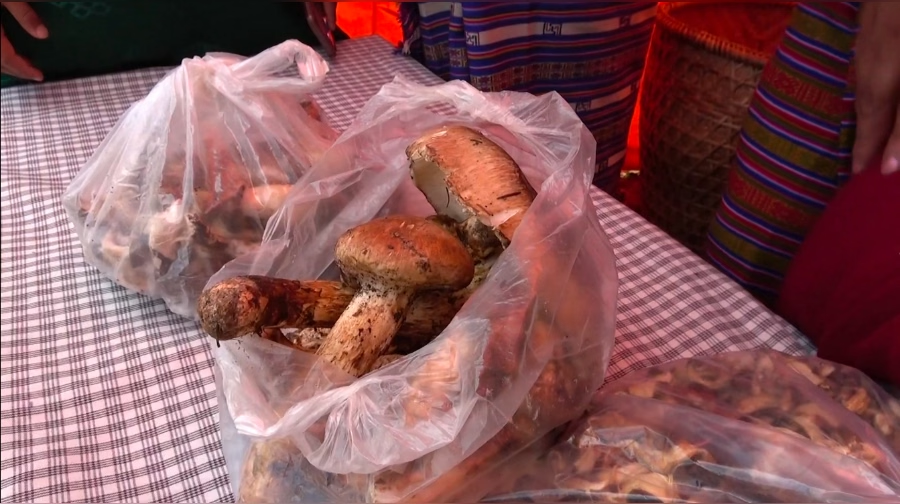
The Silent Crisis in Bhutan's Mushroom Forests 🍄
In the misty valleys of Ura Gewog, Bumthang district, a quiet crisis is unfolding that threatens one of Bhutan's most prized natural resources. The matsutake mushroom—locally revered as Sangay Shamu—has become increasingly difficult to find, signaling deeper ecological challenges that extend far beyond a single harvest season. This ancient forest treasure, which has sustained generations of Ura's farming communities, now faces an uncertain future.
The decline in matsutake production represents more than just an economic concern; it reflects the interconnected relationship between forest health and biodiversity that defines Bhutan's environmental stewardship. As local farmers struggle with diminishing yields, conservation efforts are intensifying to address the root causes of this troubling trend.
Understanding the Matsutake Mushroom Phenomenon 🌲
Unlike cultivated mushrooms that thrive in controlled agricultural environments, the matsutake exists in a delicate symbiotic relationship with forest ecosystems. This prized fungus cannot be simply planted in fields or grown through conventional farming methods. Instead, it develops naturally through a complex mycorrhizal association with specific tree species in old-growth forests.
The matsutake's dependence on forest health makes it an invaluable indicator species for ecosystem vitality. When matsutake production falters, it signals broader environmental stress within the forest system itself. This biological reality has profound implications for Ura's conservation strategy and economic planning.
The Troubling Harvest Numbers 📉
The severity of the production decline became starkly apparent during this year's Ura Mushroom Festival. Local farmers reported alarming reductions in their harvests compared to previous years. Where villagers once collected approximately 20 kilograms of matsutake within just two days of intensive harvesting, current yields have plummeted to merely 3-4 kilograms per day across entire communities.
This dramatic 80-85% reduction in productivity represents an economic crisis for families who have historically depended on mushroom sales as a significant income source during the July to September harvest season. The festival, which was established in 2008 to promote sustainable harvesting and celebrate local culture, has become a barometer for the deteriorating situation.
Farmers from neighboring regions face similar challenges. Even in Genye Gewog, collectors at the Matsutake Festival in Thimphu reported inability to gather sufficient mushrooms to meet exporter demand, suggesting this is not an isolated phenomenon but a regional environmental concern.
Forest Degradation: The Root Cause 🌳
Community members and local agricultural experts have identified a critical culprit behind the matsutake decline: the widespread death of large trees throughout the forest habitat. The loss of mature trees directly correlates with the disappearance of matsutake mushroom colonies in affected areas.
Pema Norbu, a dedicated farmer in Ura Gewog, articulated the community's observation: the matsutake production continues its year-over-year decline as forest conditions deteriorate. The connection is unmistakable—wherever large trees succumb to disease, drought, or other stressors, the mushrooms vanish entirely from those locations.
Tshetrim Dema, another local cultivator, emphasized that the drying of large forest trees directly precipitates the loss of mushroom productivity in those zones. This pattern repeats across multiple harvest areas, creating a cascading ecological failure that extends beyond simple agricultural underperformance.
The causes of tree mortality remain multifaceted, potentially including climate stress, pest infestations, disease, or changes in precipitation patterns. Understanding and addressing these underlying forest health issues has become paramount for mushroom conservation efforts.
Community Challenges and External Pressures 👥
Beyond environmental degradation, the Ura farming community faces an additional challenge: controlling unauthorized harvesting by outsiders. As matsutake becomes increasingly valuable and scarce, external collectors pose a threat to sustainable management efforts.
Pema Norbu highlighted the difficulty in maintaining organized mushroom collection groups when external harvesters can freely access the forests. This uncontrolled harvesting undermines community-based management systems and exacerbates the strain on already-declining populations.
The situation reflects broader tensions between resource access, conservation objectives, and economic necessity that characterize many Himalayan communities. Balancing community livelihoods with environmental protection requires sophisticated governance frameworks and enforcement mechanisms.
Conservation Response: Gewog and Park Partnership 🤝
Recognizing the urgency of the situation, local authorities have mobilized comprehensive conservation initiatives. The Ura Gewog Administration, working in partnership with Phrumsengla National Park, has launched coordinated efforts to address both the symptoms and underlying causes of matsutake decline.
These collaborative initiatives focus on two critical components: sustainable harvesting practices and habitat preservation. Ura Gup Chimi Tobgay emphasized that the gewog administration and national park have provided specialized training to community members on responsible collection techniques and mushroom conservation principles.
Sustainable harvesting protocols teach collectors to minimize forest disturbance, preserve mycelial networks, and ensure long-term mushroom productivity. However, officials and farmers alike recognize that training alone cannot restore declining populations without addressing the fundamental issue of forest degradation.
The Matsutake-Forest Health Nexus 🔗
Sonam Tenzin, another Ura farmer, articulated the core challenge facing conservation efforts: while sustainable harvesting practices are essential, they represent only a partial solution. The critical priority must be preserving and restoring the forest trees and mushroom habitats themselves.
The matsutake's ecological requirements create an inescapable reality—forest health and mushroom productivity are inseparable. Without addressing tree mortality, disease prevention, and overall ecosystem vitality, harvesting practices alone cannot reverse the decline.
This recognition has shifted conservation focus toward integrated forest management approaches that prioritize long-term ecological restoration alongside sustainable resource use. The strategy acknowledges that protecting matsutake requires protecting the entire forest system.
Ura's Unique Position in Bhutan's Mushroom Economy 🏆
Ura Gewog holds a distinctive ecological distinction: matsutake mushrooms are found almost exclusively in this region of Bumthang district. This geographic specificity makes Ura's matsutake production critically important for Bhutan's national mushroom economy and cultural heritage.
The Ura Mushroom Festival, now in its second decade, serves multiple purposes beyond economic promotion. It celebrates local culture, educates consumers about sustainable practices, and provides a marketplace for community producers. However, declining availability threatens the festival's viability and the economic opportunities it represents.
The geographic concentration of matsutake production in Ura means that regional environmental challenges have national implications for Bhutan's wild mushroom sector.
Seasonal Dynamics and Future Outlook ⏰
The matsutake harvest season typically concentrates between July and September, creating a compressed timeframe for annual income generation. This seasonal intensity means that production failures have immediate and severe economic consequences for farming families.
However, forest health and mushroom productivity depend on conditions throughout the entire year, not just during the harvest season. Rainfall patterns, temperature fluctuations, pest pressures, and disease prevalence during off-season months directly influence fruiting success in subsequent harvests.
This reality underscores the importance of year-round forest monitoring and management rather than seasonal focus limited to collection periods.
Broader Implications for Bhutanese Agriculture and Conservation 🌍
The matsutake decline in Ura reflects broader challenges facing Bhutan's agricultural sector and conservation objectives. As climate patterns shift and forest ecosystems face multiple stressors, wild-harvested products become increasingly vulnerable.
The situation highlights the tension between economic development and environmental protection that characterizes sustainable development in the Himalayan region. Balancing community livelihoods dependent on forest resources with ecosystem preservation requires innovative approaches and long-term commitment.
Bhutan's unique position as a carbon-negative nation with constitutionally mandated forest coverage provides opportunities for pioneering conservation models that integrate ecological protection with community economic security.
Moving Forward: Integrated Solutions and Community Engagement 💡
Addressing the matsutake crisis requires multifaceted approaches combining immediate harvesting reforms, forest health restoration, and long-term ecological monitoring. Success depends on sustained collaboration between government agencies, conservation organizations, and farming communities.
Key priorities include:
- Forest Health Assessment: Comprehensive surveys identifying causes of tree mortality and implementing targeted interventions
- Habitat Restoration: Active reforestation and forest management practices that support matsutake-host tree associations
- Sustainable Harvesting Protocols: Enforcement of collection methods that minimize ecosystem disruption
- Community Capacity Building: Ongoing training in conservation practices and sustainable resource management
- Access Control: Mechanisms to prevent unauthorized harvesting while respecting community rights
- Economic Diversification: Supporting farmers in developing alternative income sources to reduce pressure on matsutake resources
Conclusion: Protecting Ura's Forest Heritage 🌟
The decline in matsutake production in Ura Gewog represents a critical conservation challenge that transcends simple agricultural economics. It reflects the fundamental interdependence between human livelihoods and forest ecosystem health in Bhutan's mountain communities.
As local farmers continue their urgent efforts to protect matsutake forests, their work carries implications far beyond Ura. Success in restoring matsutake populations while maintaining community economic security could establish valuable models for sustainable wild-harvest management across the Himalayan region.
The path forward requires unwavering commitment to forest preservation, community-centered conservation approaches, and recognition that protecting Bhutan's natural heritage is inseparable from supporting the farmers and communities who depend on it. The future of Sangay Shamu—and the forests it represents—depends on decisions and actions taken today.
You May Also Like
Environment
Climate Crisis in the Himalayas: Bhutan's Cold Reminder
August 29, 2026
Environment
WBH Conservation Project Delivers Clean Water to Rural Homes
August 29, 2026
Environment
HKH Climate Crisis: Why Regional Unity Matters Now
August 29, 2026
Environment
Bhutan's Solar Power Revolution: Energy Security Strategy
August 26, 2026