Category:
TourismLuxury Glamping at 4,200 Metres: Bhutan's High-Altitude Innovation
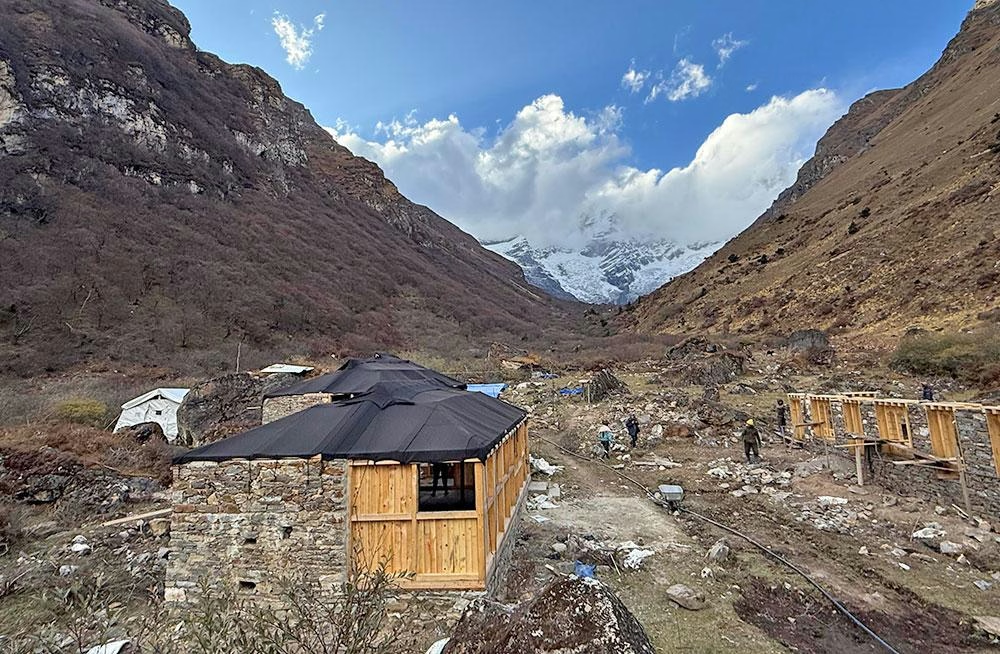
When you imagine luxury accommodation, mountain peaks and pristine wilderness rarely come to mind alongside hot showers and king-sized beds. Yet a visionary youth group in Bhutan is challenging that assumption by creating something truly extraordinary: high-altitude glamping experiences at the base of Mount Jomolhari, one of the Eastern Himalayas' most iconic summits. 🏔️
This groundbreaking initiative represents far more than a tourism venture—it's a cultural renaissance, an economic opportunity, and a commitment to sustainable development all wrapped into one innovative package.
The Vision: Redefining High-Altitude Hospitality ✨
Imagine stepping out of your tent at dawn to witness the majestic 7,326-metre Mount Jomolhari rising before you, while behind you lies a comfortable bed, warm running water, and electricity. This isn't a fantasy—it's the reality that the Soe Eco-Tourism project is bringing to life through its BjaPing initiative, also known as BjaGlamping.
Located at Jangothang, positioned at the strategic base camp of Mount Jomolhari, three luxury glamping structures are currently under construction. The project, led by chairperson Sonam Rinchen, is funded through the COMDEKS Phase 4 program under the Global Environment Facility Small Grants Programme (GEF-SGP), implemented by UNDP in partnership with the Bhutanese government. With a budget of USD 28,000, this youth-led initiative aims to welcome international and domestic tourists visiting the highly anticipated Snow Leopard Festival in 2027. 🐆
Ancient Craft Meets Modern Luxury 🧵
What truly sets BjaPing apart is its distinctive construction methodology. Rather than importing materials, the structures are built entirely from local resources, with a particular emphasis on reviving a centuries-old Himalayan tradition: yak hair weaving.
The foundation consists of stone walls reinforced with traditional mud mortar, while roofing and window slides are crafted from bja—locally woven yak hair material. This isn't merely an aesthetic choice; it's a practical solution born from generations of highland living. Yak herders have long recognized that bja retains heat exceptionally well, making it the optimal material for high-altitude tents where temperatures can plummet dramatically.
However, this traditional craft faces an existential threat. The introduction of modern tents and tarpaulin sheets has pushed bja weaving into decline. Village elders report that producing enough material for a single traditional shelter can take up to an entire year of continuous labor—a commitment few young people today are willing to undertake.
The BjaPing project directly addresses this challenge by creating economic incentives for master weavers and their apprentices. By establishing a premium market for bja-constructed luxury accommodations, the initiative transforms a disappearing craft into a valuable, income-generating skill. 💼
Community-Centered Development 🤝
Beyond the tourism infrastructure, the project's most compelling aspect is its commitment to community empowerment. Local youth have already secured meaningful employment throughout the construction phase, with one young person appointed as site supervisor and several others hired for specialized construction work.
The project's economic benefits extend far beyond construction jobs:
- Direct employment opportunities: Two baristas are being trained for the Mountain Café, two young men are receiving hospitality management training, plus positions for yak handlers, hosts, and accounting staff
- Supply chain development: Local herders will supply yak products, milk, and cheese to the facility
- Service provision: Yak and pony riding experiences, pony transport services, and traditional highland activities will generate additional income streams
- Skill development: Staff training programs are building professional capabilities within the Soe community
Sonam Rinchen envisions nightly rates of USD 350 per guest, inclusive of meals—a premium price point justified by the unique location, authentic experiences, and luxury amenities. This pricing strategy means substantial revenue flowing directly into the local economy. 💰
Authentic Highland Experiences: Beyond Standard Tourism 🏕️
The glamping facilities represent just the beginning of the experience economy being developed. The team is planning immersive two-night experiences at a bjangsa—traditional yak herder camps where visitors can participate in daily highland life.
Guests will have opportunities to:
- Milk yaks and learn traditional dairy practices
- Prepare chugu (butter tea) using authentic methods
- Sample local delicacies including philu, a traditional yak milk preparation
- Understand the intricate relationship between herders and their animals
- Experience genuine highlander culture and values
Complementing these cultural experiences, the project is implementing "farm-to-plate" and "wild-to-plate" dining concepts. Meals will feature wild vegetables, mushrooms, and herbs foraged from the surrounding highlands, creating a complete sensory connection between guests and the landscape they're visiting. This culinary approach also provides direct markets for local foragers and small-scale producers. 🍲
Environmental Stewardship at High Altitude 🌱
The initiative demonstrates sophisticated environmental consciousness. Recognizing that increased tourism creates significant waste management challenges—especially in sacred mountain environments where burning waste is spiritually inappropriate and logistically impractical—the youth group has developed comprehensive waste management protocols.
Plans include:
- Systematic waste collection and responsible disposal
- Birch tree planting initiatives beginning in spring to offset carbon footprints
- Sustainable practices throughout facility operations
- Community education about environmental preservation
This environmental commitment addresses a critical gap in Jomolhari base camp tourism, where the absence of waste pickup services has created accumulating environmental pressures. By taking ownership of waste management, the project protects both the physical landscape and the spiritual significance locals attribute to these sacred mountains. ♻️
Navigating High-Altitude Challenges 🏔️
Constructing luxury accommodation at 4,200 metres presented formidable obstacles that the team had to overcome strategically.
Labor and Expertise Constraints: The specialized construction requirements—particularly stone masonry and traditional wooden carpentry—demanded expertise unavailable locally. Workers had to be recruited from other dzongkhags (districts), requiring additional coordination and expense.
Extreme Weather Conditions: The 2025 winter proved unusually harsh, with heavy snowfall and rain repeatedly delaying construction. External workers struggled to acclimate to the severe cold, while erratic weather patterns—including late autumn rains and snow-laden electric cables—created cascading delays.
Logistical Complications: At high altitude, horses represent the sole transportation method. During peak tourist seasons, horsemen prioritize work with commercial tour operators offering superior rates, leaving the BjaPing project without adequate pack animals for material transport. This seasonal competition required careful project scheduling and relationship management with local equestrian service providers. 🐴
Strategic Positioning Within Bhutan's Tourism Landscape 📍
The timing and location of BjaPing align perfectly with emerging tourism trends in Bhutan. Jangothang sits directly on the route of the renowned 27-day Snowman Trek, one of the world's most challenging and prestigious trekking expeditions. This positioning provides access to elite adventure tourists seeking premium experiences.
Additionally, the Snow Leopard Festival—scheduled for 2027—promises to draw significant international attention and visitors to the region. The festival's focus on conservation and wildlife creates natural synergy with BjaPing's eco-tourism positioning.
Local observations suggest substantial market potential. International professionals working for organizations operating in Bhutan frequently visit Jomolhari base camp during trekking seasons. These visitors represent ideal clientele—affluent, environmentally conscious, and seeking authentic experiences without the logistical burden of traditional trekking infrastructure. 🎯
The Broader Significance for Bhutan 🇧🇹
BjaPing exemplifies Bhutan's distinctive approach to development. Rather than pursuing mass tourism, the nation prioritizes high-value, low-impact experiences that generate substantial revenue while preserving cultural integrity and environmental quality.
This project also demonstrates successful integration of traditional knowledge with contemporary sustainability principles. By reviving bja weaving, the initiative strengthens cultural continuity while creating economic incentives for youth to remain engaged with highland traditions—a critical consideration as younger Bhutanese increasingly migrate to urban centers.
The initiative aligns with Bhutan's constitutional commitment to maintaining 60% forest coverage and its pioneering carbon-negative status. Tourism development that actively supports environmental conservation represents a model with potential applications throughout the Himalayan region.
Looking Ahead: Expansion and Replication 🚀
Sonam Rinchen describes BjaPing as a pilot project with extraordinary potential. The team envisions transforming Jangothang into a comprehensive highland destination where visitors experience authentic highlander existence rather than simply passing through.
The success of this initial project could catalyze similar initiatives in other high-altitude regions of Bhutan, creating employment networks, reviving traditional crafts, and establishing sustainable tourism models that benefit entire communities.
As Bhutan continues refining its tourism strategy, projects like BjaPing demonstrate how thoughtful development can simultaneously serve economic, cultural, environmental, and social objectives. The combination of luxury amenities, cultural authenticity, environmental responsibility, and community benefit creates a template for sustainable high-altitude tourism development. ⛰️
Key Takeaways 💡
Luxury at 4,200 metres isn't merely possible—it's becoming a reality that honors tradition while embracing innovation. BjaPing represents a compelling model for tourism development that prioritizes community welfare, environmental stewardship, and cultural preservation alongside visitor experience. As the project welcomes its first guests in 2027, it will undoubtedly inspire similar initiatives throughout the Himalayas and beyond, proving that sustainable luxury and authentic development can flourish even in the world's most challenging environments.
You May Also Like
Tourism
Bhutan Extends 50% SDF Waiver Through 2029
November 17, 2026
Tourism
Zhemgang Bird Festival: Celebrating Biodiversity & Kheng Heritage
November 14, 2026
Tourism
Airlines Expand Flights for Project 108: Meeting Historic Demand
November 2, 2026
Tourism
Dorji Dhradhul: Architect of Bhutan's Tourism Philosophy
October 24, 2026