Category:
NewsKiren Rijiju Attends Historic 108-Stupa Ceremony in Gelephu
A Landmark Spiritual Event Unites India and Bhutan 🙏
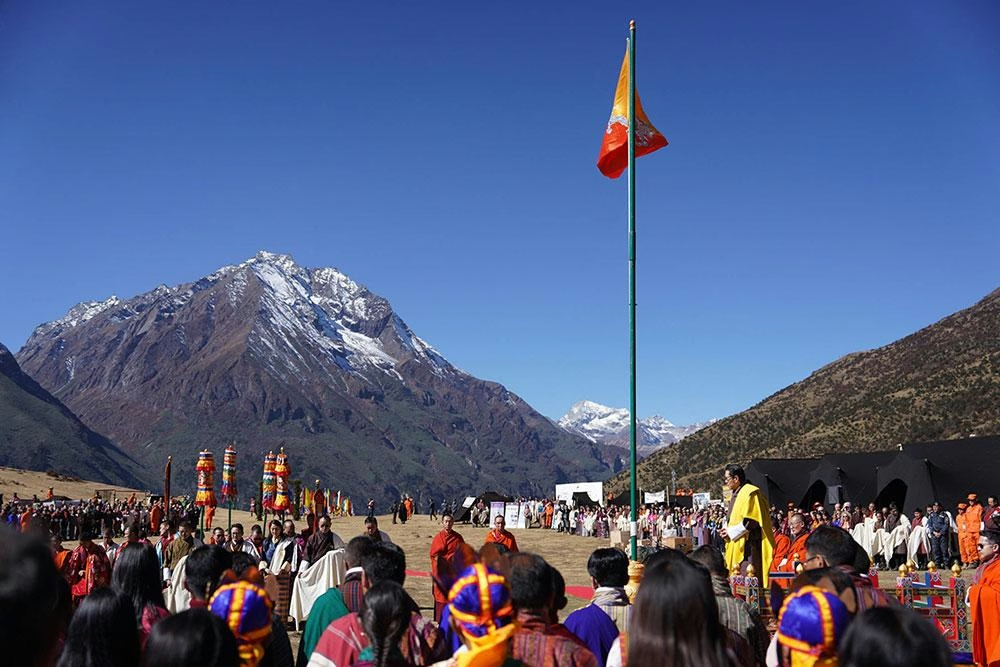
Bhutan is preparing for an extraordinary moment in its spiritual and cultural calendar. On November 1st, the nation will witness the simultaneous raising of 108 Jangchub Choetens—sacred stupas representing enlightenment—in a breathtaking 24-hour undertaking that has captured international attention. This unprecedented Project 108 marks one of the most significant religious gatherings ever organized in the region, drawing participants from across the globe to the emerging Gelephu Mindfulness City (GMC).
The event carries profound symbolic weight, representing not merely a construction achievement but a collective affirmation of Buddhist values and spiritual unity. India's participation through Union Minister Kiren Rijiju underscores the deep historical and cultural bonds that connect these two Himalayan nations, bonds forged through centuries of shared Buddhist heritage and contemporary cooperation.
India's High-Level Delegation Arrives ✨
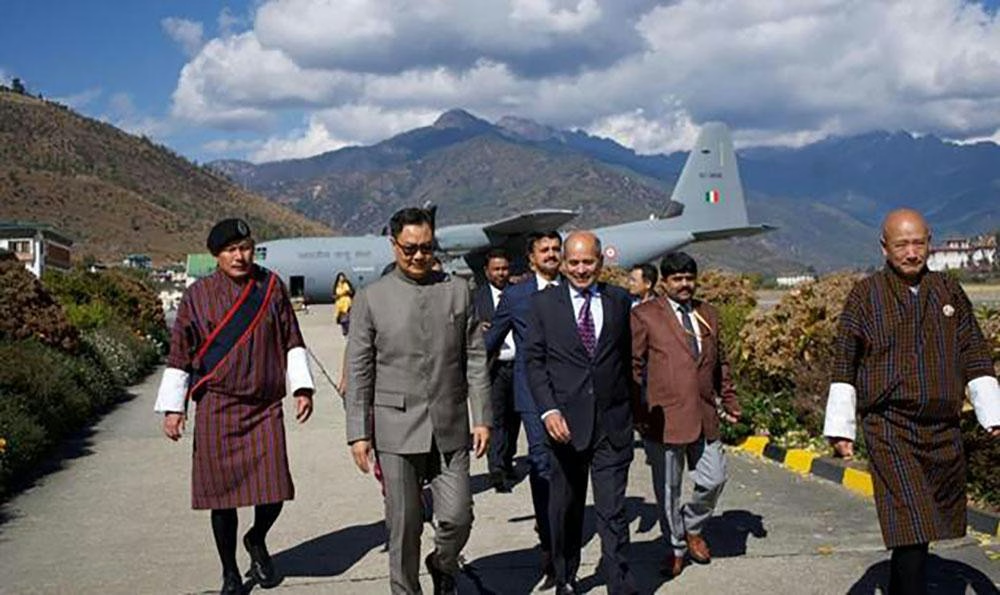
Union Minister for Parliamentary Affairs Kiren Rijiju will lead India's official representation at the historic ceremony, accompanied by Indian Ambassador to Bhutan Sandeep Arya and other embassy officials. This high-level participation reflects the significance both nations place on the event and their commitment to strengthening bilateral cultural ties.
Rijiju's presence carries particular resonance given his recent involvement in similar spiritual exchanges. Just last year, he led an Indian delegation to Bhutan in November to oversee the return of sacred Buddha relics following their public exposition—a moment that crystallized the "timeless spiritual bond that has flowed through centuries," as he eloquently described the India-Bhutan relationship.
During that earlier visit, both nations jointly released a comprehensive booklet documenting 23 sacred sites associated with Guru Rinpoche, the legendary Buddhist master whose teachings profoundly shaped Himalayan Buddhism. The publication, prepared by the International Buddhist Confederation and India's Ministry of Culture, was meticulously translated into Dzongkha, reflecting the collaborative spirit that defines contemporary India-Bhutan relations.
The Scale of Participation: A Global Gathering 🌍
The response to Project 108 has been staggering. As of late October, more than 126,000 Bhutanese citizens had registered to participate in the ceremony, demonstrating extraordinary grassroots enthusiasm for the initiative. This massive domestic engagement speaks to how deeply the project resonates with Bhutan's population.
Beyond Bhutan's borders, the event is attracting international attention. Organizers expect:
- Over 60 distinguished international guests and tourists
- Prominent spiritual leaders from multiple countries
- Approximately 100 Bhutanese spiritual leaders and monks
- Pilgrims and observers from across South Asia and beyond
This convergence of local, national, and international participants creates a truly unprecedented gathering—one that transcends religious boundaries while celebrating Buddhist spiritual traditions.
The Architectural Vision: 108 Stupas in Perfect Harmony 🏛️
Each of the 108 choetens will rise to an impressive 15 meters in height, creating a stunning visual landscape along the banks of the Mau Chhu River. The stupas will be positioned precisely 108 meters apart, a deliberate spacing that honors the sacred significance of the number 108 in Buddhist cosmology and numerology.
Together, these monuments will form a remarkable 12-kilometer procession—a living mandala stretching across the landscape. This configuration transforms the physical geography into a spiritual geography, where every element carries meaning and purpose.
The architectural approach demonstrates sophisticated urban planning that integrates spiritual symbolism with contemporary development goals. Each stupa becomes both a religious monument and a marker of Bhutan's commitment to balancing modernization with spiritual values—a philosophy that defines the entire Gelephu Mindfulness City project.
Gelephu Mindfulness City: Where Spirituality Meets Innovation 💡
Project 108 cannot be understood in isolation—it represents the spiritual cornerstone of an ambitious broader vision. Gelephu Mindfulness City seeks to create a unique development model that harmonizes multiple seemingly contradictory elements:
- Spiritual heritage: Deep roots in Buddhist traditions and Bhutanese cultural values
- Environmental sustainability: Integration with natural ecosystems and ecological principles
- Technological innovation: Modern infrastructure and digital advancement
- Economic development: Creating prosperity while maintaining cultural integrity
This holistic approach reflects Bhutan's distinctive philosophy of Gross National Happiness—prioritizing citizen wellbeing over mere economic metrics. GMC represents a practical application of this philosophy at scale, demonstrating how a nation can pursue development without sacrificing its soul.
The 108-stupa ceremony serves as both a spiritual blessing and a powerful statement about the project's foundational values. By anchoring GMC in this profound spiritual undertaking, Bhutan signals that economic development must be rooted in ethical, cultural, and spiritual foundations.
Cross-Border Coordination: Assam's Logistical Response 🚗
The scale of expected participation has prompted extraordinary coordination between Bhutanese and Indian authorities. Recognizing the influx of visitors from India, Assam's Chirang district administration implemented strategic traffic management measures.
Starting October 25 and extending through November 6, heavy vehicles and goods-carrying trucks are restricted on the route connecting the National Highway at Samthaibari to the Dadgiri–Hatisar international border crossing into Gelephu. These restrictions operate daily from 6 am to 8 pm, designed to prevent congestion while facilitating smooth visitor movement.
Critical exceptions ensure public safety and essential services remain uninterrupted:
- Ambulances and emergency medical vehicles
- Fire tenders and emergency response units
- Essential government convoy vehicles
The district magistrate's office issued formal notices warning of strict legal consequences under the Motor Vehicles Act for violations. This administrative rigor demonstrates how seriously both nations take the event's success and the safety of participating visitors.
Travel Requirements and Border Procedures 📋
The Royal Bhutan Police has established specific protocols for visitors entering Gelephu through Indian territory. All travelers must complete designated registration forms, which they must carry while traveling on Indian highways after the ceremony concludes.
These requirements, coordinated with India's Sashastra Seema Bal (the border security force responsible for the region), facilitate orderly movement through border regions during the period of heightened activity. Rather than creating bureaucratic obstacles, these procedures enable authorities to manage logistics effectively and ensure visitor safety.
The administrative framework reflects sophisticated binational cooperation—both nations working seamlessly to welcome participants while maintaining security and order. It's a practical demonstration of the "timeless spiritual bond" between India and Bhutan, translated into concrete operational coordination.
Historical Significance and Buddhist Symbolism 🕉️
The number 108 carries profound significance throughout Buddhist traditions. In Buddhist numerology, 108 represents the number of earthly desires that humans must overcome to achieve enlightenment. Many Buddhist prayer beads (malas) contain 108 beads, and practitioners often recite mantras 108 times as a spiritual practice.
The simultaneous construction of 108 stupas within a 24-hour period amplifies this spiritual significance exponentially. It transforms a construction project into a collective meditation—a unified human endeavor directed toward spiritual purposes. This approach harnesses the power of synchronized action and shared intention, principles deeply embedded in Buddhist philosophy.
Historically, stupa construction has always been considered one of the most meritorious activities in Buddhist societies. The construction of 108 stupas simultaneously represents an unprecedented expression of collective spiritual aspiration, potentially creating karmic merit on a scale rarely attempted in contemporary times.
The Broader Context: Bhutan's Spiritual Leadership 🌟
This event occurs under the direct patronage of His Majesty The King, underscoring its national importance. Bhutan's monarchy has long positioned itself as guardian of the nation's Buddhist heritage while navigating modernization challenges. Project 108 represents the King's vision of development that honors spiritual roots.
Bhutan's approach to governance emphasizes Buddhist principles explicitly. The nation's constitution mandates that Buddhism receive state support and protection, while simultaneously guaranteeing religious freedom. This balance creates space for spiritual expression while preventing religious extremism—a model increasingly studied by nations seeking ethical development frameworks.
The 108-stupa ceremony demonstrates how traditional spiritual practices can remain vital in contemporary contexts. Rather than relegating Buddhism to museums or historical archives, Bhutan actively integrates Buddhist principles into current development initiatives, keeping these traditions alive and relevant for new generations.
Looking Forward: What This Means for Regional Cooperation 🤝
Project 108 signals deepening India-Bhutan cooperation extending beyond traditional diplomatic channels into cultural and spiritual domains. As both nations face complex development challenges, their partnership offers valuable lessons in balancing modernization with cultural preservation.
The event also positions Gelephu Mindfulness City as a potential model for sustainable development in the Himalayan region. International observers and spiritual leaders attending the ceremony will carry stories of how a nation can pursue economic progress while maintaining spiritual and cultural integrity—a narrative increasingly important in our globalized world.
The logistics of hosting 126,000+ domestic participants plus international guests demonstrates Bhutan's capacity to organize large-scale events. As GMC develops further, such organizational capability will prove invaluable for future cultural, spiritual, and economic initiatives.
Conclusion: A Moment of Unity and Vision 💫
The historic 108-stupa ceremony in Gelephu represents far more than a construction milestone or a religious gathering. It embodies a vision of development that refuses to choose between spirituality and progress, between tradition and innovation, between local values and global engagement.
With India's high-level representation through Minister Kiren Rijiju and Ambassador Sandeep Arya, the ceremony becomes a binational affirmation of shared Buddhist heritage and contemporary partnership. The participation of over 126,000 Bhutanese citizens reflects grassroots enthusiasm for a project that speaks to fundamental human aspirations—the desire to create beauty, express spirituality, and build community.
As the 108 stupas rise simultaneously along the Mau Chhu River on November 1st, they will stand as monuments not just to Buddhist enlightenment but to human cooperation, collective purpose, and the possibility of development that honors both our spiritual depths and our material needs. In an era of global fragmentation, such moments of unified spiritual endeavor offer hope and inspiration.