Category:
NewsHistoric Galem House Collapse: Family Seeks Accountability
A Cultural Heritage Lost to Bureaucratic Delays 🏛️
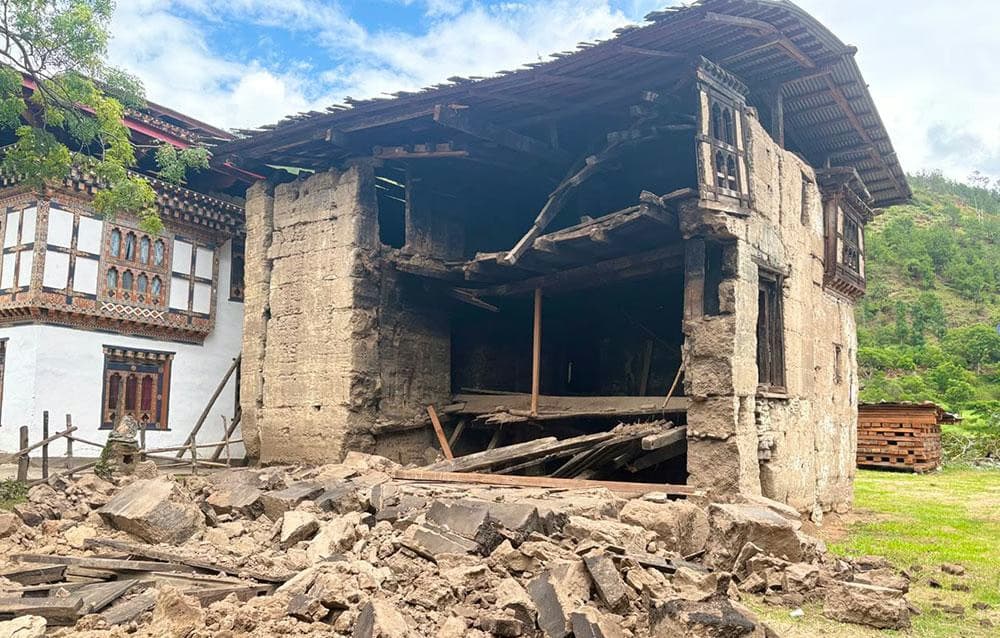
The collapse of a 17th-century architectural treasure in Punakha has reignited critical conversations about heritage preservation in Bhutan. What began as a family's patient wait for restoration support transformed into a cautionary tale about the consequences of administrative gridlock and funding uncertainties. The partial structural failure of Changyuel Galem House represents more than just the loss of timber and rammed-earth walls—it symbolizes a broader challenge facing heritage conservation efforts across the nation.
For over five years, the family custodians of this centuries-old dwelling watched helplessly as their ancestral property deteriorated. Despite their persistent appeals and documented requests since 2019, restoration efforts remained stalled in a maze of bureaucratic procedures, funding complications, and procurement obstacles that seemed insurmountable.
The Collapse: When Patience Runs Out 💔
On the night of August 7, disaster struck. A significant section of the historic structure gave way, marking the culmination of years of neglect and administrative inaction. The situation worsened just two days later when additional portions of the rear section collapsed early on August 9, leaving residents and heritage advocates alarmed about the remaining structure's stability.
The deterioration wasn't sudden or unexpected. Local residents had observed the gradual weakening of the rammed-earth walls, the compromised timber framework, and the mounting structural stress. What made the collapse particularly tragic was the sense of inevitability—this outcome could have been prevented with timely intervention.
The Immediate Response 🚨
Following the collapse, officials from the Punakha Dzongkhag Administration conducted inspections and implemented emergency stabilization measures. Bamboo and wooden supports were installed along the structure's right side to prevent further deterioration. However, these temporary interventions only addressed the symptoms, not the underlying crisis.
The remaining rammed-earth walls developed significant cracks, creating potential hazards not only for the heritage site itself but also for neighboring properties. This emergency situation forced authorities to acknowledge what the family had been warning about for years: without proper restoration, the entire structure was at risk.
The Frustration of Blocked Restoration Efforts 😤
What makes this situation particularly troubling is the family's assertion that they were prevented from undertaking restoration work at their own expense. Passang Dorji, whose name appears on the property's lagthram (land ownership record), expressed deep frustration with the administrative obstacles that blocked their attempts to preserve their family's heritage.
"I am confused because some say there is budget, while the dzongkhag administration says there is no budget," Passang Dorji stated, highlighting the contradictory messages the family received. He emphasized possessing comprehensive documentation of his repeated appeals beginning in 2019, each met with bureaucratic resistance rather than constructive solutions.
This contradiction reveals a critical gap in heritage preservation policy. When private owners express willingness to invest their own resources in maintaining culturally significant structures, the barriers preventing such initiatives warrant serious examination. The family's predicament raises questions about whether current regulations prioritize control over outcomes, or whether genuine constraints justified the restrictions.
Documentation and Desperation 📋
Passang Dorji's mention of "piles of documents" illustrates the exhaustive effort the family invested in seeking support. Each appeal, each submission, each follow-up represented hope that bureaucratic machinery would eventually move in their favor. Instead, the family watched their ancestral home crumble while holding folders full of rejected requests.
National Heritage Preservation: A Broader Context 🇧🇹
The Galem House situation reflects systemic challenges within Bhutan's heritage conservation framework. The Department of Culture and Dzongkha Development (DCDD) faces multifaceted obstacles in maintaining the nation's architectural legacy, particularly regarding privately-owned heritage properties.
Funding Complexities and International Support 💰
The restoration project initially sought approximately Nu 10 million (around Euro 130,000) from Pro Bhutan, Germany. However, the private ownership status of the property complicated efforts to secure international funding. Most international heritage funding mechanisms prefer working with government-owned or publicly-accessible sites, creating a paradox: private owners maintain these structures but face difficulty accessing preservation resources.
The involvement of German funding agencies introduced additional layers of complexity. Revised requirements from international partners necessitated modified restoration proposals, further delaying implementation. These funding cycles, while intended to ensure quality and accountability, inadvertently contributed to the deterioration they aimed to prevent.
Contractor Quotations and Procurement Hurdles 🔨
Beyond funding availability, the restoration project encountered higher-than-expected contractor quotations. In a small nation with limited specialized heritage restoration expertise, securing qualified professionals at reasonable rates presents genuine challenges. Procurement procedures designed to ensure transparency and cost-effectiveness sometimes extended timelines beyond what deteriorating structures could withstand.
The Vision: From Private Home to Public Museum 🏛️
The Galem House held significant potential as Bhutan's heritage landscape. The restoration project envisioned transforming the centuries-old dwelling into a public heritage museum, making its cultural and historical importance accessible to broader audiences. The structure's association with the 17th-century legend of Gasa Lamai Singye and Changyuel Bum Galem positioned it as an important cultural asset.
This transition from private residence to public institution represented a valuable contribution to Bhutan's cultural tourism and educational infrastructure. The loss of this opportunity extends beyond the family's personal disappointment to affect the nation's ability to preserve and share its architectural heritage.
Official Accountability and Responsibility Questions ❓
In the aftermath of the collapse, the family's central question demands attention: Who bears responsibility for years of inaction? Government officials acknowledged the delays stemmed from funding and procurement complications. During an August 4 press briefing, the Home Ministry reaffirmed commitment to the restoration, noting that a revised proposal was being prepared for German funding agency approval.
However, these explanations, while technically accurate, don't address the fundamental question of whether adequate measures were taken to prevent deterioration during the waiting period. The family's frustration centers not merely on delay, but on the combination of delay plus prevention of private restoration efforts.
Assessment and Next Steps 📊
DCDD officials traveled to Punakha on August 10 to conduct comprehensive damage assessments. They acknowledged that the collapsed sections couldn't be restored to their original condition. Instead, priorities shifted to protecting the remaining 80 percent of the structure and preventing further deterioration. The immediate focus involved supporting the roof structure and preventing water damage.
Final action plans were to be determined following submission of detailed assessment reports. This reactive posture—addressing problems after they've reached crisis stage—contrasts sharply with the proactive preservation approach that earlier intervention could have enabled.
Lessons for Heritage Preservation in Bhutan 📚
The Galem House collapse offers critical insights for policymakers and heritage administrators:
-
Private ownership shouldn't create barriers to preservation: Mechanisms should enable private owners to maintain culturally significant properties rather than impeding their efforts.
-
Funding cycles require flexibility: Heritage structures deteriorate according to physics, not fiscal calendars. Preservation frameworks must accommodate urgent needs within funding cycles.
-
International funding shouldn't delay domestic action: While external support is valuable, it shouldn't become the sole pathway for maintaining important structures.
-
Emergency stabilization isn't restoration: Temporary measures like bamboo supports address immediate safety concerns but can't substitute for genuine preservation work.
-
Documentation and communication gaps amplify frustration: Clear, consistent messaging about timelines, constraints, and possibilities could reduce family frustration and enable better planning.
Moving Forward: Preventing Future Losses 🔮
The remaining 80 percent of Galem House requires immediate, sustained attention. The structural cracks developing in the rammed-earth walls represent ongoing danger. Whether this portion can eventually be restored to museum-quality condition depends on decisions made in coming months.
Beyond this specific case, Bhutan's heritage preservation community faces broader questions about how to balance bureaucratic oversight with practical preservation needs. The nation's commitment to maintaining cultural continuity while modernizing infrastructure requires systems that enable rather than obstruct heritage conservation.
Conclusion: Accountability and Cultural Stewardship ✨
The collapse of Changyuel Galem House stands as a sobering reminder that heritage preservation isn't simply about securing funding or following procedures—it's about genuine commitment to protecting irreplaceable cultural assets. The family's years of appeals, combined with their frustration at being prevented from self-directed restoration, highlight systemic gaps that demand attention.
As Bhutan continues its development journey, maintaining the architectural and cultural heritage that defines national identity requires more than rhetorical commitment. It demands responsive systems, flexible procedures, and genuine partnership with property owners. The loss of the Galem House's original sections represents a permanent diminishment of Bhutan's cultural landscape—a loss that accountability measures cannot reverse, but whose lessons might prevent similar tragedies elsewhere.
You May Also Like
News
Women Entrepreneurs Master AI and Digital Tools in Phuentsholing
September 1, 2026
News
Can Samtse Keep Up With Its Growing Workforce?
August 29, 2026
News
Nepal Flood Exposes Critical Gaps in Bhutan's Early Warning Systems
August 29, 2026
News
High Court Overturns Acquittal: Doctor Sentenced to 10 Years for Child Sexual Abuse
August 29, 2026