Category:
NewsBhutan's GNH Philosophy Shapes Global Development Debate
Redefining Progress: Bhutan's Message to the World 🌍
In an era where technological advancement and economic expansion often overshadow human welfare and environmental sustainability, one small Himalayan nation is challenging the conventional wisdom of progress. Bhutan's groundbreaking Gross National Happiness philosophy is stepping onto the global stage, prompting a fundamental rethinking of what true development actually means.
The philosophy, which prioritizes citizen well-being and environmental preservation over purely economic metrics, has become increasingly relevant as societies grapple with artificial intelligence disruption, climate crises, and widening inequality. This shift in perspective couldn't come at a more critical moment, as nations worldwide seek alternative frameworks for measuring societal success.
The Global GNH Forum 2026: Where East Meets West 🎯
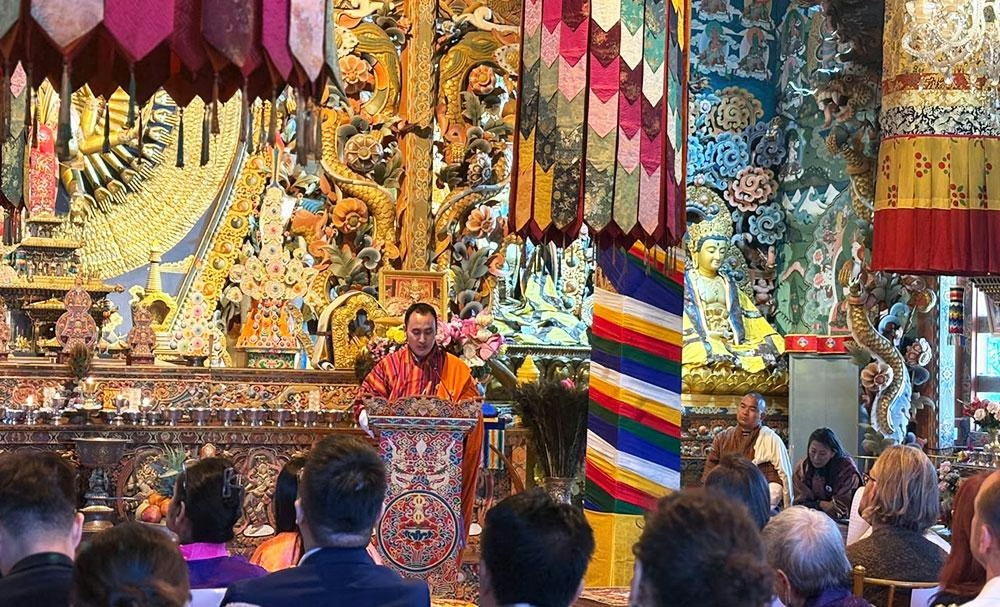
From November 9 to 11, Bhutan hosted the prestigious Global GNH Forum 2026, bringing together an unprecedented gathering of thought leaders and decision-makers. The three-day summit, which kicked off at the serene Sangchhen Dorji Lhuendrup Nunnery in Punakha before concluding in Thimphu, assembled policymakers, academics, entrepreneurs, civil society leaders, and emerging youth voices.
Under the compelling theme "Traditional Wisdom for Well-Being in an Age of Accelerated Development," the forum created a unique space for examining how ancient principles could address modern challenges. This wasn't merely an academic exercise—it represented a serious attempt to influence how nations approach sustainable development in the 21st century.
The convergence of participants from more than 10 countries demonstrated the universal hunger for alternative development models. Attendees engaged in substantive discussions about regenerative economics, ethical leadership, and human-centered progress that places ecological balance at its core.
Understanding Gross National Happiness: Beyond GDP 💚
Bhutan introduced the Gross National Happiness framework in the 1970s as a deliberate counterpoint to the dominant GDP-centric development paradigm. Rather than measuring success solely through economic output, GNH evaluates progress across four pillars: sustainable and equitable socioeconomic development, environmental conservation, cultural preservation, and good governance.
This multidimensional approach has proven remarkably prescient. As global challenges intensify—from mental health crises to biodiversity collapse—the GNH model's emphasis on holistic well-being resonates with policymakers seeking more balanced metrics.
The framework has influenced international conversations about alternative development indicators. Organizations worldwide now recognize that a nation can experience robust GDP growth while its citizens suffer from declining life satisfaction, cultural erosion, and environmental degradation.
The Urgency of Ethical Development 🔥
Her Royal Highness Princess Kesang Choden Wangchuck, President and Patron of the Gross National Happiness Centre Bhutan, articulated a crucial insight during the forum: as societies gain greater capacity to achieve things, they must develop corresponding wisdom about what they ought to achieve.
This distinction matters profoundly. Technological capabilities—from genetic engineering to artificial intelligence—increasingly outpace our ethical frameworks. The GNH philosophy addresses this gap by insisting that development decisions be grounded in compassion, cultural values, and environmental stewardship.
Princess Kesang Choden Wangchuck emphasized that while GNH principles offer valuable perspectives for global audiences, the framework isn't a one-size-fits-all model. Each nation possesses unique historical contexts, cultural traditions, and aspirations requiring customized approaches. However, the underlying values—prioritizing human dignity, collective welfare, and ecological balance—transcend borders.
Technology, Climate Change, and the Search for Balance ⚡
The timing of the forum highlighted urgent contemporary pressures. Artificial intelligence is reshaping labor markets and human relationships at unprecedented speeds. Biotechnology raises profound ethical questions. Digital transformation simultaneously creates opportunities and disrupts social cohesion.
Simultaneously, climate change, social inequality, and environmental degradation demand immediate responses. Traditional development approaches have failed to address these interconnected crises effectively.
The forum explored whether traditional knowledge systems, cultural wisdom, and ethical principles could guide societies through these challenges without sacrificing human dignity or ecological integrity. Participants examined case studies, shared policy innovations, and debated how ancient wisdom could inform contemporary solutions.
The GNHCB and UNDP Partnership: Building Global Momentum 🤝
The Gross National Happiness Centre Bhutan (GNHCB), established in 2012, has emerged as the primary institutional driver of this philosophy. The organization promotes GNH values through education, advocacy, youth engagement, and international platforms designed to advance sustainable societies.
A significant development occurred when the GNHCB formalized a partnership with the United Nations Development Programme Bhutan. This collaboration, formalized through a memorandum of understanding signed in June, represents a major step in mainstreaming GNH principles within international development discourse.
Through this partnership, both organizations committed to:
- Strengthening international dialogue on well-being and sustainable development
- Empowering youth as agents of values-driven change
- Promoting conscious food systems that balance nutrition with environmental sustainability
- Connecting Bhutan's development experience with the UN's Sustainable Development Goals
Executive Director Lhatu of the GNHCB articulated the partnership's significance: "The forum connects Bhutan's GNH experience with global development challenges, highlighting the importance of traditional wisdom in ensuring progress remains grounded in ethics, compassion and human and environmental well-being."
From First Edition to Global Platform 📈
The 2026 forum built upon the successful inaugural Global GNH Forum held in November 2025 at Dungkar Dzong in Paro. That first gathering, which drew participants from over 10 countries, established proof of concept for the forum's international appeal.
The first edition coincided with two significant commemorations: the 50th anniversary of Bhutan's GNH philosophy and the 70th birth anniversary of His Majesty the Fourth Druk Gyalpo Jigme Singye Wangchuck, the visionary leader who introduced this revolutionary framework decades ago.
Organizers now envision the Global GNH Forum as a permanent international platform for knowledge exchange and collective action. By establishing an annual gathering, Bhutan aims to institutionalize conversations about people-centered, planet-respecting development models.
Knowledge Exchange and Practical Implementation 📚
Beyond theoretical discussions, the forum facilitated practical knowledge sharing. Scholars presented research on well-being economics. Cultural practitioners demonstrated how traditional practices maintain social cohesion. Entrepreneurs showcased businesses built on GNH principles.
During the forum, organizers launched significant publications including a comprehensive book on Gross National Happiness and a detailed UNDP report examining the philosophy's applications. These resources will serve as reference materials for policymakers implementing well-being-centered development strategies.
The forum structure deliberately included diverse voices—not just government officials, but also grassroots activists, indigenous knowledge keepers, and young leaders whose perspectives will shape the next development paradigm.
Why GNH Matters Now More Than Ever 🌱
The contemporary relevance of Bhutan's GNH framework extends beyond philosophical appeal. It offers practical solutions to measurable problems:
- Mental health: Nations pursuing purely economic growth have experienced epidemic levels of depression and anxiety. GNH's emphasis on life satisfaction and social connection addresses root causes.
- Environmental sustainability: By making ecological preservation a core development pillar, GNH prevents the environmental degradation that accompanies unrestrained industrialization.
- Cultural resilience: Globalization threatens indigenous traditions and local cultures. GNH protects cultural heritage as essential to human flourishing.
- Equitable prosperity: The framework ensures economic development benefits all citizens, not just elites, reducing social fragmentation.
Looking Forward: The Evolution of Development Thinking 🚀
Bhutan's decision to champion GNH philosophy on the global stage reflects confidence that alternative development models can influence international policy. The nation isn't simply preserving a traditional concept—it's actively positioning GNH as essential infrastructure for 21st-century problem-solving.
As artificial intelligence, biotechnology, and digital transformation accelerate, societies will increasingly face choices about technological adoption. The GNH framework provides ethical guardrails for these decisions, ensuring that capability doesn't automatically translate into implementation.
The forum's success suggests growing recognition that GDP growth divorced from human well-being represents a hollow victory. Nations from Scandinavia to New Zealand are developing well-being metrics. International organizations are reconsidering development indicators. Bhutan's philosophical leadership is catalyzing this broader shift.
The Path Forward 🌟
Bhutan's commitment to spreading Gross National Happiness philosophy through global forums represents more than cultural advocacy—it's a serious challenge to the development paradigm that has dominated for decades. As the world confronts interconnected crises, the nation offers a proven alternative framework grounded in ethics, sustainability, and genuine human flourishing.
The Global GNH Forum 2026 demonstrated that this philosophy resonates across cultures and development stages. By establishing an annual platform for dialogue, Bhutan is creating institutional mechanisms to influence how nations measure progress and define success.
As societies accelerate into an uncertain future shaped by transformative technologies and environmental pressures, Bhutan's ancient wisdom about balancing material progress with spiritual well-being, cultural preservation, and ecological stewardship offers invaluable guidance. The real question isn't whether GNH principles can work globally—it's whether the world will have the wisdom to embrace them.
You May Also Like
News
Healthcare Access Crisis: Thousands in Thimphu Struggle to Reach Care Services
November 11, 2026
News
Child Safety Crisis: Addressing Violence Against Girls
November 11, 2026
News
Kabesa Schoolgirl Case: Understanding Violence Against Bhutanese Children
November 11, 2026
News
Trust Takes Centre Stage at Trans-Himalayan Conference
November 11, 2026