Category:
EnvironmentHaa Wetlands: New Breeding Haven for Cranes
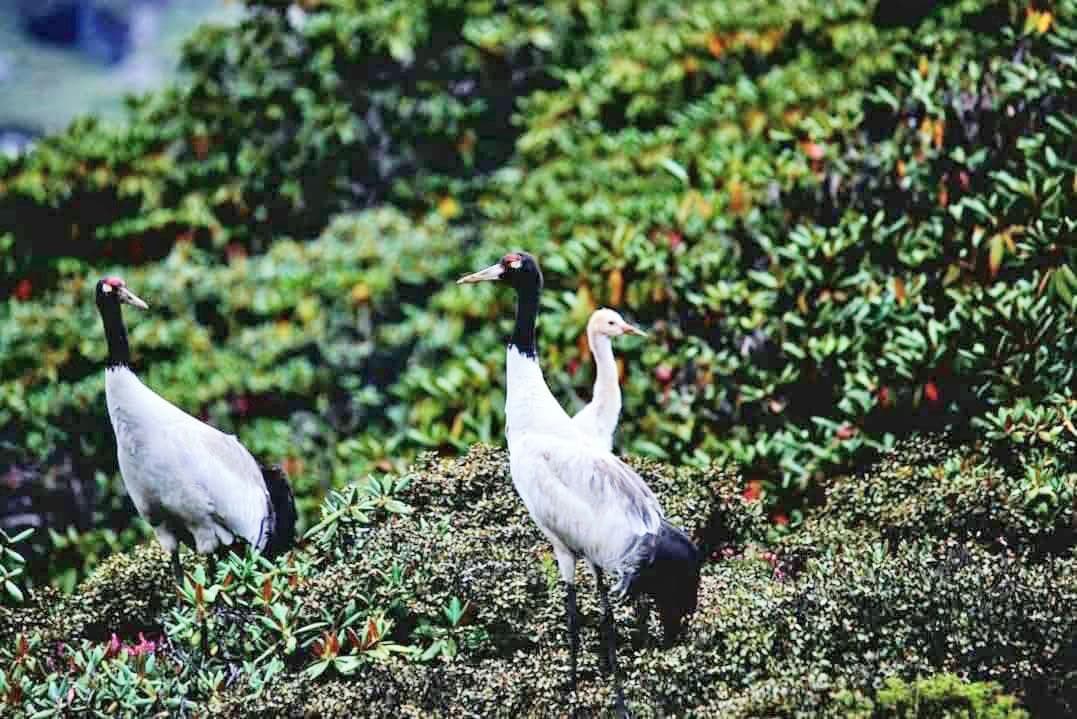
A New Frontier for Black-necked Crane Breeding 🌿
The majestic Black-necked Crane, revered in Bhutanese culture, has recently discovered a new breeding ground in the pristine wetlands of Haa. Traditionally, these cranes are known to winter in Bhutan's tranquil valleys, such as Phobjikha and Bumdeling, escaping the harsh Tibetan winters before returning to the Tibetan Plateau to breed. However, recent observations suggest a shift in this pattern, with the Haa wetlands emerging as a potential breeding site. This change could signal an adaptive response to evolving climatic conditions and landscape transformations.
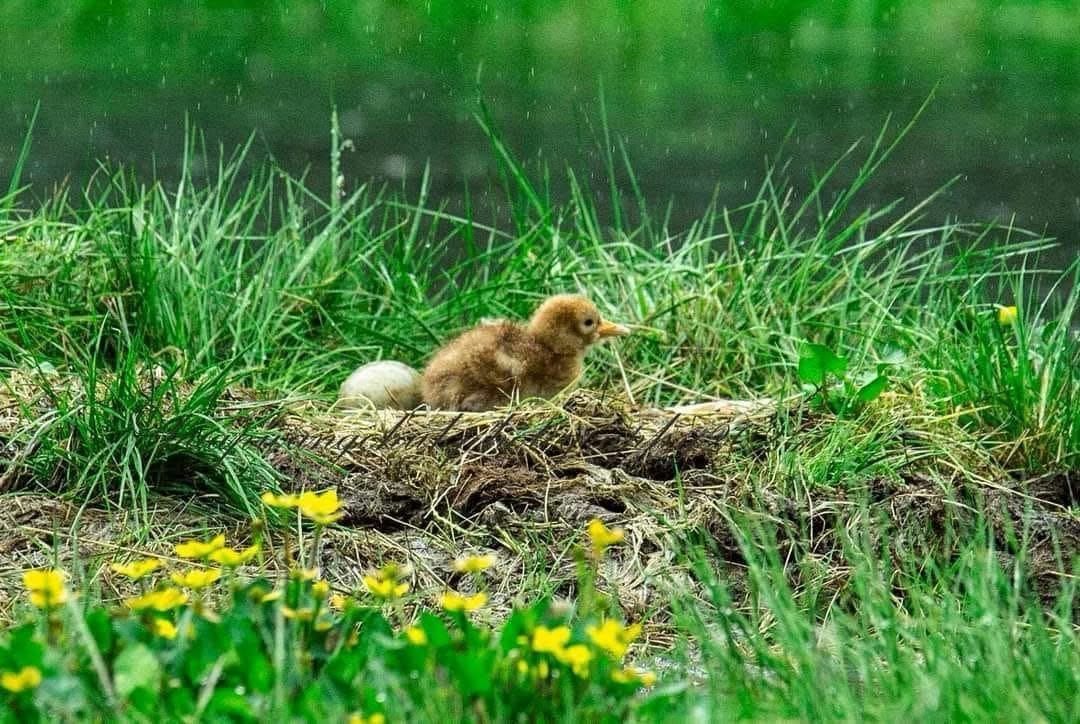
A Glimpse into Haa's Unique Habitat ✨
Located at an impressive altitude of approximately 4,100 meters above sea level, the Langjab area within the Jigme Khesar Strict Nature Reserve (JKSNR) provides a serene and undisturbed environment ideal for breeding. The ecological integrity of this area, characterized by its cool climate and abundant resources, offers a sanctuary for the cranes to engage in nesting, egg laying, and chick rearing. The reserve's protected status further ensures minimal human interference, making it a haven for these near-threatened birds.
Adapting to Climate Change 🌍
The shift in breeding grounds is not just a curiosity but a significant indicator of the broader impacts of climate change. As temperatures rise and habitats evolve, species like the Black-necked Crane must adapt to survive. The presence of these cranes in Haa, first recorded in 2019, and consistently observed in subsequent summers, underscores the need for continuous monitoring and adaptive conservation strategies.
Conservation Efforts and Challenges 🌱
While the Haa wetlands offer promising prospects for crane conservation, challenges remain. The most pressing threats include predation by free-ranging and herder-owned dogs, which pose significant risks to eggs and young chicks. To mitigate these threats, JKSNR has implemented several conservation measures:
- Community Outreach: Raising awareness about responsible dog ownership and the ecological importance of cranes.
- Habitat Protection: Implementing fencing and buffer zones around nesting areas to minimize disturbances.
- Technology Integration: Utilizing camera traps and planning the installation of data loggers and acoustic sensors to enhance monitoring efficacy.
The Role of Local Communities 🎭
Local communities and herders are pivotal in the conservation efforts. By engaging these stakeholders in nest protection and data collection, the reserve fosters a co-management approach that benefits both wildlife and local livelihoods. Training programs and eco-friendly livelihood opportunities are part of this collaborative strategy, supported by organizations like the Royal Society for Protection of Nature (RSPN).
A Decline in Population: A Call to Action 📉
Despite the promising developments in Haa, the overall population of Black-necked Cranes wintering in Bhutan has seen a decline. The annual survey conducted in February 2026 recorded 622 individuals, a decrease from 709 in 2024. Factors such as earlier migration patterns contribute to this decline, emphasizing the urgency for reinforced conservation efforts.
Looking Ahead 🔍
The emergence of Haa as a breeding ground offers a new frontier for the conservation of Black-necked Cranes in Bhutan. It highlights the dynamic nature of wildlife adaptation and the critical role of proactive conservation strategies. As monitoring continues and community involvement deepens, Haa stands as a beacon of hope for the future of these magnificent birds.
In conclusion, while the challenges are significant, the opportunities for preserving and expanding the habitats of Black-necked Cranes in Bhutan are equally promising. Continued research and community engagement will be key to ensuring the survival and thriving of these iconic symbols of Bhutanese biodiversity.
You May Also Like
Environment
Climate Crisis in the Himalayas: Bhutan's Cold Reminder
August 29, 2026
Environment
WBH Conservation Project Delivers Clean Water to Rural Homes
August 29, 2026
Environment
HKH Climate Crisis: Why Regional Unity Matters Now
August 29, 2026
Environment
Bhutan's Solar Power Revolution: Energy Security Strategy
August 26, 2026