Category:
EnvironmentGMC: Growth with Nature, Not Over It
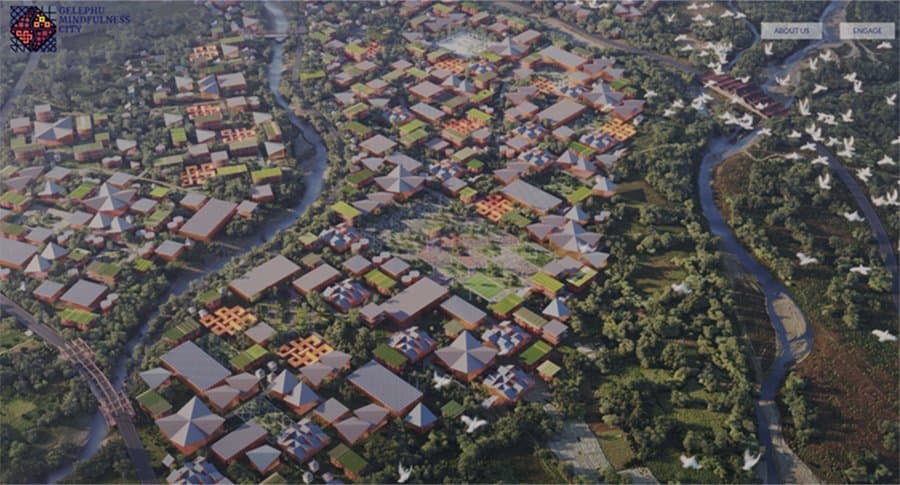
In a world where urban expansion often leads to environmental degradation, the Gelephu Mindfulness City (GMC) initiative in Bhutan stands out as a beacon of hope 🌿✨. This innovative project aims to harmonize urban development with nature, creating a city that thrives alongside its natural surroundings rather than over them.
A Visionary Approach to Urban Development
GMC is set to cover approximately 4,000 square kilometers, yet only a small fraction—just 4%—is designated for physical development. The rest of the area is preserved as forests, rivers, wetlands, farms, elephant corridors, and environmentally sensitive zones 🌳🐘. This paradigm shift in urban planning emphasizes coexisting with nature, promoting a sustainable and eco-friendly future.
Nature-Based Solutions
Traditional urban planning often relies on engineering solutions that can disrupt natural ecosystems. However, GMC planners have adopted nature-based solutions to maintain ecological balance. Instead of erecting concrete barriers to control water flow, planners are reviving historical water processes and avoiding intensive development in floodplains 🌊.
Gelephu's Ecological Significance
Located in one of the eastern Himalaya's most crucial ecological landscapes, GMC serves as a crucial link in the Manas landscape, which spans into India 🌏. This region allows wildlife to traverse from lowland tropical forests to higher elevations, adapting to climate change's challenges. Dr. Norbu Wangdi of the Bhutan Ecological Society highlights GMC's role as a connector between parks and ecosystems, enhancing biodiversity and ecological resilience.
Integrating Wildlife Corridors
Elephants, which traverse Gelephu in search of food, water, and safety, play a pivotal role in maintaining the region's ecological integrity 🐘. The Bhutan Trust Fund for Environmental Conservation and the Department of Forests and Park Services have meticulously mapped elephant movement routes. These corridors are aligned with existing habitats, ensuring safe passage for wildlife and reducing human-wildlife conflict.
A Shift in Urban Paradigms
Globally, many cities are now attempting to restore damaged ecosystems. In contrast, GMC offers a unique opportunity to plan and develop within an already intact ecological landscape. The city views its natural surroundings not as obstacles but as integral components of urban planning 🌿🏙️.
The Role of Conservation
Since 1999, Bhutan has pioneered the concept of biological corridors, facilitating species movement and genetic exchange. GMC's location within these connected conservation areas allows planners to proactively protect wildlife corridors and restore habitats, preventing future conflicts between humans and wildlife 🦋.
Future Prospects
Gelephu Mindfulness City is not just a project; it's a movement towards a sustainable future. By growing around elephant corridors, restoring altered habitats, and safeguarding floodplains, GMC sets a precedent for cities worldwide 🌍. Its approach underscores the importance of integrating ecological principles in urban development, ensuring that growth does not come at the expense of nature.
Key Takeaways
- Ecological Integration: GMC exemplifies how urban growth can be achieved without sacrificing ecological integrity.
- Sustainable Development: The city prioritizes preserving natural habitats and wildlife corridors.
- Innovative Planning: Nature-based solutions replace conventional engineering, demonstrating a commitment to environmental sustainability.
As cities across the globe grapple with the challenges of balancing development and conservation, Gelephu Mindfulness City offers a roadmap for creating urban spaces that respect and enhance natural ecosystems 🌿💡.
You May Also Like
Environment
Climate Crisis in the Himalayas: Bhutan's Cold Reminder
August 29, 2026
Environment
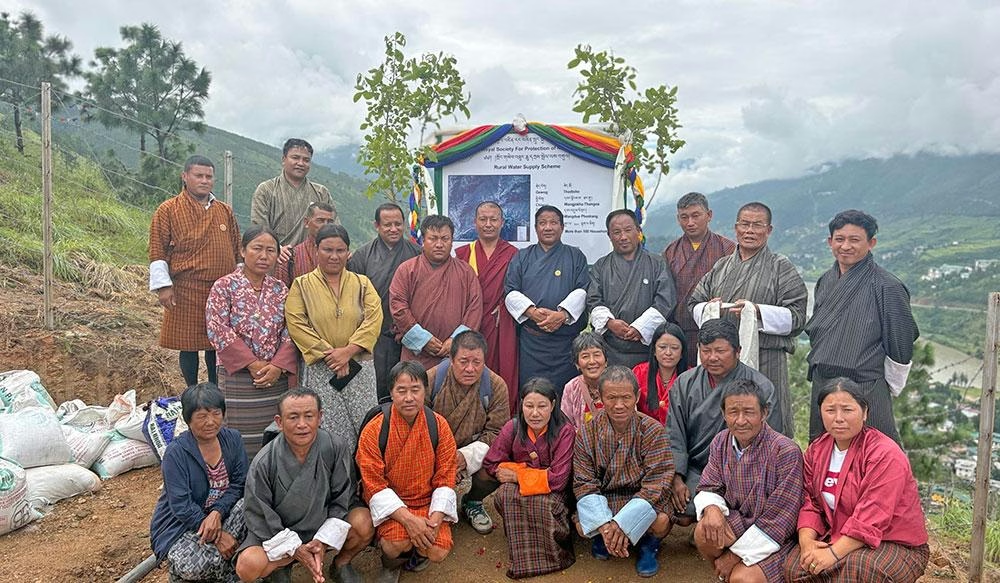
WBH Conservation Project Delivers Clean Water to Rural Homes
August 29, 2026
Environment
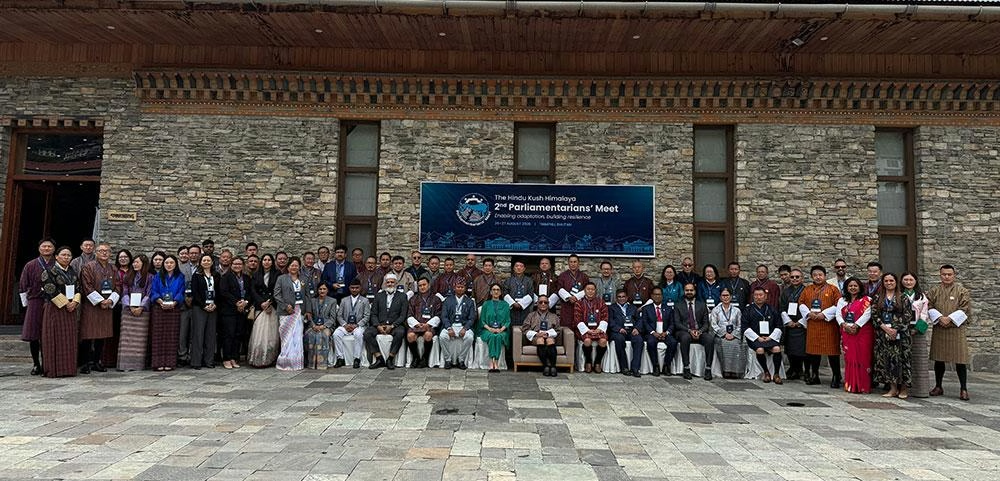
HKH Climate Crisis: Why Regional Unity Matters Now
August 29, 2026
Environment
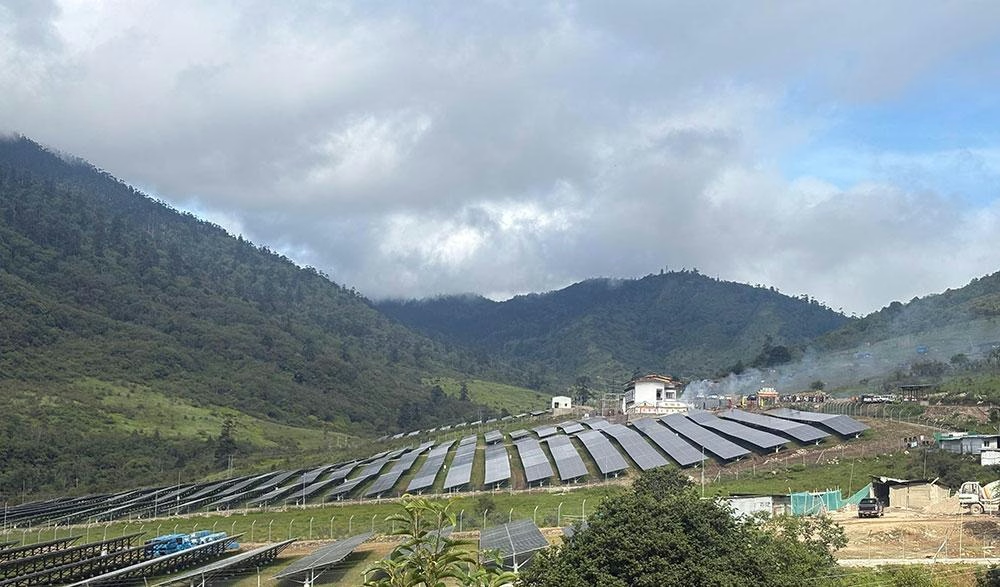
Bhutan's Solar Power Revolution: Energy Security Strategy
August 26, 2026