Category:
CultureGerman Architect Manfred Gerner: 30 Years Preserving Bhutan's Heritage
A Visionary's Journey to Bhutan's Sacred Architecture 🏛️
When a determined German architect first glimpsed Bhutan's magnificent monasteries and dzongs in 1974, he made a commitment that would span three decades. Professor Manfred Gerner arrived as part of the first European group to visit the Kingdom, embarking on a transformative mission to document and preserve one of the world's most distinctive architectural traditions. What began as a two-year quest to reach this remote Himalayan nation evolved into an extraordinary partnership between international expertise and Bhutanese cultural stewardship.
Gerner's initial fascination with Bhutan's architectural heritage wasn't merely academic curiosity—it was a profound recognition that these structures represented irreplaceable cultural treasures. The intricate timber joinery, traditional stonework, and earth construction techniques embodied centuries of knowledge that risked being lost to modernization. Over five decades of visits, Gerner would become instrumental in establishing frameworks for preserving this legacy while empowering local communities to become custodians of their own heritage.
Recognition of Extraordinary Dedication ✨
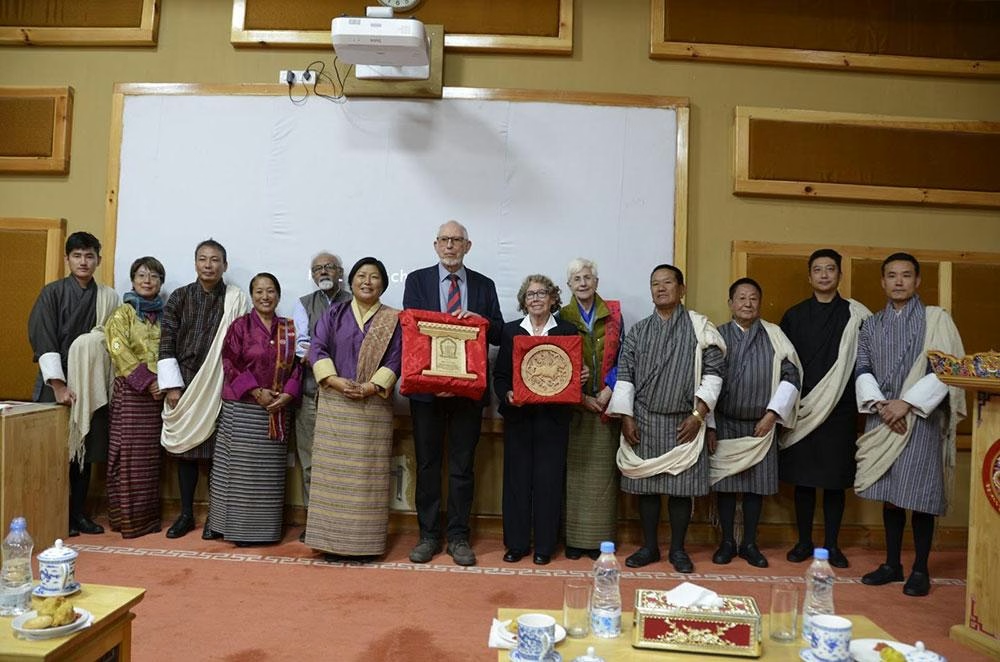
On November 23, the Department of Culture and Dzongkha Development (DCDD) honored Gerner as the inaugural recipient of a prestigious new recognition program celebrating international experts and cultural champions. This distinction acknowledges his unparalleled contribution to Bhutan's conservation landscape—a field where few outsiders have achieved such meaningful impact.
The celebration featured an exhibition showcasing his architectural drawings, photographs, and meticulous documentation spanning three decades. Bhutanese artisans crafted a special honorary plaque, symbolizing the deep integration of Gerner's work within Bhutan's cultural fabric. This wasn't merely a ceremonial gesture; it represented official validation of an outsider who had become, in many respects, a guardian of Bhutanese heritage.
Strategic Foundation for Conservation Work 🎯
Gerner's conservation initiatives gained substantial momentum during the late 1990s, following consultations with Bhutan's Special Commission for Cultural Affairs. His institutional leadership provided crucial infrastructure for his mission—serving as Honorary President of the German Bhutan Himalaya Society and directing the German Centre for Crafts and Conservation of Historic Monuments in Fulda, Germany.
These positions enabled Gerner to establish robust connections between European conservation methodologies and Bhutanese architectural traditions. His expertise in historic timber construction and traditional joinery proved exceptionally well-suited to Bhutan's building systems, which rely fundamentally on timber frameworks, rammed earth walls, and stone foundations. This technical alignment allowed him to work authentically within Bhutanese construction paradigms rather than imposing external standards.
Landmark Conservation Projects Across the Kingdom 🏰
Gerner's hands-on conservation work encompasses an impressive portfolio of sacred and secular structures:
- Wangditse Lhakhang - A significant temple restoration project
- Lingzhi Dzong - Extensively documented and later reconstructed using his meticulous records
- Jaba Lhakhang and Drakten Lhakhang - Important religious structures
- Choetsi Lhakhang and Bjee Samten Choling Lhakhang - Monastic buildings
- Chuckchi Lhakhang and Yangner Lhakhang - Village temples
- Tamshing Mani Choskhor - A sacred structure requiring specialized attention
These projects extend across Bhutan's diverse regions—from the fertile Bumthang Valley to the challenging terrain of Haa and Paro. Each undertaking required adaptation to local conditions, collaboration with regional artisans, and deep respect for spiritual significance embedded within these structures.
Building Capacity Through Knowledge Transfer 📚
Perhaps Gerner's most enduring contribution transcends individual building restorations. His visionary approach recognized that sustainable heritage preservation requires developing local expertise and institutional capacity. Rather than positioning himself as the permanent solution, he systematically worked to transfer knowledge to Bhutanese professionals and traditional craftspeople.
As DCDD Director General Nagtsho Dorji emphasized, Gerner pioneered capacity-building workshops in heritage conservation during Bhutan's early conservation efforts. He designed comprehensive training programs targeting architects, engineers, draftsmen, cultural officers, and master artisans—recognizing that preservation success depends on multi-disciplinary collaboration.
In 2000, seven Bhutanese professionals traveled to Fulda for intensive three-week training at the German Centre, absorbing techniques and methodologies directly from leading conservation practitioners. This wasn't knowledge delivered through distant consultations but immersive, hands-on instruction. Two years later, a national workshop in Thimphu drew participants from all 20 dzongkhags, democratizing access to conservation expertise across Bhutan's entire administrative structure.
Personal Mentorship and Professional Development 💡
Gerner's impact extended into individual mentorship relationships that shaped Bhutan's conservation leadership. Director General Dorji herself credits Gerner's 2002 workshop as foundational to her conservation career, launched shortly after joining the civil service. Her recollection of a grueling three-day trek to document Lingshi Dzong reveals the depth of his commitment to practical field instruction.
Dorji's observation about Gerner's meticulous evening documentation—carefully recording each day's observations in a small journal by the warmth of a traditional bukhari (wood-burning stove)—illustrates his disciplined methodology. This ritual wasn't merely professional habit; it embodied the consistency and rigor essential for authentic conservation work. Dorji explicitly identified this discipline as transformative, teaching her "the true meaning of consistency" in heritage preservation.
Many of Bhutan's now-experienced conservation professionals received their foundational training through Gerner's programs. These individuals continue serving the nation, perpetuating methodologies and values embedded in their instruction. This multiplier effect—where one mentor's influence cascades through institutional structures—represents perhaps the most sustainable form of cultural preservation.
Documentation as Living Reference 📖
Gerner's approximately 30-year association with the DCDD generated an extraordinary archive now integrated into the department's institutional repository. His early documentation of Lingshi Dzong provides a compelling case study: when the fortress required reconstruction and restoration, conservators referenced Gerner's detailed records to ensure authenticity and structural integrity.
This archival approach addresses a critical challenge in heritage preservation—maintaining institutional memory across administrative transitions and generational changes. By systematizing documentation and making it accessible to current and future conservators, Gerner created a permanent knowledge resource transcending individual expertise.
His published scholarship further extends this legacy. Works including "Chakzampa Thangtong Gyalpo: Architect, Philosopher and Iron Chain Bridge Builder" (published by the Centre for Bhutan Studies in 2007) contribute to global academic understanding of Himalayan architectural and engineering traditions. These publications position Bhutanese heritage within broader scholarly contexts, elevating its recognition and significance.
Cultural Ambassadorship and International Representation 🌍
Gerner's influence extends beyond Bhutan's borders. His involvement in the Bhutanese pavilion at EXPO 2000 in Hannover, Germany, exemplified cultural diplomacy through architectural representation. Fourteen Bhutanese craftsmen traveled to Germany to assemble the pavilion, showcasing traditional construction techniques to an international audience.
This cultural exchange proved so successful that Bhutanese artisans are currently reconstructing a pavilion based on the original design for a Portuguese location. Such international projects demonstrate how heritage preservation transcends national boundaries, creating platforms for cultural dialogue and mutual appreciation.
Navigating Modernization's Challenges ⚡
Gerner's perspective on Bhutan's development trajectory reveals thoughtful concern about cultural preservation amid rapid modernization. His early visits documented a nation with severely limited electricity and communication infrastructure—a vastly different context from contemporary Bhutan's advancing technology and connectivity.
While development brings undeniable benefits, Gerner recognizes the tension between modernization and cultural continuity. The challenge of protecting traditional culture amid infrastructure development and economic change represents one of the most complex issues contemporary heritage professionals face. This concern isn't nostalgic resistance to progress but realistic acknowledgment that rapid change can erode cultural practices and knowledge systems if not thoughtfully managed.
The Guiding Principle: "You Need a Future for Your Past" 🔮
After 32 years of dedicated work, Gerner's philosophy remains elegantly simple yet profoundly meaningful. This principle encapsulates the essential tension in heritage preservation—the recognition that cultural continuity requires active, intentional effort within contemporary contexts. It acknowledges that heritage isn't merely historical artifact but living tradition requiring investment, relevance, and integration into present and future communities.
This philosophy contrasts sharply with approaches treating heritage as museum pieces disconnected from contemporary life. Instead, it positions cultural preservation as essential infrastructure for community identity, spiritual practice, and social continuity. For Bhutan, a nation consciously balancing development with cultural values through policies like Gross National Happiness, this principle aligns perfectly with national priorities.
The Broader Context: Heritage Preservation in Himalayan Cultures 🏔️
Gerner's work occurs within a broader global context of increasing attention to Himalayan cultural heritage. UNESCO recognition of Bhutanese sites, growing international scholarly interest in traditional Himalayan architecture, and increased tourism have elevated awareness of preservation challenges. However, this attention also creates pressure—tourism can accelerate deterioration while simultaneously generating resources for conservation.
Bhutan's approach to heritage preservation remains distinctive, emphasizing community involvement, traditional techniques, and cultural authenticity over external aesthetic standards. Gerner's methodology aligned with these values, making his contributions particularly effective within Bhutanese contexts. His success demonstrates that international expertise proves most valuable when it respects local knowledge systems rather than imposing external frameworks.
Legacy and Continuing Impact 🌟
The formal recognition of Gerner's contributions marks a significant moment in Bhutanese heritage preservation, but his true legacy manifests in the professionals he trained, the structures he preserved, and the methodologies he established. The DCDD's new international recognition program signals Bhutan's commitment to acknowledging external partners who contribute meaningfully to cultural stewardship.
As Bhutan continues navigating development challenges while maintaining cultural identity, the frameworks Gerner helped establish provide essential guidance. His documented projects serve as references for ongoing conservation work. The professionals trained through his programs continue advancing preservation efforts. His publications contribute to global scholarly understanding of Himalayan heritage.
Most importantly, Gerner's 30-year commitment demonstrates that meaningful cultural preservation requires patience, humility, respect for local knowledge, and genuine partnership. In an era of rapid globalization and cultural homogenization, his work stands as testament to the possibility of meaningful cross-cultural collaboration in service of humanity's shared heritage.
You May Also Like
Culture
Thongsa's Cotton Weavers Face Existential Crisis
November 25, 2026
Culture
Nabhorok: The Sacred Oath of Himalayan Friendship
November 21, 2026
Culture
Traditional Mask Artisans Seek Certification to Preserve Craft
November 14, 2026
Culture
GMC: Bhutan's Sacred Sanctuary as Global Vajrayana Buddhism Hub
November 11, 2026