Category:
CultureTraditional Mask Artisans Seek Certification to Preserve Craft
Preserving Heritage Through Quality Standards 🎭
In the remote mountain valleys of Kengkhar Gewog in Mongar, a centuries-old tradition faces an unexpected challenge. Master mask artisans—custodians of a craft passed down through generations—are advocating for formal certification systems to protect their livelihoods and safeguard the authenticity of their work. This movement reflects a broader struggle within traditional crafts communities across the region, where the pressure to compete with mass-produced alternatives threatens to erode quality standards and cultural integrity.
The demand for mask artisan certification has emerged not from government mandates, but from the craftspeople themselves, who recognize that without formal verification mechanisms, their traditional masks face devaluation in the marketplace. What began as a cultural practice deeply embedded in ceremonial life has become a critical economic lifeline for dozens of families, making the preservation of quality standards essential for both cultural and economic survival.
The Quality Crisis Threatening Traditional Craftsmanship ⚠️
The proliferation of inferior masks has created a troubling market dynamic that punishes honest craftspeople. Artisans working with substandard materials now produce masks that visually resemble authentic pieces when newly completed, yet deteriorate rapidly over time. This deception undermines buyer confidence and threatens to tarnish the reputation of entire communities built on craftsmanship excellence.
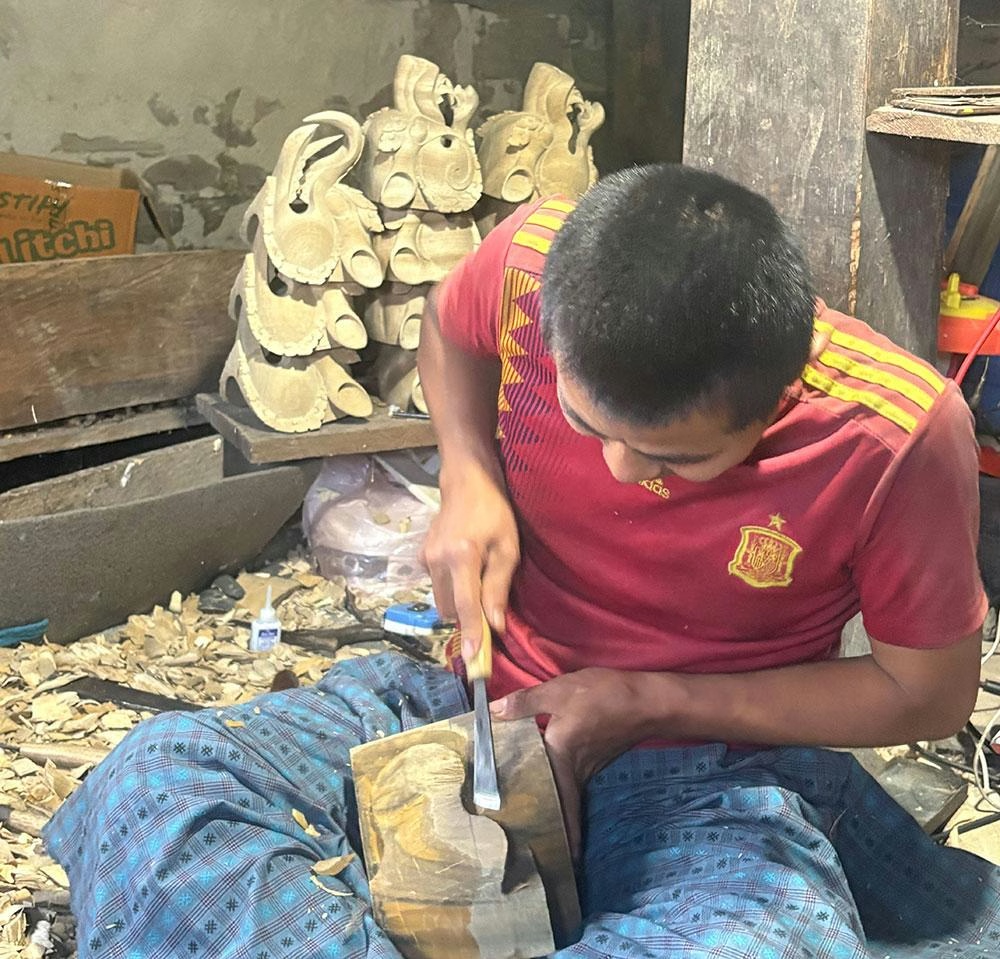
Tshering Nidup, a dedicated mask maker with 12 years of experience from Neykolog-Warongborang Chiwog, articulates the frustration felt by genuine practitioners. He emphasizes that the absence of standardized criteria encourages cost-cutting measures that compromise both artistic integrity and material quality. "When there are no established standards to meet, some artisans resort to cheaper materials and sell them at prices equivalent to high-quality masks," he explains. This race to the bottom threatens not only individual livelihoods but the collective reputation of mask artisan communities.
Economic Realities of Traditional Mask Production 💰
Producing authentic traditional masks demands significant financial investment and technical expertise. Artisans must source premium timber through official channels—typically the Natural Resources Development Corporation Limited—paying approximately Nu 22,000 for materials alone. Transportation costs add another Nu 18,000 to the expense, totaling nearly Nu 40,000 before any labor is invested.
Consider the workflow of Dorji Thinley, a 37-year-old artisan from Olokid Tsalabi Chiwog with two decades of carving experience. Creating a medium-sized set of "Rak-Sha-Ma-Chham" masks—comprising four individual pieces—requires two full days of meticulous work. He sells each set for Nu 5,000, producing approximately 11 to 12 sets monthly, generating roughly Nu 60,000 in monthly income. While this provides meaningful livelihood support, the narrow profit margins leave little room for error or price competition from inferior producers.
The Case for Formal Certification Systems ✅
Local governance structures recognize the urgency of intervention. The Kengkhar Gewog Administration is actively developing certification and verification systems designed to establish quality benchmarks and protect legitimate artisans. Such mechanisms would serve multiple functions simultaneously: distinguishing authentic craftsmanship from inferior imitations, maintaining market integrity, and encouraging quality improvement among all producers.
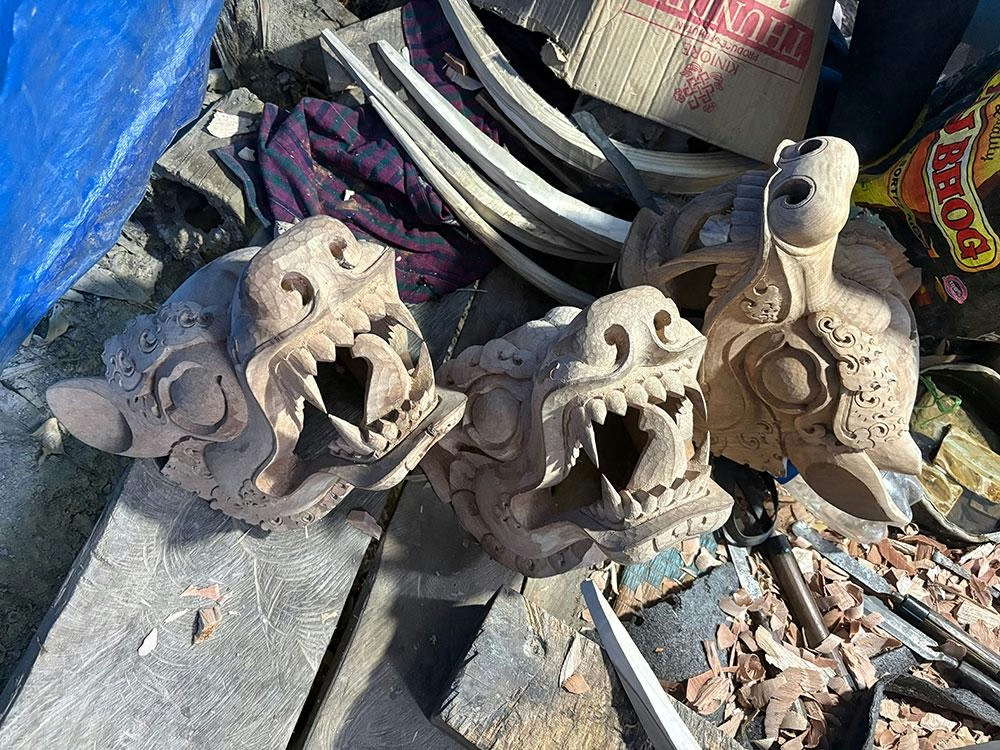
Rinchen, the Neykolog Warongborang Tshogpa, underscores a critical reality: "The quality of masks cannot be easily distinguished at first glance, but those made using poor-quality wood deteriorate over time." This information asymmetry—where buyers cannot immediately identify quality differences—creates the perfect conditions for market failure without intervention. Certification systems address this by providing trusted verification that compensates for the difficulty in assessing craftsmanship quality.
Market Dynamics and Buyer Preferences 🛍️
Interestingly, demand for authentic traditional masks remains robust despite competition from cheaper alternatives. Buyers from Thimphu, Paro, and other regions actively seek genuine masks rather than mass-produced plastic imitations. Handicraft outlets and cultural enthusiasts recognize the value of authentic pieces and willingly pay premium prices for verified quality.
This strong buyer preference suggests that certification could actually expand market opportunities rather than simply protecting existing sales. By clearly distinguishing authentic masks from inferior products, certification systems would:
- Build consumer confidence in purchasing decisions
- Enable price premiums for verified quality products
- Expand distribution networks through certified retailers
- Create competitive advantage for compliant artisans
- Support cultural tourism initiatives
The Broader Context of Traditional Craft Preservation 🌍
The mask artisan certification movement reflects global trends in cultural heritage preservation. Across Asia and beyond, traditional crafts communities increasingly pursue formal recognition and quality assurance systems. UNESCO's recognition of traditional craftsmanship as Intangible Cultural Heritage has elevated awareness of preservation needs, encouraging governments and communities to develop protective mechanisms.
Bhutan's commitment to preserving cultural traditions through its Gross National Happiness framework makes this initiative particularly significant. The nation has long prioritized cultural continuity alongside economic development, recognizing that traditional crafts represent irreplaceable cultural capital. Supporting mask artisan certification aligns directly with these national values.
Current State of the Craft Community 👥
Approximately 25 individual mask makers actively practice their craft in Kengkhar Gewog, representing a concentrated hub of traditional knowledge and expertise. This relatively small community size makes coordinated certification efforts feasible while highlighting the vulnerability of the craft to market disruptions. Each artisan represents generations of accumulated knowledge and technical skill that could be lost without proper support systems.
These artisans are not merely producing decorative items; they are maintaining living traditions essential to ceremonial and cultural life. Their masks appear in sacred performances, religious festivals, and cultural celebrations that define community identity and spiritual practice.
Implementation Challenges and Solutions 🔧
Establishing effective certification systems requires addressing several practical challenges:
- Standardization criteria: Defining measurable quality standards that capture the essence of authentic craftsmanship
- Verification processes: Creating systems for assessing materials, techniques, and finished products
- Seal authentication: Implementing tamper-proof certification marks
- Market communication: Educating buyers about certification significance
- Compliance support: Helping artisans meet standards through training and resource access
The Kengkhar Gewog Administration's planned certification system should address these elements comprehensively, potentially serving as a model for other traditional craft communities throughout the region.
The Path Forward: Balancing Tradition and Commerce ⚡
Successful certification systems must balance multiple objectives: preserving artistic authenticity, ensuring economic viability, maintaining cultural integrity, and enabling market sustainability. This requires collaboration among artisans, local government, cultural experts, and market stakeholders.
The mask artisans' advocacy for certification represents sophisticated understanding that tradition cannot survive in modern economies without institutional support. Rather than resisting market forces, they are seeking to shape them in ways that reward quality and punish deception. This proactive approach demonstrates that cultural preservation need not conflict with economic development.
Conclusion: Safeguarding Sacred Craftsmanship 🎯
The movement toward mask artisan certification in Kengkhar Gewog addresses a fundamental challenge facing traditional crafts globally: how to maintain quality and authenticity while operating in competitive modern markets. By implementing verification systems, establishing quality standards, and creating market differentiation mechanisms, communities can protect their cultural heritage while ensuring artisan livelihoods remain viable.
The approximately 25 mask makers of Kengkhar Gewog are not simply protecting their income—they are safeguarding centuries of accumulated artistic knowledge and cultural practice. Their push for certification offers valuable lessons for preserving traditional craftsmanship: that quality standards, transparency, and formal recognition can coexist with artistic integrity and cultural authenticity. As these certification systems develop, they may well become a template for protecting other endangered traditional crafts across the region and beyond.
You May Also Like

Culture
GMC: Bhutan's Sacred Sanctuary as Global Vajrayana Buddhism Hub
November 11, 2026
Culture
108 Jangchub Chortens: Bhutan's Historic Monument to Unity
November 7, 2026
Culture
Tunnel 26 Secures Historic International Distribution Deal
November 7, 2026

Culture
108 Jangchub Chortens: Bhutan's Historic Guinness World Record
November 4, 2026