Category:
NewsCapital's Bus Drivers Face Labour Law Violations
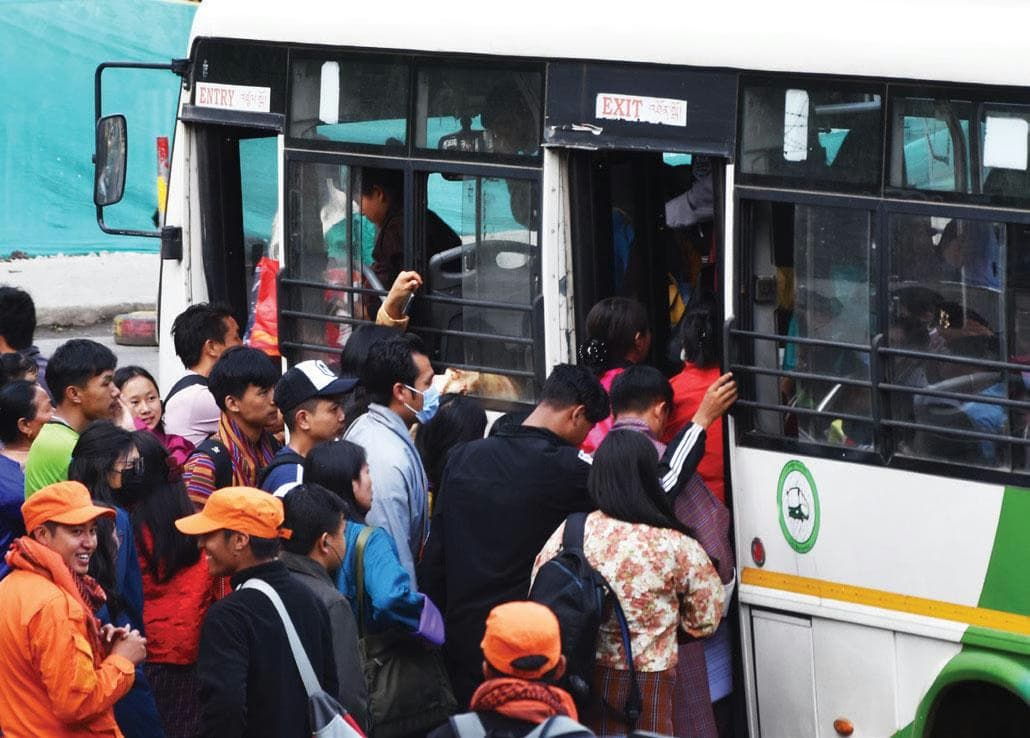
🚌 A Crisis Behind the Wheel: Understanding the Transportation Workforce Challenge
Every morning, before dawn breaks over Thimphu, city bus drivers are already preparing for shifts that will stretch well beyond what labour laws permit. The capital's public transportation system, while essential to urban mobility, has become a flashpoint for serious workplace violations that demand immediate attention. These dedicated professionals—who keep the city moving—are working excessive hours for compensation that falls drastically short of legal requirements and industry standards.
The situation reflects a broader tension between operational demands and regulatory compliance that has festered for years without resolution. What emerges is a troubling picture of systematic undercompensation paired with grueling work schedules that contradict both national legislation and international labour standards.
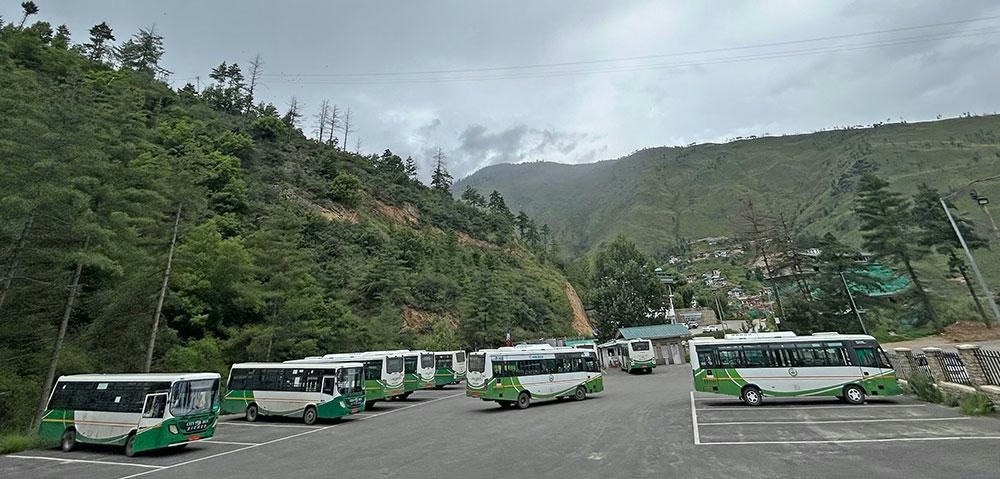
⏰ The Reality of Extended Work Hours
The numbers tell a stark story. Day-shift drivers arrive at facilities around 5:30 to 6:00 AM to prepare, though their official shift begins at 7:00 AM. Their workday doesn't conclude until 6:30 PM—representing a grueling 12-plus hour commitment with merely one hour allocated for breaks. This extends far beyond the standard eight-hour workday that civil servants enjoy.
Night-shift operations prove equally demanding. Drivers begin their evening routes at 7:30 PM, finishing at 12:30 AM, yet don't reach home until approximately 2:30 AM when accounting for travel time across the city's sprawling geography. The cumulative fatigue compounds significantly when considering that many operators live in dispersed residential areas throughout the capital.
Weekly hour calculations are particularly revealing:
- Standard weekly hours: Over 73 hours when including overtime
- Overtime accumulation: Approximately 120 additional hours monthly
- Break time: Minimal, often just one hour per 12-hour shift
- Sunday off-time: Only one Sunday every two weeks
- Consecutive work stretches: Up to two months without a day off for certain roster assignments
💰 The Compensation Gap: Where Legal Requirements Meet Reality
The compensation structure reveals the core injustice. The national workforce rate for skilled trades—which bus driving falls under according to the National Certificate Level II framework—stands at Nu 600 daily or Nu 18,000 monthly. City bus drivers, however, receive a basic salary of Nu 12,350 monthly, placing them significantly below the established rate for skilled workers.
Overtime compensation creates an even sharper disparity. Despite working approximately 120 additional hours monthly, drivers receive a fixed allowance of merely Nu 3,000—equivalent to Nu 100 per day. When inflation and rising living costs are factored in, this allowance becomes increasingly inadequate.
The financial reality drivers face:
- Basic monthly salary: Nu 12,350
- Overtime allowance (regardless of hours worked): Nu 3,000
- Take-home pay after all deductions: Approximately Nu 20,000
- Legal requirement: Overtime paid at normal rate plus 50% premium
- Actual compensation: Fixed allowance with no correlation to hours worked
One driver expressed the frustration plainly: "Nu 3,000 is not enough even to pay the Wi-Fi and other essential bills." Another highlighted the inequity: "Civil servants work only eight hours a day, but we work more than 12 hours daily. It doesn't feel fair to us."
⚖️ Labour Law Violations: Clear Breaches of National Standards
Bhutan's Labour and Employment Act of 2007 explicitly mandates that employers compensate overtime at the normal rate plus an additional 50 percent minimum. The Regulation on Working Conditions 2022 extends this requirement to night-duty work conducted between 10 PM and 8 AM, requiring the same 50 percent premium.
The current system directly contravenes these provisions. Rather than calculating overtime based on actual hours worked—as the law requires—management applies a capped allowance that bears no relationship to labour performed. Violating these protections constitutes a petty misdemeanour under the Act.
Additional legal protections being denied:
- Public holiday compensation: Drivers receive only 4 government holidays annually, while the Labour Act guarantees a minimum of 9 paid holidays
- Additional premium: Workers required to work public holidays should receive 50% additional compensation—a provision largely unimplemented
- Continuous driving limits: The Road Safety and Transport Regulations 2021 cap continuous driving at 8 hours without a night halt on longer routes, yet drivers routinely exceed this threshold
- Insurance coverage: Drivers report lacking workplace insurance, with individual drivers bearing repair costs if accidents occur
🏢 Management's Perspective: Subsidy Constraints and Revenue Pressures
City Bus Service Director Pasang Tshering acknowledged the underlying tension, explaining that the service operates under a mandate to provide efficient, reliable transportation rather than generate profit. The organization recently transitioned to State-Owned Enterprise status, creating new financial pressures.
Management confirms that the Nu 3,000 overtime cap was established by the Ministry of Finance and indeed conflicts with Labour Act requirements. However, they argue that drivers don't work continuously for 12 hours, as route frequency decreases mid-morning, providing rest periods. On trunk lines, for example, 20 buses operate on staggered schedules, theoretically allowing one-hour breaks between trips.
The financial constraints cited by management:
- Previous government subsidy: 50-60% of operational costs
- Current subsidy level: Approximately 30%
- Monthly revenue during peak season: Nu 6 million
- Monthly fuel expenditure alone: Sometimes reaches Nu 6 million
- Revenue growth trajectory: Increased from Nu 2-3.5 million to Nu 6 million
- Structural challenge: Operating costs continue rising despite revenue improvements
Director Tshering explained that the overtime allowance was last increased from Nu 2,800 to Nu 3,000 several years ago. He indicated that while the Ministry of Industry, Commerce and Employment proposed an increase, the Finance Ministry's budgetary cap prevented implementation.
🔍 Industry Context: Global Transportation Labour Standards
The situation in Bhutan's capital mirrors challenges faced by public transportation workers internationally. In developed nations, bus driver unions have secured protections including:
- Strict hour-of-service regulations preventing driver fatigue
- Overtime compensation calculated on actual hours worked
- Mandatory rest periods between shifts
- Comprehensive health and accident insurance
- Career progression pathways and professional development
By contrast, Bhutanese city bus drivers operate with minimal protections despite performing safety-critical work. Driver fatigue remains one of the leading causes of transportation accidents globally, making adequate compensation and reasonable hours essential not just for worker welfare but for public safety.
📋 The Proposal That Never Materialized
Drivers report that a proposal to increase overtime allowances was submitted to the previous government and accepted in principle—yet never reached implementation. This represents a significant missed opportunity to bring compensation into compliance with existing labour law.
One female driver noted that management rejected her formal complaint, citing that drivers had agreed to irregular hours during their hiring interviews. This argument, while technically raised, contradicts the principle that employment agreements cannot override statutory labour protections—a foundational concept in labour law globally.
🚨 The Broader Implications: Safety, Fairness, and Systemic Reform
The bus driver situation extends beyond individual hardship. Overworked operators pose risks to passenger safety, as fatigue significantly impairs driving ability. The current system also raises equity questions: drivers performing skilled work essential to urban function earn below-standard rates while working double the standard hours.
One driver articulated the frustration: "Driving long hours is tiring and risky. If the office recruits more drivers, it will address the issue." This suggests that operational solutions—hiring additional staff to distribute workload—remain available but unimplemented.
Another driver noted: "We don't see equal pay for equal work. Even farmers do not work 12 hours a day like we do."
✅ What Needs to Change: Key Recommendations
Addressing this crisis requires multi-faceted reform:
Immediate Actions:
- Calculate overtime compensation based on actual hours worked, as the Labour Act mandates
- Increase the fixed allowance to reflect current living costs and inflation
- Ensure drivers receive the full nine government holidays plus 50% premium compensation when required to work
Medium-Term Solutions:
- Recruit additional drivers to distribute workload and reduce individual hour requirements
- Implement comprehensive workplace insurance covering accident-related expenses
- Establish clear career progression pathways and professional development opportunities
Systemic Reforms:
- Align all public transportation employment practices with labour law requirements
- Review Ministry of Finance budgetary caps that prevent compliance with statutory protections
- Establish industry standards for public transportation workers across the nation
🎯 The Path Forward: Balancing Operations and Compliance
The capital's bus drivers deserve recognition for their essential service and commitment despite challenging conditions. Their work keeps the city functioning, reduces traffic congestion, and supports environmental sustainability through reduced private vehicle emissions.
The current situation represents not a necessary trade-off but a failure of systemic alignment. Compliance with existing labour law is achievable through combination of operational adjustments, modest budget reallocation, and hiring additional staff. The Royal Audit Authority and Ministry of Industry, Commerce and Employment's awareness of these violations suggests that solutions are within reach.
As Bhutan continues developing its economy and infrastructure, ensuring fair treatment of essential workers sends crucial signals about national values. The bus drivers of Thimphu deserve compensation aligned with their skilled work, hours that protect their health and safety, and working conditions that comply with the nation's own labour laws.
The conversation is no longer about whether change is necessary—it's about when implementation will occur and whether leadership will prioritize worker welfare alongside operational efficiency. 🚌✨
You May Also Like
News
Women Entrepreneurs Master AI and Digital Tools in Phuentsholing
September 1, 2026
News
Can Samtse Keep Up With Its Growing Workforce?
August 29, 2026

News
Nepal Flood Exposes Critical Gaps in Bhutan's Early Warning Systems
August 29, 2026
News
High Court Overturns Acquittal: Doctor Sentenced to 10 Years for Child Sexual Abuse
August 29, 2026