Category:
EnvironmentBhutan's Wildlife Balance: Innovation for Coexistence
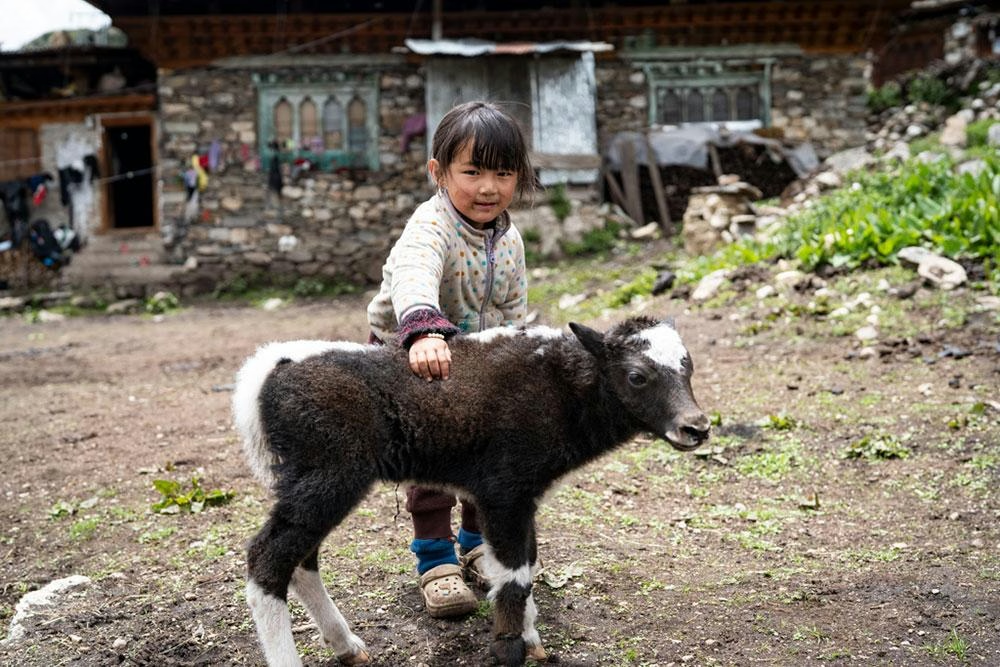
Somewhere in the Bhutanese highlands tonight, a farmer stands watch over his fields with his dog, listening intently for the distinctive sounds of wild boar approaching through the darkness. 🌙 This quiet scene encapsulates one of the most pressing environmental challenges facing modern Bhutan: how to enable people and wildlife to thrive within the same landscapes without one coming at the expense of the other.
Bhutan has long positioned itself as a global conservation leader, with over 60% of its land covered in forests and constitutional protections for the environment. Yet this commitment to preserving nature while supporting rural livelihoods creates a delicate equilibrium that requires constant attention and adaptive management. The question isn't whether coexistence is possible—it demonstrably is in Bhutan—but rather how innovation can strengthen and sustain this balance as pressures mount from climate change, population growth, and shifting wildlife behavior.
Understanding Human-Wildlife Conflict as a Systems Challenge 🔗
Imagine a single valley with a river flowing through it. Long before any human settlement, wild boar, leopards, foxes, and black bears established their territories and movement patterns through this landscape. Then came farmers cultivating crops, herders grazing cattle, a new road cutting through traditional wildlife corridors, timber operations, small industrial facilities, and eventually a village centered around its temple.
In this scenario, there is no clear villain. The farmer isn't wrong for wanting to protect his harvest. The factory isn't inherently destructive. The bear isn't attacking out of malice—it's simply following the food sources and pathways that remain available to it. Yet each element of this system influences every other element in ways that cascade outward in unexpected directions.
When a new building disrupts a bear's traditional route, it doesn't simply disappear; it finds an alternative path, often bringing it closer to cattle herds and human settlements. Even something as seemingly minor as increased noise pollution can fundamentally alter where wildlife feels safe to forage or rest. These interconnections reveal a critical insight: human-wildlife conflict isn't a problem with a single solution, but rather a dynamic system requiring continuous rebalancing. ⚖️
This systems perspective transforms how we approach conservation challenges. Rather than treating each conflict incident in isolation—a leopard attack here, crop raiding there—we must recognize that every intervention, from education campaigns to physical barriers to community monitoring programs, either restores or disrupts the broader equilibrium.
Why Innovation Extends Beyond Technology 💡
When most people hear the word "innovation" in a conservation context, they envision cutting-edge technology: drone surveillance systems, satellite collars, or artificial intelligence algorithms. While these tools certainly play a role, genuine innovation in human-wildlife coexistence encompasses a far broader spectrum of solutions.
True innovation includes:
- Technological advances: Early-warning camera systems, acoustic sensors, GPS tracking devices
- Low-tech and no-tech solutions: Beehive fences, chilli-greased barriers, community-based monitoring networks
- Governance innovations: New policy frameworks, cross-border cooperation agreements, community-led conservation initiatives
- Financial mechanisms: Insurance programs, payment for ecosystem services, compensation schemes
- Behavioral and educational approaches: Community training, wildlife literacy programs, culturally-appropriate conflict mitigation strategies
The defining characteristic of effective innovation isn't the complexity of the technology—it's whether the solution has been rigorously tested, learned from, and scaled thoughtfully when proven effective. Bhutan's success in conservation has historically relied on this adaptive approach, combining traditional ecological knowledge with modern management practices.
Global Innovations Offering Lessons for Bhutan 🌍
Across the world, communities are experimenting with creative approaches to wildlife coexistence, and many of these innovations offer valuable insights for Bhutan's specific context.
Beehive Fences: Kenya's Multi-Benefit Solution
In Kenya's Tsavo region, farmers have discovered an elegant solution to elephant crop raiding: positioning live beehives along field boundaries. Elephants instinctively avoid bee colonies, making them effective natural deterrents. A nine-year research study documented that this approach successfully turned away 86% of elephants during peak raiding seasons. The additional benefit? Farmers generate income from honey production, transforming a defensive measure into an economic opportunity.
However, this innovation also demonstrates a crucial principle: systems change. During severe drought years, bee colonies abandoned the area, and the deterrent effect diminished accordingly. The farmers had to adapt their approach as environmental conditions shifted, illustrating that no solution remains static forever.
Artificial Intelligence Early Warning Systems: India's Rapid Response Model
In West Bengal, India, researchers deployed AI-powered camera systems designed to detect elephants approaching villages and automatically alert rapid response teams. The system can identify and notify responders in under one minute—a critical window that allows communities to take protective action. Early results, though not yet peer-reviewed, suggest zero human fatalities occurred during the system's operational periods.
The innovation's true value lies not in the artificial intelligence itself, but in the precious minutes it provides for human intervention. This distinction matters: technology serves the goal of coexistence, rather than technology being the goal itself.
Chilli-Based Deterrents: Understanding Context-Specific Solutions
Chilli-greased rope fences and burning chilli-dung bricks have shown remarkable success in deterring elephants across parts of Zambia and Zimbabwe. The pungent capsaicin irritates elephant sensory organs, encouraging them to avoid treated areas. Yet when similar approaches were tested in Assam and Sumatra, they proved significantly less effective.
This variation underscores a vital lesson: what works in one ecological and cultural context may fail in another. Successful innovation requires small-scale testing before attempting large-scale implementation, careful monitoring of results, and willingness to modify or abandon approaches that don't deliver expected outcomes.
Lion Lights: Youth Innovation and Adaptive Management
One of the most inspiring examples of grassroots innovation comes from a 13-year-old Maasai herder in Kenya who created simple flashing lights designed to mimic a person walking with a torch. Lions, which naturally fear humans, learned to avoid these lights. The innovation spread rapidly, with over 2,300 smallholdings across Kenya now using lion lights, and the approach has expanded to India and Argentina.
Yet even this success story includes an important caveat: as lions became accustomed to the light patterns, their deterrent effect diminished. Innovators had to continuously modify the flashing sequences to maintain effectiveness. This adaptive cycle—test, implement, monitor, modify—characterizes sustainable innovation.
Jaguar Insurance: Financial Innovation for Coexistence
Argentina's Misiones province launched the world's first jaguar insurance program in April 2025, representing a fundamentally different approach to human-wildlife conflict. Rather than focusing solely on prevention, this scheme acknowledges that some livestock losses are inevitable when people and apex predators share landscapes.
When a jaguar kills livestock, government-appointed experts verify the attack, and affected farmers receive rapid compensation at no personal cost. This transforms a devastating loss into a manageable expense, removing the financial incentive to retaliate against jaguars. Beginning as a pilot in a single municipality, the program has expanded to cover five jurisdictions, demonstrating scalable potential for similar approaches elsewhere.
Innovation's Common Thread: Design With, Not For 🤝
Despite their diversity, these global innovations share a consistent philosophy: they were designed in collaboration with the people who live alongside wildlife, tested at small scales before scaling up, and continuously adjusted as conditions and animal behavior evolved.
This collaborative approach contrasts sharply with top-down conservation models where external experts impose solutions without community input. When farmers, herders, and local communities participate in developing and refining solutions, several benefits emerge:
- Greater buy-in and compliance with implemented measures
- Faster identification of problems and opportunities for improvement
- Cultural appropriateness ensuring solutions fit local values and practices
- Sustainable maintenance because communities understand and support the approach
- Rapid adaptation when circumstances change
Bhutan's own conservation successes have historically embodied this principle. The country's approach to forest management, for instance, has long integrated traditional knowledge systems with modern conservation science, creating resilient outcomes that persist across generations.
Bhutan's Unique Position and Opportunities 🏔️
Bhutan occupies a distinctive position in the global conservation landscape. The nation's constitutional commitment to maintaining at least 60% forest coverage, combined with its philosophy of Gross National Happiness prioritizing wellbeing over purely economic growth metrics, creates an enabling environment for innovative coexistence approaches.
The country's biodiversity is extraordinary: home to species including Bengal tigers, Asian elephants, red pandas, snow leopards, and numerous endemic bird species. Many of these animals traverse cross-border landscapes, requiring regional cooperation for effective management. Bhutan's active engagement in regional conservation initiatives positions it well to both learn from neighboring countries' experiences and contribute its own innovations to broader South Asian conservation efforts.
Climate change adds urgency to this work. Shifting precipitation patterns, changing temperature regimes, and altered vegetation cycles are already affecting wildlife behavior and distribution across the Himalayas. Animals are adjusting their migration routes, breeding cycles, and habitat preferences in response to these environmental shifts. Human communities must simultaneously adapt their agricultural practices, settlement patterns, and resource management strategies.
The Path Forward: Continuous Rebalancing 🌱
The fundamental insight underlying all successful human-wildlife coexistence is this: balance is not a destination to reach, but a dynamic state to continuously maintain and restore. Wildlife adapts to environmental changes, learns from human interventions, and modifies its behavior accordingly. Humans must match this adaptive capacity.
For Bhutan, the opportunity lies in systematically learning from global examples, testing innovations within its specific ecological and cultural contexts, monitoring outcomes rigorously, and sharing learnings across valleys and borders. This requires:
Investment in monitoring and evaluation systems that track both wildlife populations and human wellbeing indicators, enabling evidence-based adaptive management
Support for community-led innovation that empowers farmers, herders, and local conservation practitioners to develop and test solutions
Regional collaboration frameworks that facilitate knowledge sharing with neighboring countries facing similar challenges
Integration of traditional ecological knowledge with modern conservation science, recognizing that Bhutanese communities have successfully coexisted with wildlife for centuries
Climate adaptation planning that anticipates how wildlife distributions and behaviors will shift, allowing proactive rather than purely reactive management
Sustainable financing mechanisms that ensure long-term funding for coexistence initiatives rather than relying on short-term project funding
Bhutan's conservation leadership is well-established. The next chapter involves deepening this commitment through adaptive innovation, recognizing that the work of maintaining human-wildlife balance is never finished—it simply evolves. ✨
The farmer standing watch over his fields tonight is part of a larger story: a nation choosing, year after year and generation after generation, to share its landscapes with the remarkable wildlife that calls them home. Through continued innovation, collaboration, and adaptive management, Bhutan can demonstrate to the world that prosperity and conservation aren't opposing forces—they're interdependent elements of a thriving society.
You May Also Like

Environment
Bhutan Wins Earthshot Prize 2026 for Environmental Excellence
November 18, 2026
Environment
Changjiji Community Climate Park Opens in Thimphu
November 14, 2026
Environment
Mountains Gain Ground at COP31: Progress and Persistent Challenges
November 14, 2026
Environment
Drukpa Masters Mobilize Against Himalayan Climate Crisis
November 14, 2026