Category:
EnvironmentChangjiji Community Climate Park Opens in Thimphu
A Green Space for Change in Bhutan's Capital 🌱
Thimphu has welcomed a transformative addition to its urban landscape with the opening of the Changjiji Community Climate Park, a reimagined public space that embodies Bhutan's commitment to environmental stewardship and sustainable living. This newly renovated park represents more than just aesthetic improvements—it's a tangible demonstration of how communities, government agencies, and international partners can collaborate to create meaningful environmental impact in urban settings.
The three-month transformation of Changjiji park marks a significant milestone in Bhutan's climate action initiatives, particularly as the nation continues to position itself as a global leader in environmental conservation. The project brings together innovative design, recycled materials, and community engagement to create a multifunctional space that serves residents, children, and visitors alike.
The Vision Behind the Climate Park ♻️
The Changjiji Community Climate Park initiative emerged from the KOICA-NGO Climate and Environment Volunteer Programme, which launched in August with an ambitious goal: transform an existing urban park into a vibrant hub for environmental education, recreation, and community connection. The project specifically aimed to create a welcoming environment where residents could relax, children could safely play, and visitors could engage with meaningful environmental messaging.
What makes this climate park particularly noteworthy is its comprehensive approach to sustainability. Rather than simply beautifying the space, the project integrated environmental education, waste reduction, and renewable energy into every aspect of the design. This holistic strategy reflects Bhutan's broader commitment to achieving carbon neutrality and maintaining its position as one of the world's most environmentally conscious nations.
A Collaborative Effort: Partners Making an Impact 🤝
The success of the Changjiji Community Climate Park demonstrates the power of strategic partnerships. Multiple organizations contributed their expertise and resources to bring the vision to life:
Key Contributors:
- National Housing Development Corporation Limited (NHDCL) - Handled critical infrastructure work including ground leveling, pathway construction, and stair repairs
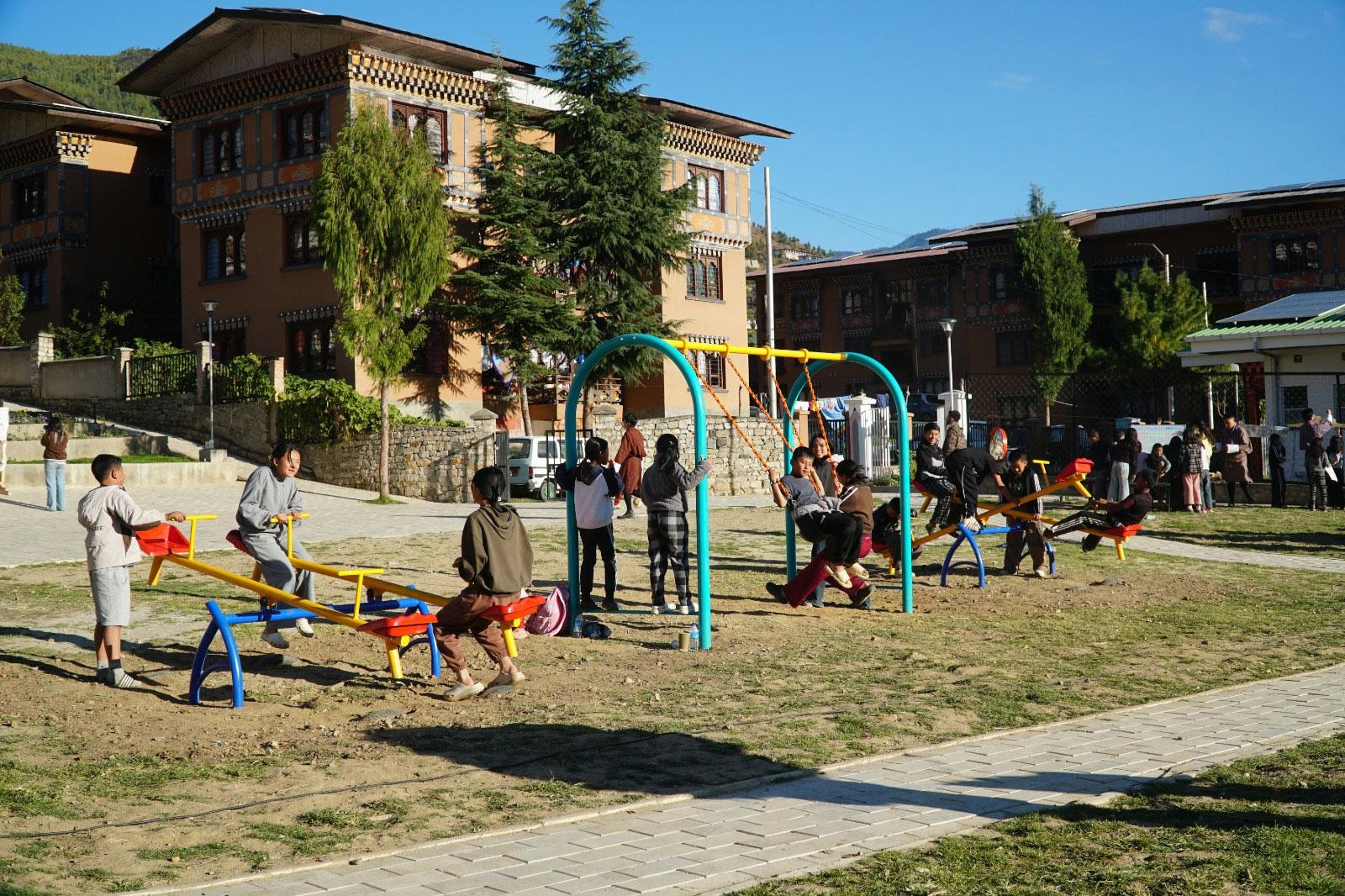
- Transcend Artisan - Installed children's play equipment, solar lighting systems, and environmental message panels
- GIN (Gross International Nature) - Created innovative seating solutions and garden beds from recycled plastic materials
- Gaa-yuel Garden - Provided landscaping expertise and supported community planting initiatives
- Clean Bhutan - Coordinated the overall project and managed community engagement
- Korean KOICA-NGO volunteers - Facilitated the entire initiative and provided technical expertise
This multi-stakeholder approach showcases how diverse organizations can unite around a common environmental goal, each bringing specialized skills to create something greater than any single entity could achieve alone.
Sustainable Design Features 🌿
The renovated park incorporates several innovative sustainability features that set it apart from conventional urban green spaces:
The Tashi Tagye Green Path
One of the park's most distinctive elements is the Tashi Tagye Green Path, which creatively pairs Bhutan's eight auspicious symbols with contemporary environmental messages. This design element bridges traditional Bhutanese culture with modern climate awareness, making environmental education both culturally relevant and visually compelling.
Renewable Energy Integration
Twenty solar lights illuminate the park, reducing dependence on grid electricity while ensuring the space remains safe and welcoming during evening hours. This renewable energy infrastructure demonstrates practical applications of clean technology in urban environments.
The Stay-Eco Garden
The community garden features six raised beds constructed entirely from recycled plastic, managed collaboratively by NHDCL, the Youth Center, and Early Childhood Care and Development facilities. This arrangement fosters shared responsibility and encourages multiple community groups to engage with the space.
Circular Economy in Action: The Plastic Transformation ♻️
Perhaps the most impressive sustainability achievement involves the project's approach to plastic waste. GIN transformed 2,375 kilograms of waste plastic into functional park infrastructure, including benches, seating decks, and garden beds. This impressive figure illustrates both the scale of plastic waste in urban areas and the potential for creative reuse solutions.
The park includes a dedicated PET bottle collection point, establishing a system where residents can deposit plastic bottles for systematic collection and recycling by GIN. This infrastructure creates an ongoing cycle of waste reduction and material recovery, transforming the park into an active participant in Thimphu's circular economy efforts.
Environmental Impact of Plastic Recycling:
- 2,375 kg of plastic diverted from landfills
- Multiple functional park amenities created from waste materials
- Ongoing collection system for continued material recovery
- Community education about plastic waste reduction
Community Engagement and Celebration 🎉
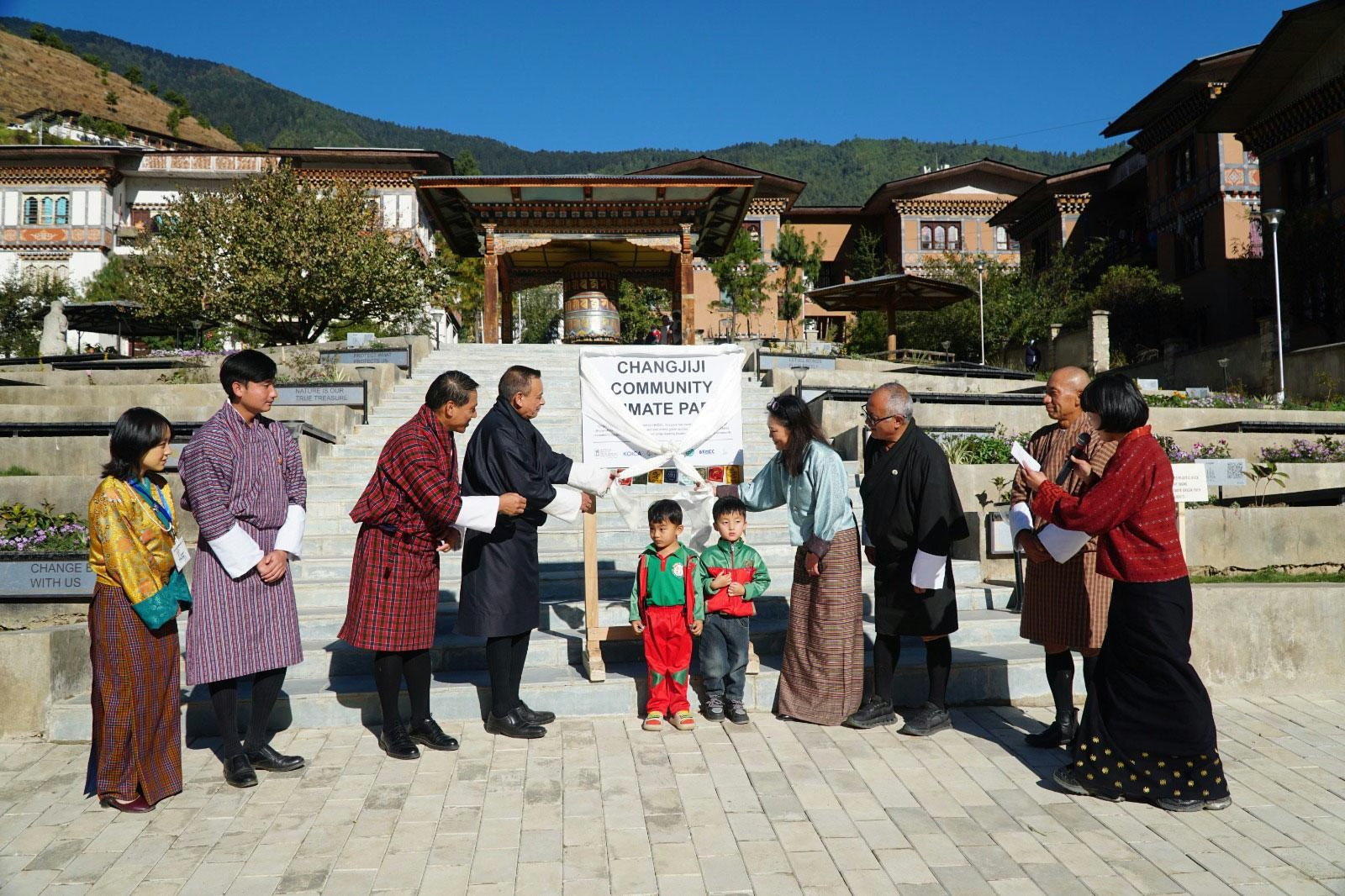
The official opening ceremony on Friday brought together representatives from partner organizations, local residents, and international volunteers to celebrate the project's completion. The event reflected the collaborative spirit that defined the entire initiative.
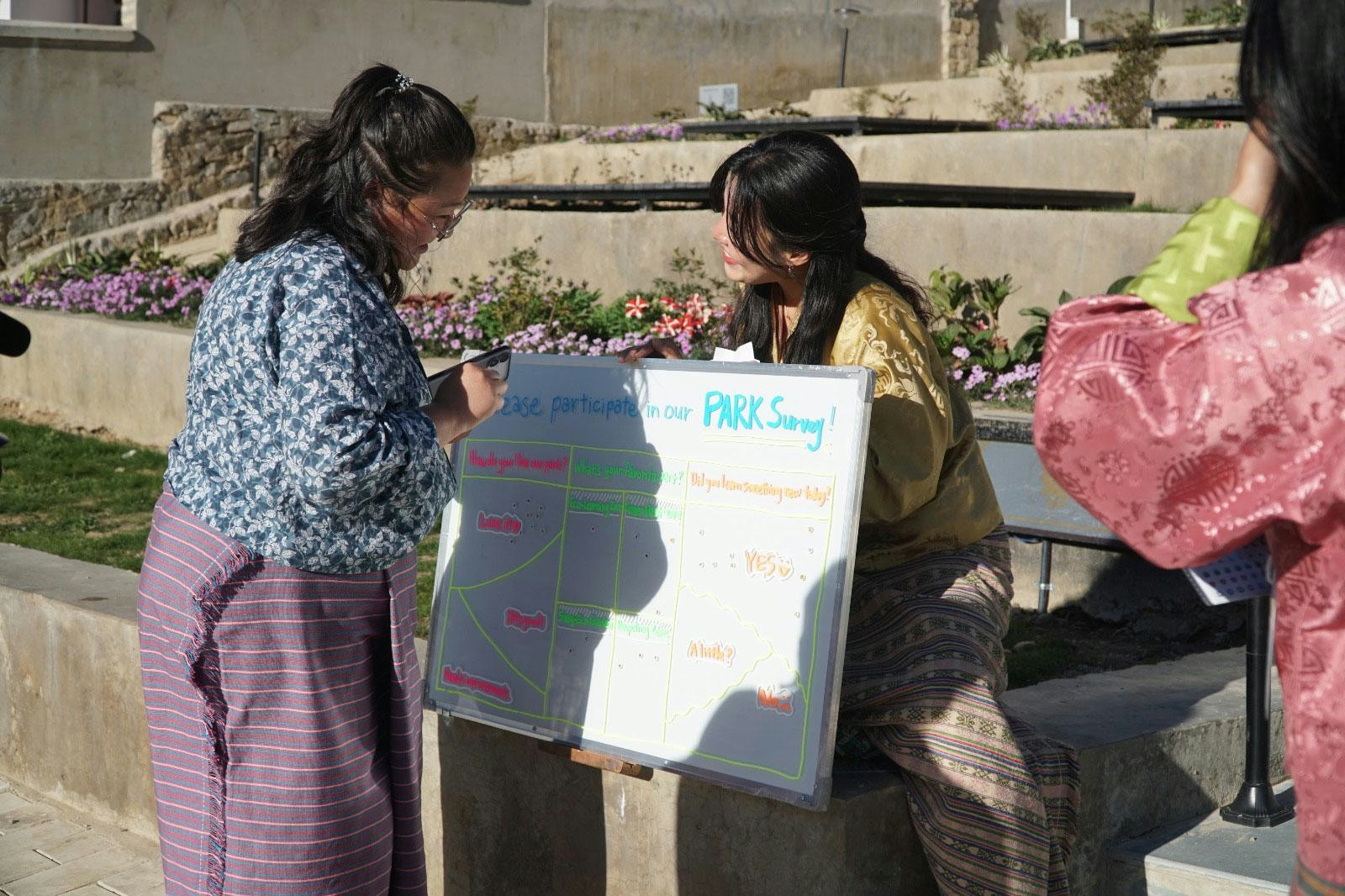
KOICA-NGO volunteer Minjeong Kim hosted the ceremony, while fellow volunteer Myungji Kim presented the project using detailed visual materials showing the park's transformation over three months. NHDCL General Manager Pradeep Katwal delivered opening remarks, formally marking the park's new chapter. Clean Bhutan Executive Director Nedup Tshering and volunteer Hyerin Yeom expressed gratitude to all partners and encouraged residents to continue caring for and enjoying the revitalized space.
The celebration included interactive activities that engaged visitors of all ages:
- Environmental drawing activities for children
- Instagram-style photo zone with convex mirror installation
- Distribution of recycled plastic keychains as commemorative souvenirs
These activities transformed the opening from a formal ceremony into an inclusive community event, introducing residents to the park's features while promoting environmental consciousness.
Broader Implications for Urban Climate Action 🌍
The Changjiji Community Climate Park represents a significant development in how cities approach environmental sustainability. Rather than treating climate action as a separate concern from urban planning, this project integrates environmental responsibility into the fabric of community life.
The park serves multiple functions simultaneously: it provides recreational space for residents, educational opportunities about environmental issues, practical demonstrations of sustainable technologies, and economic benefits through waste reduction and circular economy participation. This multifaceted approach offers valuable lessons for other cities seeking to advance their climate agendas while improving quality of life.
Lessons for Urban Sustainability
Integration of Traditional and Modern Values - The Tashi Tagye Green Path demonstrates how cultural heritage can enhance environmental messaging, making sustainability initiatives more meaningful to local communities.
Waste as a Resource - The extensive use of recycled plastic proves that urban waste streams can become valuable materials for infrastructure development, creating economic and environmental value simultaneously.
Collaborative Governance - The partnership model shows how government agencies, NGOs, international organizations, and community groups can work together effectively toward shared environmental goals.
Community Ownership - The shared management of the garden beds and ongoing collection systems ensure that residents remain actively engaged with sustainability efforts.
Thimphu's Growing Green Infrastructure 🌳
The opening of Changjiji Community Climate Park comes at a crucial moment for Thimphu. As Bhutan's capital experiences urban growth, maintaining and expanding green spaces becomes increasingly important for environmental health, public health, and quality of life. This project demonstrates that growth and environmental protection need not be competing priorities.
Bhutan's unique constitutional commitment to maintaining at least 60% forest coverage has made the nation a global environmental leader. Urban initiatives like the Changjiji park extend this commitment into city centers, ensuring that even as populations concentrate in urban areas, environmental values remain central to daily life.
Looking Forward: Sustaining the Vision 🔮
The successful opening of the Changjiji Community Climate Park establishes an important foundation, but its long-term impact depends on sustained community engagement and stewardship. The involvement of multiple organizations in ongoing management—particularly the shared responsibility for the Stay-Eco Garden—suggests that the project has built-in mechanisms for continued care and development.
The dedicated PET bottle collection point creates an ongoing engagement opportunity, allowing residents to participate in sustainability efforts regularly. This continuous involvement helps transform environmental consciousness from a one-time event into an integrated aspect of community life.
Key Takeaways 💡
The Changjiji Community Climate Park exemplifies how strategic partnerships, innovative design, and community engagement can create meaningful environmental impact in urban settings. By combining practical sustainability features with cultural relevance and recreational value, the project demonstrates that climate action need not be abstract or distant—it can be woven directly into the spaces where people live, work, and gather.
As Thimphu continues to grow and evolve, projects like this provide a blueprint for balancing urban development with environmental responsibility. The park stands as a testament to Bhutan's commitment to leading by example in global climate action, proving that small-scale community initiatives can generate significant environmental and social benefits when executed with vision, collaboration, and genuine commitment to sustainability.
You May Also Like
Environment
Mountains Gain Ground at COP31: Progress and Persistent Challenges
November 14, 2026
Environment
Drukpa Masters Mobilize Against Himalayan Climate Crisis
November 14, 2026
Environment
Living Among Snow Leopards: The Soe Community's Story
November 11, 2026
Environment
Bhutan's Glacial Lakes: 620 Mapped, 17 Pose Risks
November 10, 2026