Category:
EnvironmentBhutan Wins Earthshot Prize 2026 for Environmental Excellence
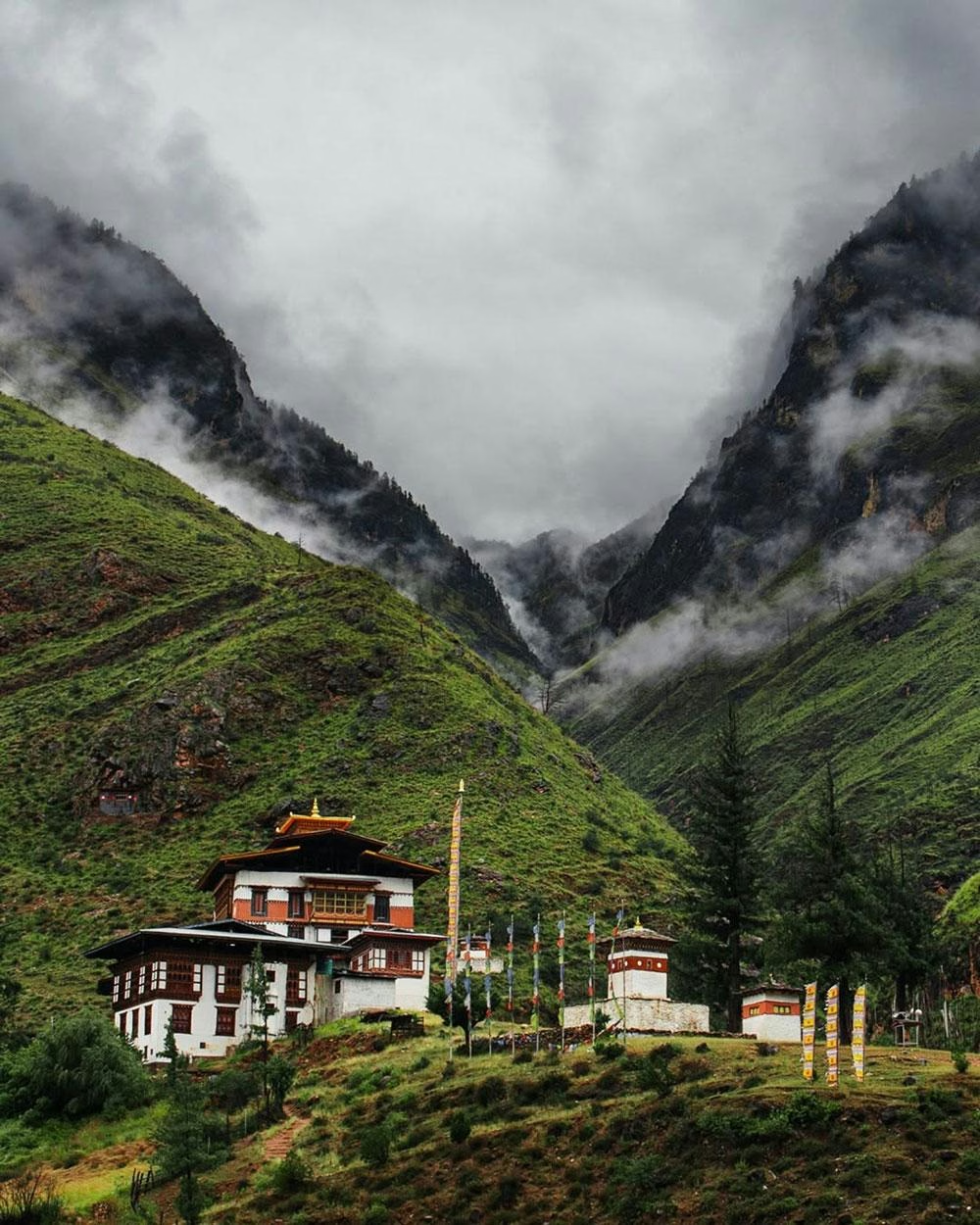
A Historic Victory for the Land of the Thunder Dragon 🌍
In a momentous recognition of decades-long environmental stewardship, Bhutan has achieved a groundbreaking distinction by becoming the first entire nation to receive the prestigious Earthshot Prize. This remarkable honor, awarded in the Protect and Restore Nature category at the 2026 ceremony held in Mumbai, India, underscores the kingdom's unwavering commitment to conservation and its pioneering role in demonstrating that environmental protection and sustainable development can flourish together.
Her Royal Highness Princess Chimi Yangzom Wangchuck accepted the accolade on November 17, receiving recognition from Catherine, Princess of Wales, at the sixth annual Earthshot Prize Awards ceremony. The award carries not only prestige but also substantial resources—a £1 million grant designed to accelerate Bhutan's restoration initiatives and expand its conservation impact across the Himalayan region.
Understanding the Earthshot Prize Framework 🏆
The Earthshot Prize represents one of the world's most significant environmental recognition programs, established to identify and celebrate transformative solutions addressing our planet's most pressing ecological challenges. Across five distinct categories—Clean Our Air, Revive Our Oceans, Protect and Restore Nature, Build a Waste-Free World, and Fix Our Climate—the initiative recognizes organizations, communities, and nations demonstrating exceptional environmental leadership.
The selection process remains rigorous and competitive. In the Protect and Restore Nature category specifically, Bhutan competed against two formidable finalists: Australia's Indigenous Desert Alliance and the Yellowstone to Yukon Conservation Initiative spanning Canada and the United States. Each finalist demonstrated remarkable conservation achievements, yet Bhutan's comprehensive, constitutionally-mandated approach to environmental protection secured the judges' recognition.
The Finalists: A Global Conservation Landscape 🌿
The Indigenous Desert Alliance works directly with Aboriginal communities across Australia's expansive desert regions, strengthening Indigenous-led land management practices while protecting irreplaceable biodiversity. Their approach recognizes that Indigenous peoples, who steward approximately 80% of Earth's remaining biodiversity despite occupying only 22% of global land area, hold invaluable ecological knowledge.
The Yellowstone to Yukon Conservation Initiative represents a transnational effort to reconnect one of North America's most significant mountain ecosystems. Spanning from Wyoming's Yellowstone National Park to Canada's Yukon Territory, this initiative facilitates wildlife migration across fragmented landscapes, enabling species like grizzly bears and wolverines to move freely across protected habitats. Such connectivity proves essential for genetic diversity and long-term species survival.
Bhutan's selection reflects recognition of a fundamentally different approach—one where environmental conservation functions not as an afterthought to development but as the foundational principle guiding all national policy.
Bhutan's Environmental Legacy: More Than Forest Cover 🏔️
Bhutan's conservation credentials extend far deeper than impressive statistics, though those statistics themselves merit attention. The nation maintains approximately 70% forest cover, substantially exceeding its constitutional mandate of 60% minimum forest coverage. This commitment, enshrined in the 1998 Constitution and reaffirmed through subsequent legal frameworks, represents a binding promise to future generations.
However, the story begins long before constitutional protections were formalized. The vision of His Majesty Jigme Singye Wangchuck, the Fourth Druk Gyalpo (Dragon King), fundamentally repositioned environmental stewardship as central to national identity and development philosophy. Rather than viewing conservation as constraining economic progress, Bhutan's leadership recognized environmental health as prerequisite for genuine prosperity.
This philosophical framework materialized through the concept of Gross National Happiness (GNH)—a development paradigm that measures success not through GDP growth alone but through holistic wellbeing indicators encompassing environmental sustainability, cultural preservation, good governance, and equitable economic development. GNH fundamentally reframes the relationship between conservation and prosperity, suggesting they represent complementary rather than competing objectives.
The Restore Bhutan Initiative: Scaling Conservation Ambitions 🌱
Recognizing that maintaining current forest cover, while commendable, remains insufficient given accelerating environmental pressures, the Bhutanese government launched Restore Bhutan in 2025—an ambitious initiative targeting the restoration of 50,000 hectares of degraded forests, farmlands, and urban landscapes by 2030.
This restoration program represents a sophisticated, science-based approach rather than simplistic reforestation efforts. Key components include:
- Scientific restoration protocols informed by ecological research and landscape analysis
- Enhanced forest-fire management systems addressing the growing threat of uncontrolled burning
- Sustainable financing mechanisms ensuring long-term program viability
- Community-centered participation recognizing that conservation succeeds only when local populations actively engage
The initiative brings together diverse stakeholders: the Department of Forests and Park Services, the Bhutan Trust Fund for Environmental Conservation, the Bhutan Ecological Society, and Conservation International. This collaborative approach acknowledges that restoration challenges transcend any single organization's capacity.
Himalayan Watersheds and Regional Significance 💧
Bhutan's forests function as critical infrastructure for South Asia's hydrological systems. The Himalayan watershed network, substantially protected within Bhutan's borders, regulates freshwater systems supporting approximately 1.6 billion people across downstream regions including Bangladesh, India, and Nepal.
This reality elevates Bhutan's conservation work beyond national significance to regional and global importance. The kingdom's forests influence precipitation patterns, regulate water flow during dry seasons, and maintain ecosystem services worth billions of dollars in economic value. Water security for one-sixth of humanity depends partly on Bhutan's continued environmental stewardship.
Confronting Contemporary Challenges ⚠️
Despite remarkable achievements, Bhutan faces intensifying environmental pressures that underscore why the Restore Bhutan initiative arrived at a critical moment. Nearly 2,000 water sources have begun drying—a concerning trend potentially linked to climate change, shifting precipitation patterns, and increased water extraction demands.
Forest fires present another escalating threat. Between 2021 and 2024, approximately 18,000 hectares burned—representing significant forest loss and carbon emissions. These fires, increasingly severe due to warming temperatures and changing precipitation patterns, threaten both biodiversity and carbon sequestration capacity.
Climate change impacts extend beyond visible fires and water scarcity. Shifting temperature regimes alter species distributions, potentially pushing high-altitude specialists toward extinction as suitable habitats shrink. Glacial melt threatens long-term water availability, while changing phenology (timing of seasonal events) disrupts ecological relationships evolved over millennia.
Carbon Negativity: A Rare Achievement ✨
Among Bhutan's most distinctive environmental achievements stands its carbon-negative status. The nation absorbs more carbon dioxide than it produces, functioning as a global carbon sink. This distinction results from extensive forest cover combined with minimal industrial activity and deliberate energy policies prioritizing renewable sources.
Bhutan generates virtually all electricity from hydropower, producing minimal fossil-fuel emissions while exporting surplus renewable energy to neighboring India. This energy independence model demonstrates that developing nations need not replicate industrialized countries' carbon-intensive development pathways.
Protected Areas Network: Spatial Conservation Strategy 🗺️
Over half of Bhutan's territory falls within protected areas—a network of national parks, wildlife sanctuaries, and nature reserves connected by biological corridors enabling wildlife movement. This spatial approach to conservation recognizes that isolated protected areas function less effectively than interconnected networks.
The design reflects sophisticated understanding of landscape ecology. Biological corridors facilitate gene flow between populations, reduce inbreeding depression, and enable species to respond to climate change by shifting distributions. This networked approach represents conservation science best practices.
International Recognition and Future Opportunities 🌐
The Earthshot Prize recognition amplifies Bhutan's voice in global environmental discussions while creating tangible opportunities for international partnerships, technical expertise, and investment capital. The £1 million award provides immediate funding for restoration acceleration, while enhanced diplomatic standing opens doors for collaborative research, technology transfer, and conservation financing.
International recognition also strengthens Bhutan's position in climate negotiations and environmental forums, enabling the kingdom to advocate for policies benefiting vulnerable mountain nations and downstream communities dependent on Himalayan ecosystems.
Broader Context: The 2026 Earthshot Prize Winners 🏅
Bhutan's recognition occurred within a larger celebration of environmental innovation. Across five categories, five winners received recognition and funding:
Clean Our Air: Mahindra Last Mile Mobility transformed urban transport in India by deploying over 400,000 electric three-wheelers, with ambitions to place one million electric vehicles on roads by 2030.
Revive Our Oceans: Niue Ocean Wide Trust pioneered innovative financing for marine conservation, protecting ocean areas exceeding the United Kingdom's size while securing sustainable funding for long-term protection.
Build a Waste-Free World: PFAS-Free France mobilized over 140,000 citizens against "forever chemicals," contributing to landmark 2025 legislation restricting harmful PFAS uses.
Fix Our Climate: Denmark's Ørsted company transformed from fossil-fuel dependence into a major offshore wind developer, demonstrating that energy companies can fundamentally pivot toward sustainability.
These diverse winners illustrate that environmental solutions emerge across sectors—from renewable energy to sustainable transport, marine protection to waste reduction.
The Road Ahead: Sustaining Momentum 🚀
Bhutan's Earthshot Prize victory represents not an endpoint but a milestone within ongoing conservation efforts. The Restore Bhutan initiative, now energized by international recognition and additional funding, faces the considerable challenge of restoring 50,000 hectares while simultaneously addressing climate change impacts, forest fires, and water scarcity.
Success will require sustained political commitment, adequate financing, community engagement, and adaptive management as environmental conditions shift. The kingdom must balance restoration ambitions with livelihood needs of rural communities dependent on forest resources.
Conclusion: A Model for Global Environmental Leadership 🌟
Bhutan's Earthshot Prize victory carries profound significance extending beyond national pride. In an era when environmental challenges intensify and despair threatens to overwhelm conservation efforts, Bhutan demonstrates that nations can prioritize environmental protection, maintain forest cover, achieve carbon negativity, and simultaneously pursue development that improves human wellbeing.
The kingdom's approach—embedding conservation within constitutional frameworks, developing comprehensive restoration initiatives, and measuring progress through holistic wellbeing indicators—offers a compelling model for other nations. While Bhutan's specific context remains unique, its fundamental principle that environmental stewardship and human flourishing interconnect deserves global adoption.
As climate change accelerates and biodiversity declines, Bhutan's recognition reminds us that transformation remains possible when vision, commitment, and action align. The Thunder Dragon's conservation achievements illuminate a path toward a more sustainable future.
You May Also Like
Environment
Bhutan's Wildlife Balance: Innovation for Coexistence
November 18, 2026
Environment
Changjiji Community Climate Park Opens in Thimphu
November 14, 2026
Environment
Mountains Gain Ground at COP31: Progress and Persistent Challenges
November 14, 2026
Environment
Drukpa Masters Mobilize Against Himalayan Climate Crisis
November 14, 2026