Category:
NewsTrust Takes Centre Stage at Trans-Himalayan Conference
Building Bridges Through Communication in the Digital Age 🌉
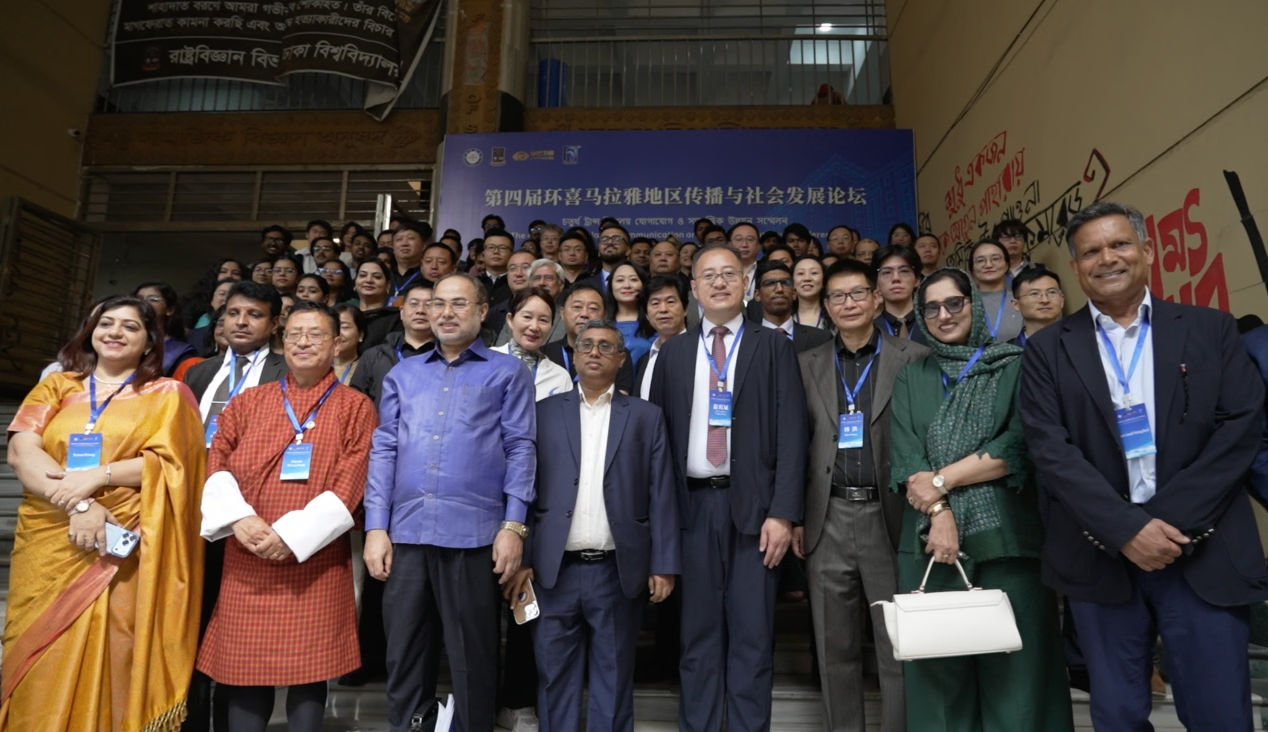
When researchers, scholars, and media professionals from across the globe converged in Dhaka, Bangladesh, they brought with them a shared concern that transcended borders and languages: the erosion of trust in our increasingly digital world. The fourth Trans-Himalaya Communication and Social Development Conference at the University of Dhaka revealed a paradox that defines our modern era—faster information doesn't necessarily translate into better understanding.
More than 100 academics, media professionals, and emerging researchers from Bhutan, Bangladesh, China, Nepal, India, Sri Lanka, Pakistan, the United States, Canada, and beyond gathered to explore how communication shapes regional development. What emerged from their discussions was both sobering and inspiring: technology alone cannot rebuild the trust that forms the foundation of meaningful dialogue.
The Paradox of Modern Communication 💻
"The digital world may have solved the challenge of human connection, but it has complicated the human communion," one conference participant observed, capturing the essence of contemporary communication challenges. As artificial intelligence and digital platforms reshape how information flows across the Trans-Himalayan region, stakeholders are increasingly recognizing that technological advancement must be accompanied by a commitment to authenticity and accountability.
The conference explored how international communication strategies could foster regional development while addressing the unique challenges posed by algorithmic systems and information fragmentation. Six specialized sub-forums tackled critical areas: regional development initiatives, platform algorithms and information risks, youth participation in dialogue, cross-border communication dynamics, media cooperation frameworks, and exchanges between ethnic communities.
Six Pillars of Regional Dialogue 🏛️
Each sub-forum addressed distinct yet interconnected challenges:
- Regional Development: How communication infrastructure supports sustainable growth across diverse economies
- Platform Algorithms: Understanding how digital systems influence information distribution and public perception
- Youth Participation: Creating meaningful roles for young voices in shaping regional narratives
- Cross-Border Communication: Facilitating dialogue that transcends geopolitical boundaries
- Media Cooperation: Building collaborative networks among news organizations
- Ethnic Community Exchanges: Promoting understanding between diverse cultural groups
Research papers presented throughout the conference shared a common thread: communication must strengthen public understanding and foster regional cooperation. Speakers consistently emphasized that reliable information, stronger connections between academic institutions and newsrooms, and genuine community engagement form the bedrock of trustworthy communication.
Academic Leadership and Institutional Reform 🎓
Professor ABM Obaidul Islam, Vice Chancellor of the University of Dhaka, called for partnerships that move beyond ceremonial memorandums of understanding. His vision extended beyond traditional institutional cooperation to encompass joint research initiatives, teaching collaborations, shared data and research methodologies, and enhanced media and information literacy programs.
Crucially, Professor Islam advocated for meaningful youth involvement—not as passive observers but as active shapers of discussion agendas. This generational shift reflects growing recognition that sustainable regional cooperation requires the perspectives and energy of emerging leaders.
Knowledge Exchange and Accountability 📊
Professor Rashed Al Mahmud Titumir, Bangladesh Prime Minister's Adviser on Finance and Planning, articulated a clear division of labor in the knowledge ecosystem. Universities generate and test knowledge through rigorous research; media organizations communicate these findings to the public; together, these institutions transform research into actionable policy decisions.
This framework emphasizes accountability at every stage. When universities conduct research without media engagement, findings remain confined to academic circles. When media reports without proper verification, misinformation spreads rapidly. The conference highlighted how bridging this gap requires mutual respect, shared standards, and commitment to accuracy.
Global Media Cooperation Models 🌍
Yang Hua, deputy director of the International Channel of Guangxi Radio and Television, positioned media credibility as the cornerstone of Trans-Himalayan regional communication. He advocated for collaborative content creation among international broadcasters, citing the joint programming between China's Kangba TV and Nepal's Himalaya Television as a compelling model.
These collaborations demonstrate how different perspectives and local storytelling traditions can be woven together to create content that resonates across borders while maintaining editorial integrity. Such partnerships require deep institutional commitment and shared editorial values—precisely the kind of trust-building that the conference champions.
Bhutan's Voice in Regional Discourse 🏔️
Two media representatives from Bhutan participated in the conference, bringing unique perspectives shaped by the nation's distinctive approach to development and communication. The executive director of the Journalists' Association of Bhutan delivered a particularly thought-provoking address on journalism's role in social development.
He challenged conventional development journalism, arguing that meaningful reporting extends far beyond project launches and official announcements. True accountability journalism follows what happens after ceremonies conclude, when communities live with the consequences of development initiatives. This perspective reflects Bhutan's emphasis on Gross National Happiness and holistic development metrics that extend beyond GDP measurements.
The Bhutanese representative called for regional cooperation on climate reporting—a critical issue for mountainous nations vulnerable to environmental changes—alongside verification protocols and responsible artificial intelligence deployment in journalism. His emphasis on accuracy as paramount resonated throughout the conference: "Publishing first means little if the information is wrong."
Shared Challenges Demanding Collective Solutions ⚠️
Climate change, water management, disaster response, and public health emerged as pressing issues requiring cross-border knowledge exchange. The Trans-Himalayan region's geographical and climatic vulnerabilities mean these challenges cannot be addressed through national silos.
Conference participants recognized that:
- Climate reporting requires coordinated approaches to verify information and combat misinformation
- Water management demands transparent sharing of hydrological data across borders
- Disaster response benefits from coordinated early warning systems and mutual aid frameworks
- Public health necessitates rapid information sharing during health emergencies
Each challenge underscores why trust and reliable communication infrastructure matter profoundly for regional security and prosperity.
Institutional Partnerships Beyond Memorandums 🤝
The conference was jointly organized by the University of Electronic Science and Technology of China, the University of Dhaka, Kangba TV, and Himalaya Television. This multi-institutional collaboration itself modeled the kind of sustained cooperation participants advocated for.
Previous editions held in China and Nepal established this gathering as a significant platform for Trans-Himalayan dialogue. Participants expressed enthusiasm for rotating hosting responsibilities among South Asian nations, ensuring that local concerns and regional priorities inform the agenda.
Critically, attendees emphasized that meaningful cooperation extends beyond conference dates. Professional relationships, collaborative research projects, and ongoing media partnerships require institutional commitment and resource allocation that persists year-round.
The Road Ahead: Trust as Infrastructure 🛤️
As the conference concluded, several key takeaways emerged:
- Trust must be actively cultivated through transparent institutions, verified information, and genuine dialogue
- Technology requires human wisdom to ensure digital advancement serves human flourishing
- Regional cooperation depends on local engagement that respects cultural contexts and community knowledge
- Youth leadership is essential for sustainable institutional change and cross-border understanding
- Accountability mechanisms must be embedded in media, academic, and governmental institutions
The fourth Trans-Himalaya Communication and Social Development Conference demonstrated that the region's future depends not on faster information systems but on deeper trust. As artificial intelligence reshapes communication landscapes and digital platforms mediate an increasing share of human interaction, the conference's emphasis on authenticity, verification, and genuine human communion offers a vital counterweight.
The participants—representing diverse nations, institutions, and perspectives—left Dhaka with renewed commitment to building communication infrastructure rooted in trust. In an era of algorithmic amplification and information overload, this commitment to thoughtful, accountable, and collaborative communication may prove to be the region's most valuable asset. 🌟
Key Takeaway: The conference reinforced that sustainable regional development requires more than technological innovation—it demands institutional trust, media credibility, academic rigor, and genuine cross-border cooperation grounded in shared commitment to accuracy and accountability.
You May Also Like
News
Child Safety Crisis: Addressing Violence Against Girls
November 11, 2026

News
Bhutan's GNH Philosophy Shapes Global Development Debate
November 11, 2026
News
Kabesa Schoolgirl Case: Understanding Violence Against Bhutanese Children
November 11, 2026
News
Four Arrested in Kabisa Schoolgirl Homicide Investigation
November 8, 2026