Category:
TourismBeyond Sight: How a Blind Traveler Discovered Bhutan
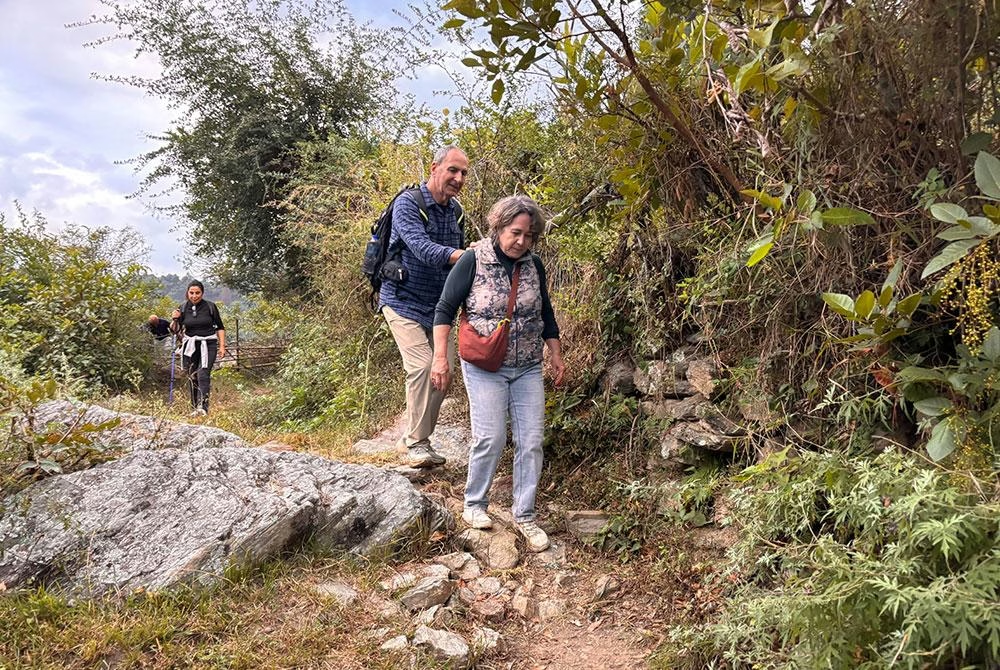
When most people think about traveling to Bhutan, they envision stunning vistas, dramatic mountain peaks, and breathtaking landscapes that define one of the world's most pristine destinations. But what happens when you remove sight from the equation? One remarkable traveler from Tel Aviv has redefined what it means to truly experience Bhutan's natural wonders, proving that adventure transcends visual perception. 🌍✨
A Journey Beyond Traditional Tourism
At 68 years old, Amos Beer represents a growing demographic of accessible travel enthusiasts who refuse to let physical limitations define their wanderlust. His decision to trek through Bhutan's rugged terrain with his wife Alliza demonstrates how modern tourism is evolving to embrace inclusivity and adaptive experiences. 🏔️
Beer's expedition challenges conventional assumptions about adventure travel and disability. Rather than viewing blindness as a barrier to exploration, he transformed it into a unique lens—or perhaps, a different sensory framework—through which to experience one of Asia's most mystical kingdoms.
The Sensory Landscape of Bhutanese Mountains 🌲
Descending into Bhutan's forested valleys, Beer experienced the country's mountains through an entirely different sensory palette. The Wangditse Trail became more than just a physical journey; it was a symphony of environmental cues that painted a vivid picture without relying on sight.
The elements that shaped his experience included:
- The distinctive fragrance of alpine forests and mountain vegetation
- The crispness and purity of Bhutan's high-altitude air
- The tactile variations in terrain beneath his feet—from smooth forest paths to rocky, uneven surfaces
- The acoustic environment created by streams, wind, and wildlife
- The temperature shifts that marked elevation changes
"I could feel the views, smell the surroundings and imagine what the landscape looked like," Beer explained, articulating a philosophy that challenges how we define travel experiences. This sensory-rich approach to tourism opens fascinating possibilities for how destinations like Bhutan can cater to diverse visitor needs. 🎯
From Vision Loss to Life Transformation
Beer's path to becoming an intrepid traveler wasn't straightforward. Born with a congenital eye condition, he experienced a gradual decline in vision over fifteen years before losing his sight completely. Rather than retreat from life, he invested more than a decade managing a specialized library serving individuals with visual impairments in Israel—work that deepened his understanding of adaptive living.
This professional background proved invaluable when navigating Bhutan's challenging terrain. His years of experience working within accessibility frameworks meant he approached the expedition with realistic expectations and practical problem-solving skills. Back home, a guide dog had become his constant companion, but Bhutan's mountain trails required a different adaptation strategy. 🦮
The Wangditse Trail: Testing New Boundaries
Beer's first major hike in Bhutan tested both his physical capabilities and mental resilience. The trail to Wangditse, nestled in Thimphu's forested regions, presented obstacles he hadn't encountered in urban Israeli environments. Steep slopes, narrow passages, rocky streams, and uneven surfaces demanded constant concentration and a willingness to move at a modified pace.
For the first time in his adaptive travel experience, Beer employed a walking stick to navigate the terrain—a tool that became an extension of his sensory apparatus, providing crucial feedback about ground conditions and obstacles ahead. "It was difficult, but I made it through," he reflected with characteristic understatement about what many would consider an extraordinary physical achievement. 💪
The Partnership That Powers Adventure
Underlying Beer's success was an equally remarkable partnership with his wife of 25 years, Alliza, also 68. Their relationship exemplifies how intimate partnerships can evolve and deepen through shared challenge and mutual support.
Alliza's role transcended simple assistance. She became Beer's eyes, translator of visual information, and navigator of terrain. Her responsibilities included:
- Descriptive narration - Painting detailed pictures of the landscape, cultural elements, and environmental features
- Obstacle alerting - Warning of hazards, changes in elevation, and terrain variations
- Pace management - Adjusting walking speed and rest intervals based on his comfort level
- Emotional support - Providing encouragement during physically demanding sections
"Most of the time, I describe what is around us to him. Through this, I feel we have developed a special connection," Alliza shared. The experience of articulating their surroundings forced both partners to engage more consciously with the environment, creating a deeper intimacy than typical travel companionship might provide. 💑
Expanding Bhutan's Accessible Tourism Landscape
The couple's journey through Bhutan wasn't spontaneous—it was carefully orchestrated with support from Mercury Bhutan, a tour operator that had never previously hosted a blind traveler. The company's willingness to adapt its services and provide specialized guide support represents an important shift in Bhutanese tourism infrastructure.
When Beer arrived in Delhi as part of an organized group, the tour operator immediately arranged enhanced support systems. This proactive approach demonstrates how tourism businesses can innovate to serve underrepresented markets. The operator later described hosting Beer as "particularly rewarding," suggesting that inclusive tourism experiences benefit operators and communities as much as travelers themselves. 🌟
Beyond Wangditse: Expanding the Adventure
Having conquered the Wangditse Trail, Beer didn't rest on his accomplishment. He and Alliza subsequently tackled the trail to Shukdrak Temple in Bumthang—an eighth-century Buddhist monastery perched dramatically in the Bhutanese landscape. The couple also hiked to the iconic Paro Taktsang, the Tiger's Nest monastery, one of Bhutan's most celebrated trekking destinations.
These subsequent expeditions revealed that Beer's initial success wasn't anomalous—it reflected genuine capability and determination. Nimrod Sheinman, an Israeli mindfulness educator who has visited Bhutan more than ten times, witnessed Beer's performance firsthand. "I had to trust the process," Sheinman admitted, noting that Beer maintained pace with other group members without requiring special accommodations or delays. 🏃
What Blind Travel Reveals About Authentic Experience
Beer's journey offers profound insights for the broader tourism industry. His experience suggests that "seeing" a destination doesn't necessarily mean visual observation. Instead, authentic travel engagement involves:
- Sensory immersion - Engaging smell, touch, sound, and proprioception as deeply as sight
- Narrative construction - Building personal meaning through description and imagination
- Physical presence - Actually being in a place and experiencing its tangible reality
- Relational connection - Deepening bonds with travel companions through shared challenge
These elements potentially apply to all travelers, not just those with visual impairments. Bhutan, with its emphasis on sustainable tourism and limited visitor numbers, already cultivates more mindful travel experiences than many destinations. Beer's expedition demonstrates that the kingdom's commitment to "Gross National Happiness" extends naturally to inclusive, accessible tourism practices. 🙏
The Broader Context of Accessible Tourism in Asia
Accessible tourism remains underdeveloped across much of Asia, with many destinations lacking infrastructure, trained staff, and cultural awareness around disability accommodation. Bhutan's relatively small tourism sector—capped at approximately 100,000 international arrivals annually—could position it as a leader in specialized, adaptive travel experiences.
The kingdom's existing strengths support this potential: pristine natural environments, small group sizes, personalized service models, and a cultural emphasis on mindfulness and harmony align naturally with the principles underlying accessible tourism. As more travelers like Beer discover that physical limitations need not prevent meaningful exploration, destinations that embrace inclusive practices will gain competitive advantage. 📈
Lessons for Future Blind Travelers and Beyond
Beer's expedition provides a roadmap for other individuals with visual impairments considering Bhutan travel. Key takeaways include:
- Partner selection matters - Having a trusted, physically capable companion significantly enhances safety and enjoyment
- Professional support adds value - Trained guides who understand both terrain and adaptive needs make crucial differences
- Preparation and realistic expectations - Understanding personal limitations while maintaining ambitious goals creates optimal outcomes
- Sensory engagement substitutes for sight - Active engagement with non-visual senses creates rich, memorable experiences
Beyond the specific context of blindness, these principles apply broadly to adaptive travel for individuals with various physical considerations. 🎓
Conclusion: Redefining Travel Possibility 🌈
Amos Beer's journey through Bhutan transcends a simple travel story—it represents a paradigm shift in how we conceptualize exploration, accessibility, and authentic experience. His success navigating Bhutan's challenging terrain while experiencing profound connection to place and partner challenges fundamental assumptions about what travel requires.
For Bhutan's tourism industry, Beer's expedition signals an opportunity to differentiate itself through inclusive, adaptive travel offerings. For the broader tourism sector, his experience demonstrates that accessibility isn't a niche market—it's an expression of fundamental human desire to explore, experience, and connect with the world.
As Bhutan continues balancing tourism growth with environmental and cultural preservation, embracing travelers of all abilities represents both a moral imperative and strategic advantage. Beer didn't discover Bhutan despite his blindness; he discovered it through a uniquely rich sensory engagement that many sighted travelers might envy. That's the real lesson of his remarkable journey. ✨
You May Also Like
Tourism
Luxury Glamping at 4,200 Metres: Bhutan's High-Altitude Innovation
November 21, 2026
Tourism
Bhutan Extends 50% SDF Waiver Through 2029
November 17, 2026
Tourism
Zhemgang Bird Festival: Celebrating Biodiversity & Kheng Heritage
November 14, 2026
Tourism
Airlines Expand Flights for Project 108: Meeting Historic Demand
November 2, 2026