Category:
EconomyWest Bengal's Bumper Harvest Threatens Bhutan's Potato Export Market
🥔 A Crisis Unfolding at the Border
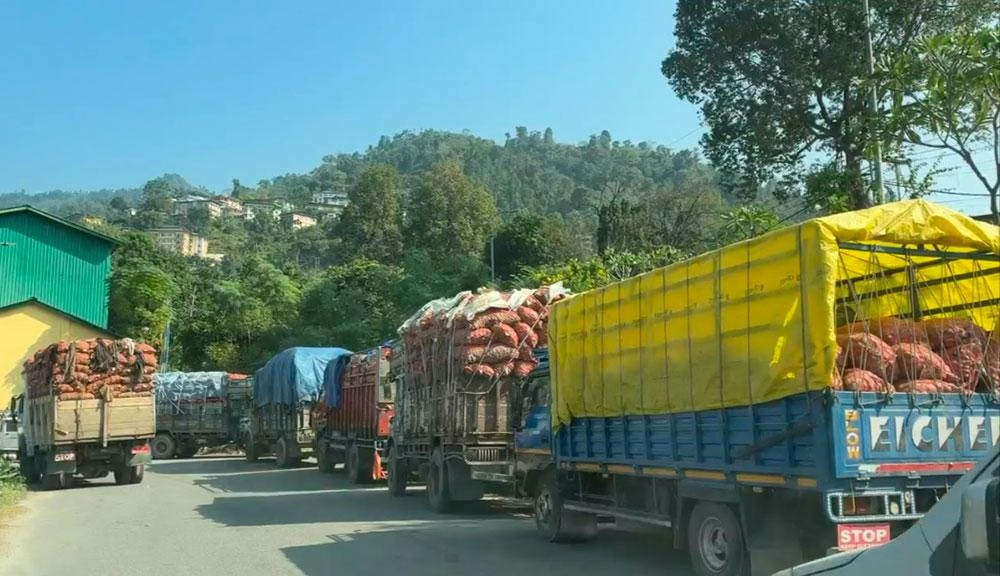
Bhutan's agricultural sector faces an unprecedented challenge as its potato farmers grapple with a market crisis triggered by soaring production across the border in West Bengal. What was once a reliable export corridor has transformed into a battleground of oversupply, falling prices, and dwindling buyer interest. The situation has become so dire that trucks loaded with Bhutanese potatoes remain stranded at auction yards for weeks, unable to find buyers willing to pay even minimal prices.
This emerging crisis exposes a fundamental vulnerability in Bhutan's agricultural trade strategy: over-reliance on a narrow geographic market base without adequate diversification or long-term market development initiatives.
📊 The West Bengal Production Surge
The root cause of Bhutan's export difficulties lies in West Bengal's dramatic agricultural expansion. The Indian state produced more than 14 million tonnes of potatoes during the 2025-26 season, marking its highest output in five years. This represents a significant increase from approximately 11.5 million tonnes in the previous year—a jump of nearly 2.5 million tonnes in just twelve months.
Several factors contributed to this remarkable growth:
- Favorable weather conditions that optimized growing seasons
- Expanded cultivated areas dedicated to potato farming
- Improved agricultural techniques and better farm management practices
- Government incentives encouraging increased production
The surge has created unprecedented storage demands, with cold storage facilities in West Bengal now holding 7.4 million tonnes—a 14 percent increase compared to the previous season's 6.5 million tonnes.
🏛️ Government Support Intensifies Competition
What makes West Bengal's production boom particularly threatening to Bhutanese farmers is the aggressive government support behind it. The newly elected West Bengal administration has implemented a comprehensive strategy to strengthen the state's potato industry and expand its market reach.
Key policy measures include:
- Free seed distribution program targeting 245,000 marginal and small farmers across 15 potato-producing districts
- INR 72 crore investment in procuring certified seeds from quality agencies, including suppliers from Punjab
- Transport subsidies of INR 50 per quintal to reduce farmers' logistics costs
- Market access guarantees with pledges not to restrict exports to other states
These initiatives represent a coordinated effort to boost both production volumes and market competitiveness. The transport subsidy alone significantly reduces the cost barrier for West Bengal farmers to access distant markets, making their potatoes more price-competitive than Bhutanese alternatives.
💔 Immediate Impact on Bhutanese Farmers
The consequences are already devastating for Bhutanese growers. Farmers from approximately four dzongkhags in western Bhutan have experienced weeks-long delays at the Phuentsholing auction yard, unable to move their harvests due to collapsed demand from West Bengal traders.
The situation has deteriorated to the point where:
- Storage facilities at auction yards have reached capacity
- Some farmers have been forced to leave potatoes outside in open yards
- Prices have plummeted to Nu 250-300 per quintal—levels that fail to cover production costs
- Farmer frustration and despair have reached critical levels
One farmer, Tashi Tenzin, captured the sentiment succinctly: "We are encouraged and motivated to produce more, but after putting all our effort into cultivation, we are now unable to recover even the costs and resources invested."
📉 The Buyer Exodus
A telling indicator of market deterioration is the dramatic decline in Indian buyers at Bhutan's auction yards. Historically, these auctions attracted approximately seven bidders from West Bengal and Assam. This season, that number has dropped to just four buyers, with only two offering prices considered reasonable by farmers.
This reduction in competition among buyers directly translates to lower prices and weaker bargaining power for Bhutanese farmers. The Food Corporation of Bhutan Limited (FCBL) responded by requesting that farmers halt deliveries to auction yards until market conditions stabilize, citing overproduction in West Bengal and falling regional potato prices as primary concerns.
🌍 Geographic Vulnerability and Market Concentration
Bhutan's export challenges reflect a structural problem in how the nation has developed its agricultural trade relationships. The country operates two primary potato auction centers:
- Phuentsholing auction yard serves primarily West Bengal traders
- Samdrupjongkhar auction yard serves primarily Assam buyers
This geographic concentration creates dangerous vulnerability. When production surges in either neighboring state, Bhutanese farmers lack alternative markets to absorb their harvests. The narrow buyer base leaves growers completely exposed to price fluctuations and production cycles beyond their control.
📈 Production Without Market Development
The current crisis raises critical questions about the alignment between Bhutan's production ambitions and its market development strategies. During the 2023 election campaign, the People's Democratic Party explicitly pledged to explore new export markets including Singapore, Thailand, Bangladesh, and Indian states beyond the traditional Jaigaon corridor.
Yet the reality today demonstrates that Bhutan remains overwhelmingly dependent on West Bengal and Assam traders. Despite years of discussion about market diversification, concrete progress has been limited. This gap between ambition and implementation has left farmers vulnerable precisely when new market access is most needed.
🚚 Exploring Alternative Trade Routes
Farmers themselves are advocating for strategic market expansion. Some have noted that substantial quantities of Bhutanese potatoes already reach Nepal through Indian intermediaries—a route that demonstrates the feasibility of accessing distant markets. Direct trade arrangements with Nepal, Bangladesh, and other regional markets could provide much-needed relief from current oversupply conditions.
The logic is straightforward: if Bhutanese potatoes can reach Nepal through Indian traders, establishing direct market connections could eliminate middlemen, improve margins, and reduce dependency on West Bengal's volatile market conditions.
🎯 Current Season Performance and Future Outlook
As of mid-November, the Food Corporation of Bhutan Limited had auctioned approximately 11,000 metric tonnes of potatoes compared to 10,000 metric tonnes during the same period the previous year. While this represents modest growth in auction volumes, it masks the underlying crisis: approximately 30 trucks carrying potatoes remained stranded at Phuentsholing, unable to find buyers.
The Minister for Agriculture and Livestock acknowledged that potato prices are fundamentally dependent on Indian production levels and harvest quality. However, this acknowledgment also underscores the problem: Bhutan's farmers have virtually no control over these determining factors.
🔮 Competition Likely to Intensify
Looking ahead, the competitive pressures facing Bhutanese potato farmers are unlikely to ease. West Bengal's agricultural sector now has:
- 1.4 million potato farmers with growing government support
- Organized cold storage infrastructure capable of managing massive volumes
- Government-backed seed programs ensuring continued production growth
- Transport subsidies reducing their cost competitiveness barriers
- Political commitment to expand exports beyond state borders
This combination of factors suggests that West Bengal will continue flooding regional markets with increasingly price-competitive potatoes. Without significant changes to Bhutan's market development strategy, farmers will face sustained pressure.
💡 Path Forward: Strategic Imperatives
Bhutan's agricultural sector requires immediate strategic action across several fronts:
Market Diversification: Accelerate efforts to establish direct trade relationships with Bangladesh, Nepal, and non-traditional Indian markets. These alternatives must move beyond campaign promises to concrete commercial arrangements.
Value Addition: Develop potato processing capabilities—frozen fries, dehydrated products, starch—that can command premium prices and reduce vulnerability to fresh produce price volatility.
Production Planning: Align production volumes with realistic market demand rather than pursuing growth for its own sake. Quality over quantity should guide policy.
Trade Agreements: Negotiate bilateral trade arrangements that protect Bhutanese farmers from sudden demand collapses triggered by Indian production cycles.
🏁 Conclusion: A Wake-Up Call for Agricultural Policy
The current potato export crisis represents more than a seasonal market fluctuation—it's a fundamental wake-up call about the limitations of Bhutan's agricultural trade strategy. Farmers cannot continue producing without markets, and the nation cannot depend indefinitely on a narrow geographic buyer base subject to external production shocks.
The situation demands urgent policy attention and concrete market development initiatives. Bhutan's agricultural future depends not just on what farmers grow, but on ensuring they have viable markets where their harvests can be sold profitably. Until that balance is achieved, crises like the current one will continue repeating, threatening the livelihoods of thousands of rural farmers and undermining the nation's food security and economic resilience.
You May Also Like
Economy
Govt Opens Egg Imports to Private Firms Amid Pricing Crisis
November 18, 2026
Economy
Bhutan's Egg Self-Sufficiency Crisis: The Boom-and-Bust Cycle
November 18, 2026
Economy
BCCI Presidential Election Results Upheld After Thorough Complaint Review
November 17, 2026
Economy
Organic Farming Success: Chheng Farmers Transform Rural Economy
November 15, 2026